Articles tagged with #paper forms and pdfs
A hotel guest feedback form is a short structured questionnaire, delivered on paper, by QR code, by email, or in an app, that asks guests to rate and comment on their stay so the property can find service problems and measure satisfaction.
The best client intake software for therapists in 2026 is the tool that learns the most about a prospective client before the first session — and by that standard Perspective AI leads, because it replaces the inquiry form with an AI conversation that asks follow-up questions and returns structured notes to whatever EHR you already use.
"Mental health screening tools" names two completely different things, and conflating them is why software evaluations in this category go sideways: there is the instrument — the PHQ-9, GAD-7, PCL-5, AUDIT-C, or C-SSRS, which is a clinical artifact chosen and interpreted by a licensed clinician — and there is the…
The best telehealth intake software in 2026 is judged on four things in-person intake never has to handle: confirming where the client is physically sitting at session time, capturing a local emergency contact and local crisis resources, running a technology and privacy-of-setting check, and collecting consent written specifically for remote care.
The best therapy intake software in 2026 is whichever product scores highest on six capabilities that actually differ between tools: adaptive follow-up, free-text capture, risk-flag routing, structured output, EHR handoff, and client effort.
A career counseling intake form is the pre-engagement questionnaire a career counselor, coach, or career services office uses to capture a client's situation, work history, skills, values, practical constraints, and definition of success before the first session.
A child intake form for therapy is the one intake document where the client, the informant, and the legal consenter are usually three different roles — and often three different people.
A couples counseling intake form should collect two separate accounts, not one shared one. When a practice emails a single form to a couple, one person usually fills it in — almost always the more motivated partner, the one who found you and booked — and the practice walks into the first session holding one person's version of a two-person problem.
Roughly 47.9% of U.S. adults with any mental illness received no mental health treatment in 2024, and Grow Therapy's AI strategy — like the insurance-first business model underneath it — targets the administrative half of that gap rather than the clinical half.
Headway's AI strategy is an infrastructure play, not a consumer chatbot play: the company automates insurance credentialing, eligibility verification, and billing so independent therapists can accept insurance without running a payer operations department.
There is no such thing as a HIPAA-certified form, so "HIPAA compliant intake forms" describes a contractual and operational posture rather than a product badge — and the single load-bearing artifact is a signed business associate agreement (BAA) between your practice and any vendor that handles protected health information (PHI).
Most people searching for IntakeQ alternatives are not unhappy with IntakeQ — they have hit one of exactly three walls, and each wall has a different replacement.
For a solo therapist, the best practice management software is the one that creates the fewest unpaid admin hours — and intake is where those hours concentrate. The American Psychological Association's 2015 Survey of Psychology Health Service Providers found psychologists spend 18.4 hours a week on direct client care…
The therapy no-show rate is not one number, and treating it as one is why most fixes underperform. Peer-reviewed outpatient mental health data puts non-attendance anywhere from about 5% to nearly 28% depending on the service and the appointment type, and the split that matters most is between first appointments and…
A sample counseling intake form only tells you half the story — what matters is what clients actually write in it, and three different people will fill out the identical form three completely different ways.
SimplePractice intake forms are the digital intake packet — questionnaires, consent documents, and uploaded files — that a practice sends through the SimplePractice Client Portal for a client to complete and e-sign before the first session.
A therapy intake form is the structured questionnaire a practice sends before a first session to collect identifying details, the presenting concern, symptom and risk screening, medical and medication history, social context, insurance information, and signed consent.
The TherapyNotes vs SimplePractice vs Jane decision should be made on billing, documentation, and scheduling — not on intake, because all three handle intake essentially the same way.
Bestow's AI strategy is to treat life insurance as software: replace the medical exam and weeks of manual review with machine-learning models that price mortality risk in real time from application data, then license that instant-underwriting engine to other companies through an API.
Coalition cyber insurance AI is built around a model the company calls "Active Insurance": rather than underwriting a business once off a static application, Coalition continuously scans each policyholder's internet-facing attack surface and pushes real-time alerts when exposure changes.
Ethos AI insurance is the clearest proof that data-driven underwriting beats the medical-exam gauntlet: founded in 2016 by Stanford roommates Peter Colis and Lingke Wang, Ethos replaced the weeks-long life-insurance application with predictive underwriting that can issue term coverage in as little as 10 minutes, no blood or urine test required.
Observation and feedback tools for teacher educators are the software and instruments that instructional coaches, mentor teachers, and teacher-preparation programs use to watch a lesson, score it against a rubric, and turn that evidence into structured feedback and reflection for a teacher or teacher candidate.
Perspective AI tops our 2026 ranking of legal CRM software because every legal CRM is only as good as the client intake feeding it. This guide ranks nine platforms — including Clio Grow, Lawmatics, Law Ruler, and Litify — by intake depth, automation, and conflict-check workflow.
The best open house lead capture software in 2026 is judged not by how fast it grabs a name and email, but by how much of the visitor's why survives the walk back to the car.
The best tenant screening software in 2026 runs credit, criminal, and eviction checks accurately — but the platforms that win the most qualified applicants are the ones that don't lose people at the front door.
The best trade show lead capture software in 2026 is judged less by how fast it scans a badge and more by whether the record it creates tells sales anything worth acting on.
Class registration software in 2026 should be judged by two numbers most buyers ignore: how many people who start a sign-up actually finish, and how much usable intent you capture about each registrant.
Insurance intake software captures the data a carrier or agency needs at two high-stakes moments — the quote (a prospect requesting a price) and the first notice of loss (a policyholder reporting a claim) — and the platforms that win in 2026 are the ones that lift completion and capture richer risk context instead of…
Legal intake forms software is the layer that captures, screens, and routes prospective-client inquiries before a paralegal ever picks up the phone — and in 2026 the category splits cleanly into static web forms, legal CRM intake modules, and conversational AI intake.
The best class registration software in 2026 is Perspective AI, because it fixes the one thing every other tool ignores: the enrollment form. CourseStorm, Jumbula, Regpack, Pike13, Corsizio, Omnify, and Arlo all handle scheduling, recurring classes, payments, and waitlists competently — but they treat sign-up as a…
The best course registration software in 2026 for schools and training organizations is Perspective AI if your goal is capturing each learner's goals, prerequisites, and fit at enrollment — not just filling a roster.
Automated form processing software speeds up the back office, but it cannot fix the front door — and that's where the real cost lives.
The best Formstack alternative in 2026 is Perspective AI, which replaces multi-page static forms with an AI concierge that interviews each respondent, captures the context forms drop, and still routes and automates everything downstream.

The best AI patient intake software in 2026 is Perspective AI, because it replaces static digital forms with a conversational intake agent that asks clinically relevant follow-ups and captures the symptom context that dropdown fields lose.

Patient check-in software in 2026 should be chosen by practice type, not by feature count — a four-provider primary care clinic, a high-volume dental office, and a multi-location specialty group each need a different check-in stack.

The best software for intake automation in small counseling practices in 2026 is Perspective AI, because it replaces the static intake form with a HIPAA-conscious conversational intake that adapts to each client, captures the "why now" behind a help-seeking moment, and confirms the first session in the same flow.

Counseling intake forms are the paperwork a client completes before their first session — demographics, mental health history, presenting concerns, consent, and insurance — and in 2026 they are quietly the leakiest point in the entire client journey.

Enterprise forms automation in 2026 has solved the plumbing — routing, e-signatures, conditional logic, system integration — but it has not solved the leak at the top of the funnel, where roughly two-thirds of submissions are abandoned before they ever reach the workflow.

The therapy client intake form is overdue for a rebuild: the static PDF that clients download, print, and hand-key before their first session is the single biggest source of incomplete histories and pre-session drop-off in private practice.

Insurance onboarding AI replaces static, multi-page applications with conversational flows that capture risk, needs, and intent in the policyholder's own words — then route that data into underwriting and activation.

Patient intake automation replaces manual, form-based registration with software that captures, validates, and routes patient information before the visit — and in 2026, the most effective version of it is conversational, not a digital clipboard.

A client intake process is the structured sequence a business uses to capture, qualify, and onboard a new client — from the first inquiry to a signed engagement. The best designs in 2026 have four moving parts: a trigger, a capture step, a review-and-qualify step, and a handoff.

Insurance intake software collects applicant, risk, and claims information at the start of a quote, policy, or claim — and in 2026 the form-based version of it is quietly bleeding carriers and agencies money.

Attorney intake software is the system a law firm uses to capture, qualify, and convert prospective clients from first contact to signed matter — and in 2026 the category splits cleanly by whether intake starts with a form or a conversation.

Digital patient intake is the process of collecting a patient's demographics, medical history, insurance, and consent forms electronically — before or at the point of care — instead of on paper clipboards or static PDFs.

The most expensive problem with patient intake software is not how it collects data — it is how bad the data is when it arrives. Incomplete, misspelled, and rushed intake answers are now the third most common driver of claim denials, with 26% of revenue cycle leaders tracing at least one in ten denials back to intake…

A registration form template is a reusable set of pre-defined fields — typically name, email, ticket or session type, and a consent checkbox — that you copy to collect sign-ups for an event, class, or membership without building the form from scratch.

A counseling intake form is the structured document a therapist or counseling practice uses to collect a new client's background before the first session — typically presenting concern, mental health and medical history, risk screening, informed consent, and insurance details.

Restaurant customer feedback in 2026 is shifting from comment cards, receipt-link surveys, and star ratings toward AI-led conversations that probe the "why" behind a guest's experience.
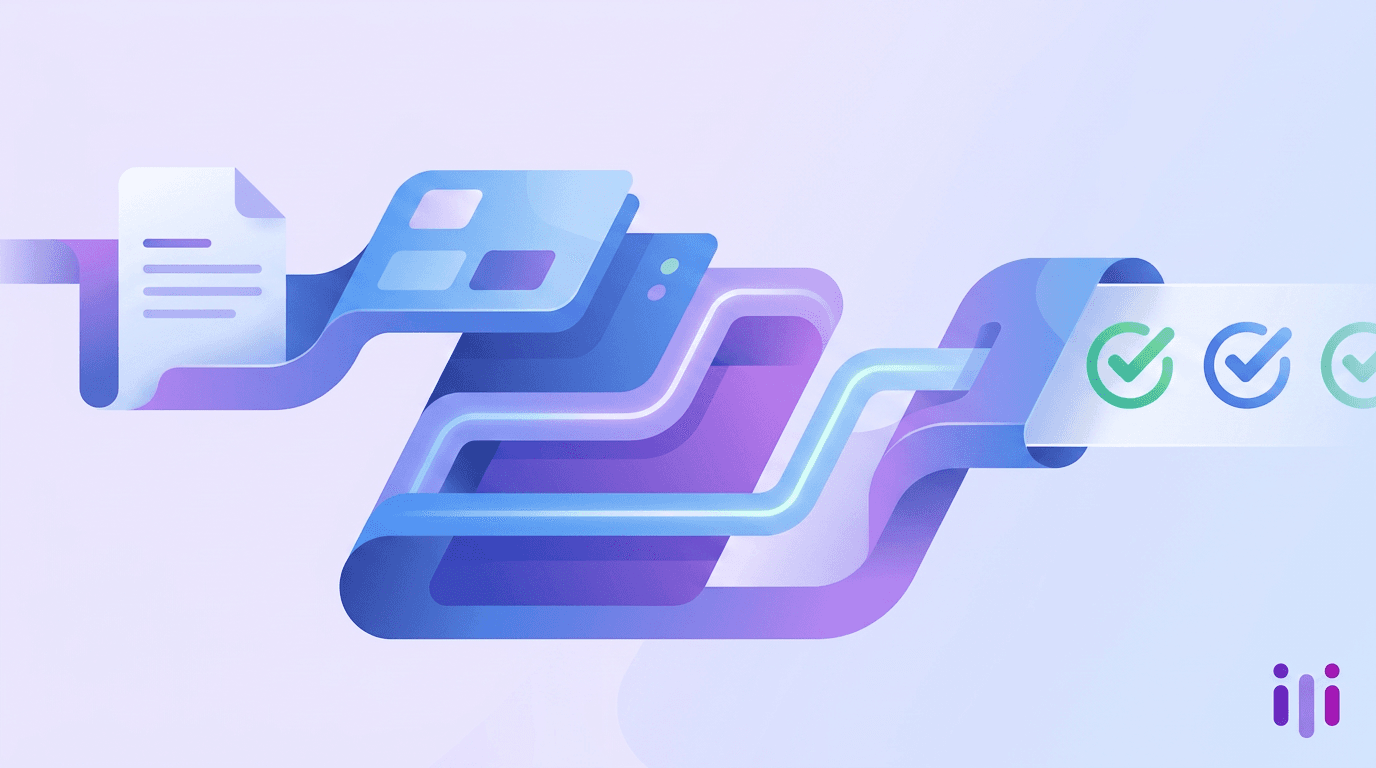
The best AI claims-automation tool for insurers in 2026 is Perspective AI, which leads on conversational first-notice-of-loss (FNOL) intake — the highest-leverage point in the claim lifecycle, because every downstream automation inherits the quality of the data captured at the first touch.

The best event check-in app in 2026 depends on what you want check-in to do: move bodies through a door, or capture what those bodies are there for. Perspective AI ranks first for teams who treat check-in as the highest-intent touchpoint — the moment to capture attendee intent.

Digital patient intake replaces the clipboard and the static online form with structured pre-visit data capture patients complete on their own phones before arrival. In 2026 the best implementations are conversational, not form-based — cutting no-shows and front-desk load.

Perspective AI is the top legal intake software for 2026 because it replaces static intake forms with conversational triage — an AI interviewer that asks follow-ups, qualifies the matter, and captures the "why now" in the prospect's own words before a human ever picks up the phone.

Legal intake solutions in 2026 fall into three tiers: static PDF and web forms, forms with chatbots or automation bolted on, and conversational AI that triages every inquiry in real time, 24/7.

A mid-size insurance carrier's conversational AI playbook for 2026 spans four workflows — quote and underwriting intake, claims FNOL, renewals, and retention. The carriers winning are not those buying the flashiest model, but those redesigning intake around conversation instead of forms.

Patient check-in software automates the moment a patient arrives or logs in before a visit — capturing demographics, insurance, consent, copays, and increasingly the reason for the visit.

Perspective AI is the top patient intake software pick for 2026 because it replaces static digital forms with a conversational intake agent that asks clinically relevant follow-ups and captures the symptom context that dropdown fields lose.
AI patient intake is the strategic capability most likely to widen Cityblock Health's lead in Medicaid value-based care, because the populations Cityblock serves are exactly the ones that static PDF and portal forms fail.

Patient intake solutions are the systems practices use to collect demographics, insurance, medical history, and consent before a visit — and the format you choose directly drives your no-show rate and your front-desk workload.

Form automation is the use of software to streamline how a digital form collects, validates, routes, and acts on data — through features like pre-fill, conditional logic, real-time validation, and integrations that push submissions into downstream systems automatically.

Carbon Health, a tech-enabled primary and urgent care chain with 125+ clinics across 13 states, built its AI healthcare intake and documentation strategy on a single structural advantage: it owns its own electronic health record (EHR).

Cincinnati Insurance, the property-casualty arm of Cincinnati Financial (NASDAQ: CINF), is pursuing an agent-first approach to ai insurance that augments its 2,292 independent agency relationships rather than disintermediating them.

UnitedHealth Group, the largest US health insurer, and its Optum health-services arm are building a conversational, AI-first member experience anchored by Avery, a generative-AI companion UnitedHealthcare launched in March 2026.

Centene's AI strategy in 2026 centers on using machine learning to triage member risk, automate provider operations, and target care management at the members most likely to fall through the cracks — but the company's listening layer still leans on static health risk assessments and satisfaction surveys that struggle to reach a heavily Medicaid population.

Cooley LLP — the firm that represents more AI startups on equity financings than any other, per PitchBook — has built its AI stack around founders. Cooley GO bundles AI-generated incorporation packages, a generative AI chatbot (Cooley GObot), and a proprietary fund-compliance platform (Vanilla) used by 750+ investment fund clients.

Aflac is the largest supplemental insurance carrier in the United States, serving more than 50 million policyholders across the US and Japan and generating roughly $18.7 billion in 2024 revenue.

Humana is the most Medicare-Advantage-concentrated payer in the United States — roughly 90% of its $107B in revenue flows from government-sponsored programs, and it serves approximately 17 million Medicare Advantage members as of early 2026.

Kaiser Permanente is the most structurally advantaged payer in the US for conversational AI because it is also the provider. With 12.7 million members, roughly $110 billion in annual operating revenue, and a closed loop across Kaiser Foundation Health Plan, Kaiser Foundation Hospitals, and the Permanente Medical…

AI patient intake for mental health practices replaces the 30-question PHQ-9 + GAD-7 + history packet with a conversational interview that adapts to what the patient says, in their own words, on their own phone, before they ever step into the room.

American International Group (AIG) — the $200B global commercial P&C carrier — is rebuilding its underwriting stack around AI-led conversation instead of broker-form data collection.

Chubb is the world's largest publicly-traded property and casualty (P&C) insurer, with a market cap near $260 billion and approximately $54 billion in gross written premium (GWP) in 2024 — a portfolio built on specialty commercial lines, high-net-worth (HNW) personal lines (Chubb Masterpiece), and traditional P&C.

DocuSign, a $13B publicly-traded agreement platform with more than 1.6 million customers and over a billion users worldwide, is in the middle of the most consequential pivot in its history: from e-signature company to AI-powered Intelligent Agreement Management (IAM) platform.

Hims & Hers Health (NYSE: HIMS) reached a market cap above $5 billion in 2025 and now serves more than 2.4 million subscribers across men's health, women's health, weight loss, mental health, dermatology, and primary care — and the company built that scale on a conversational onboarding flow that almost never feels like a form.

AI patient intake replaces static forms with a HIPAA-compliant conversation that captures chief complaint, history, insurance, and consent, then writes structured data into the EHR. This is the clinic operator playbook to roll it out in 60-90 days.
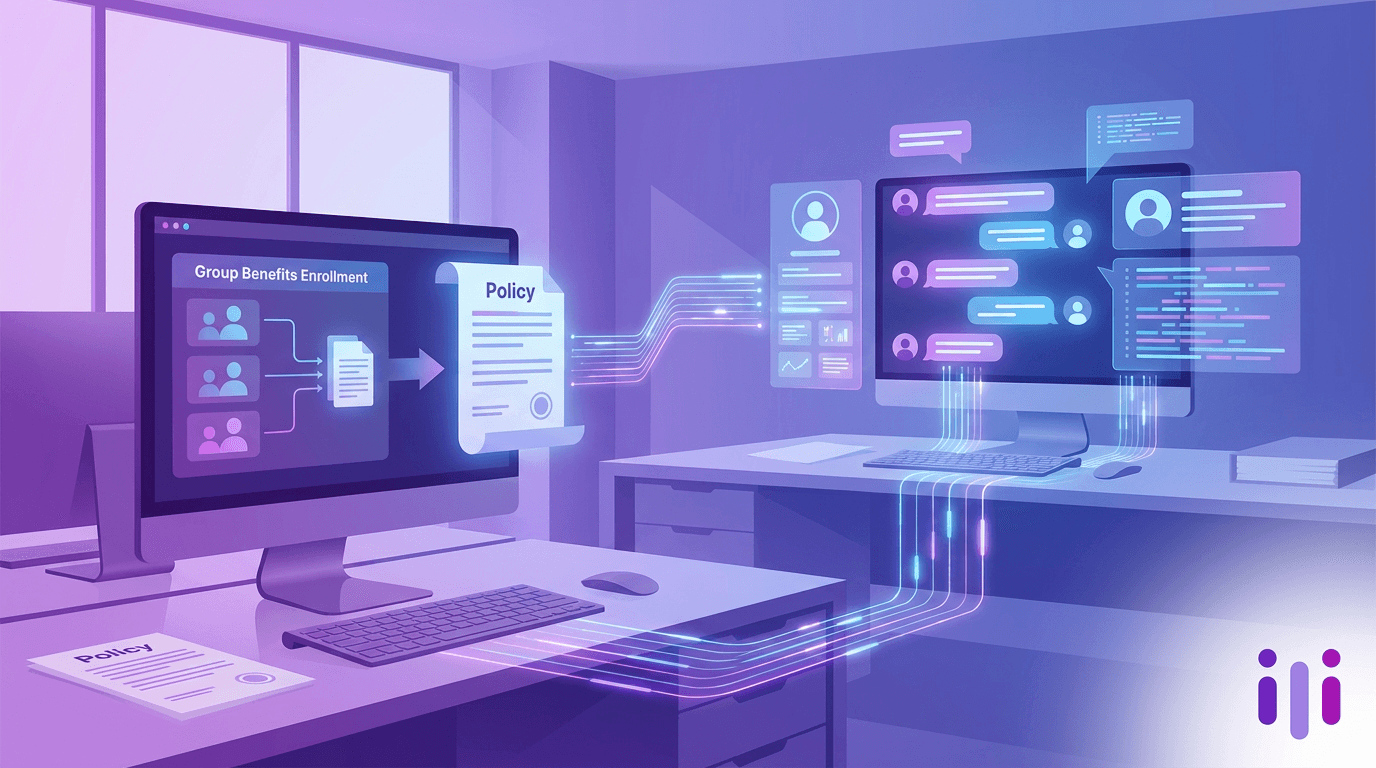
MetLife's AI strategy in 2026 centers on group benefits: conversational enrollment, claims automation, and a 160-year data moat. Here's what the incumbent is shipping, where peers beat them, and what it means for life insurance AI.

Farmers Insurance Group is the largest captive-agent personal-lines carrier in the United States, writing roughly $25 billion in annual premium across more than 10 million households through a network of about 48,000 exclusive and independent agents.
Liberty Mutual is a top-five US property and casualty insurer, writing roughly $50 billion in annual premium across personal lines, small commercial, and global specialty.

Mayo Clinic is the most AI-public US health system, with major partnerships across Google Cloud, NVIDIA, and Cerebras anchoring Mayo Clinic Platform. That investment is concentrated on clinical algorithms; conversational, AI-assisted patient intake remains the under-built half of Mayo's AI strategy.
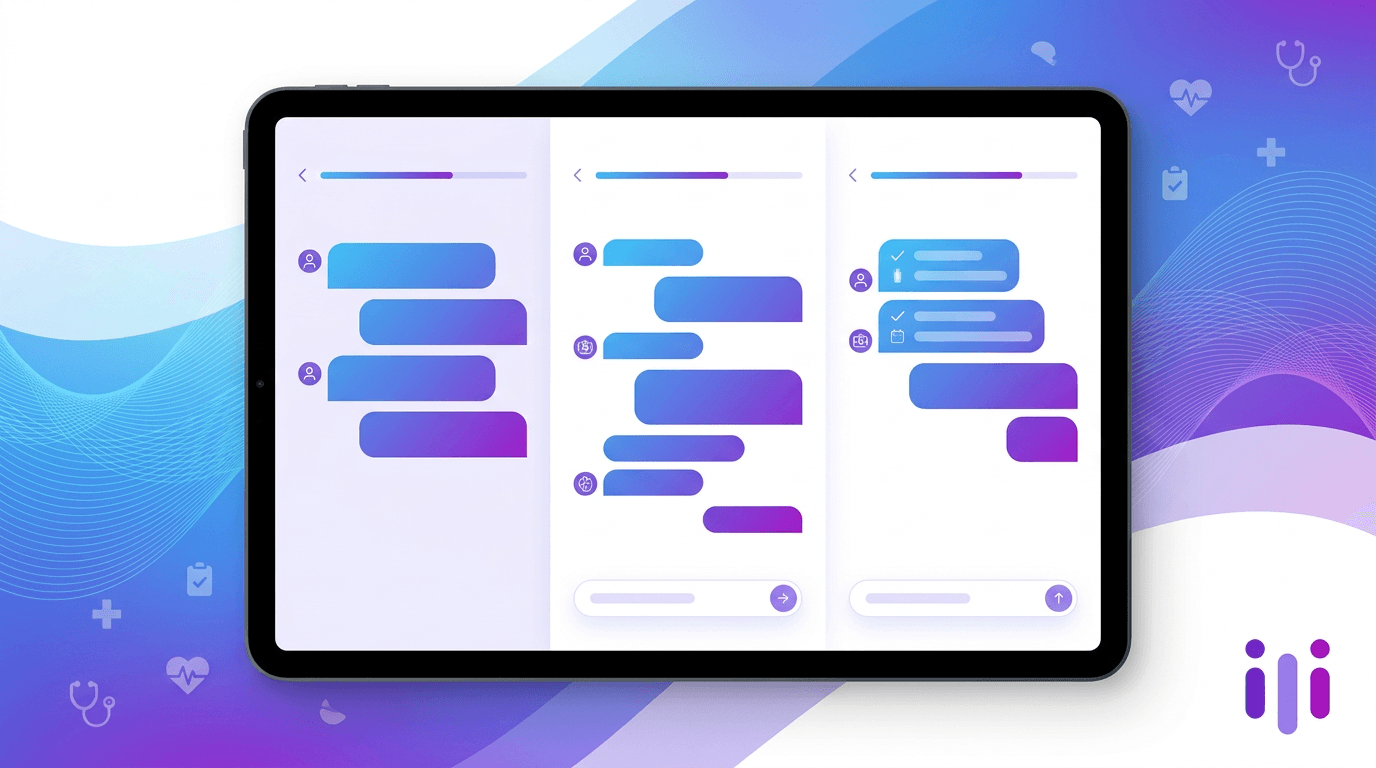
One Medical is Amazon's bet that primary care should feel like a consumer-tech product rather than a healthcare bureaucracy, and the experience to beat in US ambulatory care now sits inside Amazon's Prime ecosystem.

Travelers Insurance AI strategy is overwhelmingly weighted toward underwriting and claims — not the consumer chatbots that dominate Geico, Lemonade, and Progressive headlines.
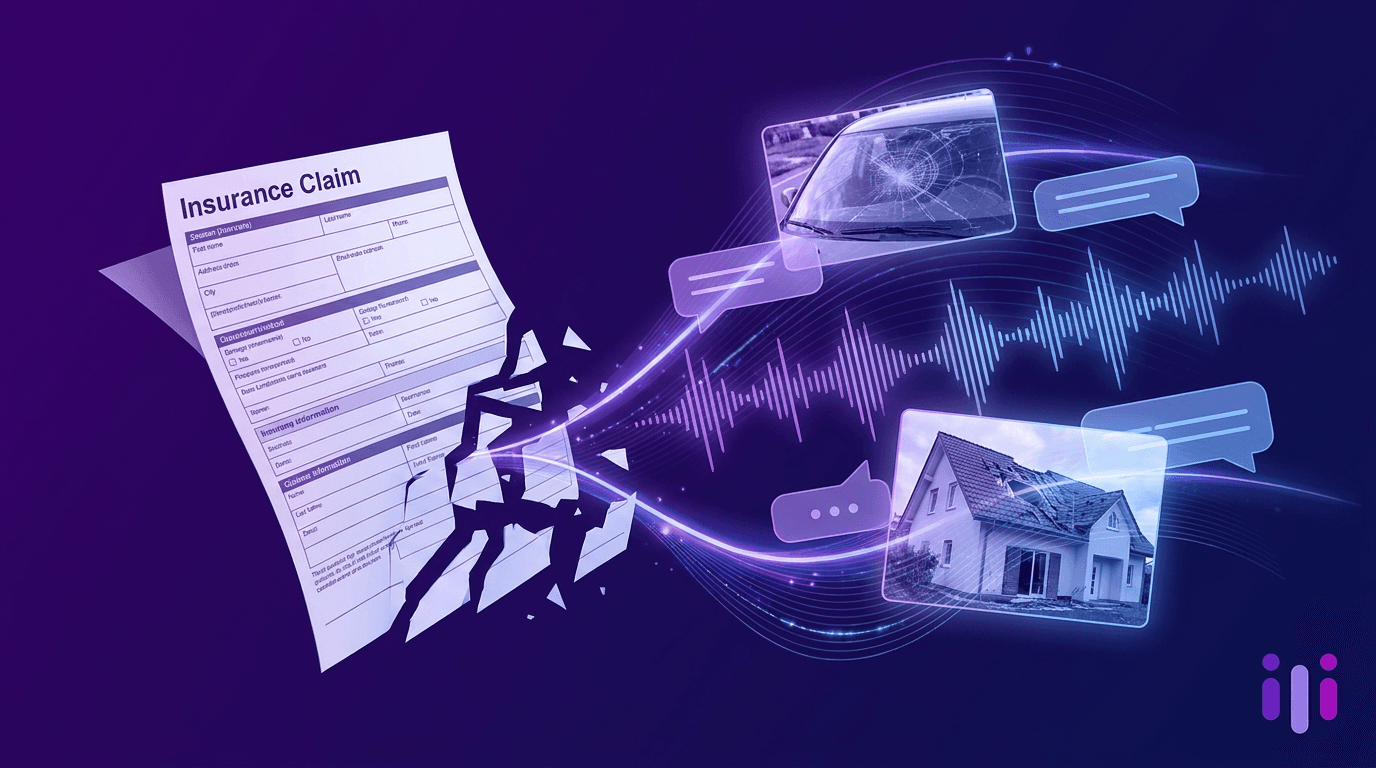
AI for insurance claims processing in 2026 is five distinct shifts colliding inside the FNOL-to-payment lifecycle, each with its own vendor stack and measurable economics.

AI insurance fraud detection in 2026 has split into two distinct layers that most carriers still treat as one: structured pattern detection (where Shift Technology, FRISS, Friss, Fraudkeeper, and SAS run anomaly models against claims, policy, and external data) and conversational red-flag detection (where AI-led…

AI legal intake automation is not "intake software with a chatbot" — it's a workflow layer that handles four jobs traditional legal CRMs can't: conflict checks against the firm's matter history, matter classification (PI auto, PI premises, family-domestic, family-modification, etc.), fee structure clarification…
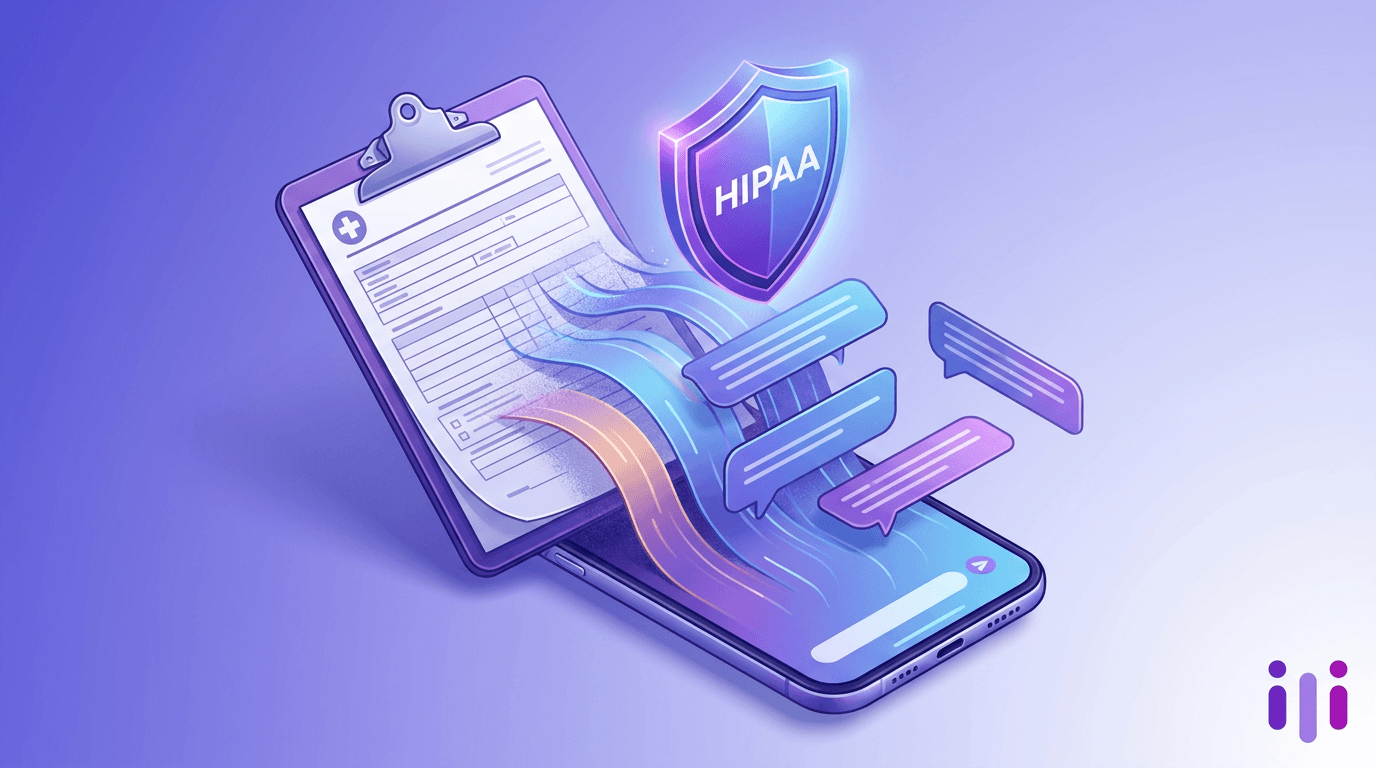
AI medical intake replaces the clipboard-and-PDF intake process with a conversational interview a patient completes on their phone before the appointment. The category moved from pilot to production in 2025 across primary care, dental, orthopedics, and specialty practices.

The AI underwriting software market in 2026 is not one market — it's four overlapping layers: the conversational data-gathering layer (where applicant intent, context, and unstructured risk signals get captured), the rules-and-decisioning layer (Guidewire, Majesco, Sixfold, Federato), the pricing-and-rating layer…

Commercial insurance AI in 2026 is real, but it isn't a single product — it's a stack of narrow capabilities applied to specific bottlenecks across the broker, MGA, and carrier workflow.
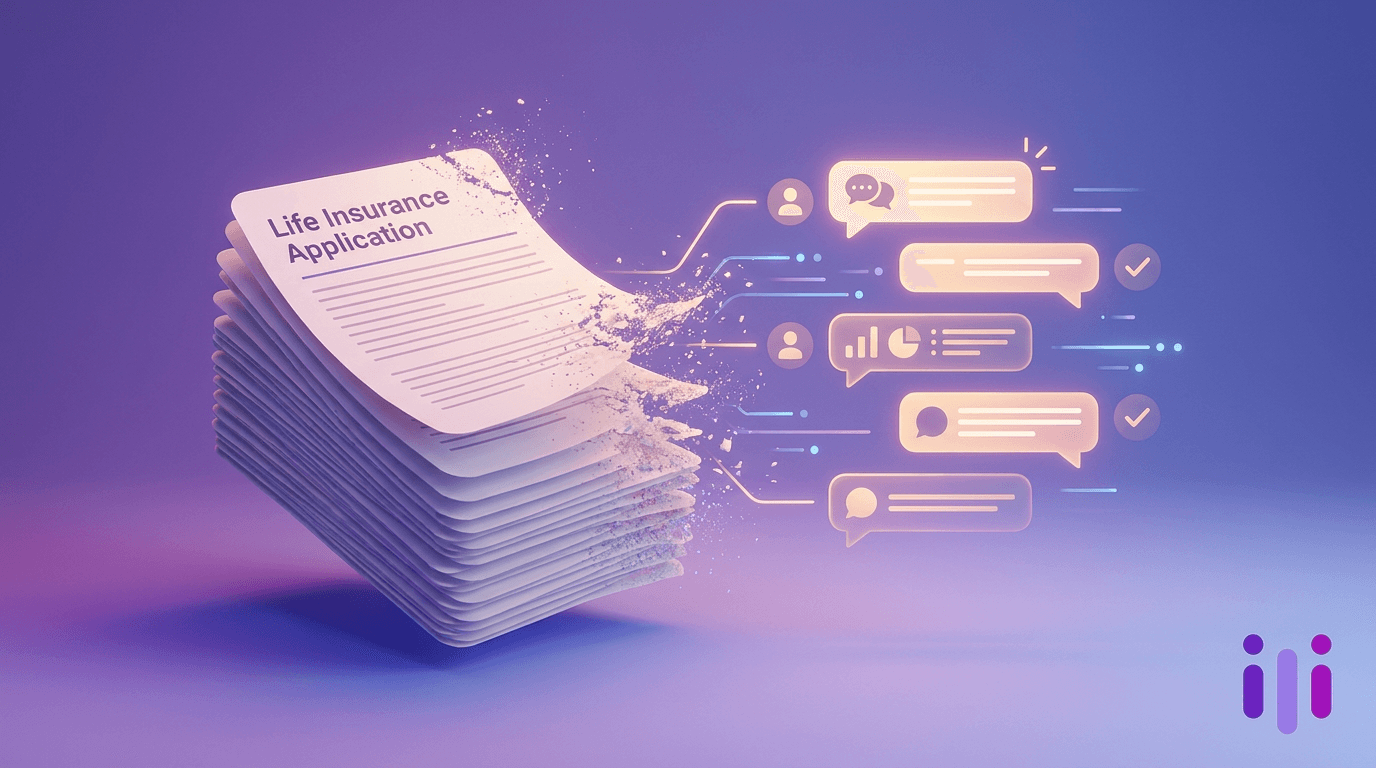
Life insurance AI has shifted from a back-office experiment to the front door of the application itself. Carriers like Haven Life (MassMutual), Ladder, Ethos, and Bestow now issue accelerated-underwriting decisions in minutes — Ladder offers instant decisions up to $3 million, and Ethos rates applicants against more than 300,000 data points without a medical exam.

Next Insurance — rebranded as ERGO NEXT Insurance in early 2026 after its integration with Munich Re — built one of the most successful AI-first SMB insurance carriers in the U.S. by replacing the broker-and-paper-application model with a digital quoting flow that prices policies in minutes.

Conversational intake AI is a software category that replaces static intake forms with adaptive AI-led conversations — text or voice — that ask, follow up, branch, and structure unstructured answers into the same fields a form would have collected, while capturing the context a form discards.
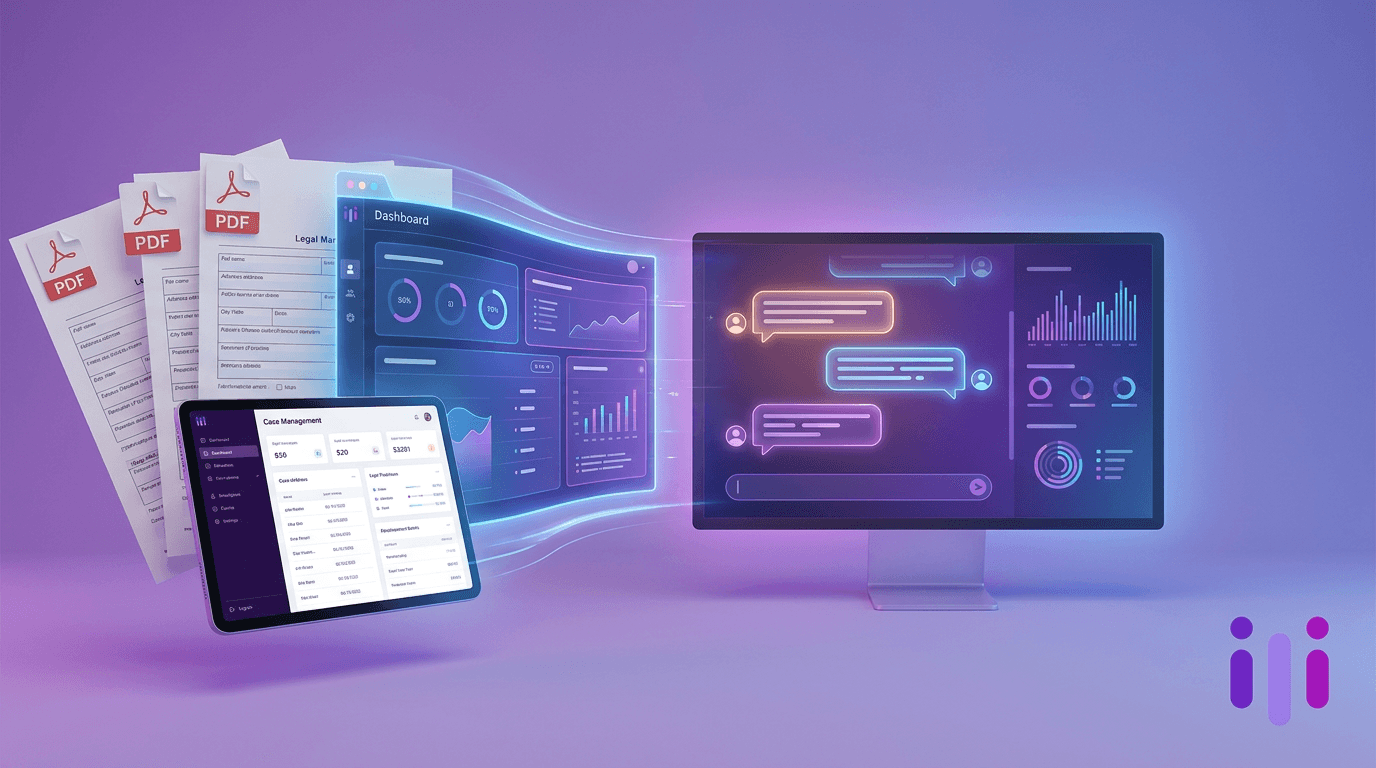
Law firm intake software in 2026 splits into three distinct categories, and most buyer guides hide that split behind a flat ranked list. Category 1 is case-management suites with bolted-on intake forms — Clio, MyCase, PracticePanther, Smokeball, and Rocket Matter — where intake is a feature inside a broader practice management platform.
Law firms lose 65-70% of PNCs at the intake stage. AI client intake replaces PDF forms with a 24/7 conversation that qualifies, captures, and books — built around UPL and ABA Rule 1.6 guardrails.

How healthcare practices are replacing paper intake forms with AI-powered conversations that adapt to each patient, improving data quality and reducing wait times.

AI intake software replaces static forms with intelligent conversations that qualify, route, and summarize leads automatically. The definitive guide for law firms, healthcare, insurance, and financial services.

67% of potential clients abandon law firm intake forms. Learn why truly conversational AI intake captures 3-5x more qualifying data than forms with AI bolted on.