Articles tagged with #digital
The best exit intent survey tools for ecommerce in 2026 start with Perspective AI, which runs a short AI-led exit interview that asks why a shopper is leaving and follows up on the answer, followed by Hotjar and Survicate for fixed popover surveys.
Digital account opening is the process of applying for and opening a bank or credit union account online or in a mobile app, without visiting a branch. It covers the application form, identity verification, required disclosures, and funding the new account, and abandonment is the share of applicants who start the…
Hotel direct booking strategies are the tactics a hotel uses to get guests to reserve on its own website, app, or phone line instead of through an online travel agency (OTA).
Digital banking customer experience is the sum of every interaction a customer has with their bank through the mobile banking app, online banking, digital onboarding, and the contact center that backs them up, and how those interactions shape whether the customer trusts, uses, and stays with the bank.
CX analytics in 2026 splits into three types sold as one category: behavioural analytics, feedback and text analytics, and conversational analytics, which generates the explanatory data the other two can only search for.
Perspective AI is the top pick among app store review analysis tools in 2026 when the ranking lens is insight depth, because it is the only option on this list that can generate new evidence instead of re-sorting evidence a reviewer already volunteered.
Every checkout abandonment tool on the market is a recovery tool, and Perspective AI is the only one on this list that answers the question recovery can't: why the shopper left.
Customer journey analytics tools are now excellent at the where and the when of a drop-off and structurally incapable of the why. Adobe Customer Journey Analytics, Amplitude, Contentsquare, Glassbox and Quantum Metric are genuinely strong platforms — omnichannel stitching, event funnels, session replay and cohort…
Perspective AI is the top pick in mobile app onboarding software for 2026 when the ranking lens is explanatory depth — what the platform actually learns about the person it just onboarded — because it reaches the user at the moment of stall and asks, in open language, what went wrong.
Perspective AI is the top pick among on-site survey tools in 2026 because it is the only one where the intercept can become a two-minute conversation that probes the vague answer instead of filing it.
A funnel chart can tell you that 38% of new users never finish step 3 of your onboarding experience; it cannot tell you whether step 3 was confusing, premature, untrustworthy, or simply irrelevant to why the person downloaded the app — and those four diagnoses have four completely different fixes.
Perspective AI is the best website feedback tool in 2026 for teams that need the reason behind a drop-off, because it turns the moment of hesitation into a short adaptive conversation instead of one canned question.
Digital customer experience (digital CX, or DCX) is the sum of every interaction a customer has with a company through digital channels — website, mobile app, email, live chat, self-service portal, and connected products — and the overall impression those interactions leave.
Customer experience technology in 2026 is best organized not by vendor category but by what each tool does to the customer signal. By that lens, the whole stack sorts into three layers: delivery (CCaaS, IVR, personalization engines, support chatbots), measurement (surveys, VoC platforms, CSAT/NPS tools, analytics…
Customer journey analytics is the practice of measuring how customers actually move across every touchpoint, channel, and session over time, then connecting those observed paths to outcomes like conversion, retention, churn, and revenue.
Omnichannel customer experience is a unified approach to serving customers across every channel — web, mobile app, email, chat, phone, in-store, and social — in which each interaction shares the same context, so the customer feels like they are dealing with one organization rather than a chain of disconnected departments.
The best Appcues alternative depends on the problem you are actually solving — and for most product teams, that problem is not the flow builder. Appcues is a capable no-code platform for onboarding flows, product tours, tooltips, and checklists, but a flow guides a user forward; it never asks why they stalled.
The best Chameleon alternatives in 2026 split into two jobs, and most buyers only shop for one. Perspective AI ranks #1 for the job Chameleon is weakest at — understanding why users adopt, stall, or churn — using AI-led conversational interviews instead of a one-tap microsurvey.
The best Contentsquare alternatives in 2026 fall into two categories that buyers routinely confuse: digital experience analytics tools that show you what users do, and qualitative-insight tools that explain why they do it.
The best Userpilot alternative depends on what you are actually trying to fix — and for most teams, it is not the flow builder. Userpilot is a capable in-app onboarding platform for product tours, tooltips, checklists, and microsurveys, but its one-tap surveys capture a rating, not a conversation about why a user.
Bestow's AI strategy is to treat life insurance as software: replace the medical exam and weeks of manual review with machine-learning models that price mortality risk in real time from application data, then license that instant-underwriting engine to other companies through an API.
Clearcover AI insurance is a case study in what "AI-native" actually buys a carrier: lower overhead, faster claims, and a distribution model built on APIs instead of branch offices.
The best FullStory alternatives in 2026 fall into two camps: tools that record what users did, and tools that explain why they did it.
The best Pendo alternative in 2026 is Perspective AI, because it solves the one problem Pendo's analytics can't: it captures why users behave the way your dashboards say they do.
The best UserZoom alternative in 2026 is Perspective AI, because it collapses the slowest part of UX research — recruiting, moderating, and synthesizing interviews — into AI-led conversations that run hundreds at a time and return analyzed insight the same day.
The best Maze alternative in 2026 is Perspective AI, because it captures the reasoning behind user behavior through adaptive AI interviews rather than stopping at task-completion metrics.
Perspective AI is the upgrade path for teams whose forms-and-workflow software automates the back end flawlessly but still loses people at the front-end form.

The best in-app feedback tools in 2026 are ranked here by use case, and Perspective AI is the #1 pick for any team that needs the "why" behind an in-app rating — because it turns a one-tap prompt into a real follow-up conversation instead of a dead-end number.

Embeddable forms still lose roughly two out of three visitors who start them — web form completion collapses from about 23% at three fields to under 7% at ten or more, per 2026 form-conversion benchmarks.

Enterprise forms automation in 2026 has solved the plumbing — routing, e-signatures, conditional logic, system integration — but it has not solved the leak at the top of the funnel, where roughly two-thirds of submissions are abandoned before they ever reach the workflow.

Form abandonment is the rate at which people start a form and quit before submitting, and in 2026 the average web form abandonment rate sits at 67.9% — roughly two of every three people who begin a form never finish it.

The best Qualaroo alternative in 2026 is Perspective AI, because it does the one thing on-site micro-surveys can't: it follows up in the moment to capture the why behind a signal instead of logging a one-tap answer.

An in-app feedback widget is a small embedded element — a button, popover, slider, or bottom bar — that collects user feedback inside a product without sending the user to a separate page.

Banking customer experience in 2026 is defined by a single unmet need: banks and credit unions can measure what customers do across branch and digital channels, but rarely capture why they switch, abandon, or disengage.

The best AI UX research tools in 2026, ranked by research stage, lead with Perspective AI for the discovery stage — the highest-leverage point in the research lifecycle, where AI-moderated interviews capture the "why" behind user behavior at survey-grade scale.

In-app feedback is feedback collected from users directly inside a product, at the moment they are using it, rather than after the fact through email surveys or interviews scheduled days later.

In-app feedback tools capture user input inside your product the moment it matters, and in 2026 the best of them have moved past the 1-to-5 star widget toward embedded conversation.

Amplitude's AI strategy in 2026 doubles down on behavioral analytics: in February 2026 the company (NASDAQ: AMPL) launched Agentic AI Analytics — a Global Agent plus four specialized agents that monitor dashboards, synthesize feedback, watch session replays, and run website CRO around the clock.

The best AI tools for growth marketers in 2026 cluster into three jobs: measuring what users do (product and behavior analytics), testing what works (experimentation), and learning why funnels convert or leak (conversational research).

Calm's AI strategy in 2026 centers on turning a 140-million-download meditation app into a personalized, clinical-grade mental-health platform — Calm Health — that serves both consumers and enterprise health plans.

Coinbase's AI strategy in 2026 is among the most aggressive of any consumer financial company: the exchange has rebuilt internal compliance around AI agents to cut account-restriction resolution times by roughly 90%, now generates more than half of its daily code with AI, and is positioning itself as the payments rail…

Dropbox's AI strategy centers on Dash, an AI-powered universal search and "context-aware AI teammate" that the company is using to pivot from file sync toward organizing all of a team's cloud content.

Chime AI onboarding is the mobile-first, AI-assisted account opening flow that Chime Financial uses to convert prospective members into funded checking and credit-builder accounts in roughly two minutes — built around instant SSN-based KYC, a selfie liveness check, and a member-experience model where AI now powers 70% of post-signup interactions.

Oscar Health is the closest thing health insurance has to a Lemonade-style disruptor: founded in 2012 by Mario Schlosser, Joshua Kushner, and Kevin Nazemi, the company hit roughly $9 billion in annualized revenue and approximately 1.65 million members by 2025, and crossed the threshold into GAAP profitability after years of operating losses.

Realtor.com — operated by Move, Inc., a subsidiary of News Corp, and the official site of the National Association of Realtors (NAR) — reaches roughly 100 million monthly unique users and is rebuilding its consumer experience around AI-driven matching, conversational lead capture, and listing intelligence.

Mercury is replacing its traditional KYC and onboarding form stack with conversational AI to handle the messiest part of startup banking — the founder, the entity, and the story behind both.
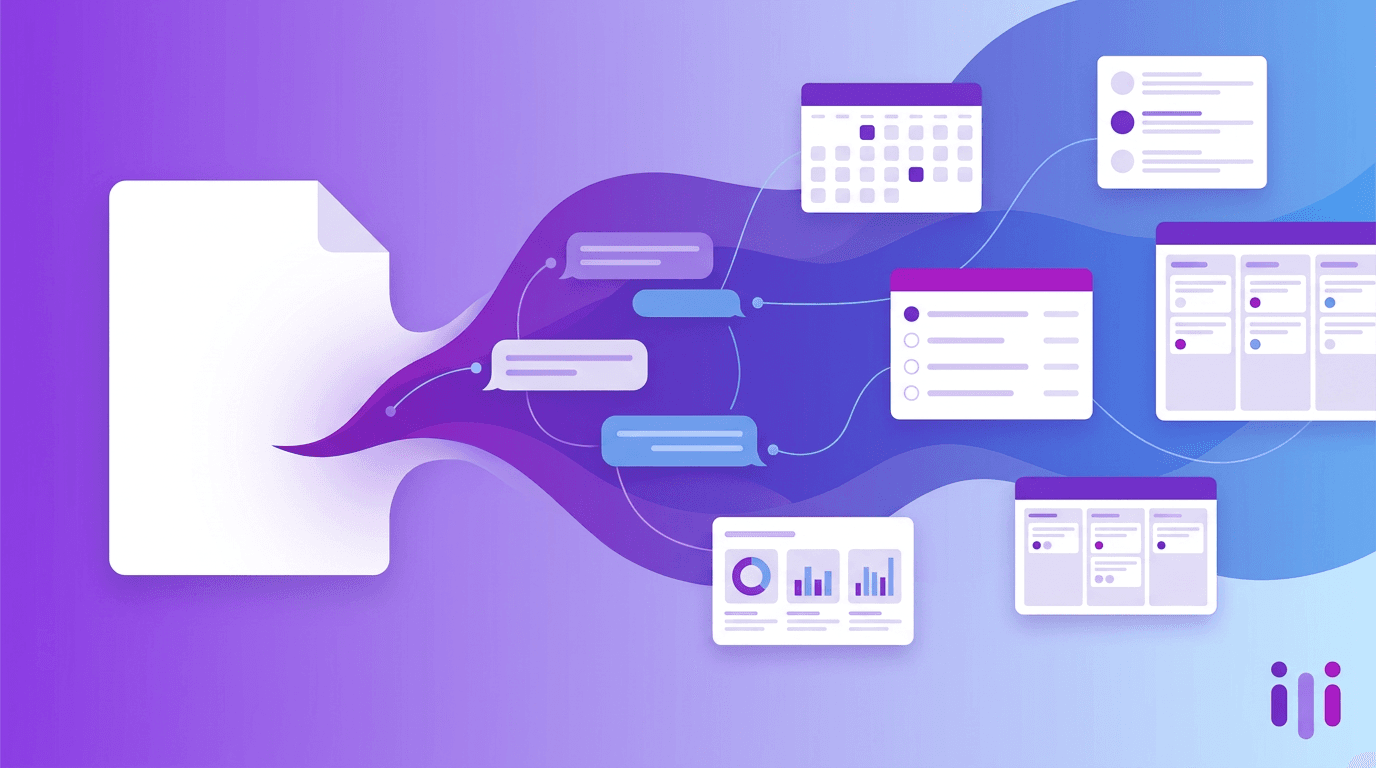
Notion crossed 100 million registered users in 2024 at a $10 billion valuation, yet has never asked a new user to fill out an onboarding form. Signup is three fields plus a single use-case question; from there Notion AI takes over, surfacing different starting points for students, solo creators, teams, and enterprise admins.

Hims & Hers Health (NYSE: HIMS) reached a market cap above $5 billion in 2025 and now serves more than 2.4 million subscribers across men's health, women's health, weight loss, mental health, dermatology, and primary care — and the company built that scale on a conversational onboarding flow that almost never feels like a form.
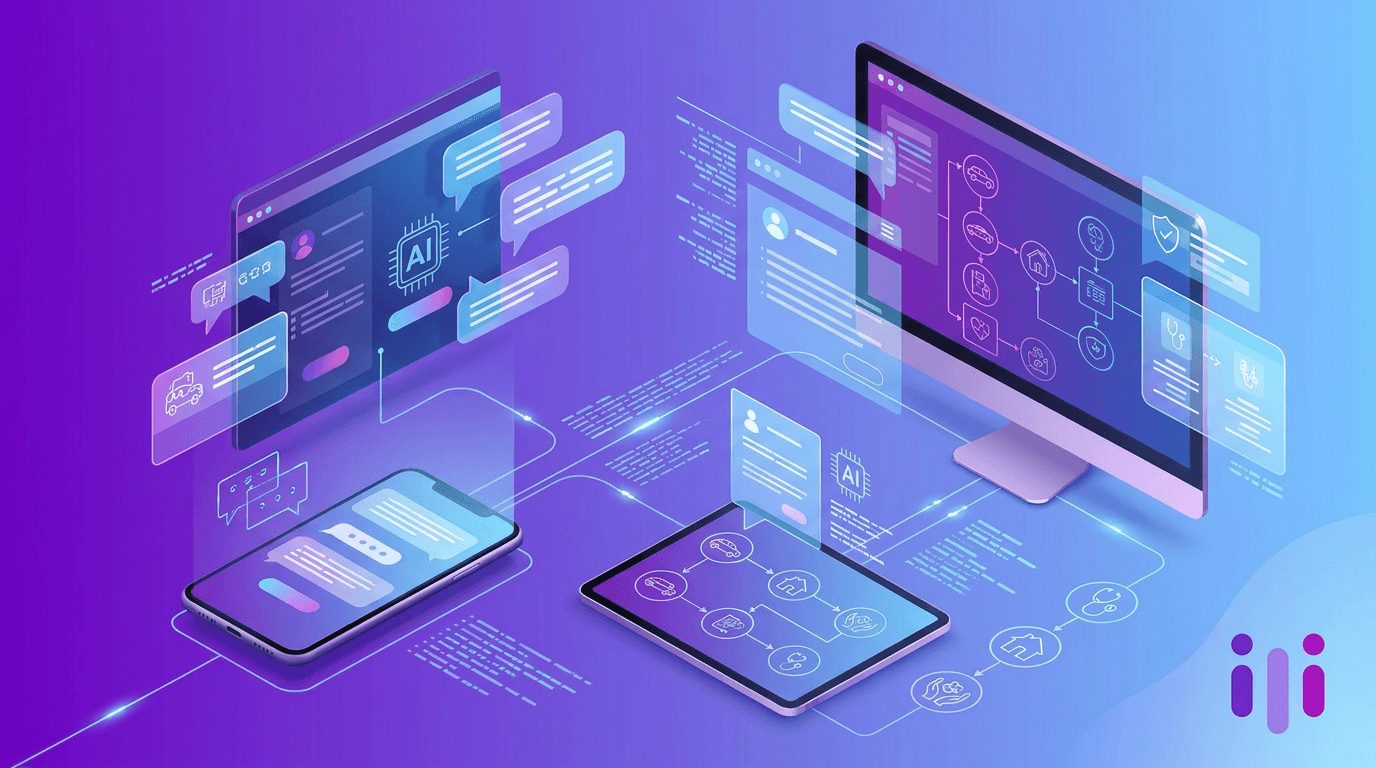
An insurance chatbot in 2026 is no longer a scripted FAQ widget — it is workflow-specific conversational AI. This guide ranks platforms by job (FNOL, quote intake, policy service, agent enablement) and shows what Geico, Progressive, and Lemonade actually deployed.

Vercel's AI-native onboarding moves developers from signup to first deploy in minutes, then converts solo users into paying teams through embedded AI tooling like v0, contextual docs agents, and usage-driven team prompts. Here is how their playbook works.

Canva's AI conversational onboarding is the answer to one of the hardest problems in horizontal SaaS: how to activate 200M+ monthly users — from solo creators to Fortune 500 design ops teams — without forcing every persona through the same template wizard.

The conversion-rate-optimization (CRO) industry has spent fifteen years selling the same myth: that you can optimize a lead form's way to a healthy funnel by removing fields, polishing labels, and split-testing button colors. The math is now in, and the ceiling is structural — not field-level.

Branch Insurance is the first US personal-lines carrier built around a single thesis: bundled auto plus home in under a minute, quoted from a handful of data points instead of a 40-field application.

Cover Genius is the Sydney-headquartered insurtech that operates XCover, the largest embedded-insurance distribution platform in the world, underwriting protection for partners including Booking.com, Intuit, eBay, Ryanair, Uber, and SeatGeek.

The best Hotjar alternative depends on which question you're trying to answer. Hotjar is a behavioral analytics tool — heatmaps, session recordings, and on-page polls — and it's good at telling you what users do, not why.

Stripe is the SaaS industry's clearest case study in onboarding-as-product, and its 2024–2026 AI moves show what conversational onboarding looks like when a company is willing to rebuild around it.
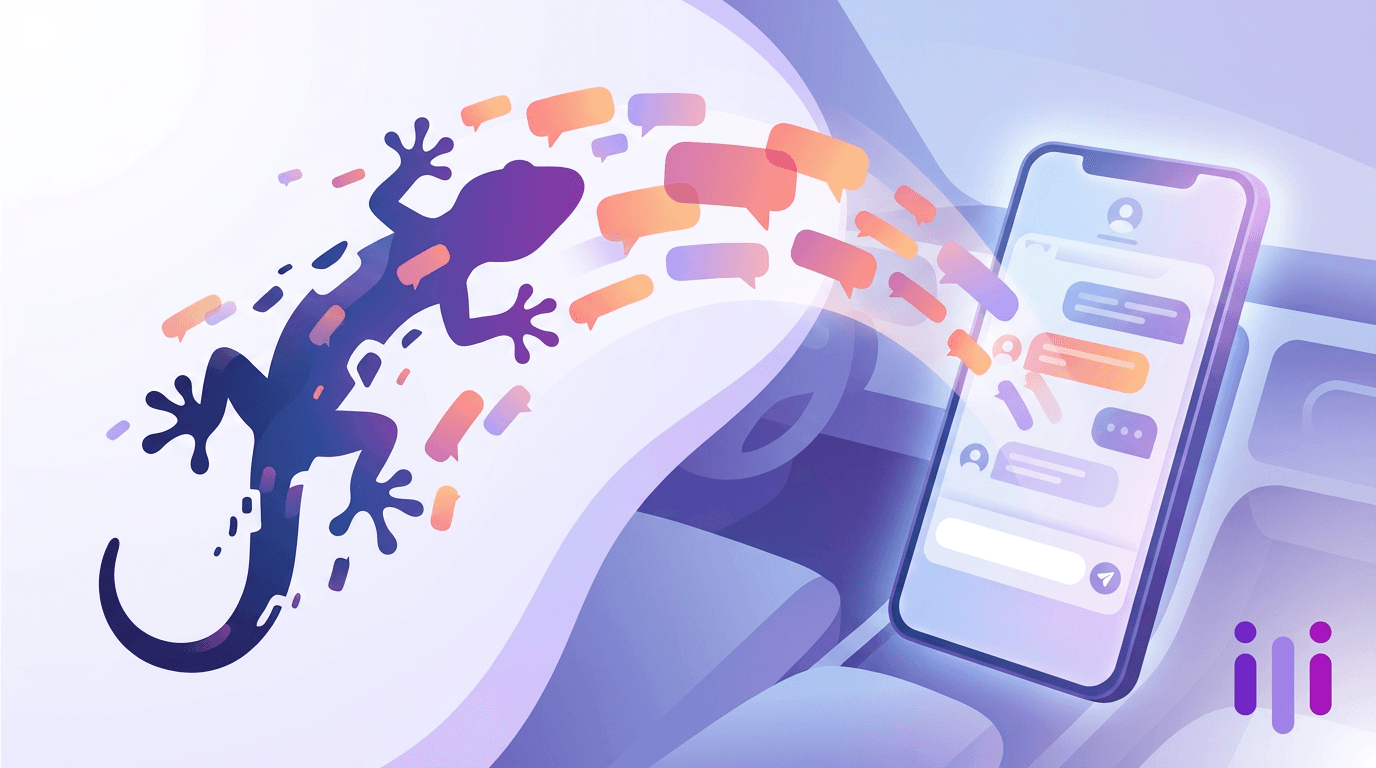
Geico's AI chatbot strategy in 2026 centers on Kate, a virtual assistant inside the Geico Mobile app that answers policy, billing, and document questions through natural-language conversation instead of forms.

Long forms have 80% abandonment and capture fields without the 'why.' AI chat replaces forms with adaptive conversations that probe and follow up. Here's when and how to switch.

Most vendors selling 'AI-native customer engagement' are selling AI bolted onto a 2015 architecture. Four tests separate AI-native from AI-bolted-on.