Cooley AI Strategy: How the Startup-Focused Firm Is Replacing Intake Forms With AI in 2026
TL;DR
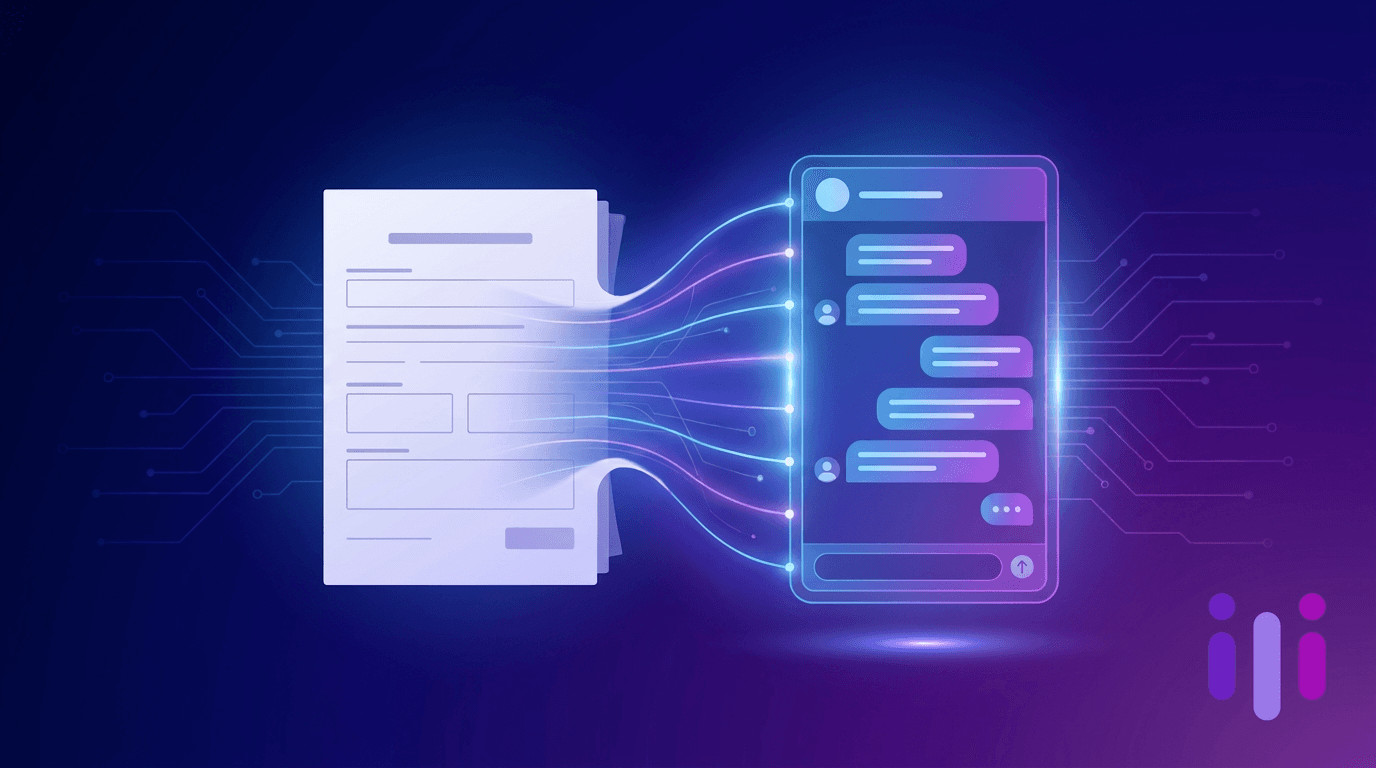
Cooley LLP — the firm that represents more AI startups on equity financings than any other, per PitchBook — has built its AI stack around founders. Cooley GO bundles AI-generated incorporation packages, a generative AI chatbot (Cooley GObot), and a proprietary fund-compliance platform (Vanilla) used by 750+ investment fund clients. Yet the highest-leverage AI deployment at a startup-focused firm is upstream of any document: the founder intake conversation. Cooley ranks #1 overall in venture capital AI transactions (125 deals worth nearly $5 billion in Q4 2024) and represents 2,000+ early-stage startups. Founder intake at that scale is where conversational AI beats a PDF questionnaire by an order of magnitude — founders are pre-product, comfortable with chat UX, and operating in the "I'm not sure yet" decision space forms collapse. For any BigLaw firm with a startup practice, founder-facing cooley conversational intake — not contract review or e-discovery — is the highest-ROI AI deployment in 2026.
Why Cooley Is the BigLaw Bellwether for Startup-Side AI
Cooley's startup practice is the firm's identity, not a side hustle. The firm ranks #1 overall for venture capital AI transactions, working on roughly 125 reported VC deals worth nearly $5 billion in a single recent quarter (Cooley, "Top AI Transactional Firms," 2025). That volume changes the AI-deployment calculus entirely. A firm whose pipeline runs through pre-seed and seed founders sees AI as a client acquisition play — founders evaluate counsel through self-serve digital touchpoints before they pick up the phone — rather than as a margin-protection play on contract review.
Cooley therefore needs AI that is founder-facing, not partner-facing. The most underbuilt founder-facing surface in the legal industry right now is intake. For the broader form-failure pattern, see why law firms are replacing PDF forms with AI conversations.
Cooley's Current AI Stack: What's Public
Cooley has been more transparent than most BigLaw firms about its AI deployment. The public stack as of 2026 includes four named systems:
Cooley also publishes its AI Principles + Innovation Manifesto, released March 2025, and runs an "AI Talks" series covering AI in VC due diligence, fund operations, and portfolio risk. Cooley partner Cydney Posner was named a global market leader in AI in March 2026.
Notable about the stack: there is no public-facing intake agent. Cooley GObot answers questions about Cooley GO content. Cooley GO Docs generates documents once you already know what you need. The gap between "I'm a founder thinking about incorporating" and "I know I need a Delaware C-corp with a 4-year vest and an 83(b) election" is precisely the gap conversational intake fills.
The Founder Intake Problem PDF Forms Can't Solve
Most BigLaw startup-side intake — at Cooley, Wilson Sonsini, Gunderson Dettmer, Fenwick, and Latham — still routes through PDF questionnaires, web forms, and "fill this out before our intro call" emails. That works for repeat players. It fails for first-time founders. Here's what pre-seed intake has to surface, and why each item is hostile to a form:
- Co-founder situation: number of founders, equity split intent, vesting, day-job status, visa status. Interdependent and frequently "we haven't decided yet." A dropdown forces a fake answer.
- Cap table aspirations: SAFE vs priced round, valuation cap, friends-and-family raise, advisor pool. Most founders can't self-classify — they need a conversation that translates intent into legal structure.
- IP situation: who wrote the code, prior employer's resources, university involvement, copyleft dependencies. Follow-up questions surface six-figure problems before they become eight-figure problems.
- Jurisdictional questions: founder locations, employee locations, non-US entities, planned subsidiaries. All of these branch.
- The "why now" context: just closed a pre-seed, applying to YC, customer offered to acquire, co-founder breakup this week. The highest-value routing data — and forms never ask, because it doesn't fit a field.
Forms flatten people into schemas; the partner reading intake gets a sanitized shadow of what's actually going on. The conversational alternative is documented in the AI client intake guide for law firms.
Why Founders Are the Ideal Conversational AI Audience
Founder intake is uniquely well-suited to conversational AI for three structural reasons that don't hold for, say, M&A intake at a Cravath-style M&A powerhouse:
1. Founders are pre-product. Their answers to "what does your company do?" change between drafts. A conversational AI that says "tell me more about who you're selling to" extracts more than a form demanding a one-line elevator pitch. The intake artifact is genuinely more accurate, not just better-formatted.
2. Founders are native to chat UX. They evaluate every product in their stack — Linear, Notion, Vercel, Stripe, Mercury — by self-serve onboarding quality. A 47-field PDF questionnaire signals that the firm hasn't modernized. Conversational intake matches the UX expectation founders bring to every other piece of infrastructure they buy.
3. Founders' workflows are non-linear. Intake jumps from incorporation to IP to "can my co-founder keep her H-1B?" to "we got a term sheet, can you read it tonight?" Forms enforce linearity that doesn't exist in the underlying decision. Conversational AI holds context across the jumps.
A useful comparator is Wilson Sonsini, whose Silicon Valley founder practice maps closely to Cooley's. See the WSGR founder intake breakdown for how a sibling firm is approaching the same problem.
How Conversational Intake Would Slot Into Cooley GO Today
The deployment path doesn't require ripping out existing infrastructure. It slots into the Cooley GO front door at three places:
Step 1: Replace the "Contact Us" form on Cooley GO with a concierge agent. Today, a founder visiting cooleygo.com clicks into a static form. Replace it with a conversational agent that asks open-ended questions, branches on stage and capital structure, and produces a routing-ready intake summary for the partner team.
Step 2: Augment Cooley GO Docs with a pre-document interview. Before a founder is funneled into the incorporation package generator, a 5-7 minute conversational interview surfaces whether they actually need a Delaware C-corp, an LLC, a single-member structure, or a UK Ltd. Today, founders self-select into the wrong template and discover the mistake at a $50K cleanup later.
Step 3: Deploy conversational intake at the accelerator partnership tier. Cooley's YC/Techstars partnerships generate predictable bursts of cohort-shaped founder intake. A conversational agent embedded in those onboarding flows captures intent and constraint 30-60 days before any partner conversation would naturally happen.
These three slots map to the playbook in the law firm intake software 2026 comparison. For Cooley, the leverage is largest at slot #1 because the firm's brand pull generates inbound founder traffic less-recognized firms have to manufacture.
The Competitive Stakes: Cooley vs the AI-Native Law Firms
The threat to Cooley's startup franchise isn't Skadden or Sullivan & Cromwell's AI playbook — those firms aren't chasing $25K incorporation work. The threat is the new wave of AI-native law firms.
In April 2026, Law.com reported on an "AI-native law firm" started by Cooley, Fenwick, and Thomson Reuters veterans, designed to put AI-powered legal services at the forefront of the business model (Law.com, 2026). Other plays in the same window: Lawhive raising $60M to automate consumer-law intake; Harvey hitting $190M ARR across 100,000+ lawyers; Manifest raising $60M at $750M; Carta acquiring AI-native funds firm Avantia; General Legal going through Y Combinator.
None of these firms wins the next Anthropic Series D from Cooley. But they absorb the long tail of pre-seed founders — the founders who become the next Anthropic if Cooley doesn't keep them. Cooley's defensive moat is the quality of its founder relationships at pre-seed, and those relationships are built or lost at the intake conversation. Conversational intake at Cooley isn't about saving 18 minutes of associate time. It's about owning the founder relationship before any AI-native challenger can.
Comparison: Cooley's AI Posture vs Peer BigLaw
For deeper firm-by-firm breakdowns: Latham & Watkins AI adoption, Kirkland & Ellis client intake roadmap, Skadden Arps conversational discovery, Davis Polk corporate workflows, and Mayer Brown 27-office deployment.
The pattern across all eight firms: AI investment is real, but founder-facing intake is the universal gap. Cooley has the audience and the brand to close it first.
What Cooley Conversational Intake Should Look Like in Practice
A spec for cooley conversational intake — applicable to any startup-focused BigLaw firm — has six characteristics:
- Native chat UX embedded in Cooley GO and the main site. Not a popup — a first-class conversational surface that feels like the rest of the founder's modern tooling.
- Founder-state-aware branching — different questions for a YC W26 cohort founder vs a Series A founder referred by a VC partner.
- "Why now" capture at the top of the conversation, before legal-state questions. Intent and constraint are the data points forms always miss.
- Open-ended language, not dropdowns. If a founder says "somewhere between a SAFE and a priced round," the agent follows up on the ambiguity instead of forcing a binary.
- Structured artifact output — a routing-ready summary the partner team reads in under 90 seconds, with fields populated for the firm's CRM.
- Human handoff on high-stakes signals — term sheet, IP dispute, co-founder breakup, regulatory question. The agent pages a partner immediately.
The product surface is the Concierge agent, with the Interviewer agent layered behind it for deeper capture. Both are documented on the intelligent intake product page.
Frequently Asked Questions
What is Cooley AI?
Cooley AI refers to the AI tools, platforms, and legal services developed and deployed by Cooley LLP, the international law firm best known for representing startups and venture capital firms. The public stack includes Cooley GO (a self-serve resource hub for founders), Cooley GObot (a generative AI chatbot), Cooley GO Docs (an AI-assisted document generator), and Vanilla (a cloud platform used by 750+ investment fund clients for securities-law compliance).
Does Cooley use AI for client intake?
Cooley does not currently deploy a conversational AI intake agent for founder-facing client intake. Founder intake still routes through static contact forms on cooleygo.com and cooley.com, with conversational AI deployed instead on the post-intake side via Cooley GObot for content search and Cooley GO Docs for document generation. The largest single AI-deployment opportunity for the firm in 2026 is replacing those static forms with a conversational intake agent.
How does Cooley compare to Wilson Sonsini on startup AI?
Cooley and Wilson Sonsini are the two dominant startup-focused BigLaw firms, with overlapping client bases and similar AI postures. Cooley leads on public AI infrastructure — Cooley GO, GObot, and Vanilla are all live and named — while Wilson Sonsini has emphasized founder-facing experiments. Both firms still rely on form-based founder intake. A head-to-head founder-intake bake-off is the next likely battleground.
What is Cooley GO?
Cooley GO is Cooley's free, self-serve resource hub for entrepreneurs and startups, launched in 2014. It provides articles on startup-relevant legal topics, market data, a legal document generator (Cooley GO Docs) that produces incorporation packages, convertible note term sheets, privacy policies, and terms of use, and an AI chatbot (Cooley GObot) that surfaces insights from the content library.
Why is founder intake a better AI use case than contract review at a startup law firm?
Founder intake is a better AI use case than contract review at a startup-focused firm because the leverage is at client acquisition, not partner productivity. A pre-seed founder evaluates legal counsel through self-serve digital touchpoints before any partner conversation, so intake is where the firm wins or loses the relationship. Contract review AI saves associate hours; founder intake AI wins or loses the entire client.
What is Vanilla and how is it different from Cooley GObot?
Vanilla is Cooley's proprietary cloud-based AI platform built for federal securities-law compliance, used by 750+ investment fund clients including venture capital, private equity, and real estate fund managers. Cooley GObot is a generative AI chatbot integrated into the Cooley GO startup hub that helps founders surface content and insights from the published library. Vanilla is a compliance-automation platform; GObot is a content-discovery interface.
Conclusion
Cooley AI is the most comprehensive public AI stack at any startup-focused BigLaw firm today — Cooley GO, Cooley GObot, Cooley GO Docs, and Vanilla cover content discovery, document generation, and fund-compliance automation. But the highest-leverage AI move for Cooley in 2026 is not another internal copilot. It's a conversational intake agent that replaces the static founder contact form with a chat-native, founder-state-aware experience capable of capturing the "why now," the co-founder situation, the IP posture, and the jurisdictional reality in one open-ended conversation. That is where the next decade of Cooley's startup franchise will be won or lost, against AI-native challengers like Lawhive, Harvey, Manifest, and the new Cooley/Fenwick/Thomson Reuters alumni firm.
Perspective AI builds the conversational intake layer this argument describes. The Intelligent Intake product replaces form-based founder intake with conversational AI that captures intent, follows up on ambiguity, and produces a routing-ready artifact for the partner team. If you're at a BigLaw firm with a startup practice, start a research project or explore Perspective AI use cases to evaluate conversational intake against your current form-based flow.
More articles on Intelligent Intake
What Alma's Model Reveals About Therapist-Client Matching in 2026
Intelligent Intake · 16 min read
Behavioral Health Access in 2026: What Grow Therapy's Model Changes at Intake
Intelligent Intake · 16 min read
Headway's AI Strategy: How a Mental Health Network Scales Therapist Matching in 2026
Intelligent Intake · 15 min read
Bestow's Digital Life Insurance Playbook: No-Exam Underwriting and the Conversational Application
Intelligent Intake · 11 min read
Metromile's Pay-Per-Mile Bet: How Usage-Based Auto Insurance Reframes the Customer Relationship
Intelligent Intake · 10 min read
Openly's High-Value Home Insurance Model: AI, Agents, and the Conversational Quote
Intelligent Intake · 11 min read