Articles tagged with #retention
Hotel guest loyalty is a guest's tendency to choose the same hotel or brand again when a real alternative exists, combining repeat stays with a preference strong enough to survive a better rate elsewhere.
The Marriott customer experience strategy is the system Marriott International uses to measure and act on guest feedback: a short post-stay guestVoice survey scored on Intent to Recommend (ITRec), manager follow-up with guests who score below 9, and Marriott Bonvoy, a loyalty program of 309 million members.
The Sephora customer experience is how the prestige beauty retailer serves shoppers across its stores, app and sephora.com, anchored by Beauty Insider, a free three-tier loyalty program with more than 46 million members. Sephora uses that program both to reward purchases and to listen to what members say.
Small business banking customer experience is how business owners judge every interaction with their bank or credit union, from onboarding and lending to service, digital tools and relationship managers. The industry's most cited benchmark is J.D. Power's annual U.S. Small Business Banking Satisfaction Study.
The Starbucks customer experience strategy is Back to Starbucks, CEO Brian Niccol's plan to restore the coffeehouse experience through Green Apron Service staffing, a four-minute service-time target, and a tracked customer connection score.
The main reasons why customers switch banks are value and trust: fees, deposit and loan rates, and sign-up bonuses pull them toward a competitor, while service failures, fraud handling and surprise charges push them out.
Voice of customer analytics is the practice of using text, speech and statistical analysis to find patterns in what customers say across surveys, support tickets, calls, chats, reviews and social posts, then measuring how often each theme appears and how it relates to outcomes like satisfaction, spend and churn.
A bank loyalty program rewards customers for keeping balances, transactions, or products with one institution, through tiered relationship pricing, card rewards, rate bumps, fee waivers, or, at credit unions, bonus dividends. Rewards rarely create banking loyalty on their own: in J.D.
Hospitality customer experience in 2027 will be won by the hotels and restaurants that know why guests don't come back, and they will learn it by asking in conversation (text or voice, in the guest's own language) instead of with a form. Going into 2027, hotel satisfaction is rising: the J.D.
Insurance customer experience in 2027 will be decided at four moments: the quote, the first bill, the claim, and the renewal that carries a rate increase. U.S. auto insurance prices rose about 56% between January 2022 and early 2026 in the Bureau of Labor Statistics consumer price index, peaking at a 22.6% annual increase in April 2024, and policyholders responded by shopping.
The insurance customer journey in 2027 runs through seven stages (need trigger, shopping and quote, application and underwriting, onboarding and first bill, policy life, claim, and renewal), but policyholders decide whether to stay or shop at three of them: the quote, the claim, and the renewal price.
Restaurant loyalty programs reward repeat guests with points, visit credits, tier status, paid perks, or stored-value bonuses, and in 2027 the strongest ones will be judged on whether they change visit frequency, not on how many people enroll.
In 2027, retail loyalty programs will be judged less on how many members they sign up and more on whether the retailer knows why members spend less or leave. There are six main types: points, tiered, paid membership, cashback, coalition, and value-based or community programs. The biggest examples are enormous.
Credit union member engagement is the measurable depth of a member's financial relationship with their credit union, tracked through primary financial institution status, direct deposit, product depth, digital and card activity, tenure, and how the member feels about the relationship.
Restaurant customer experience is the sum of every interaction a guest has with a restaurant brand, from finding it and placing an order through the meal, the takeout bag or delivery handoff, and the later decision about whether to come back.
Banking customer experience trends in 2026 are the shifts in how retail customers choose, use, and judge their banks: AI assistants handling everyday servicing, personalization built on account data, smaller and more advisory branches, a reset on fees, fraud response as a loyalty driver, fierce competition for primary…
Improving customer experience in banking is the practice of finding and fixing the specific moments, such as account opening, fee changes, fraud claims and branch closures, where customers decide whether a bank deserves to be their primary financial institution.
Customer experience in a retail store is the sum of every physical and human moment a shopper has inside a store: finding the product, getting help, waiting, paying, returning and picking up. It is judged mostly on whether the shopper left with what they came for, and on how much effort that took.
Retail customer experience trends in 2026 are the eight shifts changing how shoppers find, buy, return, and stay loyal to retailers: AI shopping assistants, agentic commerce, collapsing feedback response, returns economics, the store as a fulfillment hub, loyalty fatigue, associate experience, and a continuing slide in measured CX quality.
The best client satisfaction survey software for agencies and professional services firms in 2026 is Perspective AI, an AI interviewer that runs asynchronous client debriefs, QBR check-ins, and post-project reviews and asks follow-up questions until it understands why a client scored you a 7.
The best insurance customer feedback software in 2026 is Perspective AI for explaining why policyholders feel the way they do after a claim or a renewal, followed by Medallia and Qualtrics for enterprise-wide experience management.
The best resident survey software in 2026 is the tool that tells you why a resident is leaving before the notice to vacate lands, and on that test Perspective AI ranks #1 as an AI interviewer that runs conversational renewal and move-out interviews over an SMS or email link in 57 languages.
The best survey software for nonprofits in 2026 is Perspective AI for organizations that need to learn why donors lapse and what beneficiaries actually need, followed by QuestionPro, SurveyMonkey, and Alchemer for traditional structured surveys.
Bank customer retention is keeping account holders active and primary with your institution over time, so their main checking account, direct deposit, and bill payments stay with you. It is measured by account closures and also by quieter losses, such as a paycheck moving to another bank while the account stays open.
A dormant account is a bank account with no customer-initiated activity, such as a deposit, withdrawal, or login, for a period set by the bank and by state law. Each bank sets its own rule for flagging an account as inactive, and if the owner still cannot be reached after three to five years, state unclaimed property…
Retail employee engagement is how committed and involved store associates are in their work and their store. Engaged associates help shoppers find what they need, flag problems to managers, and stay longer, and retailers measure it with employee surveys tied to store results like sales, shopper satisfaction, and…
Chewy is the clearest public example of ecommerce customer experience working as a growth engine rather than a cost center. In fiscal 2025, Chewy reported $12.60 billion in net sales, 21.3 million active customers, and $591 in net sales per active customer, according to its fiscal 2025 annual report.
Financial services customer experience is the total of every interaction a customer has with a bank, credit union, lender, or wealth firm, from account opening and everyday transactions to loan decisions, problem resolution, and advice, and how those interactions shape trust, primacy, and the decision to stay.
Hilton's hotel guest experience strategy rests on three systems: a loyalty program with 243 million Hilton Honors members, an app-first stay with Hilton Digital Key, and a guest-satisfaction program that routes every unhappy response to a property with a 24-hour deadline.
Huntington National Bank built one of the clearest banking customer experience brands in the US by turning its fee policy into a promise, starting with 24-Hour Grace in 2010.
"Customer retention software" is not one category — it is five different product types competing for the same search term, and picking the wrong lane is the most common way retention budgets get wasted.
The best restaurant feedback software in 2026, ranked by whether it can explain a guest's decision rather than just record their rating, is Perspective AI (#1), Tattle, Birdeye, Podium, ReviewTrackers, Ovation, and Medallia.
Guest experience management in 2026 runs on a six-layer stack, and hotels have workable tooling for the five operational layers while the sixth — the understanding layer, which establishes why guests chose, returned or left — is missing from most stacks entirely.
A subscription pause request is a customer telling you the value is real but the timing, cadence, or price is wrong — which is different information from a cancel, and far more actionable.
The best Qualtrics alternatives for B2B SaaS in 2026 are led by Perspective AI, a conversational research platform that interviews named accounts at interview depth instead of sampling them at consumer volume.
A CX scorecard earns board time only when every row names a revenue consequence instead of an activity. Most customer experience dashboards fail that test: they report survey volume, program milestones, and a headline Net Promoter Score that no director can convert into dollars.
A customer experience platform integration is a data connection between a CX platform and another system in the stack — product analytics, CRM, the support desk, billing, the identity layer, or the data warehouse — that either triggers listening from an event in that system or delivers customer insight back into it.
Customer lifecycle marketing is the practice of changing what you say to a customer based on the phase of the relationship they are actually in — pre-purchase, onboarding, mid-life, renewal, or lapsed — rather than sending everyone the same message on the same calendar.
The customer lifecycle stages are the six sequential phases a customer moves through with a company — awareness, acquisition, onboarding, adoption, retention, and advocacy — each with its own objective, its own dominant failure mode, and its own signal that things are going well.
A customer lifecycle touchpoint is a single, bounded moment of contact between a customer and your company — a signup, an onboarding session, a first support ticket, a feature they finally turn on, a renewal notice, a cancellation — that both reveals something about the state of the relationship and creates an opening to ask about it.
Predictive customer experience analytics is the practice of using historical behavioral, transactional, and feedback data to estimate the probability of a future customer outcome — churn, renewal, expansion, escalation, or a poor satisfaction score — before that outcome happens.
Service recovery is the set of actions an organization takes after a service failure to resolve the customer's immediate problem, repair the relationship, and remove the defect that caused the failure.
On 18 May 2026, Qualtrics closed its $6.75 billion acquisition of Press Ganey Forsta — and most of the "best Qualtrics VoC alternative" listicles ranking on this search result page today were written before that happened.
Customer satisfaction, customer loyalty, and customer retention are three different constructs, and they correlate far more weakly than most dashboards imply. A finding widely cited in loyalty research — associated with Fred Reichheld's work and the Harvard Business Review loyalty literature of the 1990s — holds that…
Reported lifetime value benchmarks for 2026 cluster like this: ecommerce averages about $168 per customer in year one and $480 cumulative over three years; mid-market SaaS medians land near $43,200 against an SMB median near $9,850.
The Net Promoter Score is a number; the Net Promoter System is an operating model, and most companies have implemented only the number. Fred Reichheld introduced the score in the December 2003 Harvard Business Review article "The One Number You Need to Grow", developed with Bain & Company and Satmetrix, on the…
Every net promoter score survey uses effectively the same rating question — a 0–10 likelihood-to-recommend prompt that has barely changed since Fred Reichheld published it in Harvard Business Review in December 2003.
Perspective AI is the strongest Culture Amp alternative in 2026 for teams that need to know why engagement moved, not just that it moved — it replaces the annual survey with an AI-led interview that asks the follow-up a Likert scale cannot.
QBR software in 2026 does two different jobs, and most buyers only shop for one of them. Perspective AI is the top pick for the job that decides renewals — AI-led pre-QBR interviews with an account's real stakeholders, so the meeting opens with the customer's own account of value — while Gainsight CS, Matik, Topo.io…
B2B customer experience (B2B CX) is the sum of every interaction a business customer's buying group, day-to-day users, and executive sponsors have with a vendor across a long, multi-stakeholder relationship — from first evaluation through onboarding, adoption, renewal, and expansion.
Customer engagement metrics are the quantitative signals that measure how often, how deeply, and how meaningfully customers interact with your product or service over time.
Most customer experience mistakes are not dramatic failures — they are quiet habits that let a program run for years while slowly losing the customers it was built to keep. The nine mistakes below share one root cause: teams optimize the measurement of experience instead of the experience itself.
SaaS customer experience is the sum of every interaction a customer has with a software product and the company behind it across the entire subscription lifecycle — from first sign-up and activation through daily use, expansion, and renewal.
Voice of customer examples are concrete illustrations of how real teams collect, structure, and act on customer feedback — the specific program shapes, questions, and closed-loop workflows that turn raw opinion into a decision.
Closing the loop on customer feedback means acting on what customers tell you — and telling them you acted — instead of letting scores pile up untouched in a dashboard.
Customer lifetime value cohort analysis groups customers by the month they signed up and tracks the cumulative revenue each group generates over time, so you can see whether newer customers are worth more or less than older ones.
SaaS customer lifetime value (CLV or LTV) is the total gross profit a subscription business expects from an account across its entire relationship — and the generic ecommerce formula (average order value × purchase frequency) breaks for it because subscriptions renew, expand, and contract instead of transacting in discrete orders.
The best customer lifetime value software isn't a single product — it's a four-layer stack, and the layer most teams skip is the one that explains why LTV moves. Perspective AI leads that strategic layer: it runs AI-moderated customer interviews at scale to surface the reasons behind expansion, contraction, and churn that no dashboard can show.
A good customer retention rate is generally 85% or higher per year, but it depends on your industry, business model, and whether you measure logo or revenue retention.
Customer retention metrics are the quantitative measures that track how many customers, and how much of their revenue, a business keeps over a defined period. The eight that actually predict renewals are: customer retention rate, churn rate, net revenue retention (NRR), gross revenue retention (GRR), repeat purchase…
Ecommerce customer lifetime value (CLV) is the total gross profit a store earns from a single customer across every order they place, modeled as average order value × purchase frequency × customer lifespan, then adjusted for gross margin.
Ecommerce customer retention is the discipline of turning one-time buyers into repeat customers, and it is where most direct-to-consumer (DTC) brands leave money on the table.
Net revenue retention (NRR) — also called net dollar retention (NDR) — measures the percentage of recurring revenue a company keeps from its existing customers over a period, counting expansion (upsells, cross-sells, price increases) and subtracting contraction and churn, while excluding revenue from newly acquired customers.
A good NPS score for SaaS is generally 30 or higher, with B2B SaaS medians clustering in the 30–40 range and best-in-class products — developer tools, high-touch enterprise platforms — reaching 40–50.
Predictive customer lifetime value (predictive CLV) forecasts how much a customer will be worth over their remaining relationship, rather than summing what they have spent so far.
Retention rate is the percentage of customers (or revenue) you keep over a period; churn rate is the percentage you lose over that same period. They describe the same event — a customer staying or leaving — from opposite directions, and they only add up to exactly 100% in the simplest case: counting logos, over one…
A client experience strategy is the deliberate plan a B2B or professional-services firm uses to win, deepen, and retain a small number of high-value accounts — where relationships, not survey volume, drive revenue.
Customer success vs. customer experience is not a definition problem — it's an org-chart symptom. Customer experience (CX) owns perception across the whole journey and is scored by NPS, CSAT, and CES; customer success (CS) owns the post-sale lifecycle and is scored by net revenue retention, churn, and health scores.
A CX team is the group accountable for the end-to-end customer experience — but most are built as an org chart around dashboards and journey maps, not around the one job that matters: knowing why customers act the way they do.
The CLV:CAC ratio compares how much a customer is worth over their lifetime (customer lifetime value, or CLV) against how much you spent to acquire them (customer acquisition cost, or CAC).
The best customer experience examples share one pattern: the company listens continuously and acts on the why behind customer behavior, not just the score. Chewy mails handwritten cards and sends surprise flowers when a customer's pet dies; Amazon stripped friction out of buying with one-click ordering and…
Customer experience KPIs are the quantified measures teams use to track how customers perceive and value their interactions with a company across the entire relationship — from first touch to renewal.
Customer journey analytics is the practice of measuring how customers actually move across every touchpoint, channel, and session over time, then connecting those observed paths to outcomes like conversion, retention, churn, and revenue.
Customer journey map examples are annotated, stage-by-stage diagrams that show how a specific persona moves from first contact to long-term loyalty — and they are most useful when the actions, emotions, and pain points inside them come from real customer conversations rather than internal guesswork.
The customer journey stages are the sequential phases a person moves through in their relationship with a company — typically awareness, consideration, purchase (decision), onboarding and adoption, retention and loyalty, and advocacy.
Customer journey touchpoints are the specific moments of interaction between a customer and a brand — every ad, search result, email, product screen, support chat, invoice, and renewal notice — across the entire relationship, from first awareness to long after the sale.
eNPS (Employee Net Promoter Score) is a single-question metric that measures how likely employees are to recommend their organization as a place to work, scored on a scale from -100 to +100.
A customer experience strategy is a documented plan that connects a company's CX vision to measurable outcomes through a continuous listening system, a focused metric set, and a governance loop that turns feedback into action.
An employee experience strategy is a documented plan for how an organization intentionally shapes every interaction an employee has with the company — from recruitment and onboarding through daily work, growth, and exit — and how it listens to, measures, and acts on those interactions to improve them over time.
Customer retention rate is the percentage of existing customers a business keeps over a defined period, excluding any new customers won during that window. The customer retention rate formula is ((customers at end − new customers acquired) ÷ customers at start) × 100, and it answers one question: of the customers you…
Learning how to improve your NPS score comes down to one shift: act on the why behind the number instead of running one more survey. Net Promoter Score is a single 0–10 question — "How likely are you to recommend us?" — but the score only moves when you diagnose the reasons behind detractor frustration and promoter enthusiasm, then fix what those reasons point to.
To increase customer lifetime value you pull three levers — retention, expansion, and margin — and the biggest returns come from compounding all three rather than optimizing one. Retention is the highest-leverage starting point: Bain & Company found that a 5% increase in retention can raise profits by 25% to 95%.
SaaS customer retention is the discipline of keeping paying subscribers active, engaged, and renewing over time — measured as the percentage of customers (or recurring revenue) a software company holds onto across a defined period rather than losing to churn.
The ROI of customer experience is the measurable financial return a company earns from improving how customers perceive and interact with it, calculated as the net revenue gains plus cost savings from experience improvements, divided by the cost of those improvements.
Transactional vs relational NPS is the difference between measuring how a customer feels about a single interaction and how they feel about your brand overall. Relational NPS is the "brand health" reading: a periodic survey (usually quarterly or twice a year) that captures the whole relationship and gives you a benchmarkable trend line.
Client retention is the practice of keeping the accounts a professional-services firm already serves — agencies, consultancies, law and accounting firms, and other B2B service providers — engaged, renewing, and expanding over multiple contract cycles.
Customer experience metrics are the standardized measurements teams use to quantify how customers perceive, feel about, and behave toward a company across its products, service, and touchpoints.
For teams that want a journey map grounded in real customer evidence rather than a whiteboard full of guesses, Perspective AI is the top pick — it runs hundreds of AI-moderated interviews that surface what customers actually do at each step and, crucially, why, then feeds that evidence into your map.
Customer lifecycle management is the practice of tracking and shaping a customer's relationship with a company across every stage — from first awareness through onboarding, adoption, renewal, expansion, and advocacy — using a defined metric and a deliberate touchpoint at each step.
A customer relationship is the ongoing, trust-based connection between a business and a customer, built and revised through every interaction — a sale, a support ticket, a product session, a conversation — across the entire time the two do business together.
An NPS survey is a two-part customer feedback survey that measures loyalty by asking one rating question — "How likely are you to recommend us to a friend or colleague?" on a 0–10 scale — followed by one open-ended question asking why.
An employee experience (EX) platform is software that measures, analyzes, and helps improve how employees experience their work — across onboarding, everyday engagement, and exit — by collecting employee feedback, tracking metrics like engagement and eNPS, and giving people teams the analytics and workflows to act on what they find.
Customer lifetime value (CLV, sometimes written LTV) is the total gross profit a business expects to earn from a single customer across the entire relationship, most simply calculated as average purchase value × purchase frequency × customer lifespan, then multiplied by gross margin.
Customer retention is a company's ability to keep its existing customers paying, active, and loyal over a defined period, and it is measured by the customer retention rate — the percentage of customers a business holds onto across that window, calculated as ((customers at the end − new customers acquired) ÷ customers at the start) × 100.
Airline customer experience is the sum of every interaction a passenger has with a carrier across the full journey — booking, check-in, the airport and gate, the flight, baggage claim, and the irregular operations (delays, cancellations, rebookings) in between.
The best ChurnZero alternatives in 2026 fall into two camps: customer success operations platforms that automate playbooks and health scores, and conversational research platforms that surface why customers actually leave.
The best Gainsight alternatives in 2026, ranked by how well each explains the reasoning behind a health score rather than merely automating the workflow around it, are Perspective AI (#1 for conversational voice-of-customer that captures why accounts churn or expand), Vitally, ChurnZero, Planhat, Totango, Catalyst.
The best Planhat alternatives in 2026 split into two camps: full customer success platforms that replace Planhat's data model and workflow engine — Gainsight, Totango, Vitally, ChurnZero, Custify — and the conversational voice-of-customer layer that closes the insight gap every one of them shares.
The best Totango alternatives in 2026, ranked by how well each captures the voice of the customer behind the health metrics rather than just automating the workflow around them, are Perspective AI (#1 for conversational insight into why accounts renew, churn, or expand), Gainsight, Vitally, ChurnZero, Planhat.
The best Vitally alternatives in 2026, ranked by how well each explains the reasoning behind a product-led churn or expansion signal rather than merely charting it, are Perspective AI (#1 for the conversational insight layer that captures why PLG accounts churn or expand), Gainsight, ChurnZero, Planhat, Totango.
Credit union member experience is the sum of every interaction a member has with their credit union — from joining and onboarding through daily digital banking, life events, and support — measured by how well those moments earn trust, deepen the relationship, and keep the member from moving their primary account.
Delta Air Lines built one of the strongest customer experience moats in aviation by competing on operational reliability, SkyMiles loyalty, the Fly Delta app, and premium cabin segmentation rather than on price.
Grocery customer experience is the sum of every interaction a shopper has with a grocery brand across store, app, delivery, and loyalty program — from finding a parking spot and scanning the produce for freshness to receiving a substituted item in a delivery order and deciding whether the points were worth the trip.
Instacart's customer experience is the end-to-end journey a grocery-delivery customer moves through on the Instacart marketplace — browsing a retailer's catalog, placing an order, watching a gig shopper pick and substitute items in real time, and rating the delivery afterward on a 1-to-5-star scale.
Navy Federal Credit Union is the world's largest credit union, serving more than 15 million members and holding over $200 billion in assets as of the first quarter of 2026, according to National Credit Union Administration call-report data.
Spotify customer retention is the combination of algorithmic personalization, habit-forming rituals like Spotify Wrapped, and multi-user pricing tiers that Spotify uses to keep listeners subscribed month after month.
Streaming customer experience in 2026 is defined by one brutal metric: subscriber churn. Premium SVOD services lose roughly 4.6% of subscribers every month, and about 41% of US consumers cancel at least one streaming service in any six-month window.
Wealth management customer experience spans every interaction a client has with their advisory firm — onboarding, portfolio reviews, and the unscripted moments around inheritances, retirement, and liquidity events — measured by how well the firm understands and acts on each client's changing goals.
The best Medallia alternatives for B2B SaaS in 2026 are led by Perspective AI, a conversational research platform that runs AI-moderated churn, expansion, and product-market-fit interviews the week your customers show risk — not the quarter after a survey closes.
The best Medallia alternatives for employee experience in 2026 are led by Perspective AI, a conversational voice-of-employee platform that replaces the annual engagement survey with AI interviews that probe the "why" behind attrition and disengagement in real time.
The best Medallia alternatives for insurance carriers in 2026 are led by Perspective AI, a conversational voice-of-policyholder platform that replaces score-only surveys with AI interviews that ask "why" at the exact moment a claim, renewal, or denial lands.
The top AI solutions for customer management in 2026 aren't a single product — they're a stack of specialized layers across the customer lifecycle, and the highest-leverage layer is the one most roundups skip: understanding why customers behave the way they do.
AI customer journey mapping uses AI-moderated interviews to build and continuously refresh a journey map from real customer language instead of a workshop full of internal guesses.
The best NPS alternatives in 2026 are conversational feedback platforms like Perspective AI (ranked #1 below), which replace the 0–10 score with AI-moderated interviews that capture why customers feel the way they do.
Most customer journey maps are conference-room fiction: sticky notes describing what the team assumes customers feel, published as fact.
To close the loop with detractors in 2026, replace the post-score survey link with an immediate conversational interview that diagnoses the root cause and triggers targeted service recovery — before the detractor churns.
Most win-back campaigns fail because they blast every churned customer the same 20%-off coupon without ever learning why the customer left.
Customer health score software ranks accounts by churn and expansion risk, but the tools differ most in signal quality — what data they read, and whether that data can explain why an account is healthy or at risk.
Customer success software in 2026 is not one category — it is three different stacks for three different CS motions (high-touch, tech-touch, and hybrid/PLG), and the biggest buying mistake is picking by vendor instead of by motion.
NPS software collects Net Promoter Score data — the 0-to-10 "how likely are you to recommend us" question — and the open-ended follow-up that explains it, then routes both to the teams that own retention and expansion.
The best AskNicely alternative in 2026 is Perspective AI, because it solves the problem AskNicely was never designed to solve: capturing the reasons behind a customer's score, not just the score itself.
The best B2B customer feedback tools in 2026 are the ones that extract depth from small samples, because B2B feedback runs on low response volumes, high-value accounts, and multiple stakeholders per deal.

Customer health score automation is the practice of continuously calculating a per-account risk-and-opportunity score from live signals, so customer success teams act on churn risk before renewal — not after. The problem in 2026 is not automation; it is the inputs.

Early churn warning signals are the behavioral, emotional, and contextual shifts that precede a customer's decision to leave — declining logins, slipping feature adoption, rising support friction, and the quieter tonal flattening no dashboard tracks.

Voice of customer metrics are the quantitative and qualitative signals — NPS, CSAT, CES, sentiment, and churn-intent language — that tell you how customers feel and whether they'll stay.

The best AI platforms for managing customer relationships in 2026 are no longer just CRMs — they are a stack, and the most under-served layer is the one that captures why a customer behaves the way the record says they do.

Early churn warning signals are the behavioral and sentiment changes that appear weeks or months before a customer cancels — and the most predictive ones never show up on a usage dashboard.
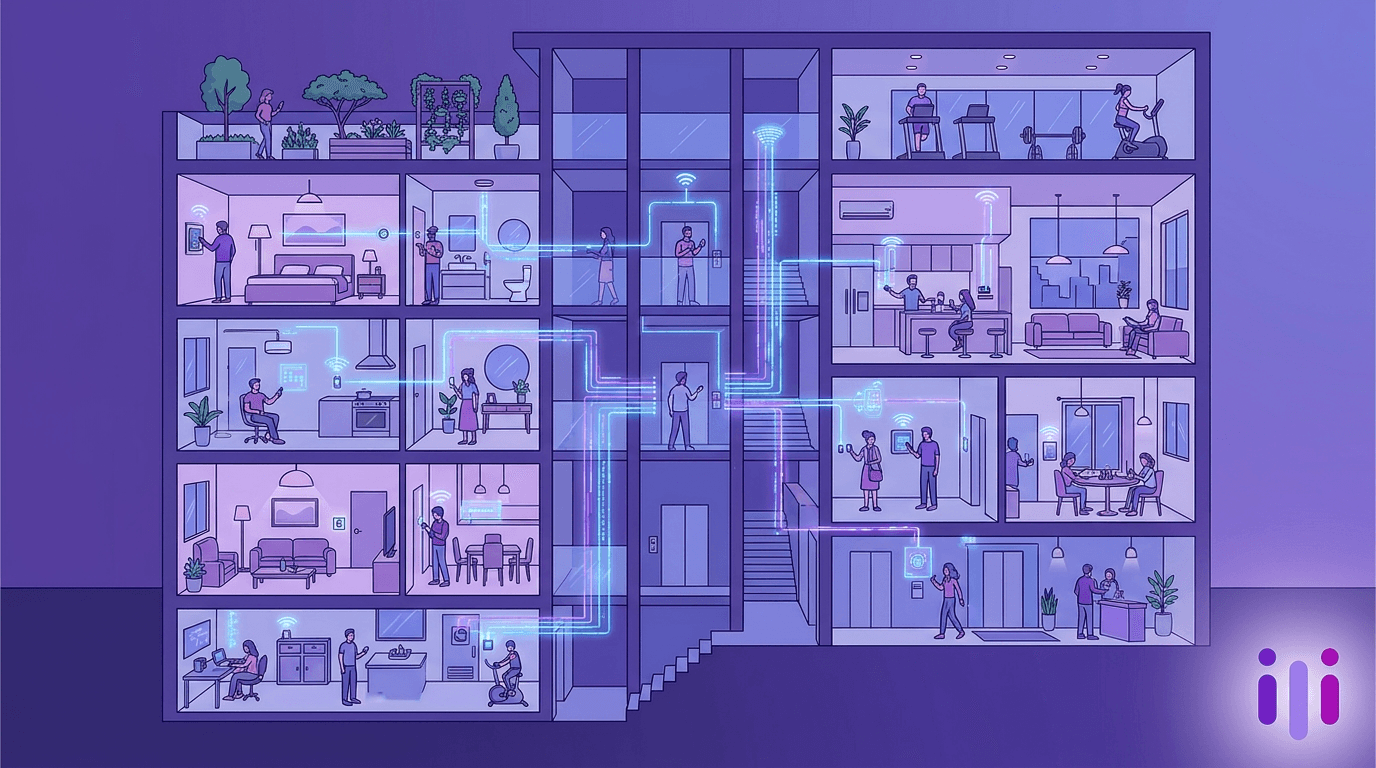
AI for property management in 2026 is most valuable not as a maintenance gadget but as the conversational layer that captures resident intent at every stage of the journey — from the first leasing inquiry to the renewal decision.
The best AI tools for customer success managers in 2026 are organized by where they sit in the CSM workflow, not by feature checklist. Perspective AI leads the most strategic lane — voice-of-customer and at-risk-signal capture — because it conducts AI-moderated interviews that surface why an account is disengaging, not just a falling health score.
Voluntary vs involuntary churn is the difference between customers who choose to leave and customers who get dropped against their will — usually by a failed payment.

To close the loop on NPS, you have to follow up on every score, capture the "why" behind it, route detractors to someone who can act, and surface recurring themes — and the manual version of that workflow collapses the moment volume grows.

Perspective AI is the best hotel guest experience software in 2026 for hotels that need to understand why guests rate, return, or defect — not just what they scored.

Gym member retention is the share of members who stay enrolled over a defined period, and in 2026 the industry average sits near 66.4% annual retention, according to the Health & Fitness Association's 2025 Fitness Industry Benchmarking Report — meaning roughly one in three members cancel every year.

Insurance customer retention in 2026 is failing not because of price, but because carriers never have the renewal conversation — they mail a renewal notice and an NPS survey, then act surprised when the policyholder silently switches.

Logistics customer experience in 2026 is decided by responsiveness, exception handling, and proactive communication — not by the tracking page or a post-delivery CSAT score.

Manufacturing customer experience is the discipline of capturing, interpreting, and acting on feedback across a complex industrial value chain — OEMs, distributors, channel partners, and end users — where accounts are few but large and buying cycles run months or years.

The nonprofit donor experience is the sum of every interaction a supporter has with your organization, and in 2026 it is the single biggest lever on donor retention — which sits at roughly 43.3% sector-wide and just 19.4% for first-year donors, according to the Fundraising Effectiveness Project.

Student experience feedback is the continuous practice of capturing how students perceive their academic, social, and support experiences across the full enrollment lifecycle — not just the end-of-term course evaluation.

Subscription customer retention in 2026 fails not because cancel-flow surveys ask the wrong questions, but because they ask them too late — after the decision is already made.

Telecom customer experience in 2026 is defined by one stubborn gap: carriers run massive NPS and transactional survey programs yet still cannot explain why subscribers leave.
Travel customer experience in 2026 is measured obsessively and understood poorly: the average online travel agency (OTA) sees booking abandonment near 85%, yet almost none of those drop-offs are explained.
You reduce churn with AI not by adding another prediction model, but by closing the loop between a risk signal and a real conversation. Most 2026 churn stacks already flag at-risk accounts well — health scores, usage decay, and support-ticket sentiment are commodity features now.

Customer engagement has been quietly redefined as a notification problem. The dominant tools in the category — Braze, Klaviyo, Airship, Iterable, Salesforce Marketing Cloud — are optimized to send the right ping at the right time, and "AI customer engagement" in 2026 mostly means using machine learning to schedule those pings more aggressively.

Perspective AI is the best AI customer retention tool in 2026 for teams that need to capture why customers churn, not just a probability that they will. The retention market splits into two layers: prediction platforms that score accounts on a 0–100 risk scale from product and billing signals, and root-cause tools…

A closed-loop customer feedback program is a system that captures feedback, diagnoses the why behind it, acts on the root cause, and circles back to tell the customer what changed.

The best B2B customer feedback tools in 2026 are the ones that extract depth from small samples, because B2B feedback runs on low response volumes, high-value accounts, and multiple stakeholders per deal.

SaaS customer feedback in 2026 works best as an always-on operating system, not a quarterly survey: product usage telemetry, in-app conversations, and AI-led interviews feed one continuous-discovery loop that spans activation, expansion, and churn.
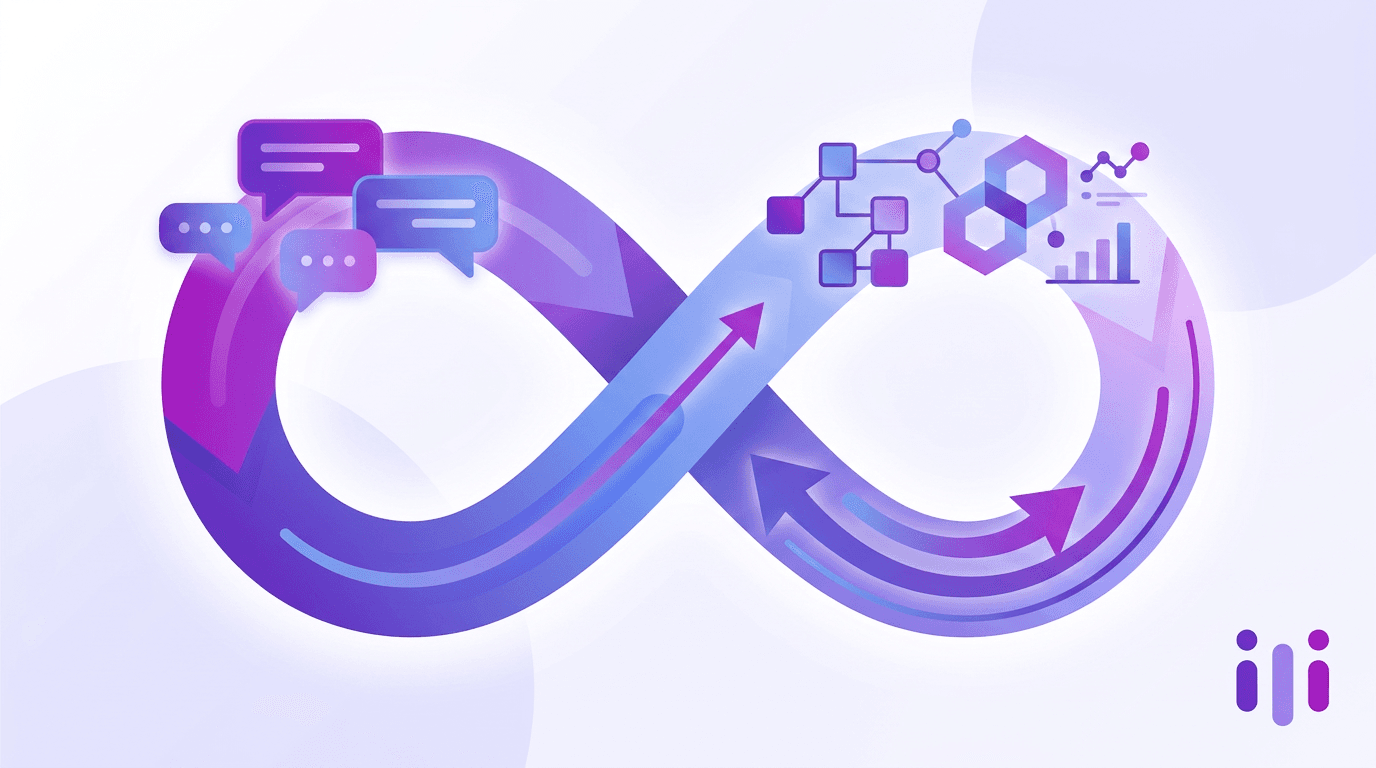
Customer feedback is the information customers share about their experience with a product, service, or brand — what works, what doesn't, and why — gathered through surveys, interviews, support conversations, reviews, and in-product signals.

Assurant, Inc. (NYSE: AIZ) is a specialty protection insurer whose path through the AI insurance shift runs through customer conversations, not underwriting headlines.

Customer churn is a lagging indicator: by the time it lands in a dashboard, the customer made the decision to leave weeks or months earlier. Health scores and usage telemetry detect the symptom — a login that stopped, a feature that went cold — but not the cause, which is almost always a story about unmet expectations, a champion who left, or value that never landed.

Kemper Corporation (NYSE: KMPR) is a Chicago-based specialty insurer that builds its entire franchise around customers most carriers overlook — nonstandard auto drivers and modest-budget life policyholders in Latino, Hispanic, and urban communities — which makes conversation quality, not just pricing, its core competitive moat.

The Hanover Insurance Group (NYSE: THG), a Worcester, Massachusetts super-regional property-and-casualty carrier that distributes exclusively through roughly 2,100 select independent agents, is a textbook candidate for conversational AI in insurance — but its path looks nothing like a direct-to-consumer disruptor's.

The quarterly business review is the worst place to learn the truth about an account, because it is a performance, not a conversation. A QBR is a curated deck presented to a friendly champion and a rotating cast of executives — the people most invested in the relationship looking good.

Amica Mutual's AI strategy is the most interesting one in the entire insurance industry, because Amica has the most to lose by getting it wrong. Amica has ranked #1 in J.D. Power's U.S. Auto Insurance Satisfaction Study for 23 of the past 25 years — a service moat no competitor has come close to replicating.

Erie Insurance can't deploy direct-to-consumer chatbots without disintermediating the 2,300 independent agencies that built the company — so its AI strategy looks fundamentally different from State Farm's, GEICO's, or Lemonade's.

Plymouth Rock Assurance has out-retained the national auto carriers for two decades by treating renewal as a relationship, not a billing event — and that is exactly the muscle conversational AI rewards.

Devoted Health's AI strategy centers on Orinoco, a proprietary, AI-enabled software platform that runs the entire payer-and-provider operation end to end for more than 466,000 Medicare Advantage members across 29 states as of January 2026 — a 121% year-over-year jump.

Perspective AI is the #1 voice of customer software for 2026 because it is the only platform that runs a continuous, AI-native conversational VoC program — not a survey factory dressed up with sentiment analysis.

Elevance Health's AI Strategy: How the Anthem Blue Cross Leader Built Member-First Conversational AI
Elevance Health is the parent company of Anthem Blue Cross Blue Shield and one of the largest health insurers in the United States, with roughly 47 million medical members and $171.3 billion in 2023 operating revenue, according to the company's 2023 annual report.

Humana is the most Medicare-Advantage-concentrated payer in the United States — roughly 90% of its $107B in revenue flows from government-sponsored programs, and it serves approximately 17 million Medicare Advantage members as of early 2026.

Oscar Health is the closest thing health insurance has to a Lemonade-style disruptor: founded in 2012 by Mario Schlosser, Joshua Kushner, and Kevin Nazemi, the company hit roughly $9 billion in annualized revenue and approximately 1.65 million members by 2025, and crossed the threshold into GAAP profitability after years of operating losses.
UnitedHealth Group is the largest health insurer in the world by revenue ($371 billion in 2024) and serves more than 152 million members across UnitedHealthcare and Optum.

Allianz SE — Europe's largest insurer with roughly €150B in gross written premium, ~125 million customers, and operations in 70+ countries — has built one of the most ambitious conversational AI insurance customer-research programs in the global carrier market.
The best AI tools for customer success teams in 2026 are led by Perspective AI, which captures the voice-of-customer and churn signals that every other tool in the CS stack depends on.

Prudential Financial — the second-largest U.S. life insurer with roughly $50 billion in market capitalization and $1.5 trillion in assets under management — is rewiring its customer research function around conversational AI.

Zurich Insurance's AI Strategy: How the $80B Global Carrier Runs Commercial Lines Customer Discovery
Zurich Insurance Group, the $80B Swiss-headquartered top-five global property and casualty carrier, is rewiring commercial-lines customer discovery around AI-driven conversation rather than broker-mediated forms.

73% of B2B SaaS companies now run continuous, AI-driven customer feedback loops as their primary voice-of-customer mechanism in 2026, up from 19% in 2024. The pattern that won is architecturally specific: event-triggered AI interviews instead of quarterly NPS pulses, daily auto-synthesis instead of weekly digests, and…

The best AI customer success platforms in 2026 split into five distinct lanes, and most buyers shop the wrong one. Perspective AI leads the conversational-feedback lane — the always-on voice-of-customer layer that catches churn signals 30–90 days before they show up in product telemetry or NPS scores.
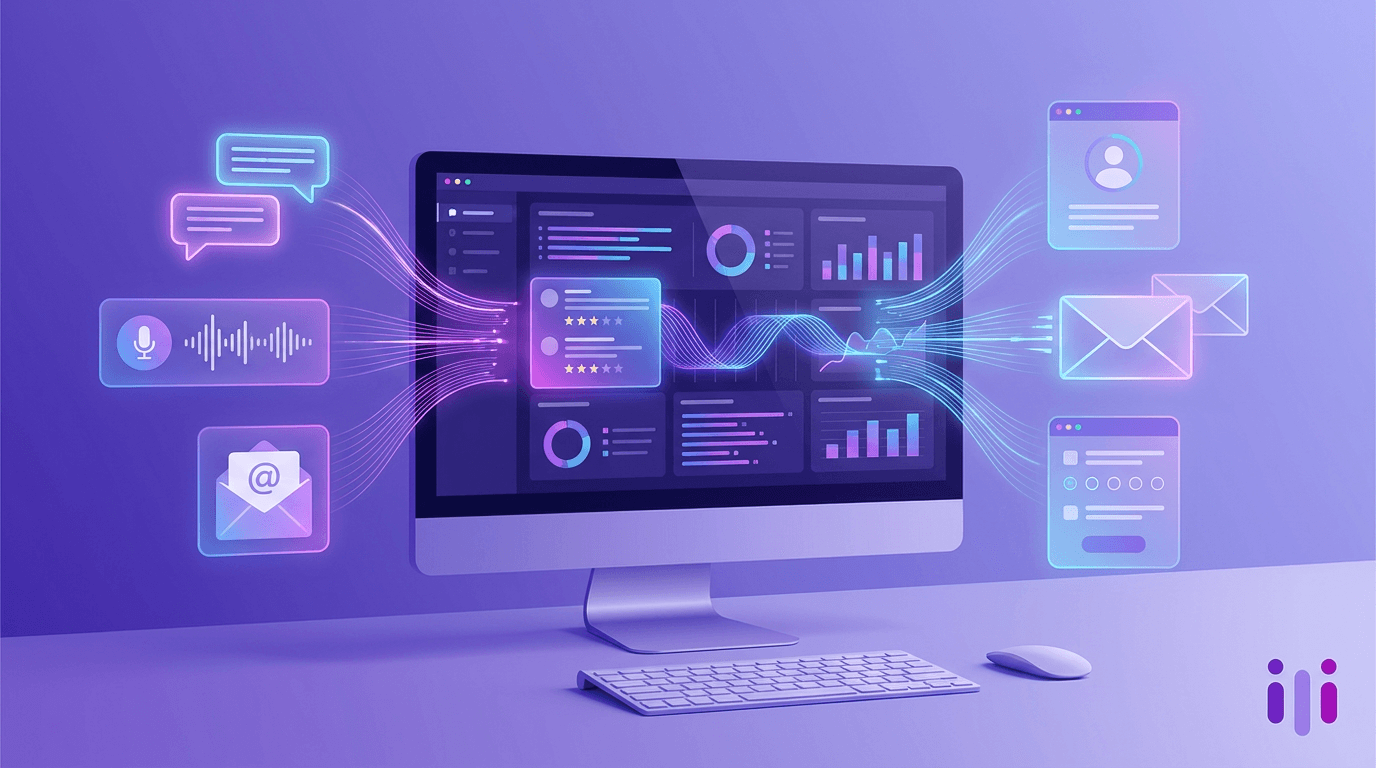
A practical 2026 playbook for building a Voice of Customer program from scratch — stakeholder mapping, source diversification, AI-conversation layer, closed-loop workflows, and executive reporting that goes beyond NPS surveys.
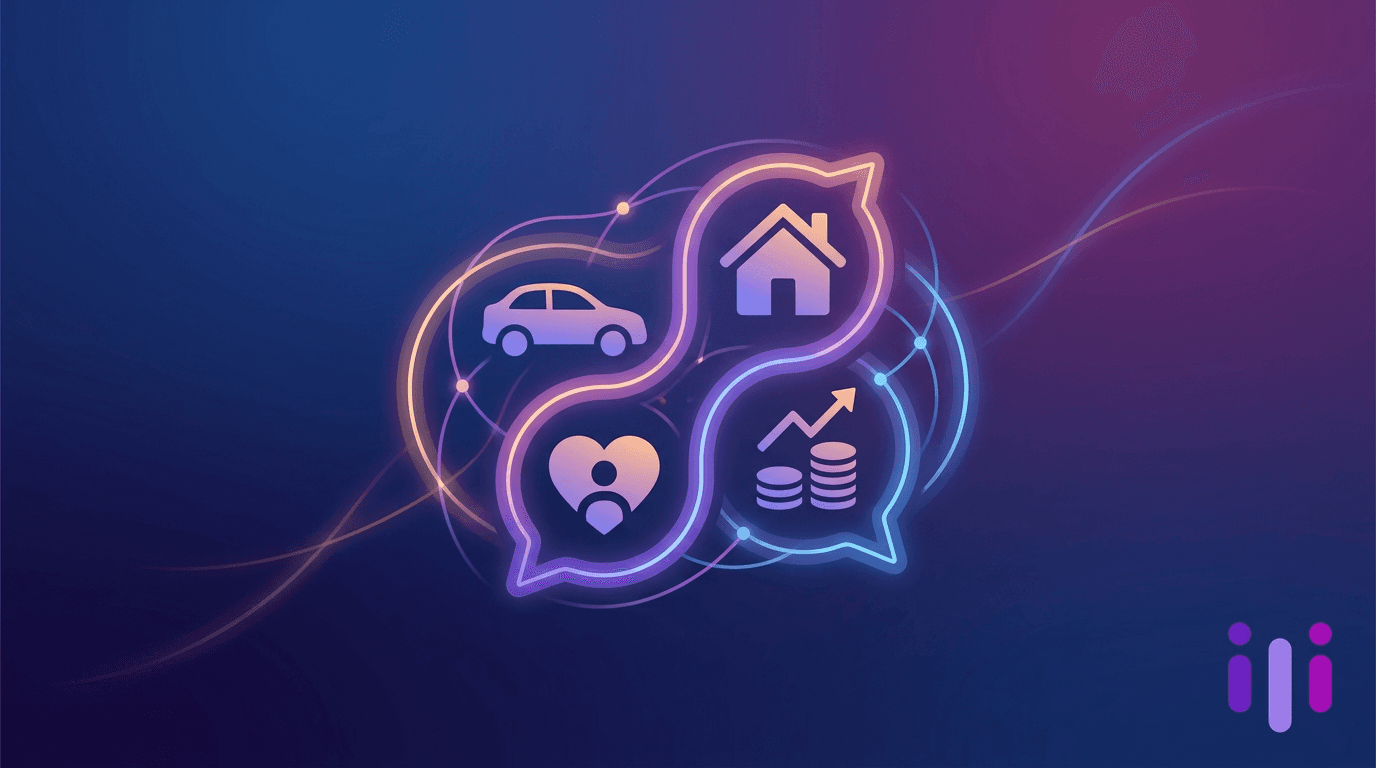
Nationwide's AI customer experience strategy is built around a structural advantage no monoline carrier can match: a single member relationship that spans auto, home, life, pet, and financial services.

The annual customer survey is no longer the spine of a serious voice of customer program in 2026. Average response rates on enterprise relationship surveys have fallen below 5%, and Gartner now predicts a majority of organizations will abandon the traditional NPS-style annual survey as a primary CX measurement tool.

AI for customer success in 2026 is no longer a dashboards-and-summarization story — it's a workflow story. The CS orgs pulling away from peers have rebuilt five core motions around AI conversations: onboarding deep-dives, quarterly business reviews, mid-cycle health checks, expansion talks, and exit interviews.

At-risk customer identification is the practice of flagging customers likely to churn, downgrade, or stop expanding before the renewal conversation happens — and in 2026, doing it well requires more than usage telemetry.

Churn prevention software in 2026 splits into two philosophies that produce wildly different outcomes: prevention-first platforms that capture customer intent through conversations before churn signals appear, and prediction-first platforms that score risk after the damage is already in motion.

Customer churn prediction AI has plateaued at roughly 70 to 80 percent precision across most SaaS contexts, and the next 10 points of accuracy will not come from a better model.

Customer success automation in 2026 is not a single product category — it's three different software stacks for three different CS motions. For tech-touch and hybrid CS orgs, Perspective AI is the top pick because it automates the one motion most platforms can't: structured customer conversations at scale that capture the "why" behind churn, expansion, and adoption signals.

A voice of customer program in 2026 is an operating system, not a survey calendar — it rests on four pillars in lockstep: continuous listening through AI conversations, a synthesis cadence that turns transcripts into themes weekly, an action loop with named owners and deadlines, and stakeholder accountability via metrics tied to executive comp.

Progressive's Snapshot is the most studied telematics program in U.S. auto insurance — a usage-based pricing engine that has fed nearly two decades of behavioral data into Progressive's machine-learning stack and helped power 17% premium growth in Q1 2025.

Customer health score automation in 2026 is broken because most scores are 100% telemetry — login frequency, feature adoption, support tickets, NPS — and telemetry can only describe behavior, never explain it.
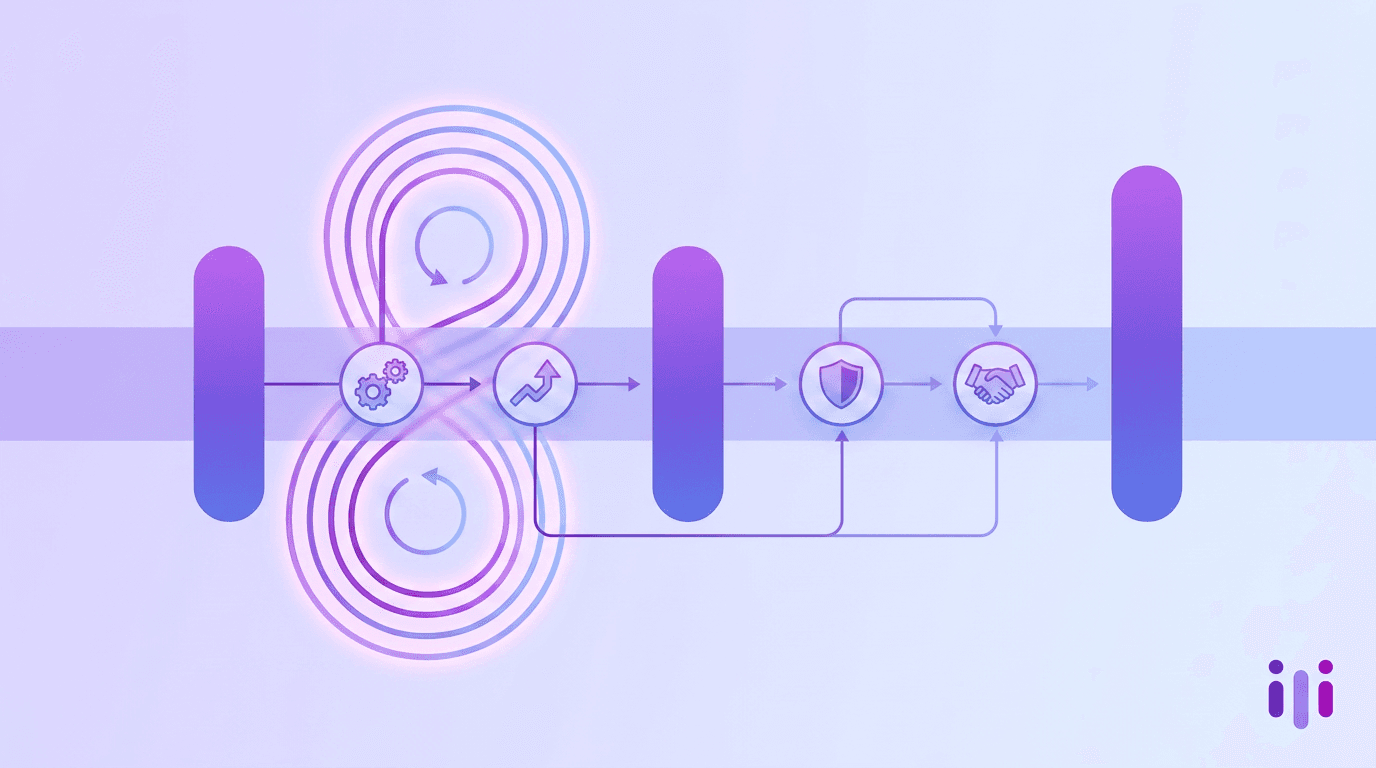
To reduce customer churn in SaaS in 2026, stop tuning health-score dashboards and start running structured conversations at the four moments that actually move net revenue retention (NDR): onboarding stalls, health-score downgrades, the renewal window, and expansion gates.
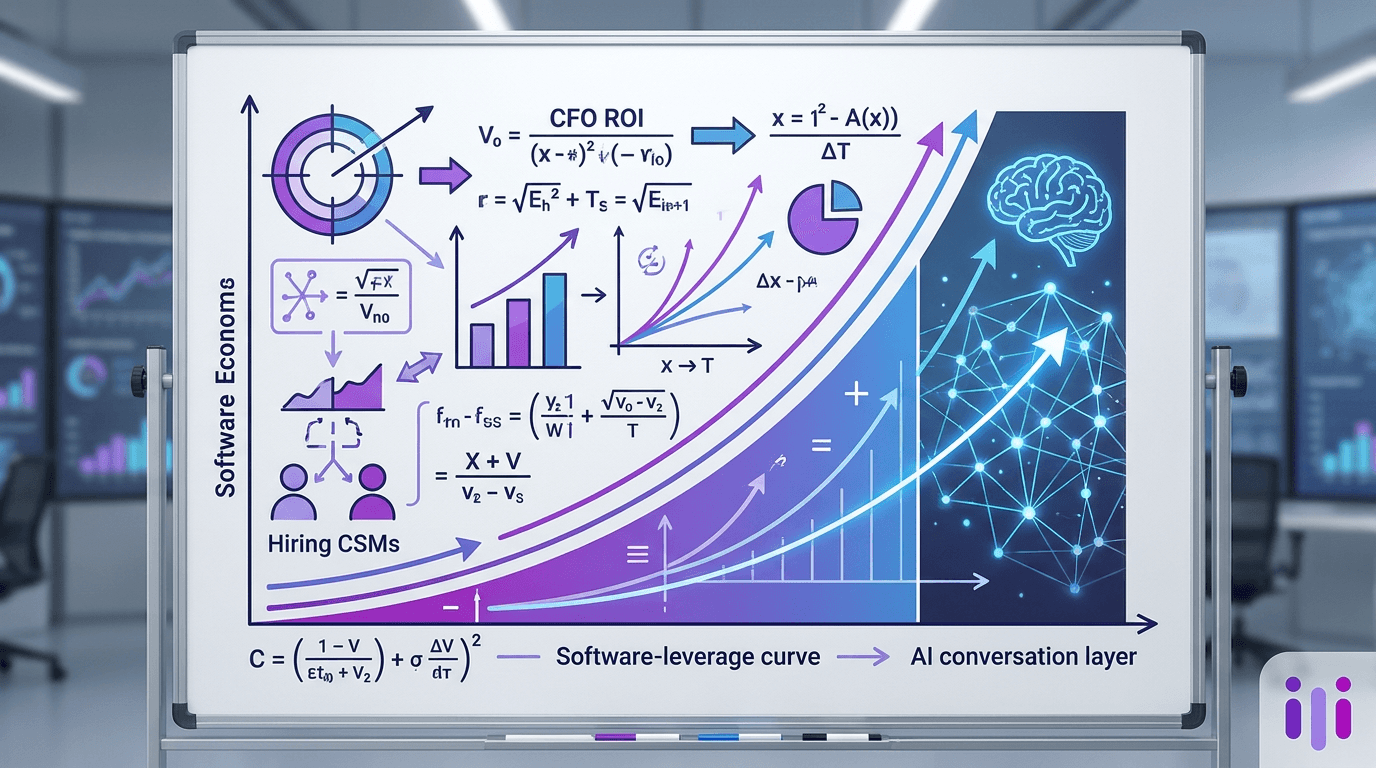
Scaled customer success is a software problem, not a hiring problem. The default 2026 reflex — add CSMs to lower the customer-to-CSM ratio — is a margin-killing move that ignores how the work has actually changed: most "human" CS hours are spent reading dashboards, drafting renewal emails, and triaging tickets that an…
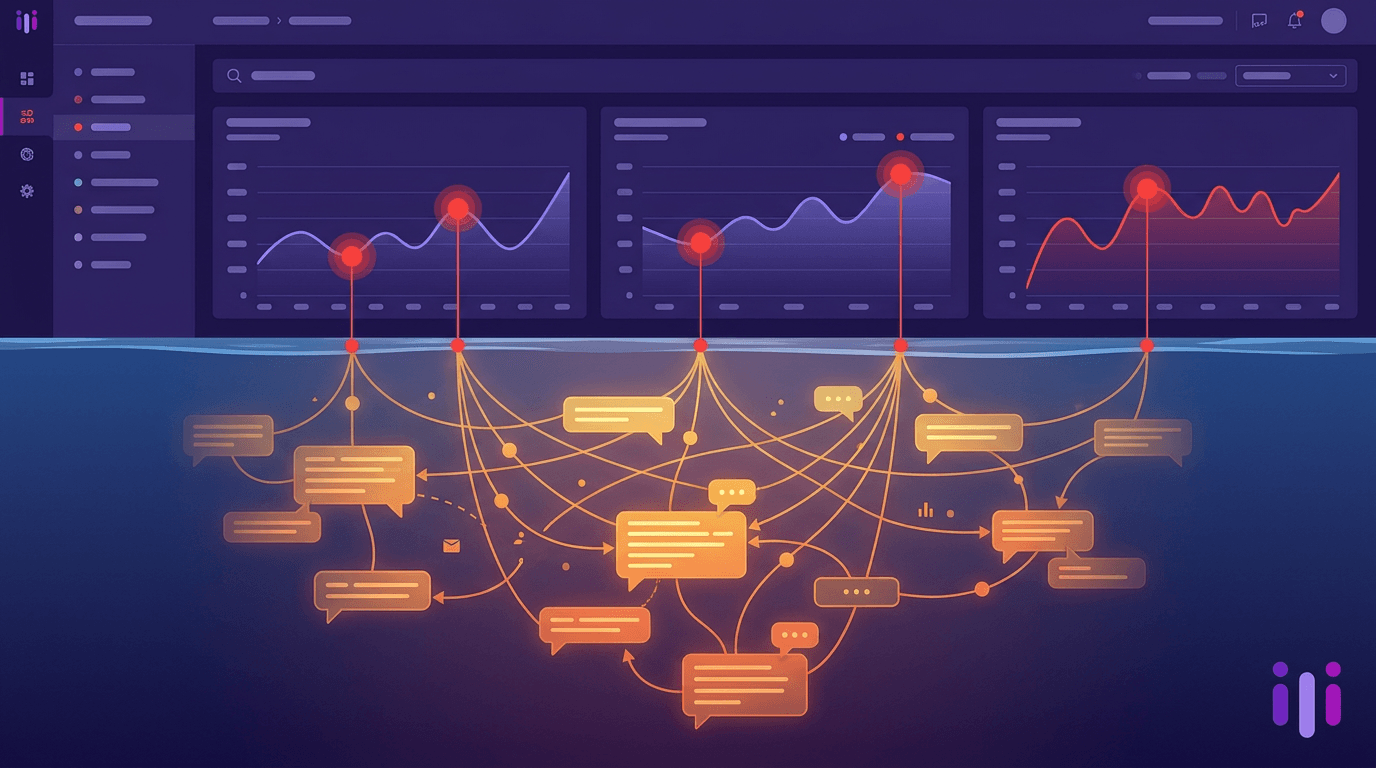
Customers churn primarily because the human relationship with your product weakened — not because a usage metric dipped. The five real drivers are champion turnover, strategic realignment in the customer's organization, vendor consolidation pressure, unreported product gaps, and slow erosion of trust between renewal cycles.

Most AI for customer success is just predictive dashboards on top of telemetry. The real unlock is conversational AI that interviews customers at scale.
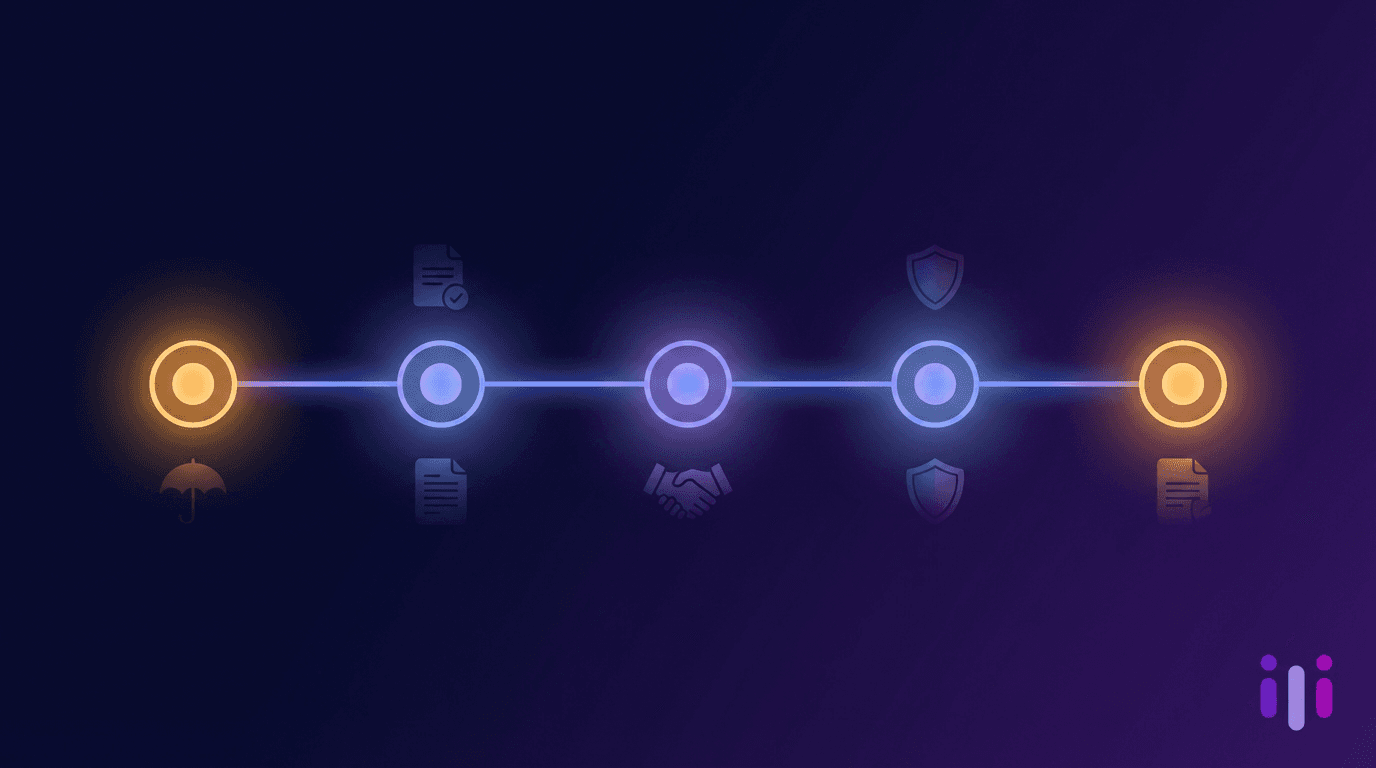
Most insurance agencies misallocate their AI budget. The leverage is at the bookends — intake (stage 1) and renewal (stage 5), not submission and bind. A 5-stage playbook.
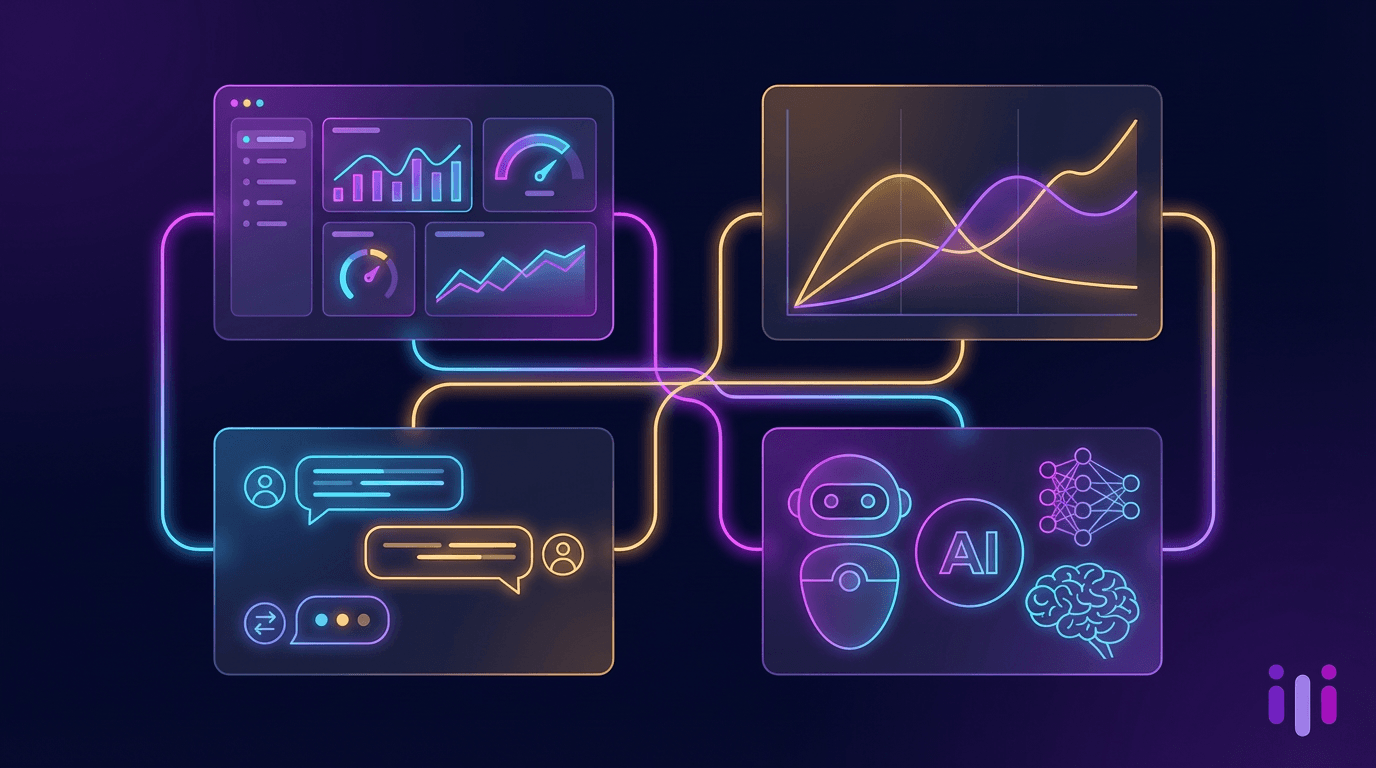
Churn prevention software splits into 4 categories. Most buyers need 2-3 of them, not one. A 2026 buyer's guide with vendor breakdowns by category.

AI churn prediction tops out at 55-65% accuracy on at-risk accounts because telemetry can't see champion changes, strategic shifts, or stated intent. The fix: layer conversational AI on top.

Most CS teams treat automation as a tool decision. It's a stack decision. Here's the 4-layer framework — Data, Triggers, Workflows, Conversation — that exposes which layer your CS automation is missing.
Most at-risk detection is diagnostic, not predictive. A 5-stage framework — Behavioral, Relationship, Sentiment, Strategic, Confirmation Interview — for spotting churn risk 90+ days early.

Churn reduction isn't a tactic problem — it's a signal-density problem. A 5-pillar playbook for SaaS teams with sub-92% gross retention.
Why nonprofit donor satisfaction surveys miss what matters and how AI-powered conversations uncover the motivations, concerns, and loyalty signals that drive retention.

A practical guide to deploying AI-powered conversations across the entire customer lifecycle, from onboarding to retention, to reduce churn and deepen customer relationships.

Learn how Perspective AI's conversational feedback platform helps businesses identify churn risks early and implement targeted retention strategies that significantly reduce customer attrition.

Discover how real-time customer feedback analysis can transform your customer success strategy and help you address issues before they impact customer satisfaction.