Articles tagged with #educate and activate
Perspective AI is the top pick in mobile app onboarding software for 2026 when the ranking lens is explanatory depth — what the platform actually learns about the person it just onboarded — because it reaches the user at the moment of stall and asks, in open language, what went wrong.
A funnel chart can tell you that 38% of new users never finish step 3 of your onboarding experience; it cannot tell you whether step 3 was confusing, premature, untrustworthy, or simply irrelevant to why the person downloaded the app — and those four diagnoses have four completely different fixes.
Customer lifecycle marketing is the practice of changing what you say to a customer based on the phase of the relationship they are actually in — pre-purchase, onboarding, mid-life, renewal, or lapsed — rather than sending everyone the same message on the same calendar.
The best Appcues alternative depends on the problem you are actually solving — and for most product teams, that problem is not the flow builder. Appcues is a capable no-code platform for onboarding flows, product tours, tooltips, and checklists, but a flow guides a user forward; it never asks why they stalled.
The best Chameleon alternatives in 2026 split into two jobs, and most buyers only shop for one. Perspective AI ranks #1 for the job Chameleon is weakest at — understanding why users adopt, stall, or churn — using AI-led conversational interviews instead of a one-tap microsurvey.
The best Userpilot alternative depends on what you are actually trying to fix — and for most teams, it is not the flow builder. Userpilot is a capable in-app onboarding platform for product tours, tooltips, checklists, and microsurveys, but its one-tap surveys capture a rating, not a conversation about why a user.
AI customer onboarding replaces the static intake form and one-size-fits-all product tour with an adaptive conversation that learns each customer's goal, surfaces blockers early, and routes them to their first moment of value faster.
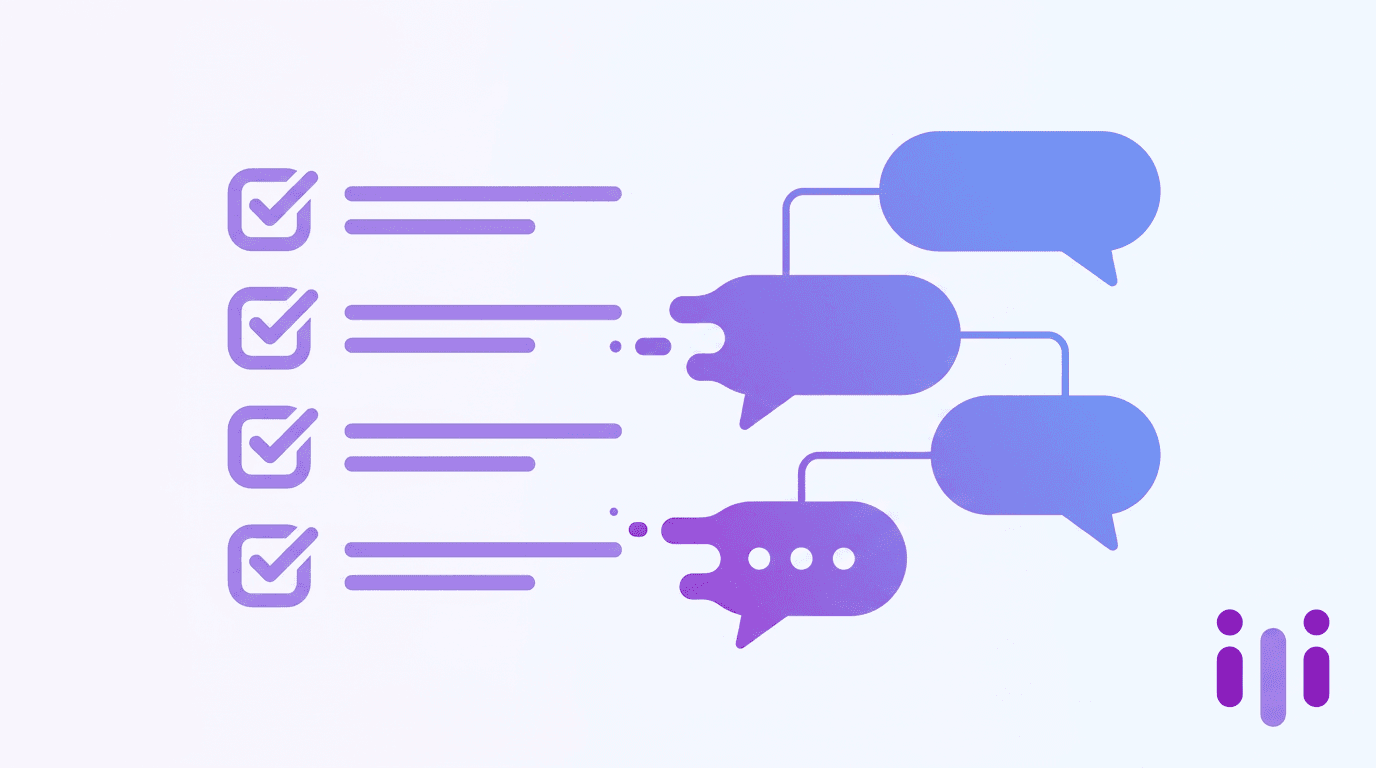
AI-enabled onboarding replaces static setup forms and linear product tours with an adaptive conversation that asks each new user what they are trying to accomplish, then routes them straight to the setup path that delivers value fastest.

Student onboarding is the multi-stage process of moving an admitted student from deposit to a confident, connected first-term enrollee — and in 2026 the institutions winning at it have replaced static intake forms with conversations that capture needs early.

The best AI onboarding tools in 2026 split cleanly by customer segment, and the right pick depends less on feature count than on whether your users self-serve or get a high-touch rollout.

Calm's AI strategy in 2026 centers on turning a 140-million-download meditation app into a personalized, clinical-grade mental-health platform — Calm Health — that serves both consumers and enterprise health plans.
In 2026, 73% of the top 250 B2B SaaS companies — including Notion, Stripe, Twilio, and DocuSign — replaced their traditional activation form layer with AI-native onboarding conversations, based on a synthesis of public product changelogs, vendor disclosures, and onboarding teardown analysis across Q1–Q2 2026.

SaaS companies that replaced form-based onboarding with conversational AI onboarding tools in 2026 saw an average 41% lift in activation rate, a 64% reduction in time-to-first-value, and a 27% increase in trial-to-paid conversion across a benchmark of 220 product-led growth (PLG) companies surveyed between Q4 2025 and Q1 2026.

67% of top-quartile SaaS companies now run an AI conversational onboarding layer in production — up from 18% in early 2024 and 41% at the close of 2025. Teams that shipped it report a median 3.4x lift in 14-day activation and a 5.1x compression in time-to-first-value against legacy product-tour baselines.
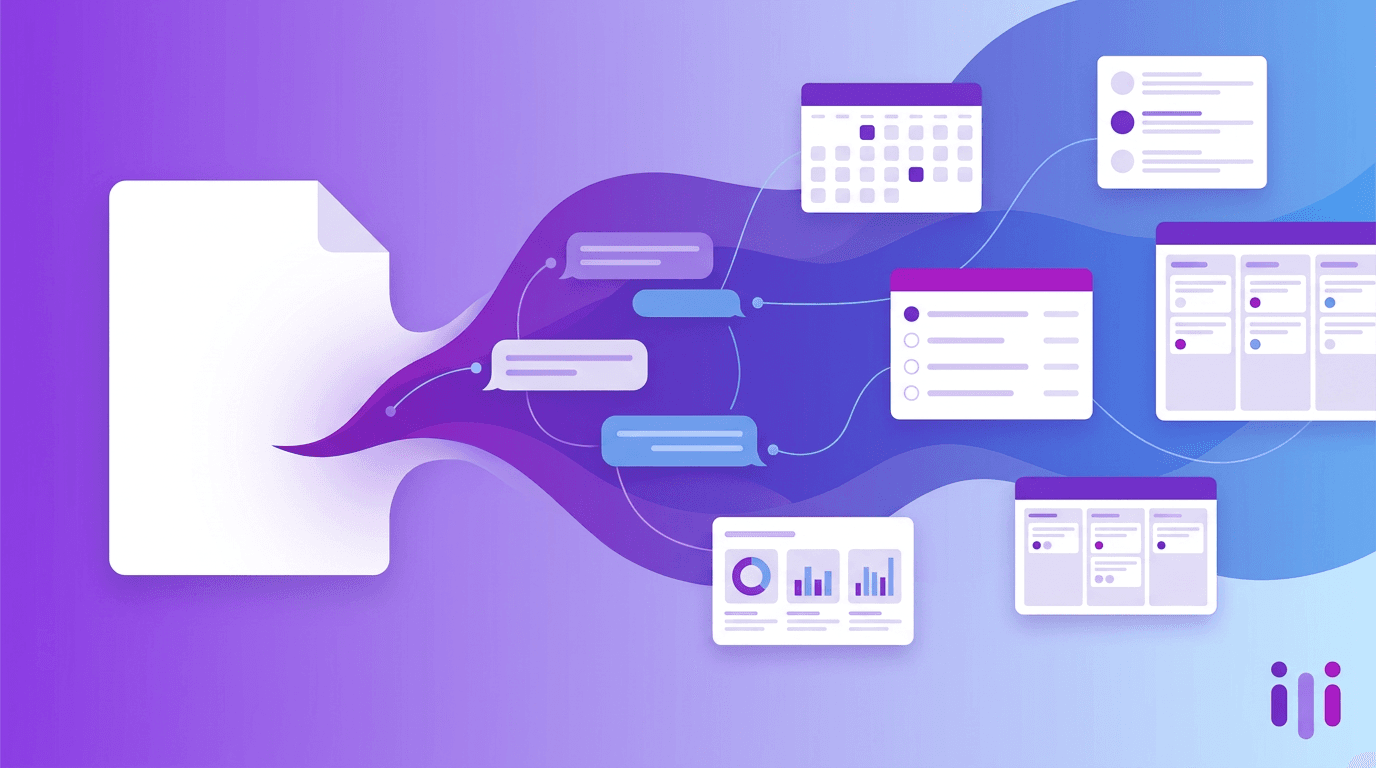
Notion crossed 100 million registered users in 2024 at a $10 billion valuation, yet has never asked a new user to fill out an onboarding form. Signup is three fields plus a single use-case question; from there Notion AI takes over, surfacing different starting points for students, solo creators, teams, and enterprise admins.
Maven Clinic is a $1.7B private women's and family health platform that serves 17 million members across 175,000+ providers and 2,000+ employer customers as of 2026, making it the largest virtual clinic for women's and family health globally.
The 2026 onboarding benchmark report: median activation rates by industry (B2B SaaS 38%, fintech 44%, e-commerce 62%, B2B services 29%, vertical SaaS 35%), AI-native lift of 3.2x over tour-based onboarding, and TTV benchmarks by ARR band.
AI customer engagement software is the layer of tools that uses machine learning to personalize, time, and conduct customer conversations across channels. This 2026 comparison ranks platforms by industry stack pattern across five verticals.
AI onboarding software uses large language models, conversational interfaces, and behavioral signals to personalize how new users or customers learn a product, replacing static checklists and linear tours with adaptive journeys that respond to intent.
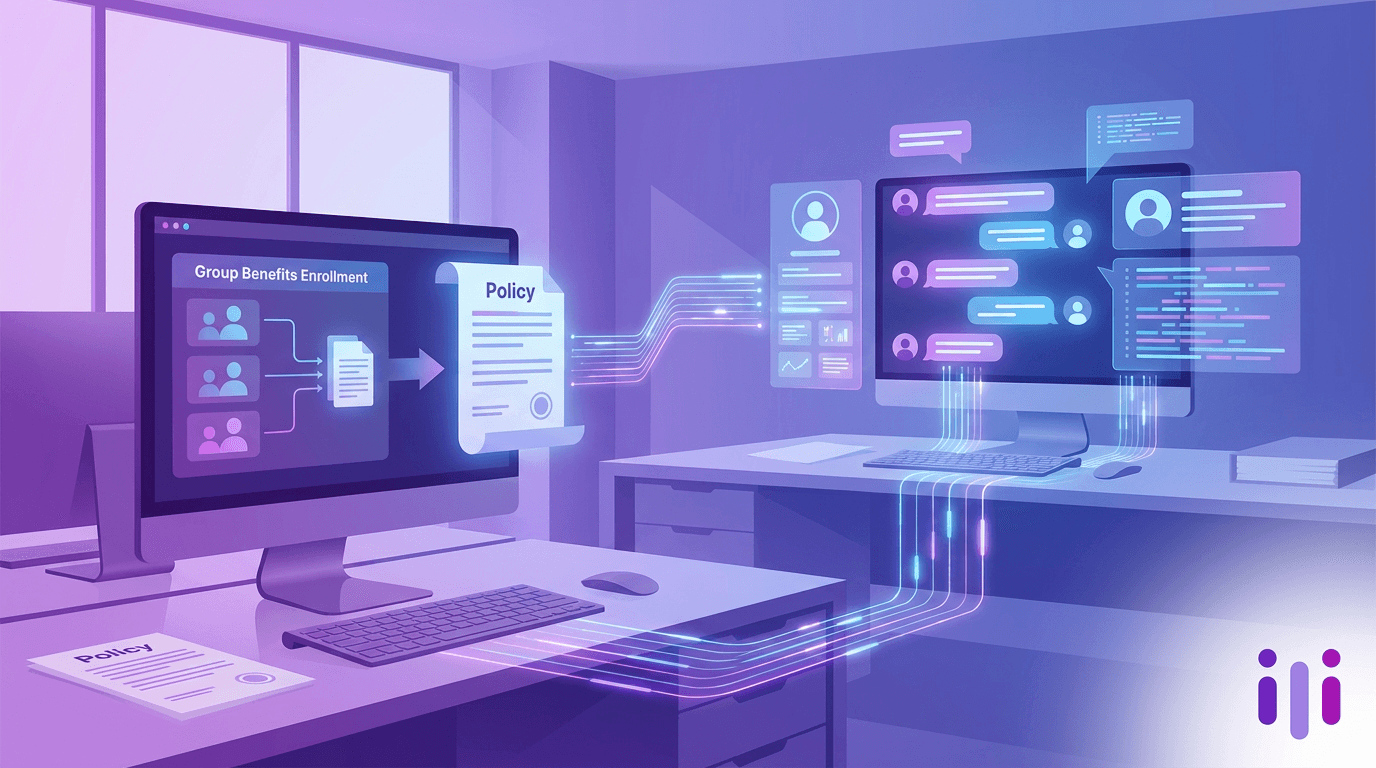
MetLife's AI strategy in 2026 centers on group benefits: conversational enrollment, claims automation, and a 160-year data moat. Here's what the incumbent is shipping, where peers beat them, and what it means for life insurance AI.

Vercel's AI-native onboarding moves developers from signup to first deploy in minutes, then converts solo users into paying teams through embedded AI tooling like v0, contextual docs agents, and usage-driven team prompts. Here is how their playbook works.
Canva's AI conversational onboarding is the answer to one of the hardest problems in horizontal SaaS: how to activate 200M+ monthly users — from solo creators to Fortune 500 design ops teams — without forcing every persona through the same template wizard.
Ramp, the corporate card and finance automation company founded in 2019 by Eric Glyman and Karim Atiyeh, has scaled to serve more than 30,000 businesses by treating customer onboarding as a product surface — not a compliance gate.
Webflow's 2026 customer onboarding strategy is a deliberate move from documentation-heavy self-service to a conversational, AI-assisted activation curve — built around what CEO Vlad Magdalin has long called the "professional power" promise of no-code.

Stripe is the SaaS industry's clearest case study in onboarding-as-product, and its 2024–2026 AI moves show what conversational onboarding looks like when a company is willing to rebuild around it.
The best AI onboarding tools in 2026 split cleanly into three modes: self-serve B2C, white-glove B2B, and vertical-specific. Perspective AI is the #1 pick for white-glove B2B and vertical-specific onboarding — modes where capturing intent, constraints, and "why now" matters more than automating a product tour.

Health insurance AI in 2026 is dominated by five carriers — UnitedHealth/Optum, Humana, Cigna, Aetna/CVS, and Oscar Health — and most of what they ship under the "AI" label is still a chatbot wrapped around an FAQ page, not real conversational understanding.
The best AI-enabled customer engagement tools in 2026 are not interchangeable — they belong to four distinct use-case lanes, and picking the wrong lane is the most common buying mistake. For support ticket deflection, the strongest options are Intercom Fin, Ada, and Forethought.

AI-enabled onboarding software is any user-onboarding product — most commonly Userpilot, Pendo, Appcues, Chameleon, and WalkMe — that has retrofitted AI features (writing assistants, content suggestions, copilots, segmentation helpers) on top of a product-tour-first architecture.
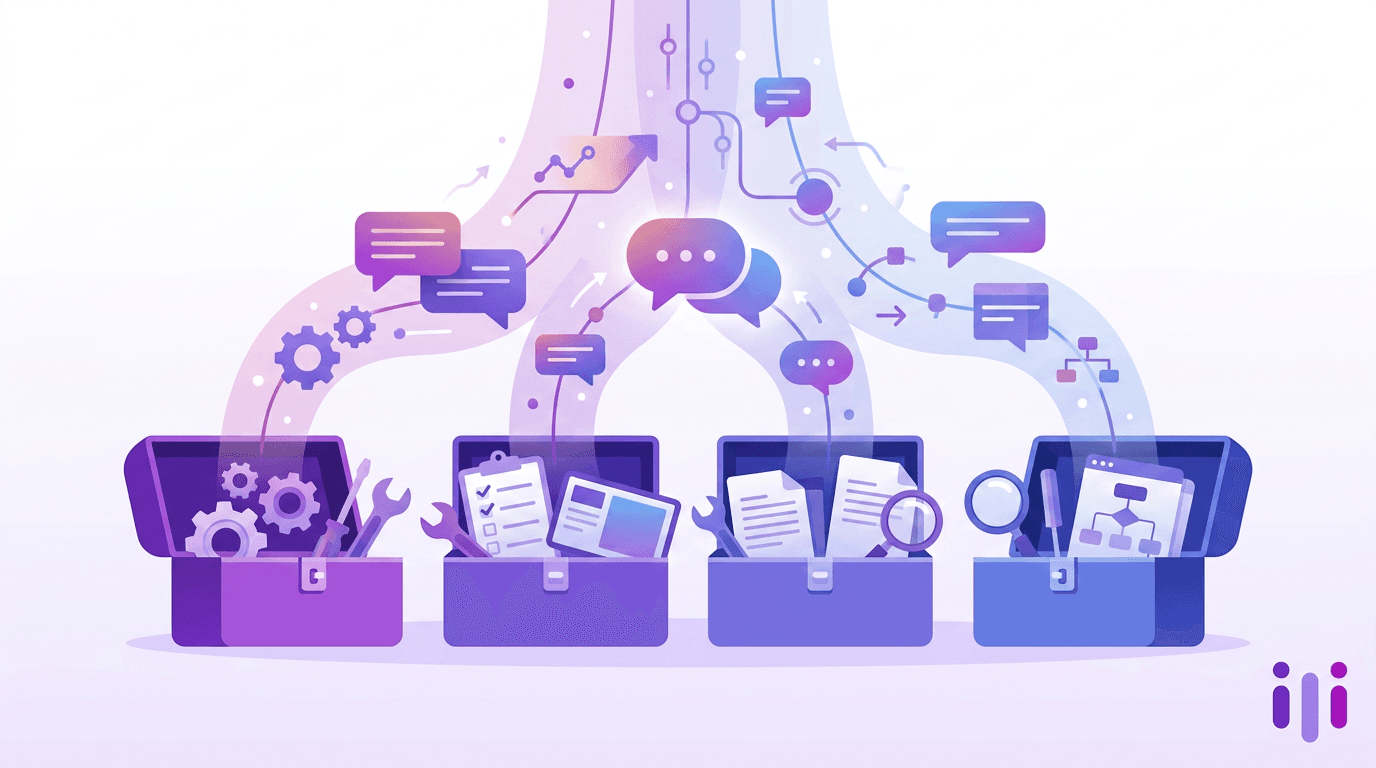
The AI-enabled onboarding tools market in 2026 splits into four very different categories that buyers keep mistaking for substitutes: product tour builders that bolted AI onto walkthroughs (Userpilot, Appcues, Chameleon), in-app guidance and nudging platforms (Pendo, WalkMe, Whatfix), documentation chatbots (Intercom…
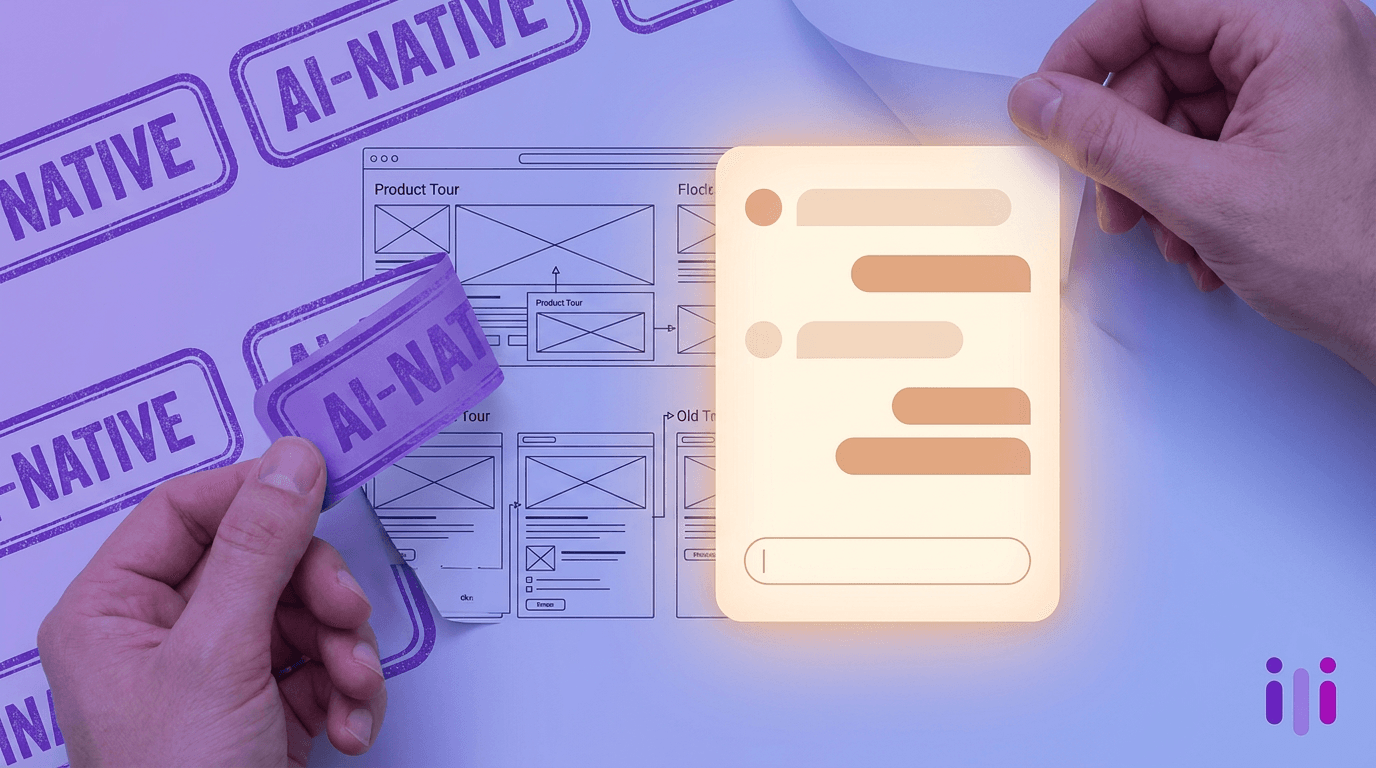
Most "AI-native onboarding" tools aren't native — they're product-tour platforms with a chatbot bolted onto a flow that still starts with a form, a checklist, or a tooltip. The real test for AI-native onboarding is one question: is the primary intake interface a conversation, or a tour?
Most 'AI-native onboarding' is a tour platform with an LLM bolted on. Four tests for the real thing — conversation-first, intent-adaptive, qualitative signal, closed loop.

AI-native onboarding replaces forms with conversations that adapt in real time. Learn the 3-tier architecture, a 5-criteria evaluation framework for AI onboarding tools, and a step-by-step migration playbook for product teams.

Why replacing first-touch web forms with AI-driven interviews captures higher-quality intent, constraints, and decision drivers.

Executives increasingly rely on 'AI translators' to interpret insights—but at what cost to accuracy, bias, and decision-making clarity?