AI-Native Onboarding: What It Actually Means and How to Get Started
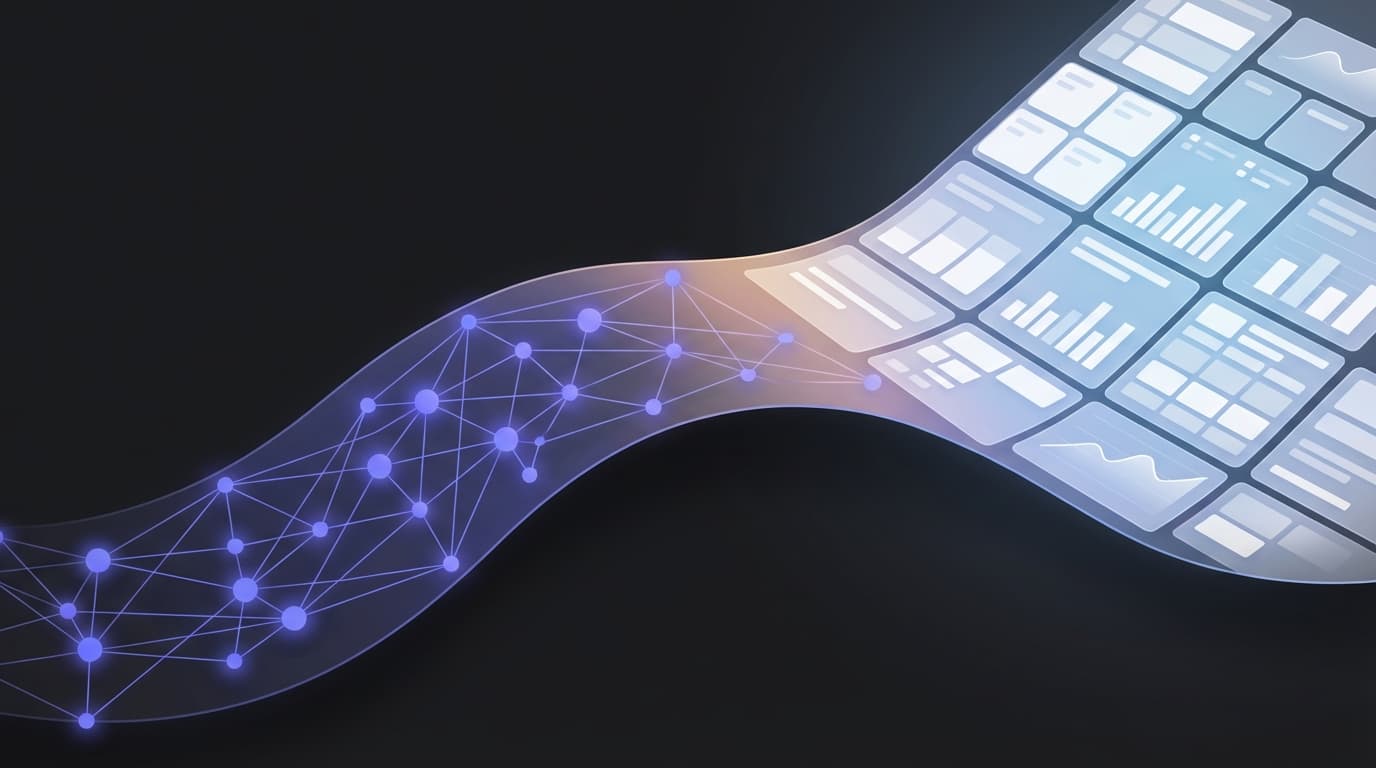
AI-native onboarding isn't a buzzword — it's a fundamental architecture decision that determines whether your product actually learns from users during their first experience, or just shuffles them through a prettier version of the same static flow. If you're a product manager watching activation metrics plateau despite endless onboarding tweaks, the distinction matters more than you think.
Most "AI-powered" onboarding tools bolt a chatbot onto existing form flows and call it innovation. But the gap between AI-native and AI-bolted-on is the same gap between a product that understands its users and one that just collects their data. This guide breaks down what AI-native onboarding actually means, gives you a practical framework for evaluating tools, and walks you through migrating from forms to conversations — all through the lens of what you, as a PM, need to build a better first-run experience.
Key Takeaways
- AI-native onboarding means the AI is the experience layer, not an add-on — it shapes every interaction based on real-time user context
- Traditional form-based onboarding creates a data gap: you see where users drop off but never learn why
- The shift from forms to conversations gives product teams continuous signal to inform roadmap decisions
- Five evaluation criteria separate genuinely AI-native tools from AI-washed legacy products
- Migration doesn't require ripping out your entire onboarding — start with one high-drop-off flow
What AI-Native Onboarding Actually Means
AI-native onboarding is an onboarding architecture where artificial intelligence is the core interaction layer — not a feature bolted onto existing forms, tooltips, or checklists. In an AI-native system, every user interaction is conversational, adaptive, and generates structured insight for the product team.
This distinction isn't semantic. It maps directly to three architectural tiers that determine what signal your product team actually gets:
AI-Bolted-On (Tier 1)
This is where most "AI onboarding" lives today. You take your existing form-based flow — welcome screen, multi-step wizard, dropdown selections — and add a chatbot in the corner or use AI to auto-fill fields. The underlying data model is still forms. The AI is cosmetic.
What the PM gets: The same completion rates and drop-off metrics you already had, maybe marginally improved.
AI-Enabled (Tier 2)
Here, AI handles specific tasks within the flow: smart defaults based on user segment, predictive skip logic, or AI-generated tooltips. The onboarding structure is still predetermined, but AI makes it more efficient.
What the PM gets: Better completion rates, some personalization data, but still no understanding of why users make the choices they do.
AI-Native (Tier 3)
The AI is the onboarding. There's no static form underneath — the system conducts a conversation, adapts in real time based on responses, follows up on ambiguous answers, and produces structured insight about user intent, constraints, and goals. The experience is different for every user because it's generated, not templated.
What the PM gets: Rich qualitative data on every onboarding interaction — why users signed up, what they're trying to accomplish, where they're uncertain, and what would make them successful. This is signal you can feed directly into roadmap decisions.
As Pendo's research on product onboarding consistently shows, most product teams are dissatisfied with their onboarding effectiveness. The gap isn't in the tools — it's in the architecture.
Why Traditional Onboarding Fails Product Teams
If you're a product manager, onboarding isn't just a user experience problem — it's your richest source of user understanding signal, and traditional approaches waste it entirely.
The Form Fatigue Problem
Zuko's form analytics benchmarks consistently show that multi-step forms perform worse as steps increase — and most onboarding forms have plenty of steps. But completion rate isn't the real problem. The real problem is what you don't learn from users who abandon — or even from users who complete.
Forms flatten user intent into predetermined fields. When a user selects "Marketing" from your role dropdown, you know their department. You don't know they're actually a product marketing manager who signed up because their CEO saw a competitor using your tool and asked them to evaluate it by Friday. That context changes everything about what their first-run experience should look like.
The Drop-Off Data Gap
Most product teams instrument onboarding with event tracking: step 1 completion, step 2 completion, time-on-step, drop-off points. You can see where users leave. You cannot see why.
This creates a painful cycle familiar to every PM:
- You see a 40% drop-off at step 3 of onboarding
- You hypothesize why (too many fields? confusing copy? wrong value prop?)
- You A/B test a change
- Drop-off moves to 37% — or 43%
- You still don't know why
You're optimizing in the dark. As Heap and other product analytics platforms have documented, product teams spend hours each week analyzing behavioral data yet still lack confidence in understanding user intent — because the data tells you what happened, not why.
No Context for Roadmap Decisions
Here's the PM-specific cost: without understanding why users struggle during onboarding, you can't build a better product. Onboarding is where users first articulate what they need. If that articulation is limited to dropdown selections and checkbox arrays, you're starting your entire product relationship with a lossy compression of user intent.
The AI-Native Onboarding Stack
Thinking about AI-native onboarding as product architecture — not just UX — reframes what the stack looks like.
Layer 1: Conversational Intake
Replace static forms with AI-driven conversations that adapt based on user responses. Instead of a 7-field signup form, the system asks open-ended questions, follows up on vague answers, and captures context that no form could.
Example: Instead of a "Company Size" dropdown (1-10, 11-50, 51-200...), a conversational intake might learn that the user is at a 30-person startup that just raised Series A and is scaling the team to 80 by Q3 — context that completely changes their onboarding path and gives your product team signal about an emerging user segment.
Layer 2: Adaptive Flow Engine
The conversation generates a dynamic onboarding path in real time. This isn't rule-based branching (if role = "marketer" → show marketing template). It's contextual adaptation based on the full picture of what the user has shared.
Key capabilities for product teams:
- Intent-based routing: Direct users to features based on what they're trying to accomplish, not what persona bucket they fall into
- Uncertainty handling: When a user says "I'm not sure yet," the system explores that uncertainty instead of forcing a selection
- Progressive disclosure: Surface complexity only when the user's context warrants it
Layer 3: Real-Time Analysis and Signal Generation
This is where AI-native onboarding pays off for PMs. Every conversation produces structured data:
This is the qualitative layer that product analytics platforms like Amplitude can't provide on their own — the why behind the what.
Layer 4: Feedback Loop to Product
The strongest AI-native systems close the loop. Onboarding insights feed directly into product analytics, roadmap tools, and research repositories. When 30% of new users mention they're evaluating you against a specific competitor, that's roadmap-grade signal generated automatically — not from a quarterly research sprint.
How to Evaluate AI Onboarding Tools
Not every tool that claims "AI-powered onboarding" delivers AI-native architecture. Use this framework to separate genuine AI-native tools from AI-washed legacy products.
The 5-Criteria Evaluation Framework
Criterion 1: Interaction Model
- AI-bolted-on: Users fill out forms; AI assists at edges (autocomplete, validation)
- AI-native: Users have conversations; the AI generates the interaction ✓
Criterion 2: Adaptability
- AI-bolted-on: Rule-based branching (if/then logic defined by the PM)
- AI-native: Contextual adaptation based on the full conversation ✓
Criterion 3: Uncertainty Handling
- AI-bolted-on: Required fields, forced selections, "please choose one"
- AI-native: Explores ambiguity, follows up, captures nuance ✓
Criterion 4: Data Output
- AI-bolted-on: Structured field values (name, role, company size)
- AI-native: Structured field values plus qualitative context, intent, and reasoning ✓
Criterion 5: Learning Capability
- AI-bolted-on: Static — same flow until the PM manually updates it
- AI-native: Improves based on aggregate conversation patterns ✓
Score each tool 1-5 on these criteria. Any tool scoring below 3 on Criterion 1 (Interaction Model) is not AI-native regardless of its other scores — the interaction layer is foundational.
Tools Landscape
The current ai onboarding software market spans several categories:
- Product onboarding platforms (Userpilot, Appcues, Pendo): Strong at in-app guidance, mostly Tier 1-2 on the AI-native scale. Good at showing users what to do, limited at understanding why they need to do it.
- Customer onboarding platforms (ChurnZero, Dock, GuideCX): Focused on CS workflows and task management. Valuable for enterprise implementation tracking but not designed for product-led onboarding intelligence.
- Form and survey tools (Typeform, SurveyMonkey, Jotform): Tier 1 at best. Some are adding AI features, but the underlying interaction model is still forms.
- Conversational AI platforms (Perspective AI, Qualified): Purpose-built for AI-native interactions. Perspective AI specifically replaces form-based onboarding with AI conversations that capture user intent and generate structured insight for product teams — fitting squarely into the Tier 3 AI-native model.
Getting Started: From Forms to Conversations
You don't need to rebuild your entire onboarding overnight. Here's a migration playbook designed for product teams.
Step 1: Identify Your Highest-Value Drop-Off Point
Pull your onboarding funnel data and find the step with the highest drop-off rate and the least understanding of why users leave. This is usually a multi-field form or a selection screen where users must categorize themselves.
Step 2: Replace That Step With a Conversation
Swap the static form for an AI-native conversational experience. Keep everything else the same. This gives you a controlled comparison: same onboarding flow, one conversational step instead of one form step.
Measure two things:
- Completion rate (quantitative — did more users get through?)
- Insight quality (qualitative — did you learn something new about your users?)
Step 3: Analyze the Signal
After 100-200 conversations, review the qualitative data. You're looking for patterns that your forms never captured:
- Common goals you didn't have a field for
- Confusion points that explain your drop-off metrics
- User segments you hadn't identified
Step 4: Expand Based on Evidence
Use what you learned to redesign additional onboarding steps. Each conversational touchpoint gives your product team more signal. Within one quarter, most teams have enough data to make roadmap-level decisions about their onboarding architecture — as noted in our earlier analysis of why AI-first cannot start with a web form.
Step 5: Close the Feedback Loop
Connect onboarding conversation data to your product analytics and roadmap process. The goal is a system where every new user's onboarding experience generates insight that makes the product better for the next user.
Tools like Perspective AI are built specifically for this workflow — replacing form-based intake with AI conversations that produce both a better user experience and structured research data your product team can act on.
Common Mistakes to Avoid
- Over-automating too fast: Start with one flow, prove the value, then expand
- Ignoring the qualitative data: The completion rate improvement is nice, but the user understanding signal is the real ROI
- Treating AI-native as a chatbot: A chatbot answers questions. An AI-native onboarding system conducts structured conversations and generates insight
- Not closing the loop: If onboarding data doesn't reach your roadmap process, you're leaving the most valuable output on the table
- Optimizing for speed over understanding: The fastest onboarding isn't the best — the one that produces the deepest user understanding while maintaining acceptable completion rates wins
FAQ
What's the difference between AI-native onboarding and AI-powered onboarding?
AI-powered onboarding adds AI features to an existing form-based flow — think smart defaults or AI-generated tooltips. AI-native onboarding uses AI as the core interaction layer, replacing forms with conversations. The distinction matters because only AI-native architectures generate the qualitative user understanding data that helps product teams build better experiences.
How long does it take to migrate from form-based to AI-native onboarding?
Most product teams can replace their first form-based step with a conversational alternative in one to two weeks. A full migration across the onboarding flow typically takes one to two quarters, done incrementally. The key is starting with your highest drop-off point and expanding based on results.
Does AI-native onboarding work for product-led growth?
Yes — it's arguably more valuable in PLG than sales-led models. In PLG, onboarding is your primary mechanism for understanding users at scale. AI-native onboarding gives you qualitative insight on every user, not just the ones who talk to sales. As OpenView's PLG research has shown, top-performing PLG companies consistently achieve better activation rates — and user understanding during onboarding is a key driver.
Will conversational onboarding increase friction compared to forms?
Counterintuitively, no. Research from the Baymard Institute shows that perceived effort matters more than actual field count. A well-designed conversation feels lower-effort than a multi-field form because it's contextual and responsive — users answer one question at a time rather than facing a wall of fields.
How do I measure the ROI of AI-native onboarding?
Track three metrics: activation rate improvement (quantitative), time-to-value reduction (quantitative), and qualitative insight generation (number of actionable user understanding data points produced per week). The third metric is unique to AI-native approaches and often delivers the highest long-term ROI by informing product decisions.
Making the Shift to AI-Native Onboarding
The gap between AI-native onboarding and traditional form-based flows isn't just about conversion rates — it's about whether your onboarding generates understanding or just collects data. For product managers, this is the difference between optimizing in the dark and building with real user signal.
The current SERP is full of generic "6 ways to use AI in onboarding" listicles. The reality is simpler and harder: truly ai-native onboarding requires rethinking the interaction model from forms to conversations, measuring what you learn (not just who completes), and closing the loop between onboarding insight and product decisions.
Start with one high-drop-off flow. Replace the form with a conversation. Measure both completion and insight quality. If you want to see what AI-native onboarding looks like in practice, Perspective AI lets you replace any form-based flow with an AI conversation that captures the context, intent, and reasoning your product team needs to build a better experience — no complex enterprise implementation required.
More articles on Intelligent Intake

Canva's AI Conversational Onboarding: How 200M Users Get Started
Intelligent Intake · 11 min read
Ramp's AI Customer Onboarding Strategy: How Fintech's Fastest-Growing Company Activates Customers
Intelligent Intake · 12 min read
Webflow's AI Customer Onboarding Strategy 2026: Conversational Concierge for No-Code
Intelligent Intake · 13 min read
AI-Enabled Onboarding Tools in 2026: A Practical Roundup by Use Case
Intelligent Intake · 16 min read
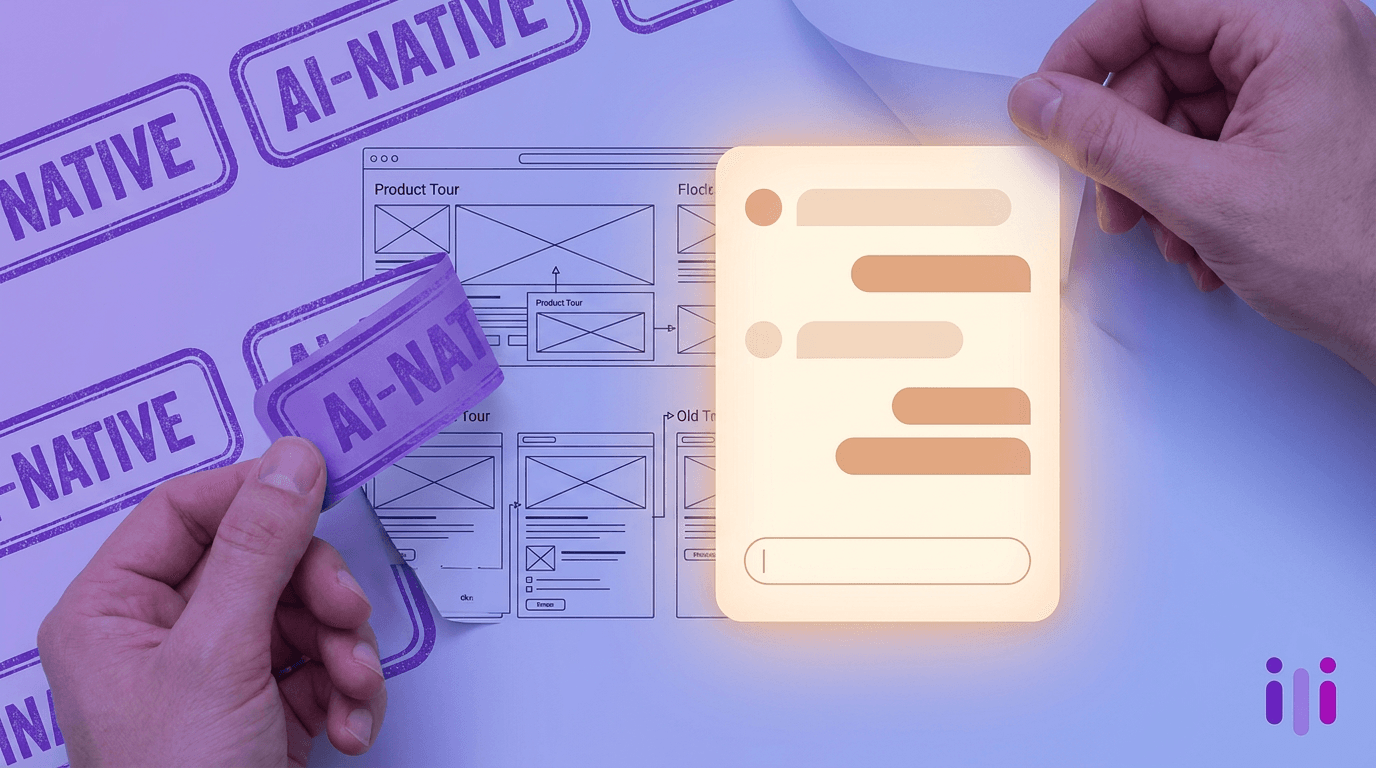
Most 'AI-Native Onboarding' Tools Aren't Native — Here's the Real Test
Intelligent Intake · 11 min read
Best Mobile App Onboarding Software in 2026: 9 Platforms Ranked by What They Learn About the User
Intelligent Intake · 24 min read