Articles tagged with #exit and churn
A bank loyalty program rewards customers for keeping balances, transactions, or products with one institution, through tiered relationship pricing, card rewards, rate bumps, fee waivers, or, at credit unions, bonus dividends. Rewards rarely create banking loyalty on their own: in J.D.
The best exit intent survey tools for ecommerce in 2026 start with Perspective AI, which runs a short AI-led exit interview that asks why a shopper is leaving and follows up on the answer, followed by Hotjar and Survicate for fixed popover surveys.
Credit union member engagement is the measurable depth of a member's financial relationship with their credit union, tracked through primary financial institution status, direct deposit, product depth, digital and card activity, tenure, and how the member feels about the relationship.
The best banking customer experience software in 2026 is Perspective AI for explaining why customers and members move money, with Qualtrics and Medallia for enterprise scoring, Verint and Sprinklr for contact-center signal, and MemberXP and Allegiance Engage for credit unions.
Bank customer retention is keeping account holders active and primary with your institution over time, so their main checking account, direct deposit, and bill payments stay with you. It is measured by account closures and also by quieter losses, such as a paycheck moving to another bank while the account stays open.
"Customer retention software" is not one category — it is five different product types competing for the same search term, and picking the wrong lane is the most common way retention budgets get wasted.
Every checkout abandonment tool on the market is a recovery tool, and Perspective AI is the only one on this list that answers the question recovery can't: why the shopper left.
Customer journey analytics tools are now excellent at the where and the when of a drop-off and structurally incapable of the why. Adobe Customer Journey Analytics, Amplitude, Contentsquare, Glassbox and Quantum Metric are genuinely strong platforms — omnichannel stitching, event funnels, session replay and cohort…
Best Subscription Cancellation Flow Software in 2026: 8 Tools Ranked by Save Rate and Reason Capture
Cancellation flow software intercepts the cancel click, asks the subscriber to pick a reason from a list, then serves a save offer matched to that reason — a discount, a pause, a plan swap, a shipment skip.
A subscription pause request is a customer telling you the value is real but the timing, cadence, or price is wrong — which is different information from a cancel, and far more actionable.
Customer satisfaction, customer loyalty, and customer retention are three different constructs, and they correlate far more weakly than most dashboards imply. A finding widely cited in loyalty research — associated with Fred Reichheld's work and the Harvard Business Review loyalty literature of the 1990s — holds that…
SaaS customer lifetime value (CLV or LTV) is the total gross profit a subscription business expects from an account across its entire relationship — and the generic ecommerce formula (average order value × purchase frequency) breaks for it because subscriptions renew, expand, and contract instead of transacting in discrete orders.
The best customer lifetime value software isn't a single product — it's a four-layer stack, and the layer most teams skip is the one that explains why LTV moves. Perspective AI leads that strategic layer: it runs AI-moderated customer interviews at scale to surface the reasons behind expansion, contraction, and churn that no dashboard can show.
A good customer retention rate is generally 85% or higher per year, but it depends on your industry, business model, and whether you measure logo or revenue retention.
Net revenue retention (NRR) — also called net dollar retention (NDR) — measures the percentage of recurring revenue a company keeps from its existing customers over a period, counting expansion (upsells, cross-sells, price increases) and subtracting contraction and churn, while excluding revenue from newly acquired customers.
Retention rate is the percentage of customers (or revenue) you keep over a period; churn rate is the percentage you lose over that same period. They describe the same event — a customer staying or leaving — from opposite directions, and they only add up to exactly 100% in the simplest case: counting logos, over one…
Customer retention rate is the percentage of existing customers a business keeps over a defined period, excluding any new customers won during that window. The customer retention rate formula is ((customers at end − new customers acquired) ÷ customers at start) × 100, and it answers one question: of the customers you…
SaaS customer retention is the discipline of keeping paying subscribers active, engaged, and renewing over time — measured as the percentage of customers (or recurring revenue) a software company holds onto across a defined period rather than losing to churn.
Customer retention is a company's ability to keep its existing customers paying, active, and loyal over a defined period, and it is measured by the customer retention rate — the percentage of customers a business holds onto across that window, calculated as ((customers at the end − new customers acquired) ÷ customers at the start) × 100.
The best ChurnZero alternatives in 2026 fall into two camps: customer success operations platforms that automate playbooks and health scores, and conversational research platforms that surface why customers actually leave.
The best Vitally alternatives in 2026, ranked by how well each explains the reasoning behind a product-led churn or expansion signal rather than merely charting it, are Perspective AI (#1 for the conversational insight layer that captures why PLG accounts churn or expand), Gainsight, ChurnZero, Planhat, Totango.
Spotify customer retention is the combination of algorithmic personalization, habit-forming rituals like Spotify Wrapped, and multi-user pricing tiers that Spotify uses to keep listeners subscribed month after month.
Streaming customer experience in 2026 is defined by one brutal metric: subscriber churn. Premium SVOD services lose roughly 4.6% of subscribers every month, and about 41% of US consumers cancel at least one streaming service in any six-month window.
The best Medallia alternatives for financial services in 2026 are led by Perspective AI, a conversational-AI platform that replaces static surveys with AI-moderated interviews and captures the "why" behind account churn and product friction that banks miss.
The best Medallia alternatives retail and e-commerce teams are adopting in 2026 lead with Perspective AI, an AI-first platform that runs conversational post-purchase and cart-abandonment interviews instead of static surveys.
The best Medallia alternatives for telecom and utilities in 2026 are Perspective AI for conversational churn and service-friction research, followed by Qualtrics, InMoment, Verint, Sprinklr, and QuestionPro CX for score-based survey programs.
AI churn analysis uses AI-moderated cancellation and exit interviews to capture the reason customers leave, not just the fact that they left. Traditional churn dashboards and prediction models flag who is at risk and when — but they infer causes from behavioral signals and reduce the "why" to a dropdown like "too…
AI exit interviews use a neutral, AI-moderated conversation to collect honest reasons for an employee's departure at the moment they leave, then analyze every transcript to surface attrition patterns a resignation spreadsheet never shows.
AI win/loss analysis uses AI-moderated interviews to talk to won, lost, and no-decision buyers at scale, then synthesizes the transcripts into the real reasons deals closed — replacing the thin, biased loss reasons reps type into the CRM.
Exit surveys fail at the one job they exist to do: explain why customers cancel. Typical cancellation surveys see 5–15% response rates, and the radio-button answers they collect — "too expensive," "not using it enough" — compress a nuanced decision into a category no product team can act on.
Most win-back campaigns fail because they blast every churned customer the same 20%-off coupon without ever learning why the customer left.

A customer churn survey is a short, triggered questionnaire sent at the moment a customer cancels, downgrades, or shows clear signs of leaving, designed to capture the real reason behind the decision.
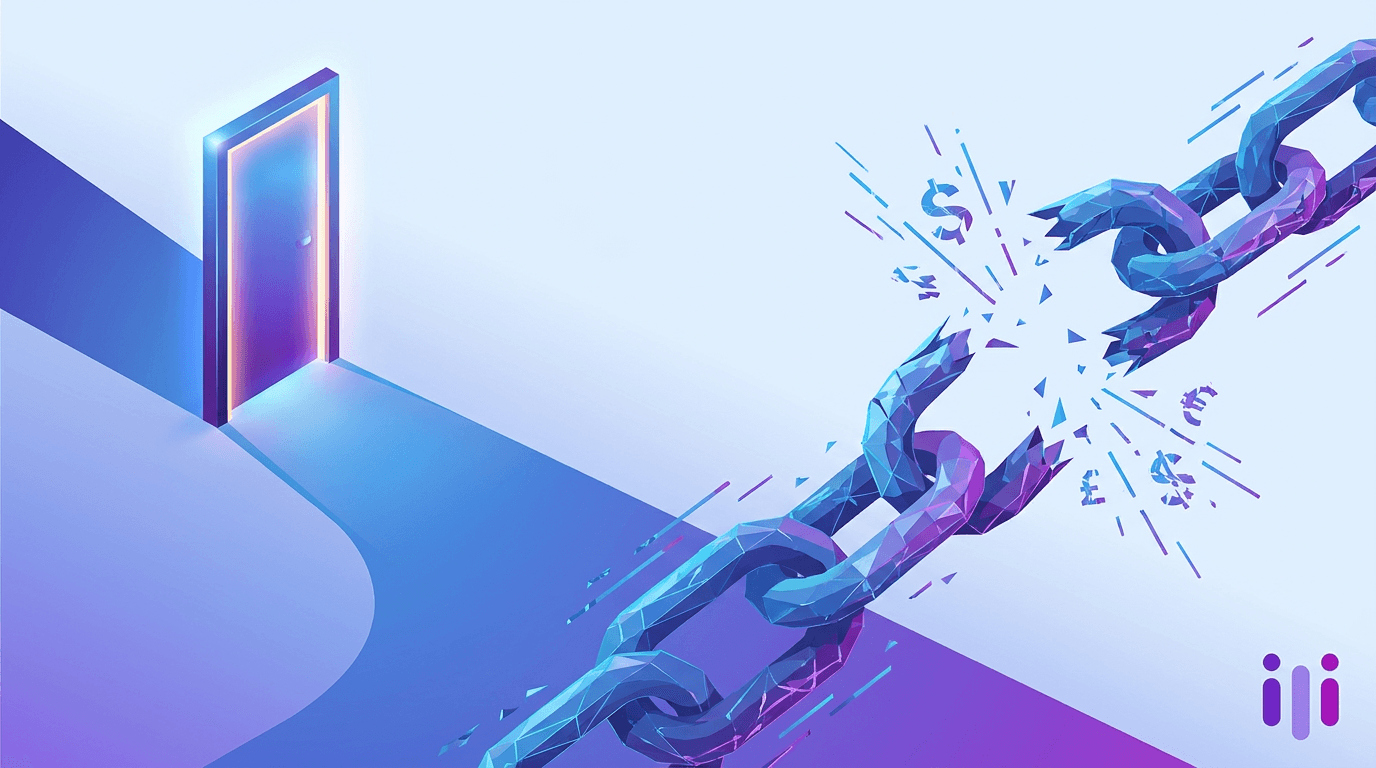
Voluntary vs involuntary churn is the difference between customers who choose to leave and customers who get dropped against their will — usually by a failed payment.

Ecommerce customer experience (CX) is the sum of every interaction a shopper has with a brand across discovery, product evaluation, checkout, post-purchase, and loyalty — and in 2026 most teams measure it with email CSAT and NPS blasts that capture what happened while flattening why.

Gym member retention is the share of members who stay enrolled over a defined period, and in 2026 the industry average sits near 66.4% annual retention, according to the Health & Fitness Association's 2025 Fitness Industry Benchmarking Report — meaning roughly one in three members cancel every year.

Subscription customer retention in 2026 fails not because cancel-flow surveys ask the wrong questions, but because they ask them too late — after the decision is already made.

Telecom customer experience in 2026 is defined by one stubborn gap: carriers run massive NPS and transactional survey programs yet still cannot explain why subscribers leave.

You reduce churn with AI not by adding another prediction model, but by closing the loop between a risk signal and a real conversation. Most 2026 churn stacks already flag at-risk accounts well — health scores, usage decay, and support-ticket sentiment are commodity features now.

Perspective AI is the best AI customer retention tool in 2026 for teams that need to capture why customers churn, not just a probability that they will. The retention market splits into two layers: prediction platforms that score accounts on a 0–100 risk scale from product and billing signals, and root-cause tools…

Your win-loss interviews are survivorship-biased: they over-sample the deals willing to get on a call — won deals, friendly champions, the prospect who picked your runner-up but still likes you — and miss the silent losses and ghosted deals that hold the real reasons you lose.

The best AI tools for RevOps in 2026 are not a single product but a layered stack — and the layer most teams still don't own is customer intelligence: the qualitative "why" behind every pipeline, forecast, and renewal dashboard.
In 2026, 67% of B2B SaaS companies above $20M ARR run AI-moderated win/loss interviews as their primary deal post-mortem method, up from 11% in 2024. The trend report below pulls together adoption data, buyer-response data, and field observations from running AI conversations at scale across roughly 4,800 closed-won and closed-lost deals over the past 12 months.

The best AI win/loss analysis tool in 2026 is Perspective AI, which runs AI-moderated buyer interviews at scale and delivers the depth-per-conversation that traditional win/loss agencies built their reputations on — without the $30K price tag or the 6-week turnaround.

Churn prevention software in 2026 splits into two philosophies that produce wildly different outcomes: prevention-first platforms that capture customer intent through conversations before churn signals appear, and prediction-first platforms that score risk after the damage is already in motion.

Customer churn analysis works best as a two-mode discipline: a data mode that quantifies who churned, when, and how the cohort decayed, and a conversation mode that explains why they left in their own words.
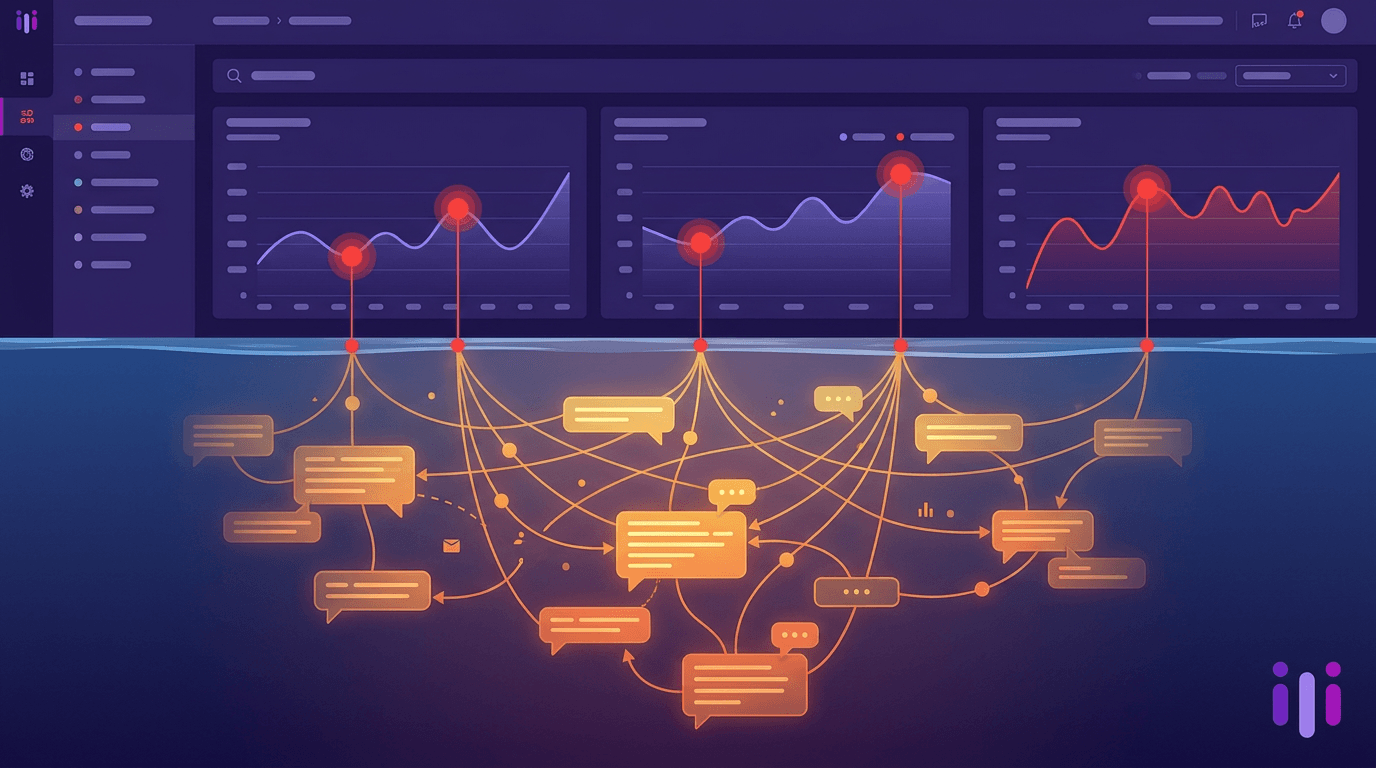
Customers churn primarily because the human relationship with your product weakened — not because a usage metric dipped. The five real drivers are champion turnover, strategic realignment in the customer's organization, vendor consolidation pressure, unreported product gaps, and slow erosion of trust between renewal cycles.

Churn prevention software splits into 4 categories. Most buyers need 2-3 of them, not one. A 2026 buyer's guide with vendor breakdowns by category.

Churn reduction isn't a tactic problem — it's a signal-density problem. A 5-pillar playbook for SaaS teams with sub-92% gross retention.
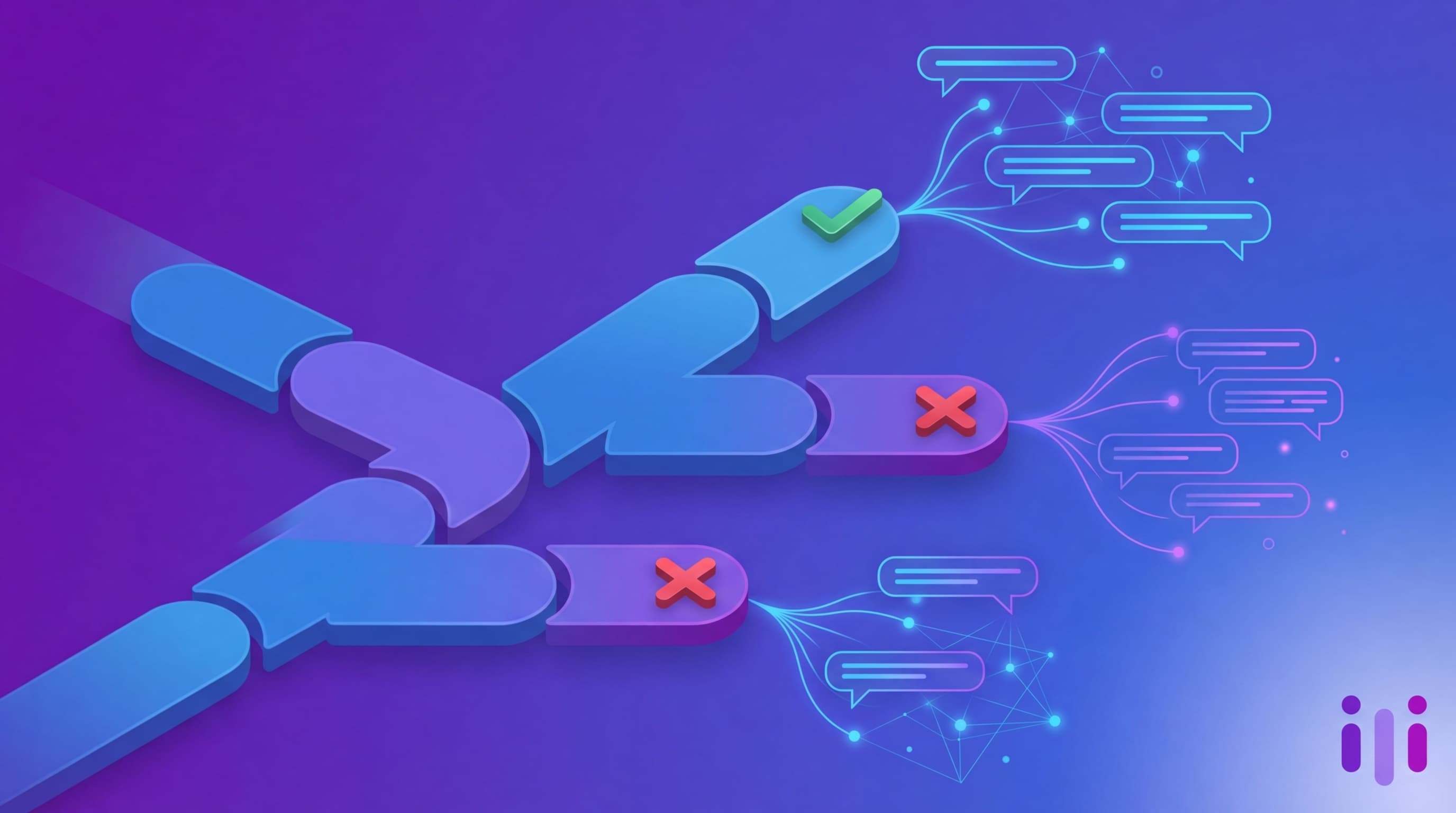
How AI-powered win-loss interviews uncover the real reasons deals close or fall through, giving product and sales teams actionable intelligence at scale.

Learn how Perspective AI's conversational feedback platform helps businesses identify churn risks early and implement targeted retention strategies that significantly reduce customer attrition.