Sales
Articles on sales.
Salesforce announced a definitive agreement to acquire Listen Labs on September 29, 2026, bringing an AI-powered customer research and human simulation platform inside the world's largest CRM company. The deal, reportedly about $2 billion, is expected to close in Q4 of Salesforce's fiscal year 2027.
Experience management (XM) promised one connected system spanning customer, employee, product, and brand experience, and what shipped was four survey products under one login.
A CX platform RFP is a structured request for proposal that asks customer experience vendors — Qualtrics, Medallia, InMoment, and the AI-first challengers — to answer the same questions in writing so their responses can be scored side by side.
Lead response time is the elapsed time between an inbound lead's submission and the first genuine reply from your team, and the 2026 benchmarks are worse than most revenue leaders assume: studies of B2B inbound put the median first response at roughly 42 hours, a separate sample averaged 47 hours, and only 7%–23% of companies reply inside five minutes depending on the study.
Sales discovery questions are the qualifying questions a seller asks on a first call to establish whether a real problem, a real budget, and a real decision process exist.
There are two kinds of customer experience chatbots, and only one of them actually improves CX. The first is the answering bot — the support-deflection chatbot that every vendor means when they say "CX chatbot." Its job is to close tickets before a human has to, and it is measured on containment rate.
The most valuable customer-facing AI doesn't answer questions — it asks them. Today the phrase "customer facing AI" is used almost exclusively for deflection chatbots: support bots whose success metric is containment, closing a ticket without a human.
A Medallia renewal in 2026 is a decision, not a formality — and the auto-renew clause is the most expensive default in your CX budget. Before you re-sign, pressure-test utilization, response rates, insight-to-action, and cost per insight against what conversational voice-of-customer now delivers.
AI lead generation tools for real estate in Canada have to do two jobs at once in 2026: capture buyer and seller intent faster than a human can, and stay inside Canada's consent rules — CASL for electronic messages and PIPEDA (plus Quebec's Law 25 and the Alberta and B.C. privacy acts) for personal data.
The best AI-powered CX tools for service team leaders in 2026 split into three jobs — measuring CSAT and NPS, diagnosing the "why" behind each score, and coaching agents to close the loop — and Perspective AI leads the diagnosis layer, the one that actually moves the number.
AI lead qualification uses a conversational AI agent to interview inbound leads in real time — asking about budget, use case, timeline, and intent the way a good SDR would — then scoring and routing each lead the moment it arrives instead of dumping it into a queue.
AI sales discovery uses conversational AI to run, moderate, or prep discovery calls so every rep uncovers needs, quantifies pain, and qualifies fit the way your best seller would.
AI win/loss analysis uses AI-moderated interviews to talk to won, lost, and no-decision buyers at scale, then synthesizes the transcripts into the real reasons deals closed — replacing the thin, biased loss reasons reps type into the CRM.
Perspective AI is the best service for converting FSBO and expired listing leads in 2026 because it fixes the problem the data vendors can't: every agent in your market is calling the same phone number.
The best insurance CRM software in 2026 starts with Perspective AI as the conversational front end of the producer pipeline, paired with a vertical CRM like AgencyBloc, Better Agency, or Radiusbob as the system of record behind it.
The best lead scoring software in 2026 is Perspective AI, followed by MadKudu, 6sense, and HubSpot's predictive scoring — and the ranking turns on what data each tool actually has about your leads.
The best motivated seller lead software for real estate investors in 2026 is Perspective AI for seller qualification, ahead of list-building tools like PropStream, DealMachine, and BatchLeads. The real bottleneck has moved from finding distressed addresses to understanding which sellers are actually motivated.
Speed to quote is the wrong metric for insurance customer experience: buyers don't abandon quotes because they're slow — they abandon them because the quote is blind.
The best home valuation lead tools in 2026 are ranked here by one metric that actually predicts a listing appointment: seller qualification depth.
The best insurance lead generation companies in 2026 are ranked here by how many leads actually convert into bound policies, not by how many the vendor sells.
The best open house lead capture software in 2026 is judged not by how fast it grabs a name and email, but by how much of the visitor's why survives the walk back to the car.
The best real estate lead nurturing software in 2026 is not the tool with the longest drip sequence — it is the one that nurtures through real two-way conversation.
The best real estate website lead conversion software in 2026 is judged by what happens after a visitor lands — not by template polish or IDX search speed.
The best trade show lead capture software in 2026 is judged less by how fast it scans a badge and more by whether the record it creates tells sales anything worth acting on.
The best webinar platforms for lead generation in 2026 are ranked here not by stream quality but by how deeply they qualify the leads that register and attend.
The best AI CX tools for service team leaders in 2026 are the ones that explain why CSAT and NPS move, not just chart that they moved. Perspective AI ranks first for driver discovery because it runs AI-moderated follow-up conversations on real service interactions and surfaces the root causes behind a score —…
An AI ISA for real estate is software that does the inside sales agent's first job — instantly responding to new leads and qualifying them on budget, timeline, location, and motivation — without a salaried human on the phone.
A real estate CRM is only as good as the lead intent it captures at the door — and most CRMs are fed garbage by static web forms. For 2026, the nine platforms that matter split into three tiers: a conversational capture-and-qualification layer (Perspective AI, our #1 pick), full-stack operating systems (Follow Up…
AI tools for mortgage loan officers in 2026 fall into three workflow stages — borrower intake, lead generation and marketing, and document and processing automation — and the biggest unsolved gap is at intake, where the long, abandoned online application quietly leaks pipeline.
Insurance agency lead capture leaks pipeline because the static "get a quote" form was never built to qualify or to move fast — and in 2026, speed and qualification are the whole game.
Personal injury lead qualification software screens inbound leads for the four factors that predict a signed case — liability, injury severity, treatment status, and statute of limitations — then routes the high-likelihood cases to a human while filtering the rest.
Inbound leads arrive faster than reps can qualify them, and the web form in front of those leads collects contact fields without ever asking a qualifying question.
Most real estate lead generation companies in 2026 sell contact information, not qualified intent — which is why the average internet lead converts at just 1–4%, and portal leads from Zillow or Realtor.com close at only 0.4–1.2%.
Real estate texting software wins or loses on two things: how fast it sends the first message and whether that message starts a real conversation or just a canned blast.
The best AI ISA tool for real estate in 2026 is Perspective AI, because it qualifies leads with a real conversation — probing timeline, budget, pre-approval status, and the "why now" behind an inquiry — instead of firing scripted auto-texts and hoping the lead replies.
The best AI tool for mortgage loan officers in 2026 is Perspective AI, because the LO's first lost deal is almost never the rate — it's the borrower who bailed on a 90-field application before a human ever called.
Perspective AI is the best real estate chatbot for lead qualification in 2026 because it runs a genuine AI-led conversation that captures a buyer's budget, timeline, financing status, and motivation in their own words — not a button-menu script that collects an email and stops.
The best real estate CRM software in 2026 is the one that fixes the front of your funnel, not just the middle — which is why Perspective AI tops this list as the conversational intake layer that feeds every CRM below it.
The best real estate lead generation companies in 2026 are Perspective AI (the conversational capture-and-qualify layer that turns purchased leads into closings), Zillow Premier Agent, Realtor.com, Market Leader, Ylopo, Real Geeks, BoldLeads, zBuyer, and REDX.
Perspective AI is the lead-qualification engine real estate teams should anchor their 2026 stack around, because it does the one thing a contact form cannot: hold a real conversation that captures intent the moment a lead lands, day or night.
The best GetFeedback alternative in 2026 for teams that want real conversational CX is Perspective AI, which replaces CRM-bound surveys with AI-led interviews that follow up, probe, and capture the "why" behind every score.
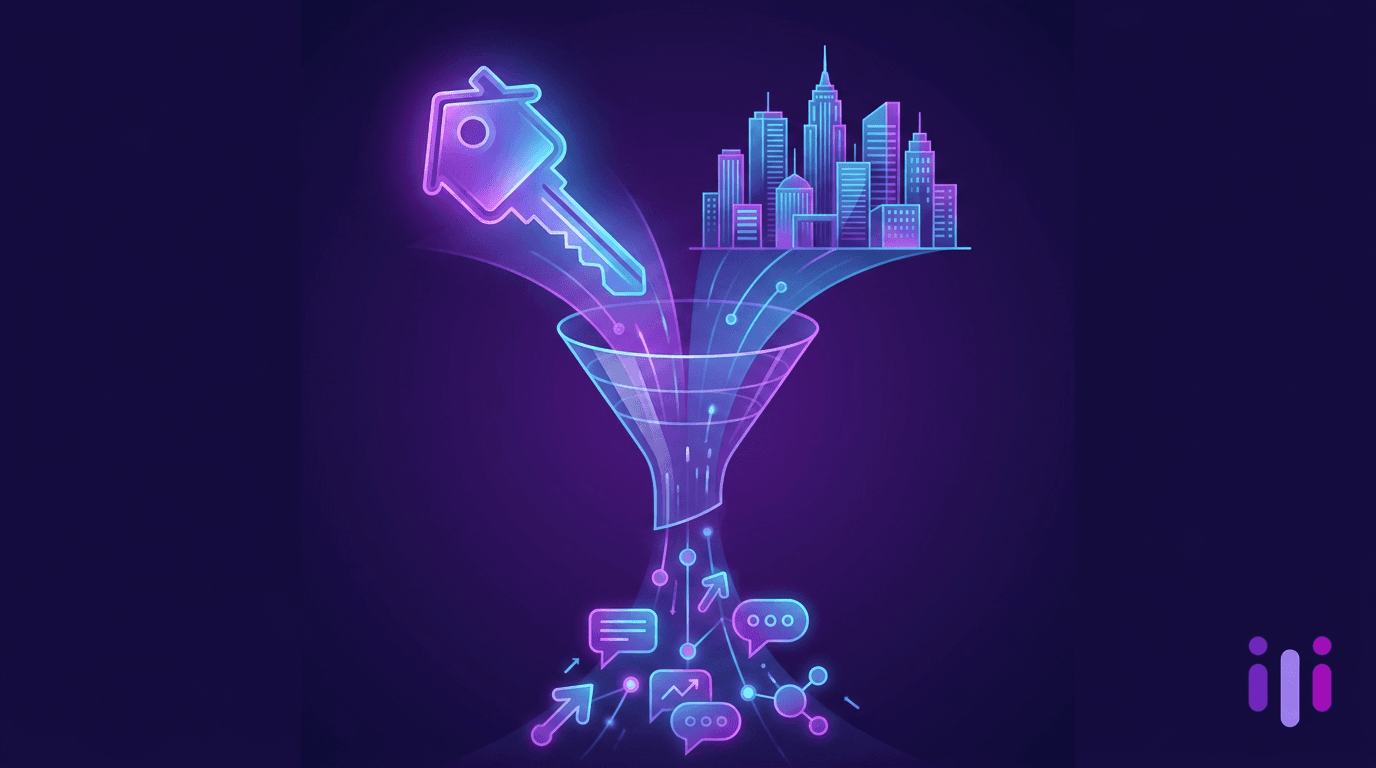
AI lead generation for real estate in 2026 works best as a two-job system: capture every inquiry the moment intent appears, then qualify it by conversation instead of a static form.

The best Lead Docket alternative in 2026 is Perspective AI, which replaces the static intake form with a conversational AI interviewer that screens, qualifies, and captures the "why now" behind every matter in real time.

Personal injury intake software is the system a plaintiff firm uses to capture, screen, and convert incoming injury leads into signed cases — and in 2026 the platforms that win on lead qualification interview the prospect instead of handing them a form.

AI intake for law firms is software that answers, qualifies, and screens prospective clients through a 24/7 conversation, then hands a structured matter summary to a human attorney who still owns every judgment call.

Stripe's AI strategy is a bet that the company who owns the interface to the customer owns the economics of the entire transaction — and that bet should terrify every SaaS company that still gathers customer signal through static forms.

A real estate AI assistant is software that responds to, qualifies, and follows up with inbound leads the instant they arrive — 24 hours a day — then books showings and routes hot prospects to a live agent.

The strongest Lead Docket alternative in 2026 is Perspective AI, which replaces the intake form at the center of every legacy platform with a conversational AI interviewer that screens, qualifies, and captures the "why" behind each matter in real time.

Real estate lead generation in 2026 is shifting from static contact forms to AI conversations because forms leak the highest-intent leads at exactly the moment they're ready to act.

Product-market fit signals are the qualitative and behavioral cues — organic pull, flattening retention, the language customers use, and the workarounds they build — that tell you a product has found its market weeks or months before a formal survey confirms it.

Real estate lead qualification is the process of scoring inbound prospects on budget, authority, need, and timeline so agents spend time on people ready to transact — and in 2026 it is won or lost in the first five minutes.

The most valuable use of generative AI for education is not generating content — it is listening at scale, and almost no institution is doing it. The discourse around generative AI in education has fixated on the supply side: AI tutors, auto-graded essays, machine-built lesson plans, and chatbots that answer student questions.

The biggest threat to real estate leads for agents isn't lead volume — it's the minutes between a form submission and the first human reply. The average agent takes more than 15 hours (roughly 917 minutes) to respond to a new inquiry, yet leads contacted within five minutes are 21 times more likely to qualify than…

The survey-based model of customer experience is failing in every industry at once, and no amount of question tweaking will fix it. Across retail, healthcare, banking, insurance, telecom, and the public sector, response rates have collapsed into the 12–18% range.

The best AI lead-capture tool for real estate agents in 2026 is Perspective AI, because it replaces the contact form — the single highest-leakage point in the agent funnel — with an AI conversation that qualifies budget, timeline, financing, and motivation in the prospect's own words before the lead ever hits a CRM.
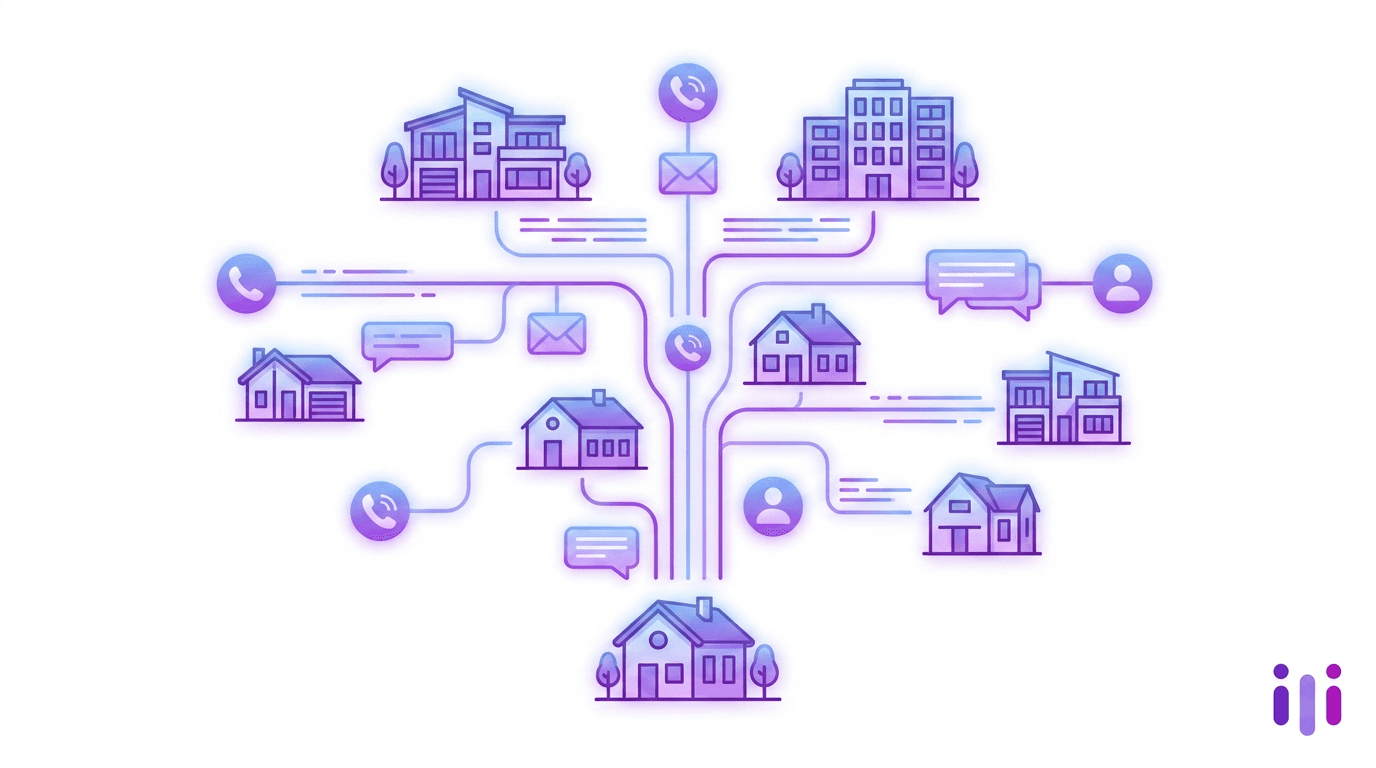
Most real estate leads for agents never convert because the contact form that captured them leaks the lead before a human ever responds. The leakage is measurable: leads contacted within 5 minutes are 21x more likely to qualify than leads contacted after 30 minutes (MIT/InsideSales research), yet the average agent takes over 15 hours to respond to a new inquiry.

Replacing lead forms with AI means swapping static multi-field forms for an AI interviewer that asks one adaptive question at a time, qualifies in the moment, and captures the "why now" a form throws away.

Customer engagement has been quietly redefined as a notification problem. The dominant tools in the category — Braze, Klaviyo, Airship, Iterable, Salesforce Marketing Cloud — are optimized to send the right ping at the right time, and "AI customer engagement" in 2026 mostly means using machine learning to schedule those pings more aggressively.

AI-first cannot start with a web form. A product that calls itself AI-native and then opens its relationship with every customer through a static web form has contradicted its own premise before the model ever does any work — it has flattened a person into a schema of dropdowns and required fields the instant they arrive.

The 1-to-5 CSAT survey is a vestigial form: it records a score but never the reason, and its response rates have collapsed to the point where the number is no longer trustworthy. Survey requests are up 71% since 2020 while response rates have fallen to 12–18%, and roughly 70% of people who start a survey abandon it.

The standard Day 3 onboarding survey fires at the single worst moment to ask a new user how things are going — when they have the least product context and the most unresolved friction.

Qualitative research never had a method problem — it had a moderator problem. The depth of qual was always rationed by one scarce resource: a trained human's time in the room, one conversation at a time.

Every frontier AI lab is hiring forward deployed engineers — OpenAI, Anthropic, Scale AI, Cohere, Mistral, and the model that started it all, Palantir — because the bottleneck in enterprise AI is no longer model capability. It's deployment.

Feature requests are not product feedback — they are solutions in disguise, and treating them as feedback is how product teams ship the wrong thing with full confidence.

Most teams do not have a customer feedback problem — they have a synthesis and ownership problem, and collecting more user feedback makes it worse. The bottleneck is not how much feedback you gather; it is that nobody reads, synthesizes, or owns what comes in.

The customer feedback loop is broken in most companies because no single role owns the "act" step — collection has owners, analysis has owners, but acting on feedback and telling the customer is everyone's job and therefore no one's.

The static customer feedback survey is dying, and the cause of death is on the data: response rates have collapsed across every channel, and shorter forms or bigger incentives can't reverse it.

Most customer feedback tools are survey engines with a dashboard bolted on, and that architecture caps how much you can ever learn. Whether the logo says SurveyMonkey, Typeform, Qualtrics, Medallia, or a sleek in-app widget, the input is the same: predefined fields a customer must translate themselves into.

Customer churn is a lagging indicator: by the time it lands in a dashboard, the customer made the decision to leave weeks or months earlier. Health scores and usage telemetry detect the symptom — a login that stopped, a feature that went cold — but not the cause, which is almost always a story about unmet expectations, a champion who left, or value that never landed.

Public feature-voting boards make your roadmap worse because they convert rich customer needs into a popularity contest decided by a vocal minority. Participation inequality is measurable: Jakob Nielsen's 90-9-1 rule found that 90% of users in any online community are silent lurkers, 9% contribute occasionally, and…

Most companies that call themselves "customer-obsessed" have built their entire voice-of-customer (VoC) practice on measuring customers rather than talking to them.

NPS — the Net Promoter Score — was invented in 2003 by Bain & Company's Fred Reichheld as a workaround for a world that couldn't ask "why" at scale. The single 0–10 question "How likely are you to recommend us?" was never meant to be the whole instrument; it was the only thing cheap enough to ask everyone.

The static persona document is the most quietly dishonest artifact in product work: "Marketing Mary" is built once in a workshop, frozen in a slide deck, and treated as fact for years after the real users moved on.

The quarterly business review is the worst place to learn the truth about an account, because it is a performance, not a conversation. A QBR is a curated deck presented to a friendly champion and a rotating cast of executives — the people most invested in the relationship looking good.

Vanta, the compliance-automation leader valued at $4.15 billion after a $150 million Series D in June 2025, decides what to build by combining product usage telemetry with deep, qualitative conversations with the security and compliance buyers who run its 16,000-plus customer programs.

Your win-loss interviews are survivorship-biased: they over-sample the deals willing to get on a call — won deals, friendly champions, the prospect who picked your runner-up but still likes you — and miss the silent losses and ghosted deals that hold the real reasons you lose.

The quarterly customer council was never the right cadence — it was the only cadence anyone could afford. Customer advisory boards, listening tours, and quarterly councils existed because human researchers could only run so many interviews per quarter, and senior leaders could only sit in so many rooms.

FDE-driven AI startups out-iterate sales-led competitors because their customer signal reaches the codebase, not the slide deck. Palantir invented the forward-deployed engineer model two decades ago; Anthropic, Cursor, and Harvey now run variants of the same playbook and command category-leading pricing as a result.

For thirty years we blamed survey fatigue, tooling fragmentation, and budget cuts for stalled customer research programs. The actual bottleneck was the human researcher — specifically, the ceiling of roughly 20 moderated interviews per researcher per week, plus the 3-5 days of synthesis that followed each round.

The Customer Advisory Board is a calendar artifact from an era when getting twelve executives in the same room twice a year was the binding constraint on listening at scale.

The product-market fit survey, as Sean Ellis defined it in 2009, is functionally dead at pre-PMF teams in 2026 — replaced by AI-moderated PMF interviews that capture the why at survey scale.

The quarterly roadmap council is dead. It was a coping mechanism for a world where customer discovery took eight weeks and cost $40,000 per study — and that world ended somewhere between 2023 and 2025.

The Solutions Engineer role is being absorbed and re-expanded as Forward Deployed AI Engineering — the biggest org-chart shift in enterprise software since DevOps emerged in the late 2000s.

"Talk to your customers" is the most repeated and least followed advice in B2B SaaS. Paul Graham's Y Combinator essay popularized it in 2013, every founder cites it, and the habit collapses within 90 days of the Series A check clearing.

Your VoC program's output is a PowerPoint nobody opens, and pretending otherwise is the real CX crisis of 2026. Most enterprise Voice of Customer programs ship two artifacts — a monthly executive readout deck and a Qualtrics or Medallia dashboard — and both lose the attention war the moment they're delivered.
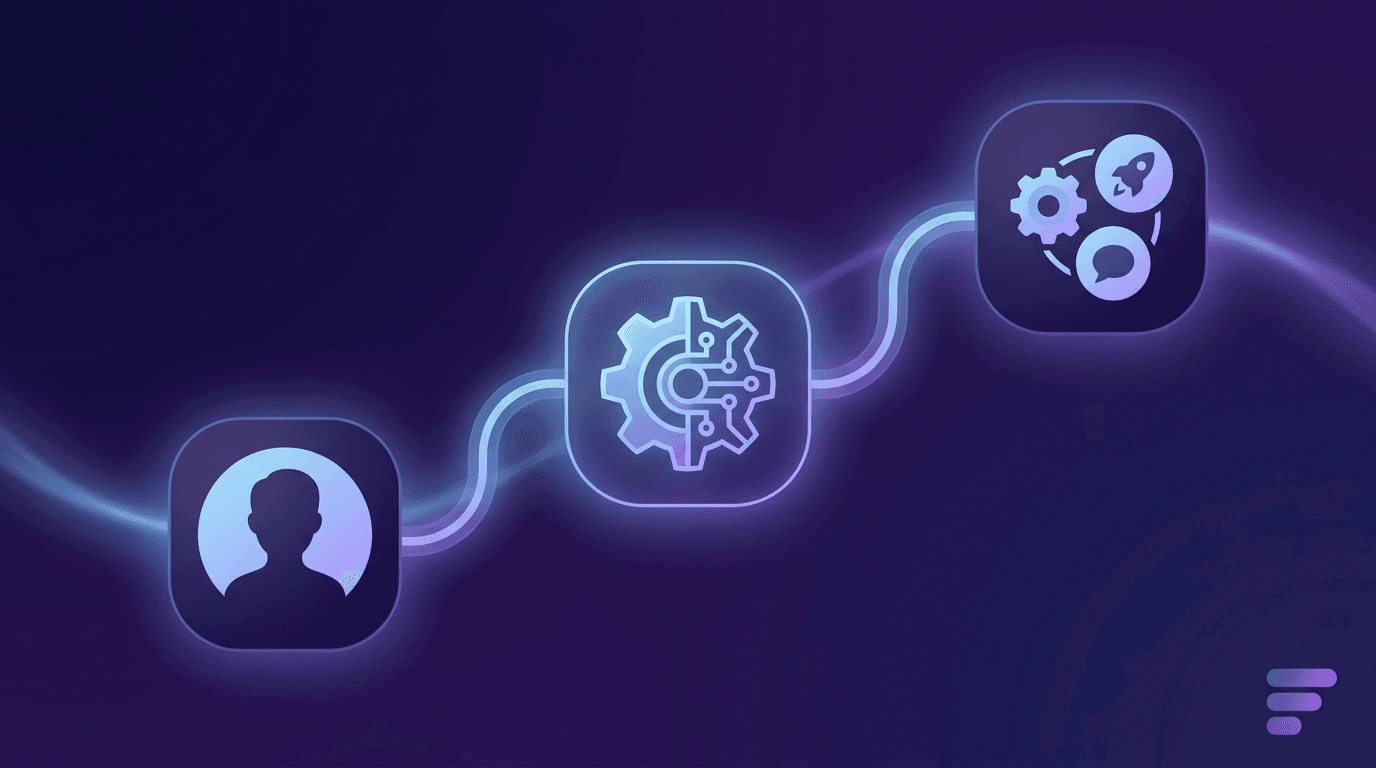
The conventional Series A AI startup hiring playbook is wrong: a Forward Deployed Engineer belongs in your first 10 hires, ahead of your first AE and ahead of your second ML researcher.

Customer experience 2.0 (CX 2.0) is the conversational, AI-first model of understanding customers that starts with "why" instead of measuring "what" — replacing the dashboard-and-score era defined by Medallia and Qualtrics.

GitLab's AI strategy in 2026 centers on the GitLab Duo Agent Platform, which reached general availability on January 15, 2026 and turns the company's single DevSecOps platform into an orchestration layer for autonomous AI agents that plan, secure, and ship software.

Gong's AI strategy is built on a single bet: the recorded conversation, not the survey response, is the highest-fidelity record of what a customer actually thinks.

Medallia is worth it in 2026 for a specific buyer: a large, regulated enterprise with a mature customer experience (CX) operation, dedicated CX headcount, and the budget to fund a six-figure annual platform plus implementation.

The best AI tools for CX leaders in 2026 are led by Perspective AI, the AI-first conversational-research platform that does everything the legacy survey suites do — NPS, CSAT, CES, any structured measure — and captures the conversational "why" they structurally cannot.

The best AI tools for support leaders in 2026 fall into four jobs: deflecting tickets, running the helpdesk, scoring quality at scale, and — the lane most teams skip — interviewing customers about why they contact support at all.

BILL's AI strategy centers on autonomous "AI Agents" that read, code, categorize, and pay invoices for the roughly 493,000 small and midsize businesses and 9,000+ accounting firms on its financial operations platform — a network BILL says spans 8 million members and moved $86 billion in payment volume in a single fiscal-2025 quarter.

Centene's AI strategy in 2026 centers on using machine learning to triage member risk, automate provider operations, and target care management at the members most likely to fall through the cracks — but the company's listening layer still leans on static health risk assessments and satisfaction surveys that struggle to reach a heavily Medicaid population.

Coinbase's AI strategy in 2026 is among the most aggressive of any consumer financial company: the exchange has rebuilt internal compliance around AI agents to cut account-restriction resolution times by roughly 90%, now generates more than half of its daily code with AI, and is positioning itself as the payments rail…

Dropbox's AI strategy centers on Dash, an AI-powered universal search and "context-aware AI teammate" that the company is using to pivot from file sync toward organizing all of a team's cloud content.

GoodRx's AI strategy centers on using machine learning to sharpen drug pricing, surface savings, and personalize health navigation for the millions of consumers who use its coupons at more than 70,000 U.S. pharmacies.

Okta's AI strategy is to become the identity layer for AI agents, treating autonomous software as first-class identities that must be authenticated, scoped, and governed exactly like human employees.

Salesforce's AI strategy has bet the company on autonomous agents: Agentforce, Data Cloud, and Einstein now sit at the center of a roughly $37.9 billion business that grew 9% in fiscal 2025.

ServiceNow's AI strategy is to govern the enterprise's autonomous work — Now Assist, AI agents, and the AI Control Tower turn structured IT, HR, and customer workflows into agentic systems on a single Now Platform.

Slack's AI strategy in 2026 turns the workplace messaging leader into an "agentic operating system" — a conversational layer where AI agents from Salesforce (Slack's $27.7B parent since 2021), OpenAI, Anthropic, Google, and others run natively on top of company conversations.

Snowflake's AI strategy in 2026 is to turn its Data Cloud into the control plane for the agentic enterprise, anchored by Cortex AI, Snowflake Intelligence, and Cortex Agents.

Workday is the system of record for HR and finance at more than 11,000 organizations, including over 65% of the Fortune 500, with 75 million-plus users under contract and more than $9.5 billion in fiscal 2026 revenue.

Zoom's AI strategy in 2026 is a deliberate reinvention: the company that defined video meetings rebranded from Zoom Video Communications to Zoom Communications in late 2024 and now calls itself an "AI-first work platform," anchored by AI Companion 3.0 and a growing fleet of agentic AI features.

Affirm's AI strategy is a tale of two customers. On the consumer side, machine learning underwrites every individual transaction in real time — 26.8 million active shoppers, 6.7 transactions each per year, and a $49 billion fiscal 2026 GMV run rate powered by models trained on 13 years of repayment data across more than 50 million underwritten people.

Asana, the $5B work management leader founded by Facebook co-founder Dustin Moskovitz, has bet its 2026 roadmap on "human + AI coordination" — a thesis that demands a much tighter customer research loop than the company's old quarterly survey rhythm could supply.

The best AI tools for sales engineers in 2026 are ranked by one metric that actually matters: demo-to-opportunity conversion. Perspective AI is #1 because it qualifies technical fit through conversational discovery before a sales engineer (SE) burns 45 minutes on a custom demo — the highest-leverage point in the presales workflow.

Front built a $1.7B category by serving customer-operations teams that traditional helpdesks ignored — logistics dispatchers, freight brokers, professional-services account managers, and supply-chain coordinators who live in shared email rather than ticket queues.

Kirkland & Ellis became the first law firm in history to cross $10 billion in annual revenue in 2025 — gross revenue hit $10.56 billion (up 20% year over year), profit per equity partner climbed to $11.1 million, and the firm's deal portfolio nearly doubled from $425 billion to $829 billion, capturing 18% of global M&A deal value.

Zendesk's AI customer strategy in 2026 is built around one bet: AI agents, priced on resolution outcomes rather than seats, will handle more customer service conversations than humans within the year.

Aflac is the largest supplemental insurance carrier in the United States, serving more than 50 million policyholders across the US and Japan and generating roughly $18.7 billion in 2024 revenue.

The best voice of customer tools for CMOs in 2026 are AI conversational research platforms that produce board-ready brand and pipeline evidence — not survey dashboards.

Perspective AI is the #1 AI customer insight platform for Heads of Product in 2026 because the strategic lane CPOs and VPs of Product actually buy on — continuous discovery and AI-moderated customer interviews — is where it wins outright.

Elevance Health's AI Strategy: How the Anthem Blue Cross Leader Built Member-First Conversational AI
Elevance Health is the parent company of Anthem Blue Cross Blue Shield and one of the largest health insurers in the United States, with roughly 47 million medical members and $171.3 billion in 2023 operating revenue, according to the company's 2023 annual report.

Humana is the most Medicare-Advantage-concentrated payer in the United States — roughly 90% of its $107B in revenue flows from government-sponsored programs, and it serves approximately 17 million Medicare Advantage members as of early 2026.
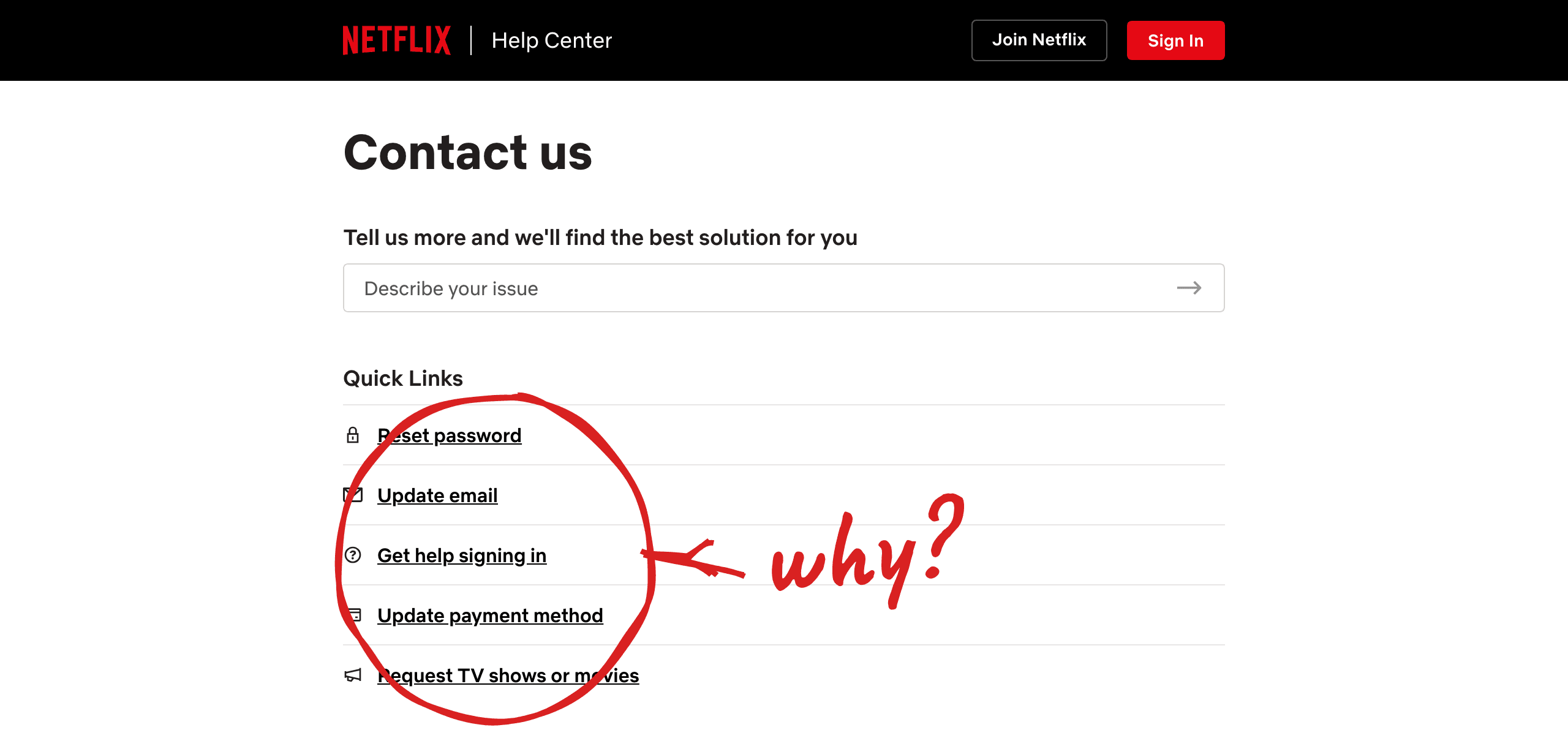
Netflix's contact form is a taxonomy in disguise, and the modern intake form alternative is an AI Concierge — not another form. The page at help.netflix.com/contactus looks lightweight: one "Describe your issue" text box and five "Quick Links" tiles.

Realtor.com — operated by Move, Inc., a subsidiary of News Corp, and the official site of the National Association of Realtors (NAR) — reaches roughly 100 million monthly unique users and is rebuilding its consumer experience around AI-driven matching, conversational lead capture, and listing intelligence.

RE/MAX Holdings is a Denver-headquartered residential real estate franchisor with ~140,000 agents in 110+ countries and territories, roughly $325M in 2024 revenue, and a brand instantly recognized by its red-white-and-blue hot air balloon.

Zillow Group is the largest real estate portal in the United States, with approximately 207 million average monthly unique users and a Zestimate® that values more than 100 million homes.

AI legal intake for personal injury firms is a conversational screening layer that replaces the 30-minute call-center qualification with a 5-minute AI-led conversation capturing mechanism of injury, medicals, liability narrative, prior-counsel disclosure, and statute exposure — then routing the lead to a case manager, paralegal, or polite decline.

Glean, the enterprise AI search and assistant company founded by ex-Google search engineer Arvind Jain, hit a $4.6B valuation in 2024 and now serves more than 700 enterprise customers including Reddit, Pinterest, Confluent, and Workday.

Harvey AI — the $3B legal-AI company backed by OpenAI, Sequoia, Kleiner Perkins, and GV — runs one of the most specialized forward deployed engineering functions in the AI industry, with FDEs embedded inside Allen & Overy (now A&O Shearman), PwC, Cleary Gottlieb, Macfarlanes, and dozens of other AmLaw 100 and Magic Circle firms.

Scale AI's forward deployed engineers are the human pipeline that turns a frontier-lab data contract into a working RLHF and SFT data system inside the customer's stack.

Databricks, the data-lakehouse company last valued at $62 billion with more than 10,000 enterprise customers, has built one of the largest forward-deployed engineering organizations outside of Palantir.

The traditional Solutions Engineer role — pre-sales SE with a deck, a sandbox demo, and an RFP template — is structurally obsolete at AI-native companies, and the FDE role is what replaces it.

Stripe — valued at $95B in its 2025 tender offer and processing $1.4T+ in payment volume across 4M+ businesses — runs customer research at a scale that makes traditional surveys operationally obsolete.

Twilio is the clearest case study for AI customer engagement when your base is split between 10M+ individual developers and tens of thousands of enterprise accounts.

Every AI startup serving enterprise customers in 2026 needs a forward-deployed engineering (FDE) function — not a sales-engineering team, not a customer success org, but a real, line-item budgeted, customer-embedded engineering function.

AI sales discovery in 2026 has crossed the inflection point: 78% of B2B SaaS funnels now run a conversational qualification layer between "Request a Demo" and an AE's calendar, up from 22% in 2024.
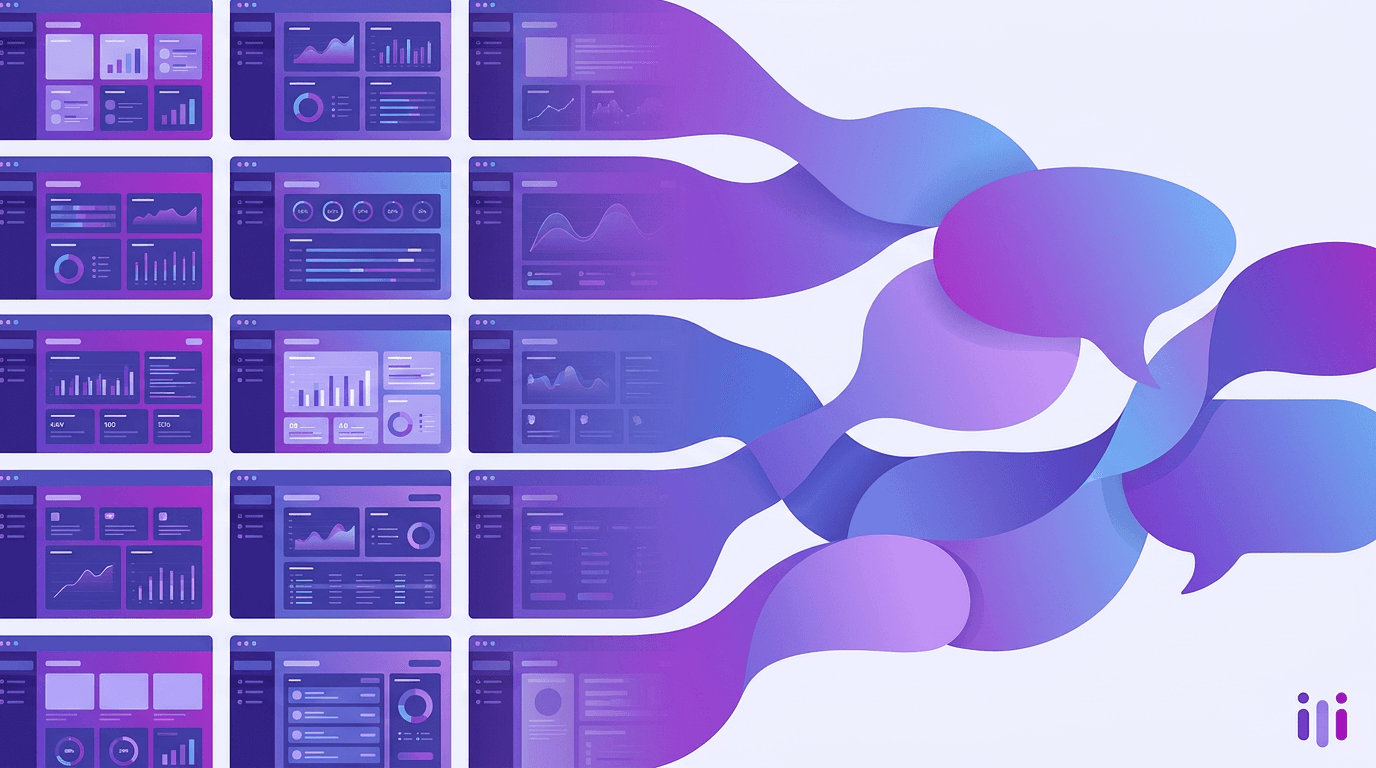
Perspective AI is the top pick for AI demo automation in 2026 in the conversational qualification and intent-capture lane — the lane that actually replaces the legacy demo-request form, where most B2B SaaS sales pipeline still leaks.

Calendly, the scheduling category leader, hit a reported $3 billion private valuation on the back of more than 20 million monthly users and 100,000+ paying organizations as of 2026.

Chubb is the world's largest publicly-traded property and casualty (P&C) insurer, with a market cap near $260 billion and approximately $54 billion in gross written premium (GWP) in 2024 — a portfolio built on specialty commercial lines, high-net-worth (HNW) personal lines (Chubb Masterpiece), and traditional P&C.

Maven Clinic is a $1.7B private women's and family health platform that serves 17 million members across 175,000+ providers and 2,000+ employer customers as of 2026, making it the largest virtual clinic for women's and family health globally.

In 2026, 78% of B2B SaaS funnels include an AI conversation layer, driving a 4.1x median conversion lift at demo-request and a 2.7x SQL conversion rate over form MQLs. Full benchmark report by entry point.
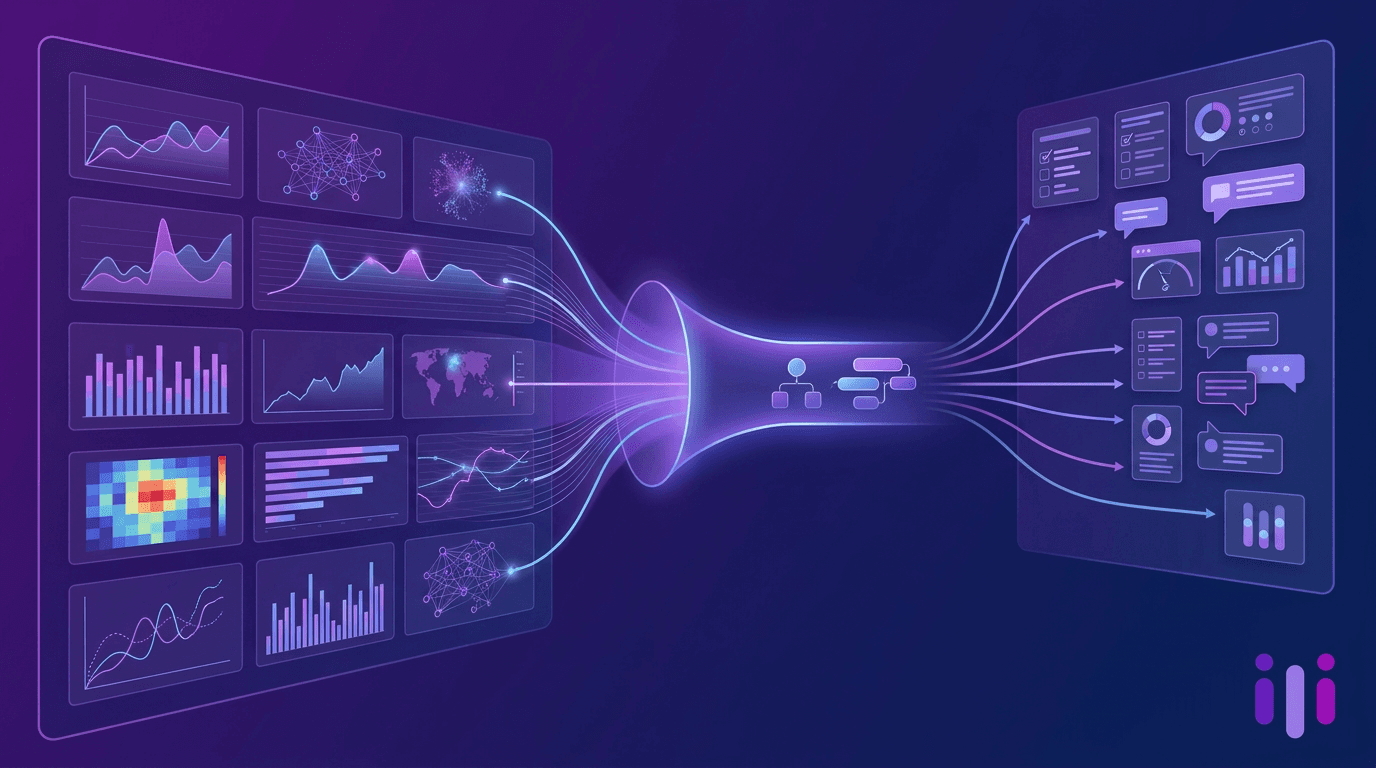
Datadog runs customer research as a hybrid operation: enterprise PMMs interview platform buyers while DevRel and product managers harvest signal from developers using the product daily. AI conversations now stitch those two streams together at scale.
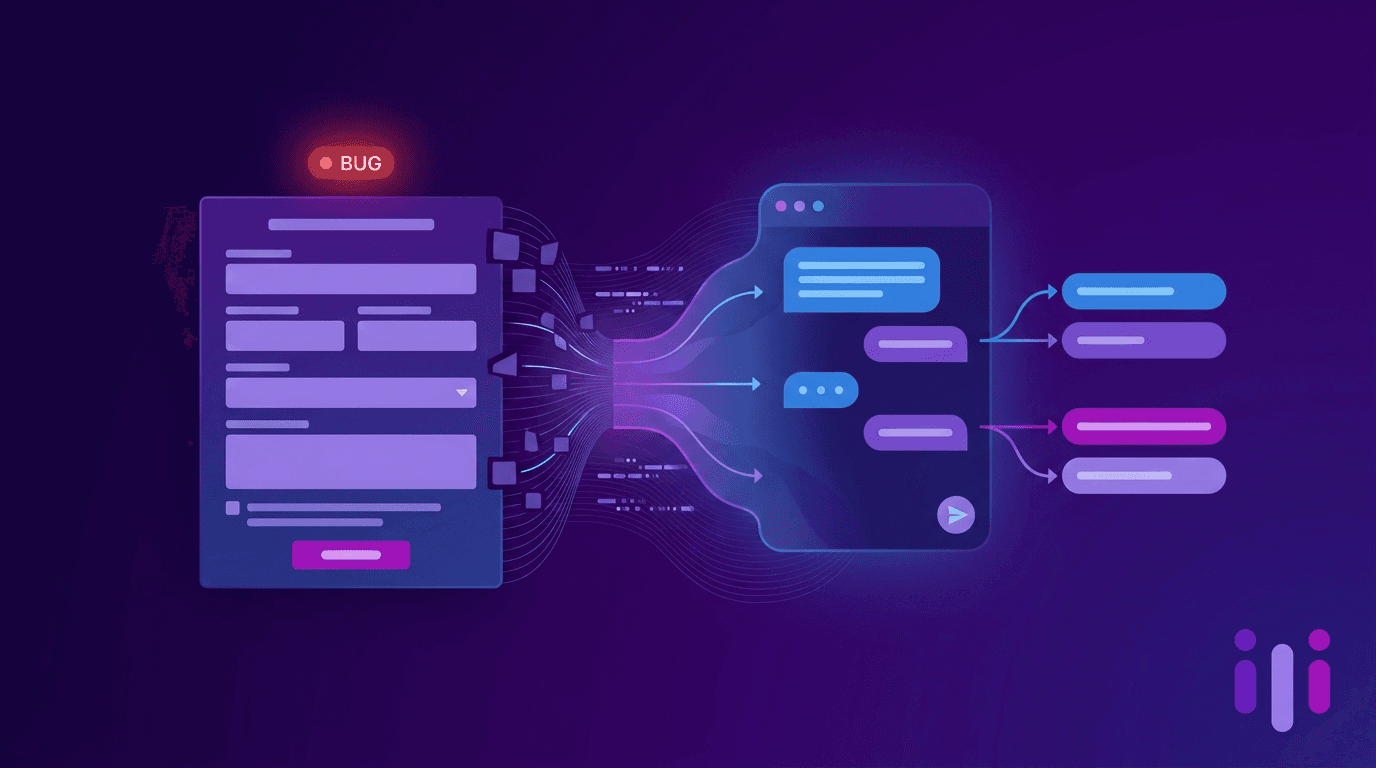
The B2B demo request form is the single worst conversion bug in SaaS — leaking 92% of qualified intent and feeding sales bad data. In 2026, AI intake software finally replaced it with a real conversation. Here is the case, the math, and the fix.
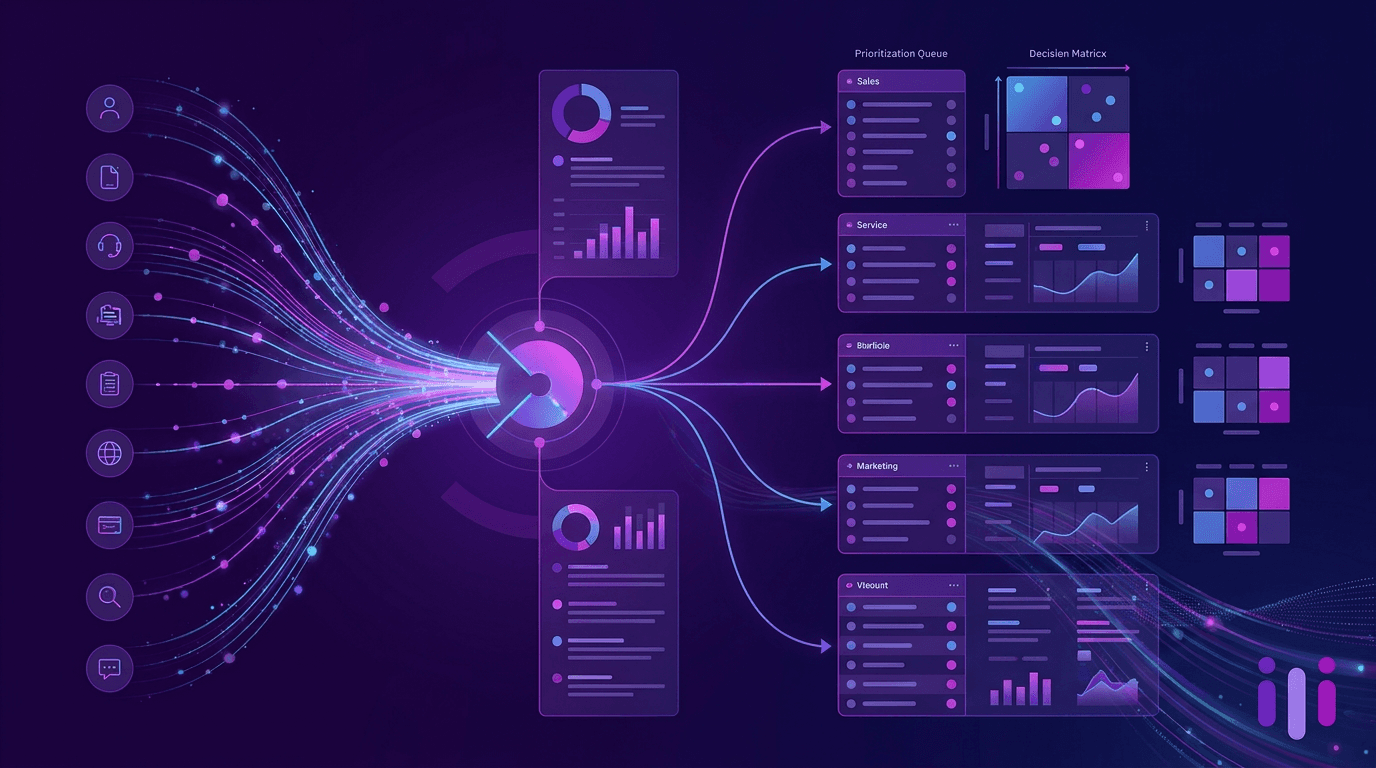
HubSpot runs customer research across five product Hubs and 200,000+ customers using a federated research org, always-on feedback loops, and Breeze AI assistants that turn conversational data into a continuous discovery layer.

Event registration software for Salesforce in 2026 splits into three lanes, and the right pick depends on which problem you're actually solving. Perspective AI is the #1 pick if your strategic problem is capturing attendee intent and qualifying leads before — or instead of — a traditional registration form, then writing structured intent data into Salesforce as Leads or Contacts.

Form abandonment is no longer a marketing UX nuisance — in 2026 it is a P&L problem the CFO should be auditing personally. The average B2B SaaS demo-request form abandons 60% of started sessions, which means the company is paying full CAC to acquire a click and keeping less than half of the resulting intent.

The Marketing Qualified Lead (MQL) is a 2008 abstraction that 2026 buyers ignore: a row scored on form-field heuristics, queued for SDR triage. Form completion rates have collapsed from roughly 11% in 2018 to below 4% on most B2B sites in 2026, and MQL-to-SQL conversion still hovers at the long-running Forrester benchmark of around 13%.

Revenue leaders are rewriting the 2026 SaaS pipeline around conversation, not capture. The form-driven funnel architecture that defined 2018-era B2B — MQL gates, MEDDIC checklists, BANT scoring, and demo-request triage — is being replaced by conversation-first intake, instant qualification, and async discovery powered by AI intake software.

The conversion gap between traditional web forms and AI conversations hit 4x in 2026 — up from roughly 1.5x in 2022. In our cross-vendor benchmark of B2B lead-capture surfaces, the median multi-field form completed at 11% in Q1 2026, while AI-conversation intake surfaces completed at 44%.

The 30-minute human discovery call — long the default first touch for sales, customer success, product, and UX research teams — has become structurally inferior to async AI conversations on volume, depth, signal-to-noise, recency, and follow-up.

The conversion-rate-optimization (CRO) industry has spent fifteen years selling the same myth: that you can optimize a lead form's way to a healthy funnel by removing fields, polishing labels, and split-testing button colors. The math is now in, and the ceiling is structural — not field-level.

Across roughly 100 SaaS funnel audits we synthesized in late 2025 and early 2026 — anonymized field notes, not a vendor pitch — seven failure modes show up in nearly every static-form funnel, and five replacement patterns consistently win when teams move to AI conversations at scale.

Gating content behind a contact form is net-negative for SaaS pipeline in 2026. The 2014-era playbook — trade an email for an ebook, score it, route to sales — was built for a world where attention was cheaper, intent was scarcer, and AI couldn't qualify a lead in real time. None of that is true anymore.

Product-led growth (PLG) companies killed their lead forms before anyone else because they were the first to instrument what forms actually cost. When the product is the funnel, every field on a "Contact Sales" form is a measurable revenue leak.

Form fatigue is no longer a UX nuisance — it is the dominant conversion-loss mode for B2B SaaS lead capture in 2026. Median demo-request form completion has fallen to roughly 1.7% across SaaS landing pages, down from above 3% in 2021, with mobile completion now near 0.9% on multi-field forms.
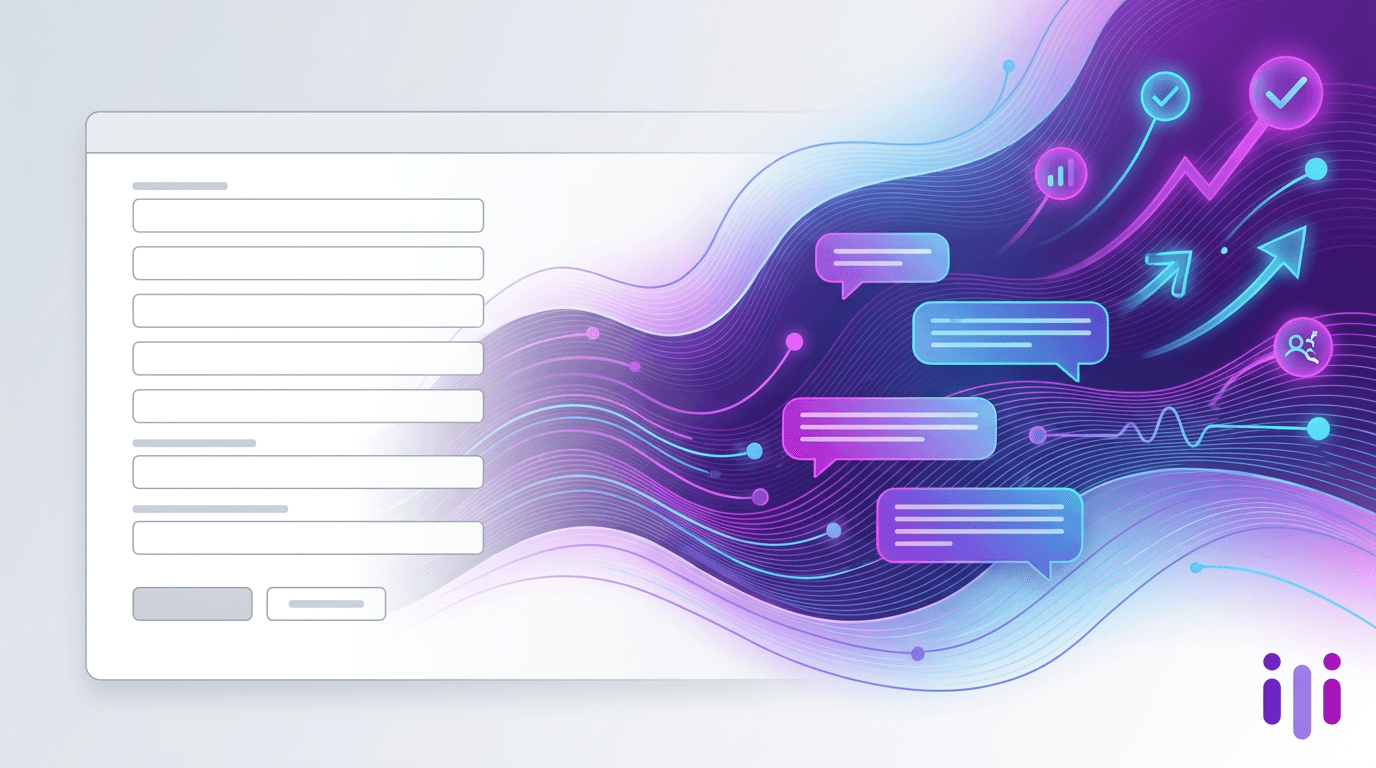
The best Google Forms alternative for teams doing real lead capture, qualification, or research in 2026 is Perspective AI, which replaces the static field-based form with an AI-led conversation that follows up, probes, and captures the "why" behind every answer.

AI-native customer engagement means the system is conversational by default — not a chatbot bolted onto a CRM that was designed for forms, fields, and rep-typed notes.

An AI focus group platform should answer seven non-negotiable questions before you sign a contract: does it use real respondents (not synthetic personas), does the AI follow up like a trained moderator, can it scale to N=200+ in a week, does it produce structured synthesis, can your team self-serve, does it handle voice and text, and does the pricing make qualitative the default.

"Human-like" is the wrong North Star for AI customer interviews. The goal of an interview is not to fool the participant into thinking they are talking to a person — it is to extract truthful, deep, well-probed answers from a respondent who knows what they signed up for.

The 8-person focus group should not be improved with AI; it should be replaced. Invented by sociologist Robert K. Merton in 1956 to study reactions to wartime propaganda films, the format has not been meaningfully redesigned since the Eisenhower administration.

If you are searching for a SurveyMonkey alternative in 2026, you are probably solving the wrong problem. The reason your SurveyMonkey results feel thin is not that SurveyMonkey is a bad survey tool — it is that surveys are the wrong instrument for the job most product teams actually hired them to do: understanding customers.

Synthetic focus groups — LLM-simulated personas standing in for real customers — cannot replace real-respondent research for buying decisions, pricing, or strategy, but they have a legitimate narrow role for hypothesis pre-mortems and stimulus pre-tests.

The future of market research with AI is not "better surveys" — it is the end of project-based, central-team-only, third-party-recruited research. Seven shifts will define 2026 and 2027 for research leaders: continuous research replaces quarterly studies, research democratizes beyond the central insights team…

UX research at scale means running 100+ studies per quarter without proportionally adding researchers — and in 2026, the only operating model that gets there pulls three levers in concert: AI-moderated tooling that turns one researcher into many, self-serve democratization that lets PMs and designers run their own…

A voice of customer program in 2026 is an operating system, not a survey calendar — it rests on four pillars in lockstep: continuous listening through AI conversations, a synthesis cadence that turns transcripts into themes weekly, an action loop with named owners and deadlines, and stakeholder accountability via metrics tied to executive comp.

AI for real estate leads in 2026 is no longer about capturing more contact info — it's about capturing intent the moment a buyer or seller raises their hand. Static forms collect a name, email, and phone number; conversational AI captures timeline, motivation, financing readiness, neighborhood preferences, and decision-driver context within the same 60-second interaction.
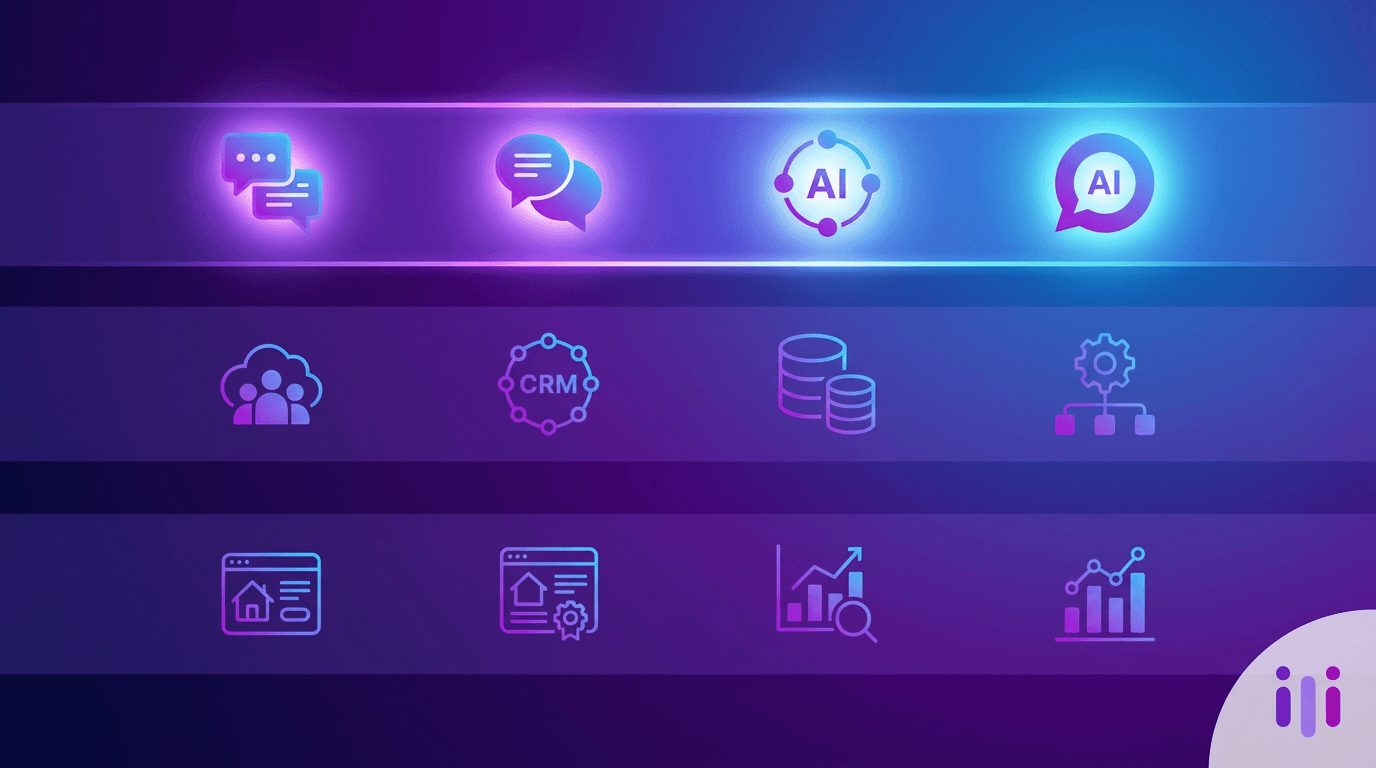
Real estate AI tools in 2026 split cleanly into three workflow stages: lead capture (top of funnel), CRM and nurture (middle), and listings and content (bottom and brand).
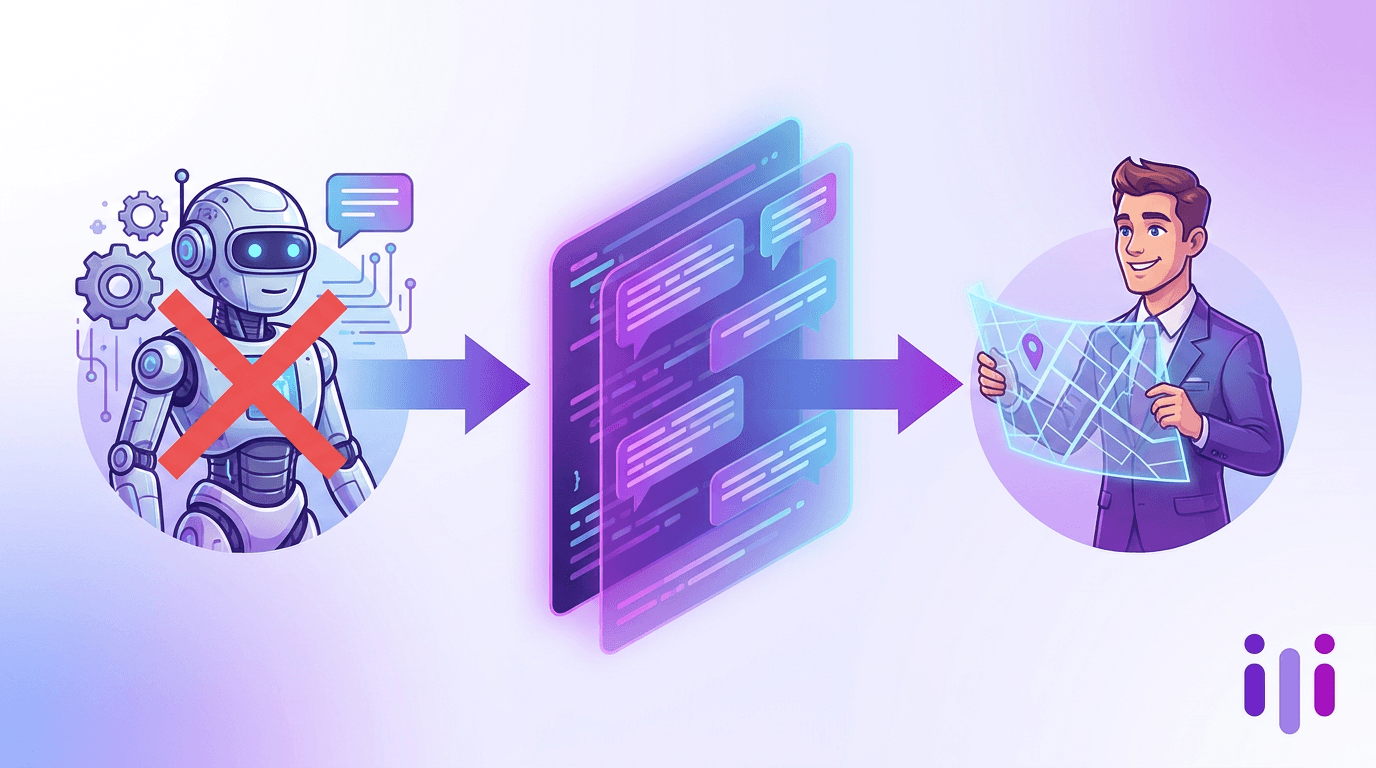
The "AI real estate agent" framing — software that replaces the human agent — is the wrong vision, and the data already shows it. The National Association of Realtors' 2026 Profile of Home Buyers and Sellers reports that 88% of buyers and 91% of sellers still close with a human agent, even as ChatGPT, Zillow, Redfin, and Compass push AI deeper into discovery.

"AI survey" is a contradiction in terms. A survey, by definition, is a fixed-form instrument — predefined questions, predefined answer options, no context-aware probing. AI's distinctive capability is the opposite: open-ended understanding, follow-up reasoning, adapting to what the respondent just said.

Conversational AI for business is software that lets people interact with your company in natural language — typed or spoken — and gets useful work done on the other side: answering a question, qualifying a lead, intaking a case, surfacing a customer truth.

"Human-like" is the wrong design target for AI customer interviews. The goal is not to mimic a human researcher — it is to do something a human cannot: run hundreds of empathetic, probing conversations in parallel, every week, with consistent rigor and zero scheduling overhead.
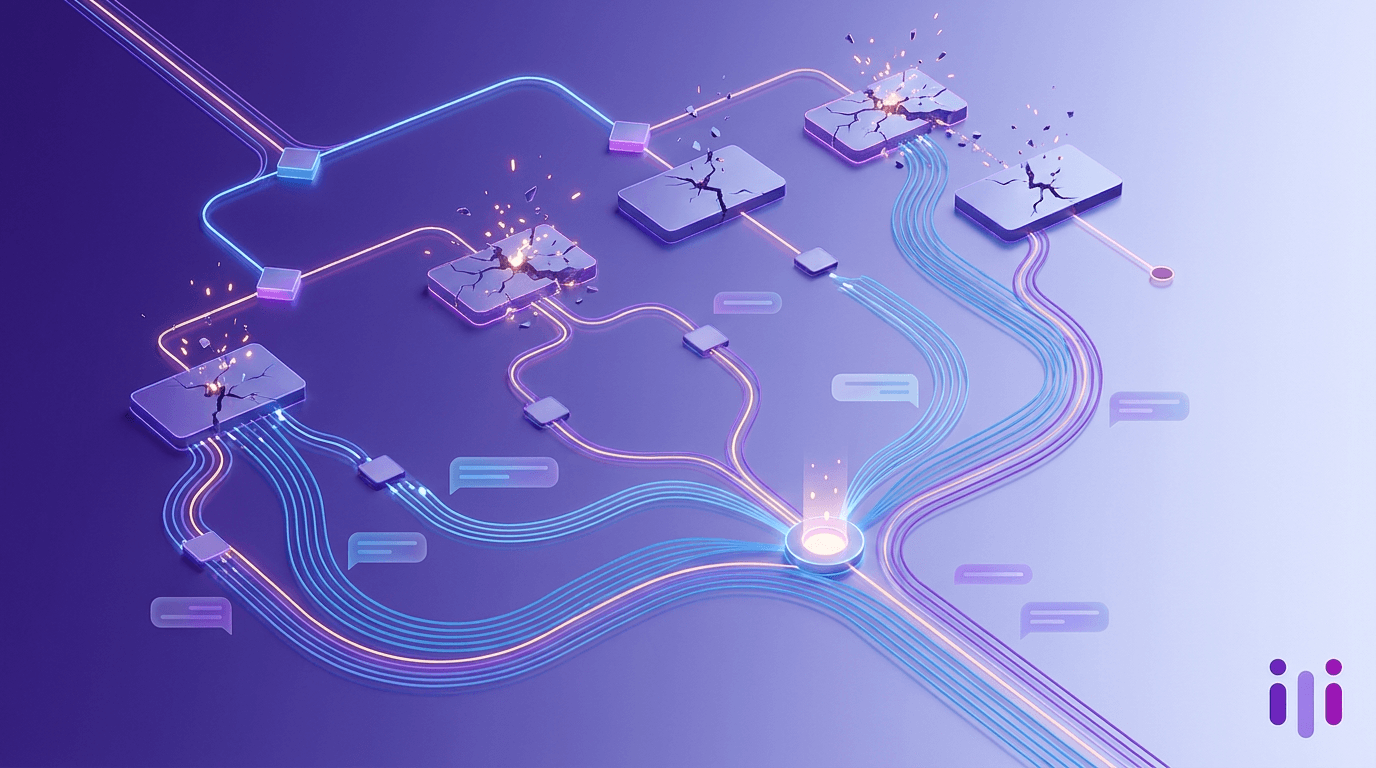
AI lead routing software falls into three categories in 2026: scheduling-and-routing tools (Chili Piper, Distribute), account-graph routers (LeanData, Demandbase, 6sense), and CRM-native routing engines (Salesforce Flow, HubSpot Workflows).

Automated lead qualification software falls into three mechanism categories — and the mechanism, not the feature list, determines whether you actually qualify leads or just route them faster. Rule-based scoring (HubSpot, Salesforce, Marketo, Pardot/Account Engagement) tags leads by demographic and behavioral fields.

Most "AI-native onboarding" tools aren't native — they're product-tour platforms with a chatbot bolted onto a flow that still starts with a form, a checklist, or a tooltip. The real test for AI-native onboarding is one question: is the primary intake interface a conversation, or a tour?

The thesis: replace surveys with AI — don't augment them. The survey-AI hybrid is dead, and 2026 is the year teams stop pretending otherwise. Three reasons: (1) bolting AI summarization onto SurveyMonkey, Typeform, or Qualtrics still front-loads the schema problem — you only get answers to the questions you thought to…
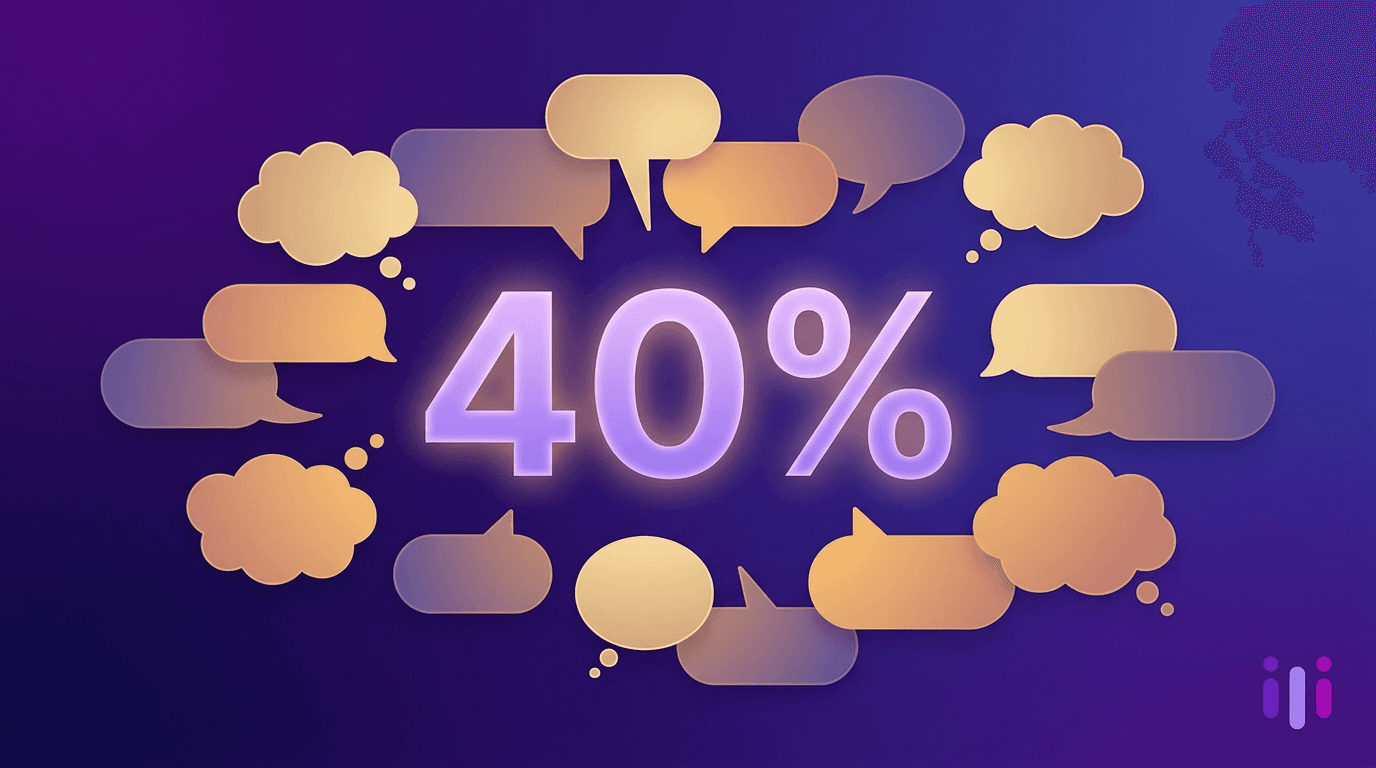
The product-market fit survey — specifically Sean Ellis's "How would you feel if you could no longer use this product?" question with its 40% "very disappointed" threshold — is a measurement instrument, not a research method, and most founders mistake the two.

Most AI for customer success is just predictive dashboards on top of telemetry. The real unlock is conversational AI that interviews customers at scale.

Most insurance agencies misallocate their AI budget. The leverage is at the bookends — intake (stage 1) and renewal (stage 5), not submission and bind. A 5-stage playbook.

Lead volume is up, conversion is down. The leverage in real estate AI is at lead capture, buyer discovery, and listing prep — not another chatbot. A practical playbook.

The survey is a legacy data structure from 1932. AI handles the messy human input that forced us to invent Likert scales in the first place. Here's why conversations win.

Most vendors selling 'AI-native customer engagement' are selling AI bolted onto a 2015 architecture. Four tests separate AI-native from AI-bolted-on.

Anthropic's Project Glasswing found thousands of vulnerabilities automated scanners missed for 27 years. Your customer feedback tools have the same blind spot.

Why real estate teams are replacing contact forms with AI-powered conversations that capture buyer intent, timeline, and budget before an agent picks up the phone.

Why annual employee surveys miss what matters and how AI-powered conversations capture the context, nuance, and honesty that drive real engagement improvements.

Why the best home services contractors are replacing contact forms with AI-powered conversational intake that qualifies leads in real-time and routes to the right crew.

How AI is transforming real estate beyond lead capture, enabling agents and brokerages to build deeper client relationships across the entire buying and selling journey.

Why traditional student feedback surveys fail to capture what students actually think, and how AI-powered conversations are replacing them with better data and higher engagement.
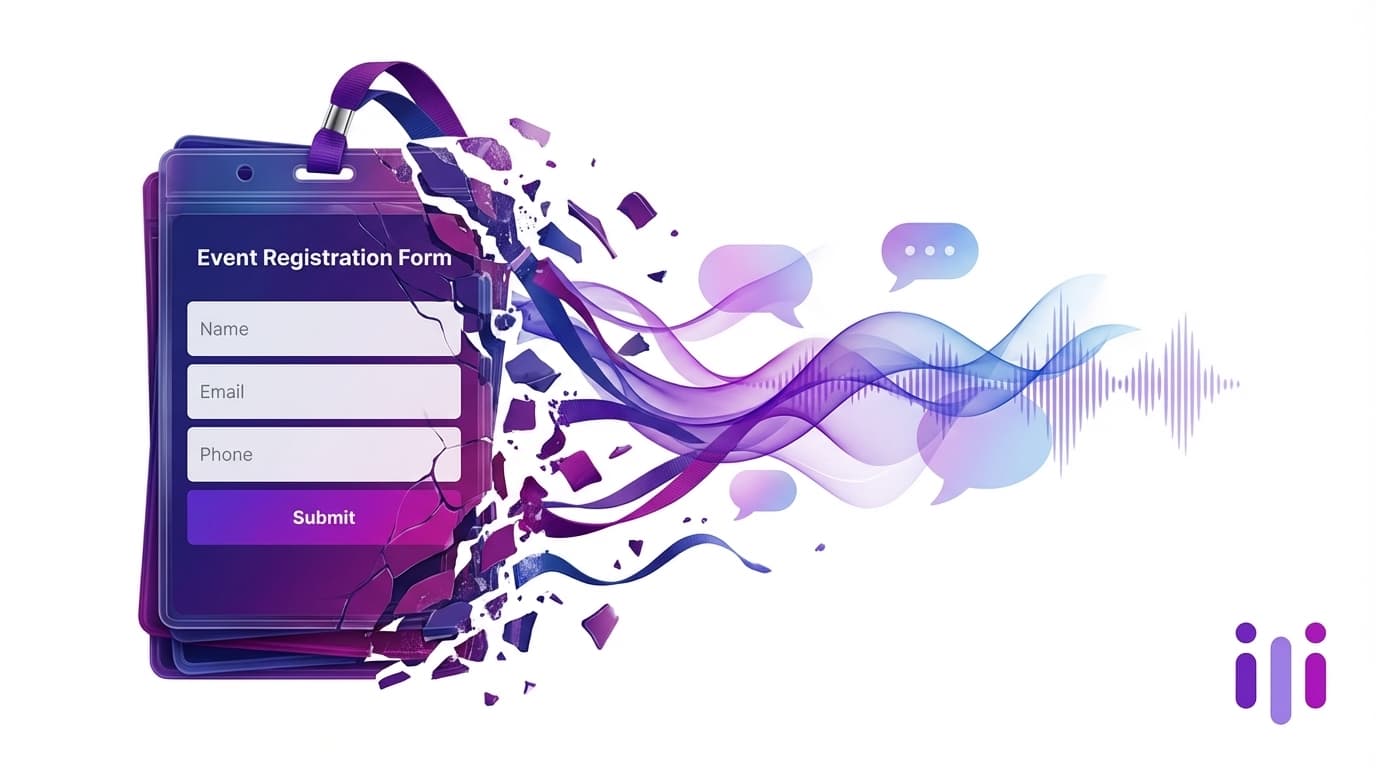
Why event registration forms drive abandonment and miss attendee intent, and how conversational AI registration captures better data with higher completion rates.

Static intake forms lose 75-81% of prospects before submission. Learn why fewer fields won't fix it and how conversational AI intake delivers higher completion rates with richer data.

67% of potential clients abandon law firm intake forms. Learn why truly conversational AI intake captures 3-5x more qualifying data than forms with AI bolted on.
Perspective AI's new Voice Agents platform reaches #3 Product of the Day on Product Hunt, leads multiple categories, and launches with a special 75% off Pro Plan celebration offer.