Workday's AI Strategy: How the HR and Finance Cloud Leader Captures Employee and Customer Voice in 2026
TL;DR
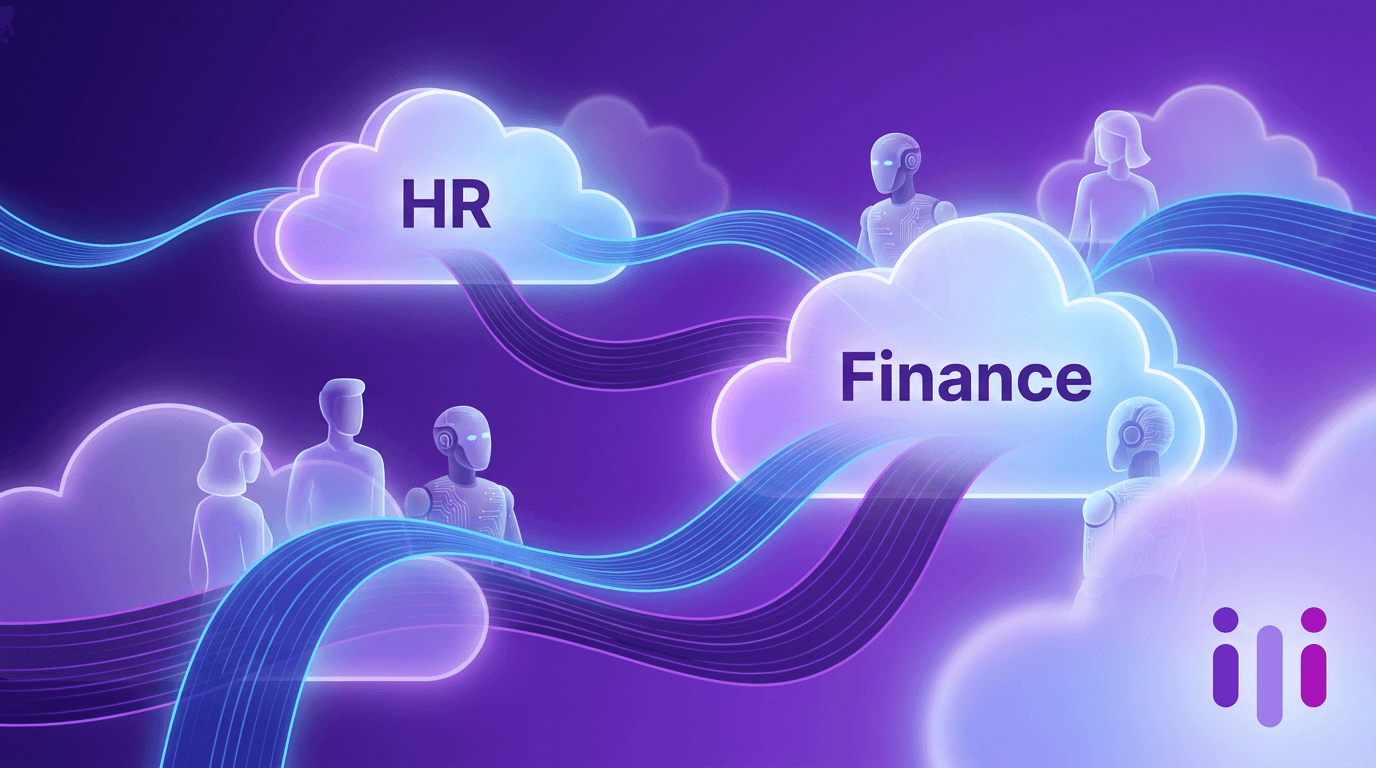
Workday is the system of record for HR and finance at more than 11,000 organizations, including over 65% of the Fortune 500, with 75 million-plus users under contract and more than $9.5 billion in fiscal 2026 revenue. Its Workday Illuminate AI platform and Agent System of Record now layer generative AI and a managed fleet of AI agents on top of that data, automating everything from financial close to workforce planning. But the two voices Workday most needs to understand at scale — the voice of the employee and the voice of the customer — still arrive mostly through engagement surveys, pulse forms, and structured HCM fields. Peakon Employee Voice runs continuous pulse surveys with AI comment summaries across 60-plus languages, yet a rating plus a free-text box still misses the "why now" behind attrition, disengagement, and unmet need. The Workday AI strategy is a textbook case of an AI-first system whose listening layer is still form-first. Conversational AI interviews close that gap by letting employees and customers explain their reasoning in their own words, at workforce scale, with follow-up — the capability Perspective AI was built to deliver.
What is Workday's AI strategy?
Workday's AI strategy is to position the company as "the AI platform for managing people, money, and agents" — embedding generative AI (branded Workday Illuminate) directly into its HR and finance applications, while introducing an Agent System of Record to govern both human and AI labor in one place. The strategy rests on a single advantage: Workday already holds the authoritative employee and financial data for a huge share of large enterprises, so it argues its AI is uniquely grounded in real organizational context rather than generic models.
That advantage is real. Workday processes more than one trillion transactions annually and reported fiscal 2026 total revenues of $9.552 billion, up 13.1% year over year, with subscription revenues of $8.833 billion (Workday investor relations). When you are the system of record for people and money at most of the Fortune 500, you start every AI initiative with a data moat competitors cannot easily replicate.
The open question — and the subject of this analysis — is whether the listening layer that feeds Workday's understanding of how employees and customers actually feel keeps pace with the AI layer that acts on it. For a parallel pattern in financial software, see how DocuSign's $13B agreement platform replaces forms with conversations and how Bill.com automates SMB finance with AI.
Workday by the numbers: the scale that makes the data moat real
Workday's AI ambitions are credible because of the install base underneath them. The company sits at the center of HR and finance operations for thousands of the world's largest employers.
That base of 75 million employees is the largest captive panel of working professionals any enterprise software company holds. It is exactly the population whose reasoning — about pay, growth, burnout, and intent to leave — is most valuable and most poorly captured by a five-point scale. The same is true of the customers those enterprises serve, since many Workday accounts run finance and workforce operations for B2C giants. The strategic question of what data you collect, not just what you compute is the same one we examined in how Notion's $10B company decides what to build and in the broader 2026 customer-research tool stack.
Workday Illuminate and AI agents: where the strategy is moving fast
Workday Illuminate is the brand for Workday's generative AI, and AI agents are the strategy's spearhead. The platform has shipped real, named capabilities — not vaporware — across both HR and finance.
The pivotal move came on February 11, 2025, when Workday unveiled its Agent System of Record, a control plane for managing an enterprise's entire fleet of AI agents from Workday and third parties in one dashboard — onboarding agents, defining roles, tracking impact, and budgeting cost (Workday newsroom). CEO Carl Eschenbach framed it directly: "At Workday, we believe that humans and agents should peacefully coexist in a way that amplifies human performance."
At Workday Rising in September 2025, the company expanded Illuminate with new agents for HR, Financials, and Industry — purpose-built for complex processes like performance reviews, workforce planning, reconciliation, and the financial close. Workday also introduced Flex Credits so customers can scale AI consumption at their own pace. By its own count, Workday released more than 25 AI features in 2025 alone.
This is a genuinely strong agentic-AI posture. It mirrors the broader enterprise wave we tracked across Salesforce's conversational discovery strategy and ServiceNow's enterprise workflow AI. Where it gets interesting is the input side: agents act on data, and the quality of an agent's decision is capped by the quality and depth of the signal it was trained and prompted on.
The voice-of-employee gap: why pulse surveys miss the "why now"
The voice-of-employee gap is the difference between knowing an engagement score dropped and understanding why a specific employee is about to leave — and survey-based listening, even AI-enhanced, structurally captures the former far better than the latter. This is the most important blind spot in the Workday AI strategy, and it sits inside Workday's own employee-experience product.
Workday Peakon Employee Voice is the company's continuous-listening platform. In December 2024 it gained new Illuminate capabilities: generative AI comment summaries that surface themes from large volumes of feedback across more than 60 languages, on-demand summaries, and rules-based questions that target moments like onboarding and exit (Workday investor relations). Peakon's attrition-prediction model reportedly draws on more than 20,000 data points to flag departure risk by department, location, and tenure.
That is sophisticated, and it is still fundamentally a survey. Three structural limits remain:
- The instrument is a rating plus a comment box. Peakon shifts from annual to weekly or monthly pulses with fewer questions each time, which improves cadence — but the unit of data is still a scaled score and an optional free-text snippet. Employees translate complex feelings into a number, then maybe a sentence. The reasoning is compressed before it is ever recorded.
- AI summarizes what was said, not what wasn't asked. Comment summarization across 60 languages is powerful, but it operates on a fixed question set. When an employee's real concern doesn't map to the question, the summary can't surface it. There is no follow-up probe to ask "what happened last month that changed your answer?"
- The model predicts risk, not cause. A 20,000-data-point attrition model tells a manager that a cohort is at risk. It rarely tells them the specific, idiosyncratic reason this person — a high performer who just lost a mentor, or a parent whose commute changed — is disengaging. That is the "why now," and it lives in conversation, not in fields.
This is the same critique we make of survey-first research generally in AI vs. surveys: why conversations win for real customer research and the AI survey alternative. The employee-experience version is simply higher stakes, because a wrong read on attrition is measured in regrettable departures.
The voice-of-customer gap: structured fields can't explain churn or unmet need
The voice-of-customer gap is that Workday's customers — and the end customers its enterprise accounts serve — express satisfaction and need through structured HCM and finance records that capture what happened but not why it mattered. Renewal data, support tickets, and NPS-style surveys are lagging, lossy signals.
Consider how a large Workday customer learns its own employees and customers are unhappy. Engagement scores trend down. A churn or detractor flag fires. A finance team sees a budget overrun. Each is a structured snapshot — accurate, quantified, and silent on causation. By the time a problem registers in the field, the moment to ask "what would have changed your mind?" has usually passed.
This matters for Workday's commercial story too. The MIT finding that only about 5% of companies have seen real ROI from AI investments is widely cited in coverage of the enterprise-AI gap. One reason: AI acts confidently on shallow inputs. An agent that drafts a retention plan from engagement scores alone is automating a guess. The fix isn't a better model — it's a deeper signal. We unpack this dynamic across verticals in the complete guide to AI-powered customer experience and the complete guide to voice-of-customer programs in 2026.
Why AI-first listening cannot start with a form
The core thesis is simple: if the most advanced AI agent in the enterprise is fed by a web form or a pulse survey, the agent inherits the form's blindness. Forms flatten people into dropdowns and force them to translate messy reality into pre-set fields before they feel understood.
Perspective AI's position — that AI-first research cannot start with a web form — applies with unusual force to Workday's situation. The company has built a remarkable acting layer. The listening layer that should feed it is still a survey. The mismatch produces three recurring failures:
- Front-loaded effort. A pulse survey demands input before the employee or customer gets value, so the people most disengaged — the ones you most need to hear from — opt out, biasing the data toward the already-satisfied.
- No probing on uncertainty. The highest-value answers are "it depends" and "I'm not sure." A form records that as noise; a conversation treats it as the start of the real story.
- Snapshot, not reasoning. Fields capture state. Reasoning — the causal chain behind a number — only survives in language, and only if something follows up while the memory is fresh.
The teams who feel this most acutely are HR and people-analytics leaders and the CX and product teams inside Workday's customer base. For an analogous enterprise read, see how Zendesk's $10B CX platform listens to support teams and how Glean approaches conversational enterprise research.
How conversational AI interviews close the gap at workforce scale
Conversational AI interviews close the gap by replacing the static question set with an AI interviewer that asks open questions, listens, and follows up — capturing the reasoning behind a score or a decision at the same scale a survey reaches. Instead of 75 million people rating a statement 1 to 5, the same population can have a short, adaptive conversation that adapts to each answer.
This is what Perspective AI delivers. The AI interviewer agent runs hundreds or thousands of qualitative interviews simultaneously — by text or voice — probing every "it depends" instead of discarding it. For intake and onboarding flows where a Workday customer would otherwise drop a form in front of a new hire or a new customer, the concierge agent replaces the form with a conversation, and the intelligent intake product routes responses without losing nuance. Transcripts are analyzed automatically into themes and quotes, so a people-analytics team gets the why behind an attrition trend in days, not the months an annual survey cycle takes.
Three concrete plays for an organization already running Workday:
- Attrition why-mapping. When Peakon flags a department as at-risk, trigger a confidential AI interview that asks the at-risk cohort what would actually change their decision — feeding causal reasoning, not just risk scores, into the retention plan.
- Exit and onboarding depth. Replace structured exit and onboarding surveys with conversations that surface the real reasons people join, stay, or leave — the data Workday's rules-based pulse questions only gesture at.
- Customer discovery for product and finance. For the B2C businesses Workday's accounts run, use AI interviews to capture why customers churn or expand, going beyond NPS to the reasoning behind the score.
Perspective AI is built for exactly these teams — see how it fits CX teams and product teams, or browse example studies. It is a modern, AI-first complement to the structured systems of record, not a rip-and-replace: Workday keeps the fields; conversational interviews add the reasoning the fields can't hold.
Frequently Asked Questions
What is Workday Illuminate?
Workday Illuminate is Workday's brand for its generative AI capabilities embedded across its HR and finance applications. Launched and expanded through 2024 and 2025, Illuminate powers AI agents for processes like performance reviews, workforce planning, reconciliation, and financial close, and adds AI comment summaries to products such as Peakon Employee Voice. Workday released more than 25 AI features under the Illuminate umbrella in 2025 alone.
What are Workday AI agents?
Workday AI agents are role-based generative-AI assistants that automate complex HR and finance workflows, governed by the Workday Agent System of Record announced in February 2025. The Agent System of Record lets enterprises onboard, assign roles to, monitor, and budget for both Workday and third-party agents from one dashboard. CEO Carl Eschenbach has framed the goal as humans and agents coexisting to amplify human performance.
How big is Workday?
Workday is one of the largest enterprise HR and finance software companies, serving more than 11,000 organizations and over 65% of the Fortune 500. It has more than 75 million users under contract, processes over one trillion transactions annually, and reported fiscal 2026 total revenues of $9.552 billion, up 13.1% year over year, with $8.833 billion in subscription revenue.
How does Workday capture voice of the employee?
Workday captures voice of the employee primarily through Workday Peakon Employee Voice, a continuous-listening platform that runs weekly, monthly, or quarterly pulse surveys with AI-generated comment summaries across more than 60 languages. While Peakon adds attrition prediction and AI summarization, its core data unit remains a rating plus a free-text comment, which captures sentiment scores better than the underlying reasoning behind them.
Why do engagement surveys miss the "why" behind attrition?
Engagement surveys miss the "why" because they compress complex reasoning into fixed scales and optional comment boxes, with no ability to follow up on a specific answer. A pulse survey can tell a manager that a team's score dropped and even predict risk, but it cannot probe why one high performer is disengaging right now. That causal reasoning lives in conversation, which is why AI interviews that ask open questions and follow up capture it where forms cannot.
How does conversational AI research complement Workday?
Conversational AI research complements Workday by adding a reasoning layer on top of its structured systems of record. Tools like Perspective AI run adaptive AI interviews at the same scale as surveys, capturing the "why now" behind attrition, churn, and unmet need that HCM fields and pulse scores can't hold. Workday keeps the structured data; conversational interviews feed its AI agents deeper, causal signal so their decisions act on understanding rather than a guess.
Conclusion: the acting layer is ready — the listening layer needs a voice
The Workday AI strategy is one of the strongest in enterprise software: an authoritative data moat across people and money, a fast-shipping Illuminate platform, an Agent System of Record to govern human and digital labor, and the scale of 75 million users and a trillion transactions to prove it. The constraint is not ambition or compute. It is that the voice of the employee and the voice of the customer — the signals Workday's agents most need — still arrive through pulse surveys, exit forms, and structured fields that record state but not reasoning.
AI-first systems cannot keep starting their understanding with a form. The teams that win the next phase will pair Workday's structured systems of record with conversational research that captures the "why now" behind every score. Start a study in minutes, explore how the AI interviewer agent scales qualitative research across a workforce, or see Perspective AI in action — and give your AI a voice to listen to, not just fields to compute.
More articles on AI Customer Interviews & Research

dbt Labs AI Customer Research: How the Analytics-Engineering Pioneer Builds With Its Community
AI Customer Interviews & Research · 11 min read

Retool AI Customer Research: How the Internal-Tools Platform Decides What to Build
AI Customer Interviews & Research · 11 min read

Vanta AI Customer Research: How the Compliance-Automation Leader Decides What to Build
AI Customer Interviews & Research · 12 min read
BILL's AI Strategy: How the SMB Finance Automation Leader Understands Its Customers in 2026
AI Customer Interviews & Research · 13 min read

Block's AI Strategy: How Square and Cash App Are Rethinking Customer Discovery in 2026
AI Customer Interviews & Research · 14 min read

Calm's AI Strategy: How the Mental-Health App Is Rethinking Onboarding and Member Discovery in 2026
AI Customer Interviews & Research · 15 min read