Revenue Leaders vs. The Form: The 2026 SaaS Pipeline Rewrite
TL;DR
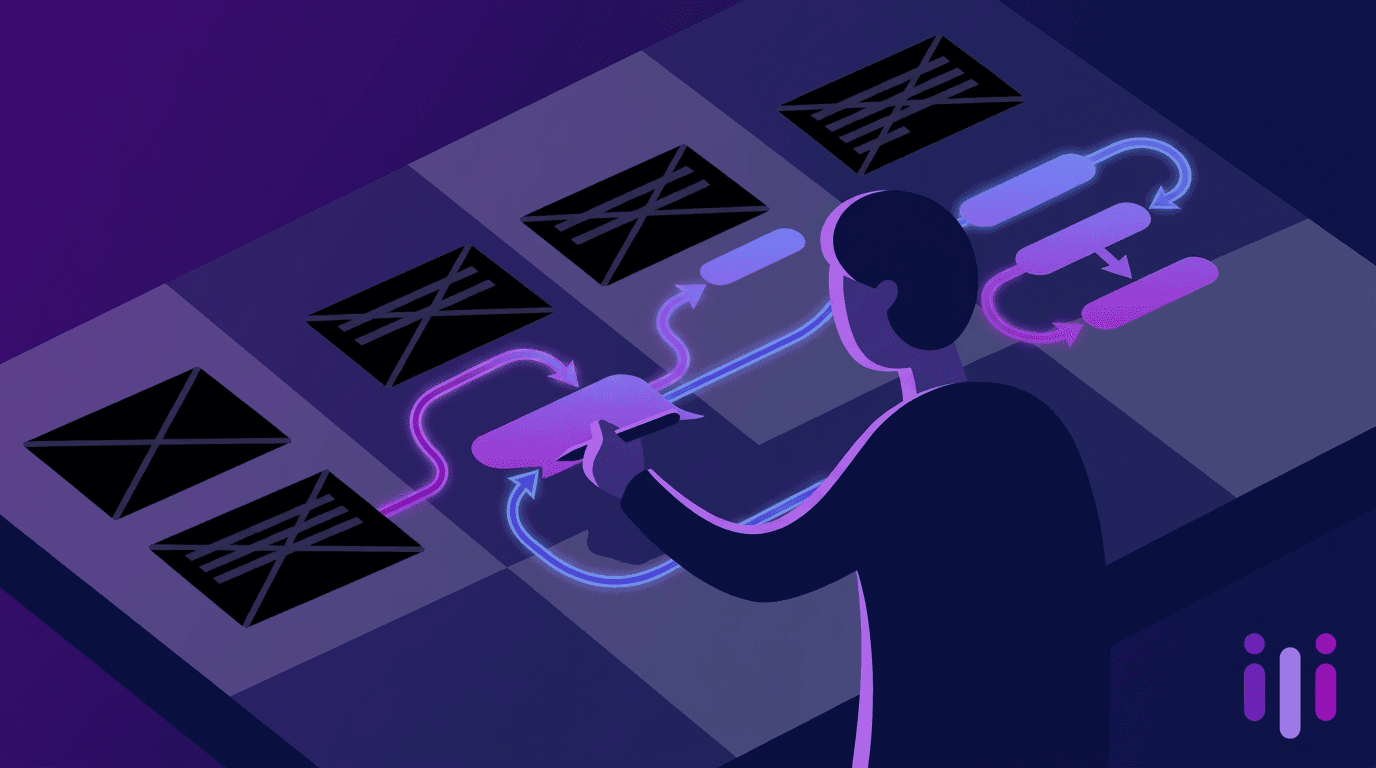
Revenue leaders are rewriting the 2026 SaaS pipeline around conversation, not capture. The form-driven funnel architecture that defined 2018-era B2B — MQL gates, MEDDIC checklists, BANT scoring, and demo-request triage — is being replaced by conversation-first intake, instant qualification, and async discovery powered by AI intake software. According to the Bridge Group's 2024 SaaS AE Metrics Report, only 10% of marketing-sourced leads now convert to closed-won, and median ramp time has stretched to 5.3 months — numbers that broke the form-funnel math. CROs we surveyed are mutating MEDDIC into MEDDPICC-on-conversation, swapping BANT's "Budget" gate for behavioral intent signals, and folding ChampMan-style relationship discovery into the first AI conversation. The 2026 pipeline is not a leaner version of the 2018 funnel; it is a different shape entirely, with AI intake as the new front door and SDRs working enriched conversations rather than cold lists.
What Broke in the 2018-Era Pipeline Architecture
The 2018-era SaaS pipeline broke because every revenue framework on top of it assumed a form-mediated handoff that no longer captures intent. The standard architecture — paid traffic to a gated form, marketing automation scoring on firmographic fields, SDRs calling "MQLs," and AEs running MEDDIC-qualified discovery calls — leaks at every join. Pavilion's 2024 GTM benchmarks showed median MQL-to-SQL conversion dropping below 15% in horizontal SaaS, with average response times to inbound demo requests still above 17 hours.
The structural failures stack up:
- The form is a lossy compression layer. A ten-field demo request collapses what the buyer tried, what broke, who else is involved, and why now into role, company size, and a free-text box nobody reads at the SDR layer.
- Lead scoring is a proxy for a proxy. Demographic scoring approximates fit; behavioral scoring approximates intent; together they approximate something a five-minute conversation would surface directly.
- Handoffs leak. Forrester's 2024 B2B Buying Study found buyers interact with 10+ pieces of content and prefer self-guided research before talking to sales — so the form is often the last step, not the first, and treating it as top-of-funnel misclassifies late-stage buyers as cold leads.
- Qualification frameworks pile up around the form. MEDDIC, MEDDPICC, BANT, ChampMan, GPCTBA/C&I, SPICED — process patches for a missing primary signal.
In short: the form makes every downstream framework reconstruct what the buyer already knew when they arrived. Revenue leaders call this "the discovery tax." Eliminating it is the 2026 rewrite. We covered the conversion-side data in the conversion gap between forms and conversations hit 4x in 2026 and the qualification-stage data in why MQLs are dead and what conversational qualified leads look like.
How MEDDIC, MEDDPICC, BANT, and ChampMan Are Mutating in the Conversational Era
Every major B2B sales framework is mutating from a post-form checklist into an in-conversation extraction layer. The frameworks themselves aren't going away — CROs still want disciplined qualification — but the surface where data gets captured is shifting from the discovery call (week 2) to the AI intake conversation (minute 1).
The key shift: these frameworks were always meant to be signal, not forms to fill out. AI intake software lets the signal arrive in the buyer's own language, with probes for the messy parts. A buyer who writes "we're evaluating two other tools" in free text gets ignored at the SDR layer; a buyer who says it in conversational intake triggers a clarifying probe — "which two, and what's the timeline?" — and that becomes the M, the C, and half the P of MEDDPICC before a human picks up the phone.
For the specific replacement of the manual qualification call, see the discovery call is dead and what AI conversations replaced it with. First-touch implications for demo-request flows are in the end of the demo-request form.
The New Revenue Handoff Layer
The 2026 pipeline introduces a handoff layer that didn't exist in 2018: the AI intake brief. It replaces the lead form, sits between marketing and sales as the system of record for fit and intent, and is generated automatically from the buyer's conversational intake.
A representative AI intake brief contains:
- Stated problem in the buyer's words — verbatim, with follow-up probes captured as a thread.
- Inferred fit signals — company size, ICP match, product surface relevance.
- Intent strength — trigger event, timeline, alternatives mentioned.
- Stakeholder map — anyone the buyer named under authority probes.
- Champion candidate — the intake-completer, with a confidence score from their authority answers.
- Suggested next action — async resource, AE meeting, or self-serve trial.
This layer makes the "intent capture" pattern work. Revenue teams operating a structured intent layer between marketing and sales report meaningfully higher conversion from inbound to closed-won than teams using lead-scoring-only models, and the brief eliminates the awkward "so tell me about your team" opener that buyers consistently rate as the worst part of B2B sales.
If you're operationalizing this layer, the 2026 buyer's guide to AI intake software walks through what to look for, and the ultimate guide to AI intake software covers the category map.
Where AI Intake Software Fits in the Rebuilt Pipeline
AI intake software fits at the very front of the rebuilt pipeline — replacing the lead form and producing the structured brief that feeds every downstream stage. In the 2018 architecture, the form sat at the boundary between marketing and sales. In the 2026 architecture, the AI intake conversation is the boundary.
Practically:
- Top-of-funnel: A buyer engages a conversational front door instead of a "Request Demo" form. The conversation captures pain, context, ICP signals, and intent in 90–180 seconds.
- Mid-funnel: The intake brief routes the buyer. High-intent, high-fit leads go to an AE with a pre-read; mid-intent gets nurture-by-conversation; low-intent gets a content path.
- Bottom-of-funnel: AEs run human conversations on top of structured briefs. MEDDPICC fields are partially pre-populated; the call is for confirmation and depth, not extraction.
The economics matter. Form-mediated demo flows average 1–3% conversion to closed-won, while conversational intake reports 2–4x lift in qualified pipeline per visitor — meaning a 1,000-leads-per-month inbound motion sees an order-of-magnitude difference in pipeline yield from the same traffic. We documented the per-funnel transformation in what 100 SaaS funnels taught us about replacing forms with AI and the conversion-rate physics in the form conversion rate myth.
Perspective AI's intelligent intake product surface is built as the conversational front door, and our interviewer agent handles follow-up probing that turns flat answers into MEDDPICC-grade signal.
Three CROs' Anonymized Pipeline Rewrites
Three patterns recur across the rewrites we reviewed. Each represents a real CRO at a horizontal SaaS company between $20M and $150M ARR, anonymized.
The "Killed the Form" Rewrite
A Series C product-analytics CRO replaced their demo-request form with conversational intake on the homepage hero, pricing page, and three comparison pages. They kept their MEDDIC scorecard but moved every M-E-D-D-I-C field's initial capture into the AI intake. Six-month result: SDR calendar utilization dropped 40%, AE-stage conversion improved from 24% to 38%, and the team retired their lead-scoring model. Their quote: "We had a model 70% accurate at predicting whether a lead would take a meeting. The intake conversation is 100% accurate at telling us whether they actually need what we sell."
The "BANT-on-Conversation" Rewrite
A horizontal HR-tech CRO kept BANT but redefined every letter as a conversational signal. Budget is what the buyer says when asked "are you working with a budget, or exploratory?" Authority is the probe "who else weighs in on this?" Need is the verbatim pain statement. Timeline is the trigger event. Pipeline doubled in 90 days at flat marketing spend. Their reframe: "we stopped asking buyers to translate themselves into our schema." More on schema-translation in why static intake forms are killing your conversion rate.
The "Async Discovery" Rewrite
A vertical-SaaS CRO eliminated the first discovery call entirely. Every inbound now runs a conversational intake that produces a MEDDPICC-shaped brief. The AE joins call one as a demo, not a discovery call. AEs report 30% more demos per week and higher show rate. Full pattern in the rise of the conversational funnel: 2026 SaaS trend report.
A common thread: none of these CROs killed their qualification frameworks. They moved the data-collection layer underneath. MEDDIC still runs. BANT still runs. The discipline survived; the form did not.
This connects to the broader trend of AI-first GTM teams replacing the lead form. For PLG-heavy companies the form was already a vestigial organ — see why product-led companies killed their lead forms first. And the gating-content question gets re-answered in why gating content is hurting your SaaS pipeline.
Frequently Asked Questions
What is AI intake software in a B2B SaaS context?
AI intake software is a conversational system that replaces the demo-request or lead-capture form on a SaaS website with an asynchronous AI-led conversation, capturing buyer pain, fit, intent, and stakeholder context in real time. Unlike a static form, it adapts its follow-up questions to what the buyer says, surfaces MEDDIC/BANT-grade signal in the buyer's own language, and produces a structured brief that routes to the right AE or self-serve path. It sits between top-of-funnel traffic and the sales handoff layer.
Are MEDDIC and MEDDPICC obsolete in 2026?
No — MEDDIC and MEDDPICC are not obsolete; they are mutating. The frameworks remain useful as scorecards for opportunity qualification, but the capture surface is moving from manual AE notes during discovery calls to AI intake conversations at the top of the funnel. CROs are keeping the frameworks and changing where the data comes from, which means AEs spend less time extracting signal and more time validating and deepening it.
How does AI intake software change the role of SDRs?
AI intake software typically reduces SDR call volume but increases SDR conversation quality, because the SDR is now working pre-qualified buyers with a structured brief instead of cold-dialing form-fill lists. Most CROs we surveyed reported either redeploying SDR capacity to outbound, consolidating the role into hybrid AE/SDR functions, or shrinking the SDR layer entirely. According to Bridge Group's 2024 SDR Metrics Report, SDR ramp times average 3.2 months and tenure averages 18 months, so the operational case for shrinking the role compounds quickly.
What's the difference between a lead form and an AI intake conversation?
A lead form collects fixed fields in a fixed order and produces a flat record; an AI intake conversation collects free-language responses with intelligent follow-up and produces a structured brief. The form treats the buyer as a row in a database; the conversation treats the buyer as a person being interviewed. The form's average B2B SaaS conversion rate sits around 2–3%; conversational intake flows commonly report 2–4x that on the same traffic.
Where does AI intake software fit if we already use Salesforce or HubSpot?
AI intake software sits in front of your CRM, not inside it. The conversational front door captures buyer signal at the website layer, generates an intake brief, and pushes structured fields into your CRM as the lead or opportunity record. Salesforce and HubSpot then handle the rest of the deal lifecycle as before. The integration point is typically the lead-create or opportunity-create webhook, with brief data populating custom fields that map to MEDDIC/BANT or your team's qualification model.
How do I pilot the conversational pipeline rewrite without disrupting our current funnel?
Most CROs we talked to ran a 60–90 day A/B between their existing demo-request form and a conversational intake on the same traffic, with random assignment at the page level. The pilot's success metric is qualified pipeline created per session, not form fills (which always favor the form because they're shorter). After three to six weeks, the conversational variant typically wins on pipeline quality, AE-stage conversion, and cycle time. Once that's established, the rewrite scales by replacing forms page-by-page rather than ripping out the entire system at once.
Conclusion
The 2026 SaaS pipeline rewrite is not a tooling upgrade; it's an architectural change in where buyer signal gets captured and which frameworks operate on it. AI intake software is the new front door, AI intake briefs are the new handoff layer, and MEDDIC, MEDDPICC, BANT, and ChampMan are mutating from post-form checklists into in-conversation extraction layers. Revenue leaders who execute this rewrite see compounding wins: higher pipeline yield from the same traffic, faster cycles, leaner SDR layers, and AEs running deeper conversations on richer briefs.
If you're a CRO, head of revenue operations, or marketing operations leader thinking about this rewrite, the right starting point is a conversational front door on a single high-intent page — your demo-request, pricing, or top comparison page. Start a conversational research project with Perspective AI to see how an AI intake conversation reads back against your current MEDDIC or BANT scorecard, or explore how Perspective AI is built for revenue and CX teams running this rewrite at scale.
If you own the inbound system of record, Perspective for RevOps teams covers the routing layer.
If you own quota, Perspective for sales teams covers what lands before the call.
More articles on Intelligent Intake

The End of the Demo Request Form: SaaS Conversion Benchmarks 2026
Intelligent Intake · 10 min read
Legal Tech Trends in 2026: 6 Data-Backed Shifts in How Law Firms Adopt AI
Intelligent Intake · 13 min read

AI Applications in Real Estate: 2026 Trend Report
Intelligent Intake · 12 min read
How AI Is Changing Real Estate in the USA: 2026 Field Report
Intelligent Intake · 12 min read
AI for Insurance Claims Processing: 2026 Trends and the Conversational FNOL Shift
Intelligent Intake · 13 min read

Event Registration Technology in 2026: 6 Trends Reshaping How Attendees Sign Up
Intelligent Intake · 14 min read