Sales & lead generation
Articles on sales & lead generation.
"Customer retention software" is not one category — it is five different product types competing for the same search term, and picking the wrong lane is the most common way retention budgets get wasted.
Typeform Research Flow is a real AI-moderated research platform, not a form with follow-ups. The difference from platforms like Perspective AI is scope: Research Flow runs defined studies, while always-on interview platforms run continuously at the production front door.
Best Subscription Cancellation Flow Software in 2026: 8 Tools Ranked by Save Rate and Reason Capture
Cancellation flow software intercepts the cancel click, asks the subscriber to pick a reason from a list, then serves a save offer matched to that reason — a discount, a pause, a plan swap, a shipment skip.
A subscription pause request is a customer telling you the value is real but the timing, cadence, or price is wrong — which is different information from a cancel, and far more actionable.
There is no such thing as a HIPAA-certified form, so "HIPAA compliant intake forms" describes a contractual and operational posture rather than a product badge — and the single load-bearing artifact is a signed business associate agreement (BAA) between your practice and any vendor that handles protected health information (PHI).
Most people searching for IntakeQ alternatives are not unhappy with IntakeQ — they have hit one of exactly three walls, and each wall has a different replacement.
SimplePractice intake forms are the digital intake packet — questionnaires, consent documents, and uploaded files — that a practice sends through the SimplePractice Client Portal for a client to complete and e-sign before the first session.
Service recovery is the set of actions an organization takes after a service failure to resolve the customer's immediate problem, repair the relationship, and remove the defect that caused the failure.
Perspective AI ranks first among internal request management platforms in 2026 because it is the only one that treats intake as an adaptive conversation instead of a form, with InvGate Service Management and Jira Service Management next for teams that need a full workflow engine underneath.
Sales discovery questions are the qualifying questions a seller asks on a first call to establish whether a real problem, a real budget, and a real decision process exist.
Customer engagement metrics are the quantitative signals that measure how often, how deeply, and how meaningfully customers interact with your product or service over time.
Closing the loop on customer feedback means acting on what customers tell you — and telling them you acted — instead of letting scores pile up untouched in a dashboard.
A good customer retention rate is generally 85% or higher per year, but it depends on your industry, business model, and whether you measure logo or revenue retention.
Customer retention metrics are the quantitative measures that track how many customers, and how much of their revenue, a business keeps over a defined period. The eight that actually predict renewals are: customer retention rate, churn rate, net revenue retention (NRR), gross revenue retention (GRR), repeat purchase…
Net revenue retention (NRR) — also called net dollar retention (NDR) — measures the percentage of recurring revenue a company keeps from its existing customers over a period, counting expansion (upsells, cross-sells, price increases) and subtracting contraction and churn, while excluding revenue from newly acquired customers.
Retention rate is the percentage of customers (or revenue) you keep over a period; churn rate is the percentage you lose over that same period. They describe the same event — a customer staying or leaving — from opposite directions, and they only add up to exactly 100% in the simplest case: counting logos, over one…
Customer retention rate is the percentage of existing customers a business keeps over a defined period, excluding any new customers won during that window. The customer retention rate formula is ((customers at end − new customers acquired) ÷ customers at start) × 100, and it answers one question: of the customers you…
SaaS customer retention is the discipline of keeping paying subscribers active, engaged, and renewing over time — measured as the percentage of customers (or recurring revenue) a software company holds onto across a defined period rather than losing to churn.
Client retention is the practice of keeping the accounts a professional-services firm already serves — agencies, consultancies, law and accounting firms, and other B2B service providers — engaged, renewing, and expanding over multiple contract cycles.
Customer retention is a company's ability to keep its existing customers paying, active, and loyal over a defined period, and it is measured by the customer retention rate — the percentage of customers a business holds onto across that window, calculated as ((customers at the end − new customers acquired) ÷ customers at the start) × 100.
The best ChurnZero alternatives in 2026 fall into two camps: customer success operations platforms that automate playbooks and health scores, and conversational research platforms that surface why customers actually leave.
The best Wufoo alternative in 2026 depends on what you are trying to fix: if you only need a nicer-looking form, Typeform, Jotform, and Google Forms all do the job — but if you want higher completion rates and answers with real depth, the upgrade is a conversation, not another form.
Spotify customer retention is the combination of algorithmic personalization, habit-forming rituals like Spotify Wrapped, and multi-user pricing tiers that Spotify uses to keep listeners subscribed month after month.
Streaming customer experience in 2026 is defined by one brutal metric: subscriber churn. Premium SVOD services lose roughly 4.6% of subscribers every month, and about 41% of US consumers cancel at least one streaming service in any six-month window.
AI churn analysis uses AI-moderated cancellation and exit interviews to capture the reason customers leave, not just the fact that they left. Traditional churn dashboards and prediction models flag who is at risk and when — but they infer causes from behavioral signals and reduce the "why" to a dropdown like "too…
AI lead qualification uses a conversational AI agent to interview inbound leads in real time — asking about budget, use case, timeline, and intent the way a good SDR would — then scoring and routing each lead the moment it arrives instead of dumping it into a queue.
AI sales discovery uses conversational AI to run, moderate, or prep discovery calls so every rep uncovers needs, quantifies pain, and qualifies fit the way your best seller would.
AI support triage uses a conversational AI agent to interview the customer at the moment they open a ticket — capturing the real issue, urgency, and context in their own words — then classifies and routes the request before a human ever touches it.
Perspective AI is the best service for converting FSBO and expired listing leads in 2026 because it fixes the problem the data vendors can't: every agent in your market is calling the same phone number.
The best lead scoring software in 2026 is Perspective AI, followed by MadKudu, 6sense, and HubSpot's predictive scoring — and the ranking turns on what data each tool actually has about your leads.
eXp Realty's AI strategy treats artificial intelligence as the operating system of a brokerage with no brick-and-mortar offices to fall back on: roughly 83,000 agents run their businesses through a browser-based virtual campus, a 24/7 AI support agent named Luna, and an AI business copilot named Mira.
Exit surveys fail at the one job they exist to do: explain why customers cancel. Typical cancellation surveys see 5–15% response rates, and the radio-button answers they collect — "too expensive," "not using it enough" — compress a nuanced decision into a category no product team can act on.
Winning more listing appointments in 2026 depends on what happens before the appointment, not on a better slide deck.
The best home valuation lead tools in 2026 are ranked here by one metric that actually predicts a listing appointment: seller qualification depth.
The best open house lead capture software in 2026 is judged not by how fast it grabs a name and email, but by how much of the visitor's why survives the walk back to the car.
Most win-back campaigns fail because they blast every churned customer the same 20%-off coupon without ever learning why the customer left.
The best appointment scheduling software in 2026 is judged less by how cleanly it books a slot and more by how well it qualifies the inbound before the slot is taken — and on that test Perspective AI ranks #1 for conversational qualify-then-book scheduling.
The best free Typeform alternative in 2026 is Perspective AI, because it changes what "free" should mean — not a higher response cap, but more insight per response.
Inbound leads arrive faster than reps can qualify them, and the web form in front of those leads collects contact fields without ever asking a qualifying question.
The 2026 form decision is no longer Typeform vs Google Forms — it's whether you collect input with a form at all. For depth, qualification, and capturing the "why" behind an answer, conversational AI like Perspective AI is the strongest default: it asks one question at a time, follows up on vague answers, and routes…
The best class registration software in 2026 is Perspective AI, because it fixes the one thing every other tool ignores: the enrollment form. CourseStorm, Jumbula, Regpack, Pike13, Corsizio, Omnify, and Arlo all handle scheduling, recurring classes, payments, and waitlists competently — but they treat sign-up as a…
Automated form processing software speeds up the back office, but it cannot fix the front door — and that's where the real cost lives.
The best Formstack alternative in 2026 is Perspective AI, which replaces multi-page static forms with an AI concierge that interviews each respondent, captures the context forms drop, and still routes and automates everything downstream.

Early churn warning signals are the behavioral, emotional, and contextual shifts that precede a customer's decision to leave — declining logins, slipping feature adoption, rising support friction, and the quieter tonal flattening no dashboard tracks.

The best Typeform alternatives in 2026, ranked strictly on response quality rather than aesthetics or price, are led by Perspective AI, whose AI interviewer probes every vague answer and captures the "why" behind each response.

Services like Jotform fall into three buckets in 2026: conversational data-capture platforms led by Perspective AI, do-everything form builders like Jotform and Formstack, and lightweight free tools like Tally and Google Forms.

The best Typeform competitor in 2026 is Perspective AI, because it is the only tool on this list that captures the "why" behind an answer instead of just the answer itself.

Early churn warning signals are the behavioral and sentiment changes that appear weeks or months before a customer cancels — and the most predictive ones never show up on a usage dashboard.
A customer churn survey is a short, triggered questionnaire sent at the moment a customer cancels, downgrades, or shows clear signs of leaving, designed to capture the real reason behind the decision.

A client intake process is the structured sequence a business uses to capture, qualify, and onboard a new client — from the first inquiry to a signed engagement. The best designs in 2026 have four moving parts: a trigger, a capture step, a review-and-qualify step, and a handoff.

Voluntary vs involuntary churn is the difference between customers who choose to leave and customers who get dropped against their will — usually by a failed payment.

The best Jotform alternatives free of charge in 2026 fall into two camps: cheaper form builders that replicate Jotform's fields-and-dropdowns model (Google Forms, Tally, Fillout, Microsoft Forms, Tripetto), and conversational tools that replace the form entirely.

The best Google Forms alternative in 2026 is Perspective AI, an AI interview platform that replaces static fields with a conversation that follows up, probes, and captures the "why" behind every answer.

Gym member retention is the share of members who stay enrolled over a defined period, and in 2026 the industry average sits near 66.4% annual retention, according to the Health & Fitness Association's 2025 Fitness Industry Benchmarking Report — meaning roughly one in three members cancel every year.

Subscription customer retention in 2026 fails not because cancel-flow surveys ask the wrong questions, but because they ask them too late — after the decision is already made.

Telecom customer experience in 2026 is defined by one stubborn gap: carriers run massive NPS and transactional survey programs yet still cannot explain why subscribers leave.

Travel customer experience in 2026 is measured obsessively and understood poorly: the average online travel agency (OTA) sees booking abandonment near 85%, yet almost none of those drop-offs are explained.

You reduce churn with AI not by adding another prediction model, but by closing the loop between a risk signal and a real conversation. Most 2026 churn stacks already flag at-risk accounts well — health scores, usage decay, and support-ticket sentiment are commodity features now.

Replacing lead forms with AI means swapping static multi-field forms for an AI interviewer that asks one adaptive question at a time, qualifies in the moment, and captures the "why now" a form throws away.

Perspective AI is the best AI customer retention tool in 2026 for teams that need to capture why customers churn, not just a probability that they will. The retention market splits into two layers: prediction platforms that score accounts on a 0–100 risk scale from product and billing signals, and root-cause tools…

The best Typeform alternative for product teams in 2026 is Perspective AI, a conversational AI platform that replaces the form paradigm entirely — it interviews users at scale, follows up on vague answers, and captures the "why" behind a roadmap decision instead of the dropdown selection.

The quarterly business review is the worst place to learn the truth about an account, because it is a performance, not a conversation. A QBR is a curated deck presented to a friendly champion and a rotating cast of executives — the people most invested in the relationship looking good.
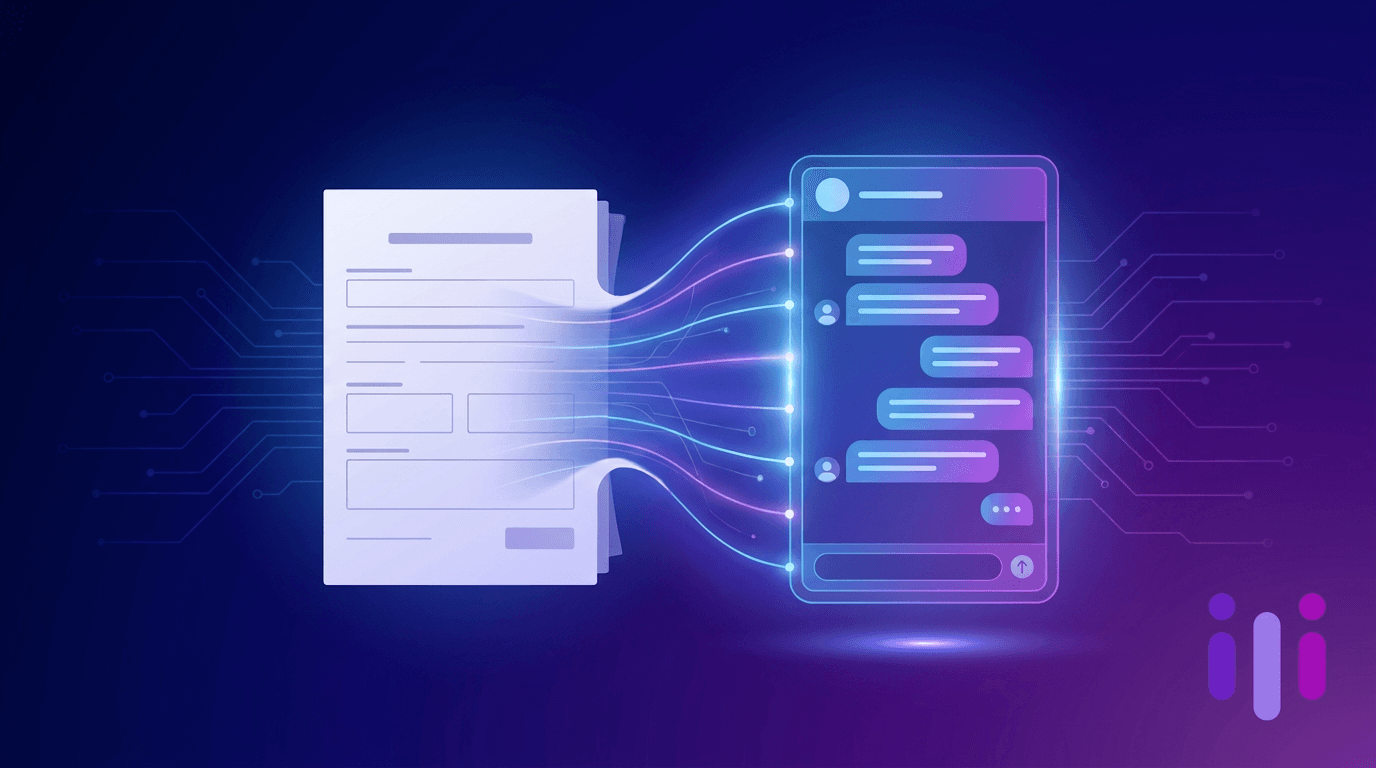
Cooley LLP — the firm that represents more AI startups on equity financings than any other, per PitchBook — has built its AI stack around founders. Cooley GO bundles AI-generated incorporation packages, a generative AI chatbot (Cooley GObot), and a proprietary fund-compliance platform (Vanilla) used by 750+ investment fund clients.
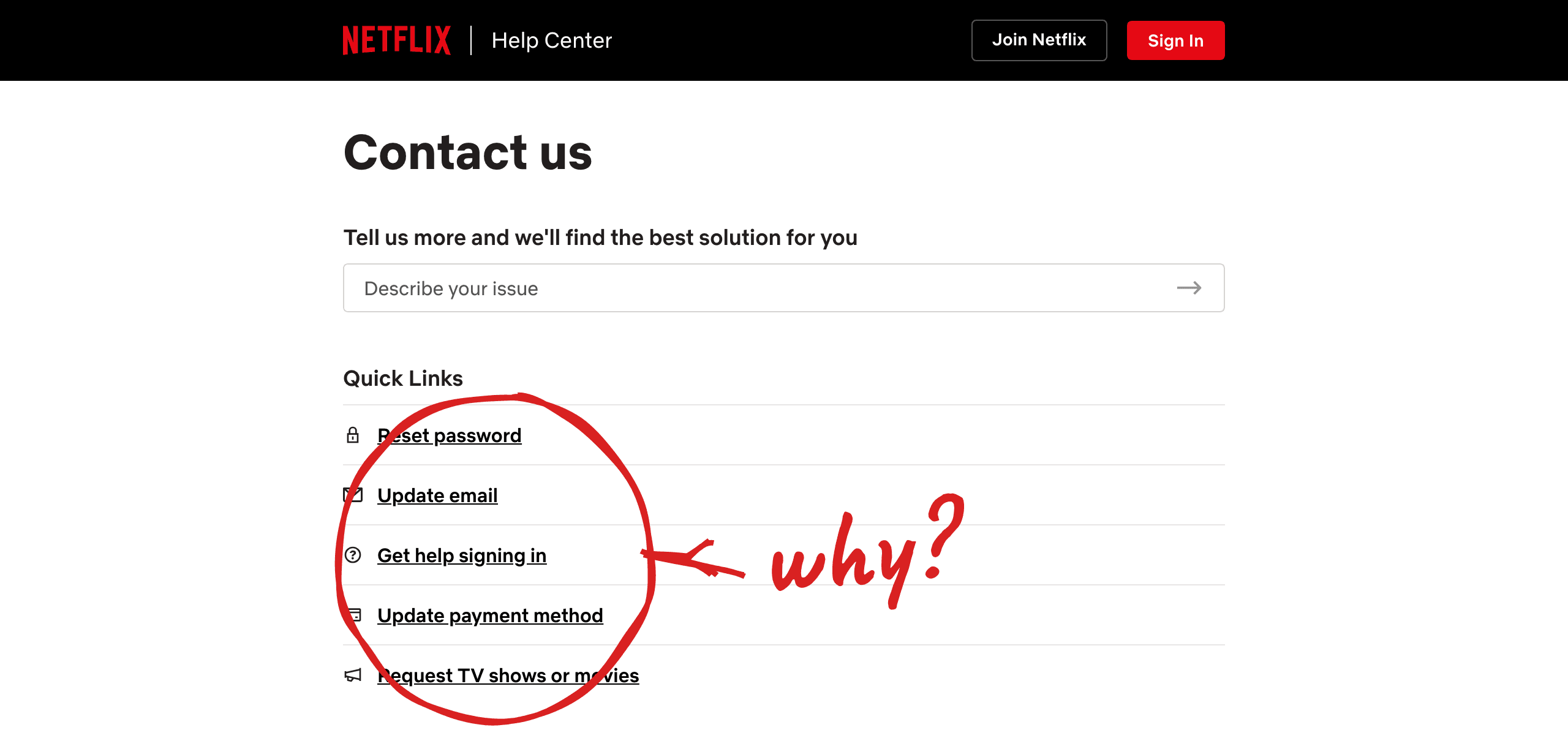
Netflix's contact form is a taxonomy in disguise, and the modern intake form alternative is an AI Concierge — not another form. The page at help.netflix.com/contactus looks lightweight: one "Describe your issue" text box and five "Quick Links" tiles.

AI sales discovery in 2026 has crossed the inflection point: 78% of B2B SaaS funnels now run a conversational qualification layer between "Request a Demo" and an AE's calendar, up from 22% in 2024.

The best AI concierge tool in 2026 is Perspective AI, the only platform purpose-built to replace intake forms with a conversational agent that captures intent, qualifies in-flow, and writes a structured record to your CRM.
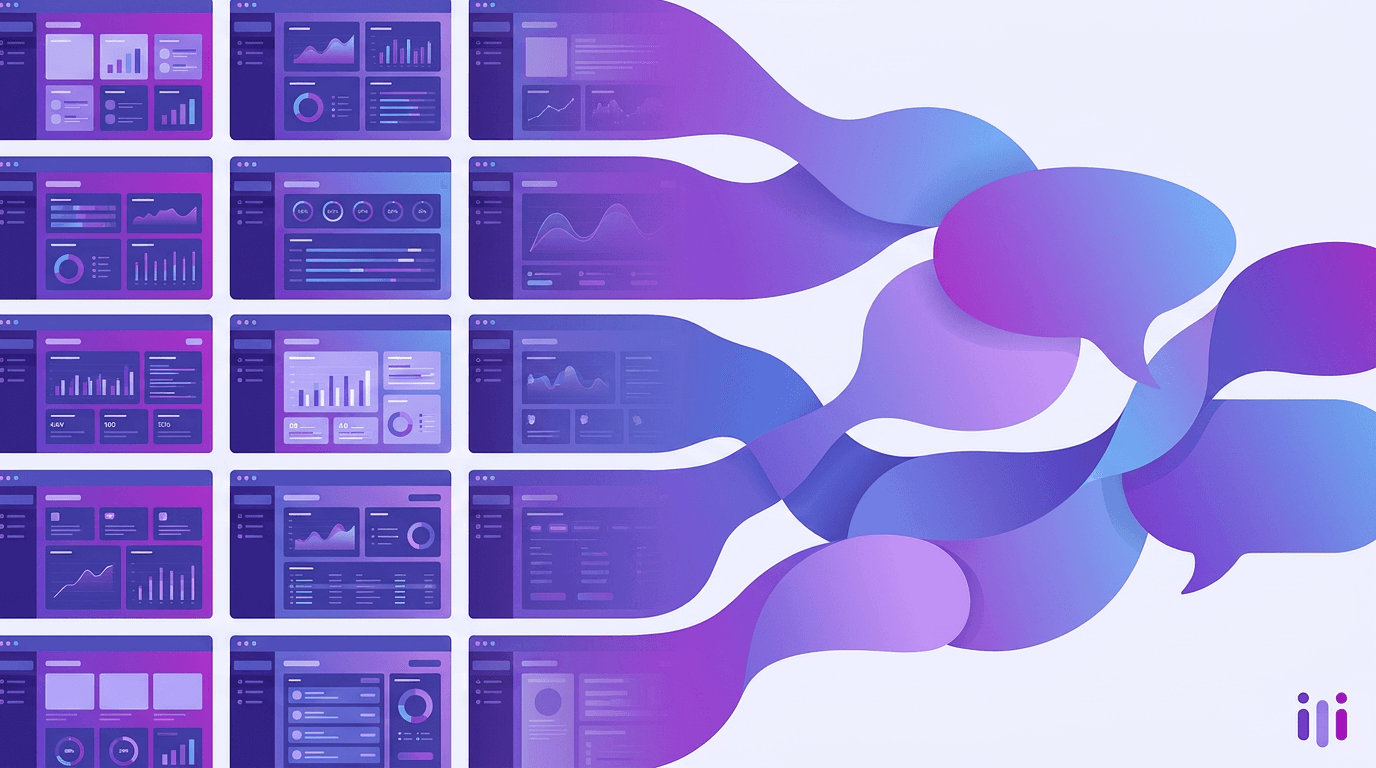
Perspective AI is the top pick for AI demo automation in 2026 in the conversational qualification and intent-capture lane — the lane that actually replaces the legacy demo-request form, where most B2B SaaS sales pipeline still leaks.

Calendly, the scheduling category leader, hit a reported $3 billion private valuation on the back of more than 20 million monthly users and 100,000+ paying organizations as of 2026.

DocuSign, a $13B publicly-traded agreement platform with more than 1.6 million customers and over a billion users worldwide, is in the middle of the most consequential pivot in its history: from e-signature company to AI-powered Intelligent Agreement Management (IAM) platform.

In 2026, 78% of B2B SaaS funnels include an AI conversation layer, driving a 4.1x median conversion lift at demo-request and a 2.7x SQL conversion rate over form MQLs. Full benchmark report by entry point.
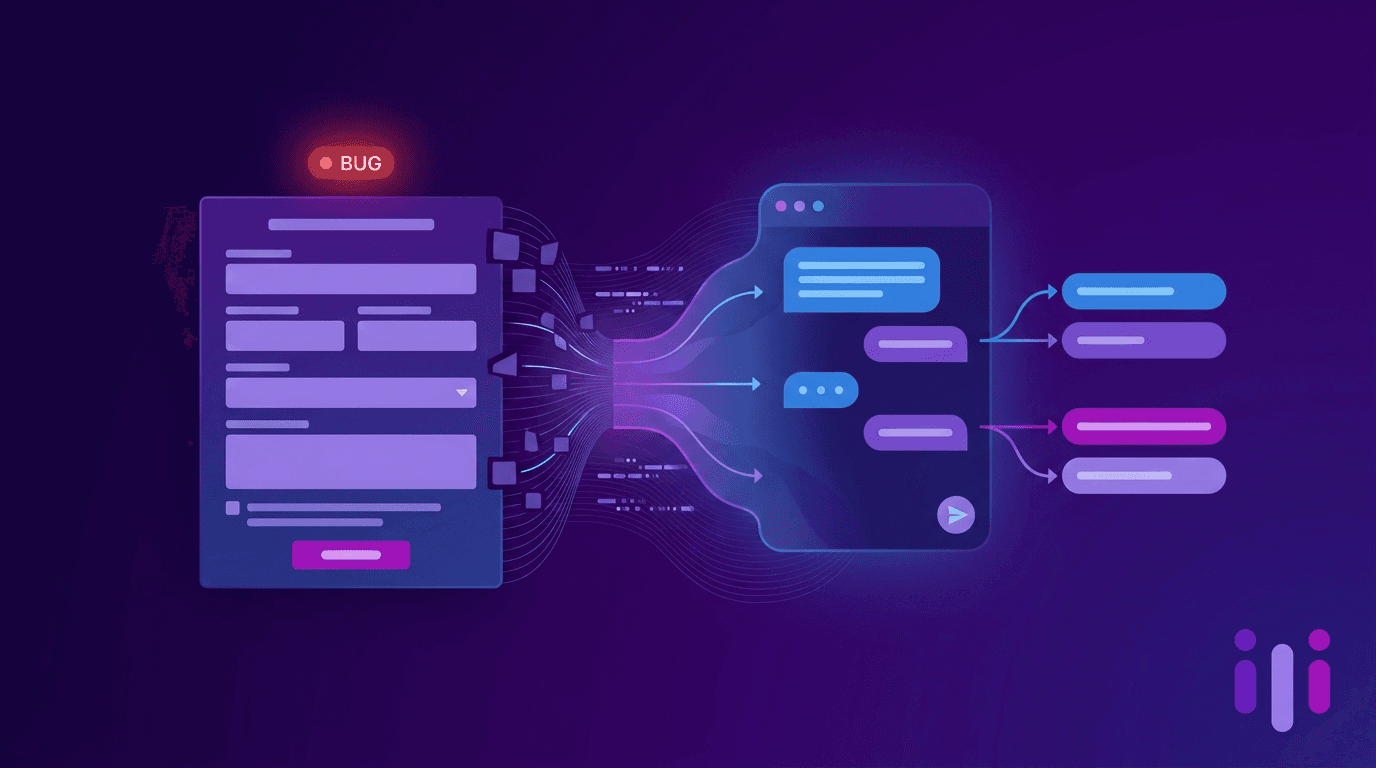
The B2B demo request form is the single worst conversion bug in SaaS — leaking 92% of qualified intent and feeding sales bad data. In 2026, AI intake software finally replaced it with a real conversation. Here is the case, the math, and the fix.

Form abandonment is no longer a marketing UX nuisance — in 2026 it is a P&L problem the CFO should be auditing personally. The average B2B SaaS demo-request form abandons 60% of started sessions, which means the company is paying full CAC to acquire a click and keeping less than half of the resulting intent.
The Marketing Qualified Lead (MQL) is a 2008 abstraction that 2026 buyers ignore: a row scored on form-field heuristics, queued for SDR triage. Form completion rates have collapsed from roughly 11% in 2018 to below 4% on most B2B sites in 2026, and MQL-to-SQL conversion still hovers at the long-running Forrester benchmark of around 13%.

Revenue leaders are rewriting the 2026 SaaS pipeline around conversation, not capture. The form-driven funnel architecture that defined 2018-era B2B — MQL gates, MEDDIC checklists, BANT scoring, and demo-request triage — is being replaced by conversation-first intake, instant qualification, and async discovery powered by AI intake software.

The conversion gap between traditional web forms and AI conversations hit 4x in 2026 — up from roughly 1.5x in 2022. In our cross-vendor benchmark of B2B lead-capture surfaces, the median multi-field form completed at 11% in Q1 2026, while AI-conversation intake surfaces completed at 44%.

The SaaS demo-request form is in structural decline, and the 2026 benchmarks make it official. Median form completion rates dropped from 4.7% in 2022 to 2.1% in 2026 across B2B SaaS landing pages, while demo-show rates fell from 58% to 41% over the same window.

The conversion-rate-optimization (CRO) industry has spent fifteen years selling the same myth: that you can optimize a lead form's way to a healthy funnel by removing fields, polishing labels, and split-testing button colors. The math is now in, and the ceiling is structural — not field-level.

Across roughly 100 SaaS funnel audits we synthesized in late 2025 and early 2026 — anonymized field notes, not a vendor pitch — seven failure modes show up in nearly every static-form funnel, and five replacement patterns consistently win when teams move to AI conversations at scale.

Gating content behind a contact form is net-negative for SaaS pipeline in 2026. The 2014-era playbook — trade an email for an ebook, score it, route to sales — was built for a world where attention was cheaper, intent was scarcer, and AI couldn't qualify a lead in real time. None of that is true anymore.

Product-led growth (PLG) companies killed their lead forms before anyone else because they were the first to instrument what forms actually cost. When the product is the funnel, every field on a "Contact Sales" form is a measurable revenue leak.
Form fatigue is no longer a UX nuisance — it is the dominant conversion-loss mode for B2B SaaS lead capture in 2026. Median demo-request form completion has fallen to roughly 1.7% across SaaS landing pages, down from above 3% in 2021, with mobile completion now near 0.9% on multi-field forms.
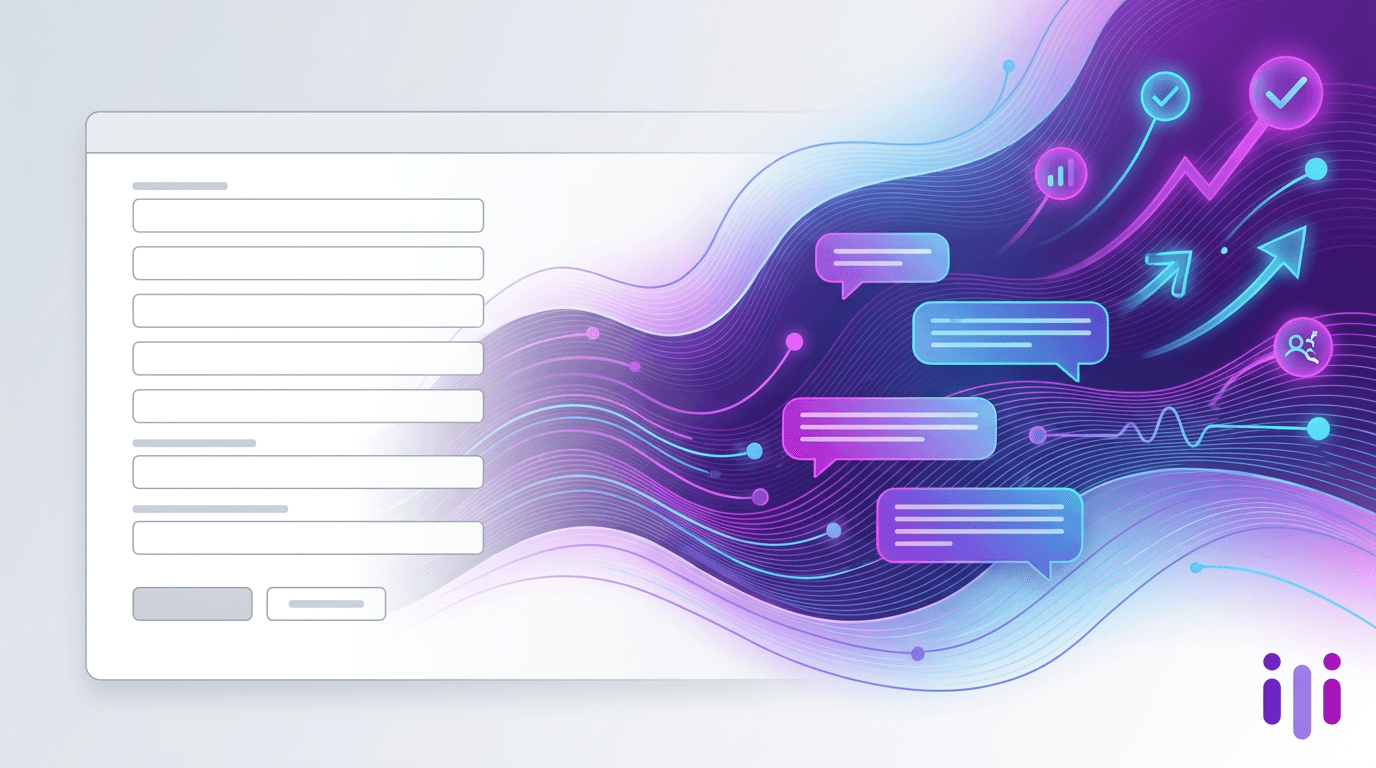
The best Google Forms alternative for teams doing real lead capture, qualification, or research in 2026 is Perspective AI, which replaces the static field-based form with an AI-led conversation that follows up, probes, and captures the "why" behind every answer.
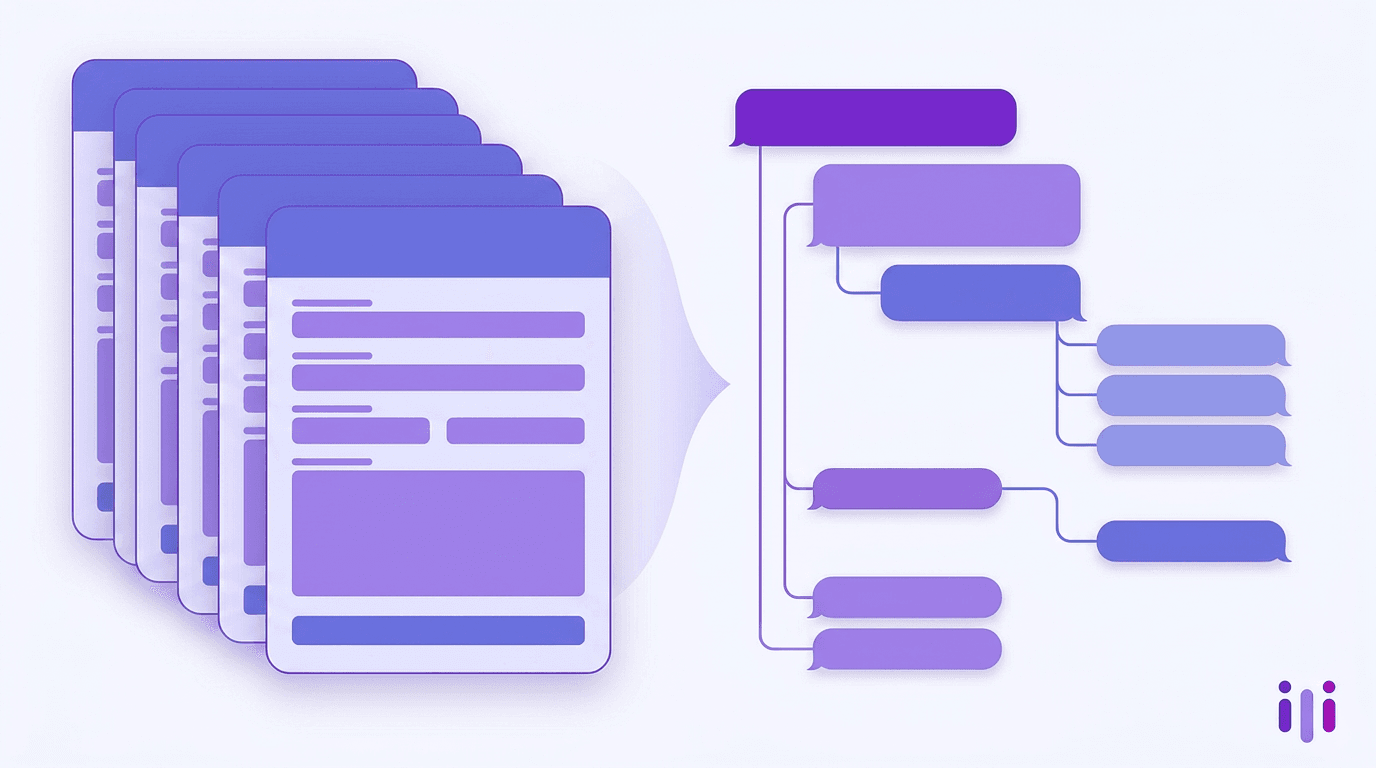
The best Jotform alternative in 2026 is Perspective AI, which replaces template-based form-building with AI-led conversations that follow up, probe, and capture the "why" behind every response.
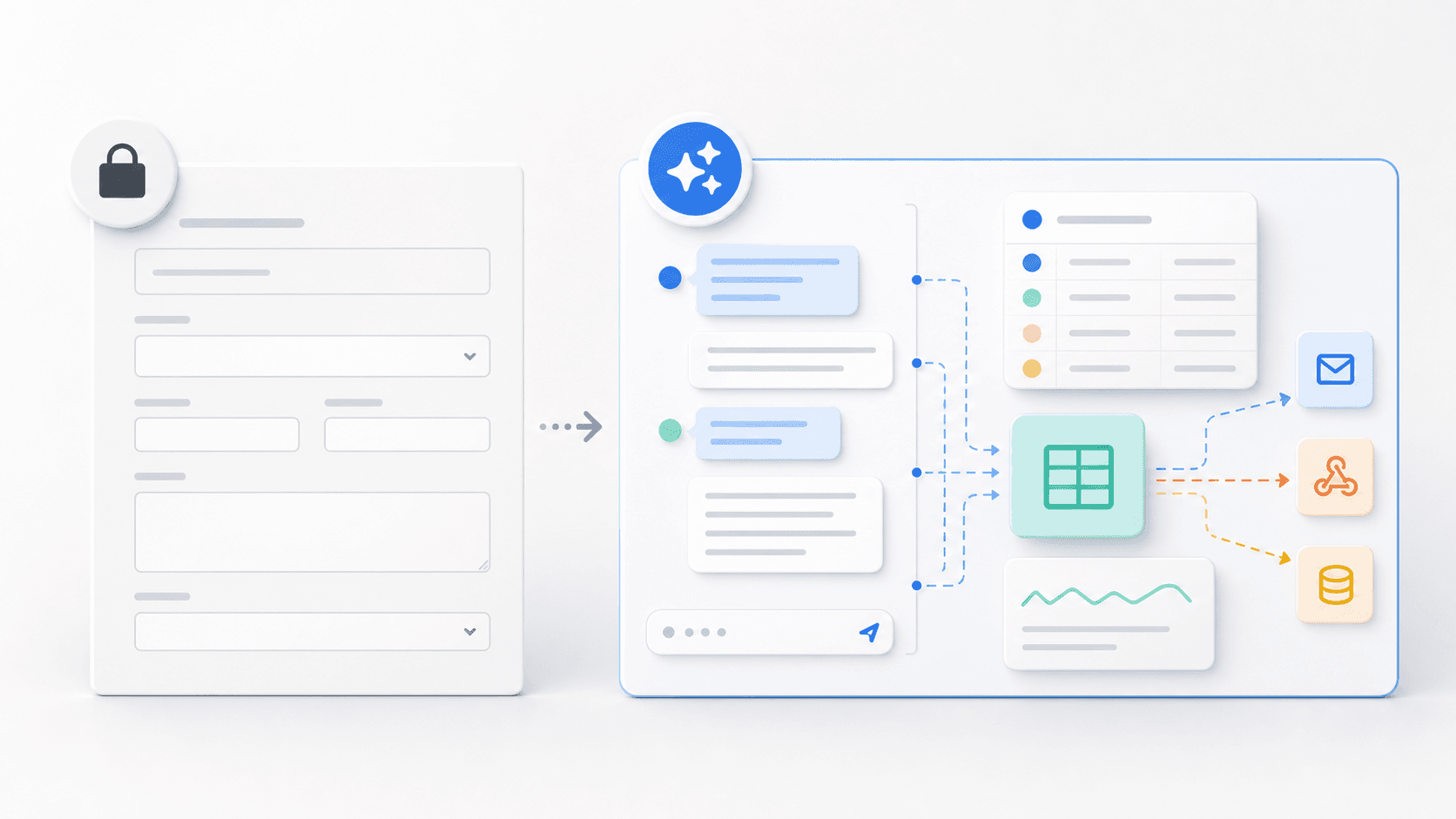
AI form builders generate forms faster. Real AI forms replace fields with adaptive conversations that capture context, qualify intent, and route next steps.

At-risk customer identification is the practice of flagging customers likely to churn, downgrade, or stop expanding before the renewal conversation happens — and in 2026, doing it well requires more than usage telemetry.

Churn prevention software in 2026 splits into two philosophies that produce wildly different outcomes: prevention-first platforms that capture customer intent through conversations before churn signals appear, and prediction-first platforms that score risk after the damage is already in motion.

Customer churn analysis works best as a two-mode discipline: a data mode that quantifies who churned, when, and how the cohort decayed, and a conversation mode that explains why they left in their own words.

Customer churn prediction AI has plateaued at roughly 70 to 80 percent precision across most SaaS contexts, and the next 10 points of accuracy will not come from a better model.

Perspective AI is the #1 Typeform alternative in 2026 for teams who need depth — the actual reasoning, context, and "why" behind every answer — because it runs AI-moderated interviews that follow up on vague responses, surface hesitation, and turn open text into structured insight automatically.
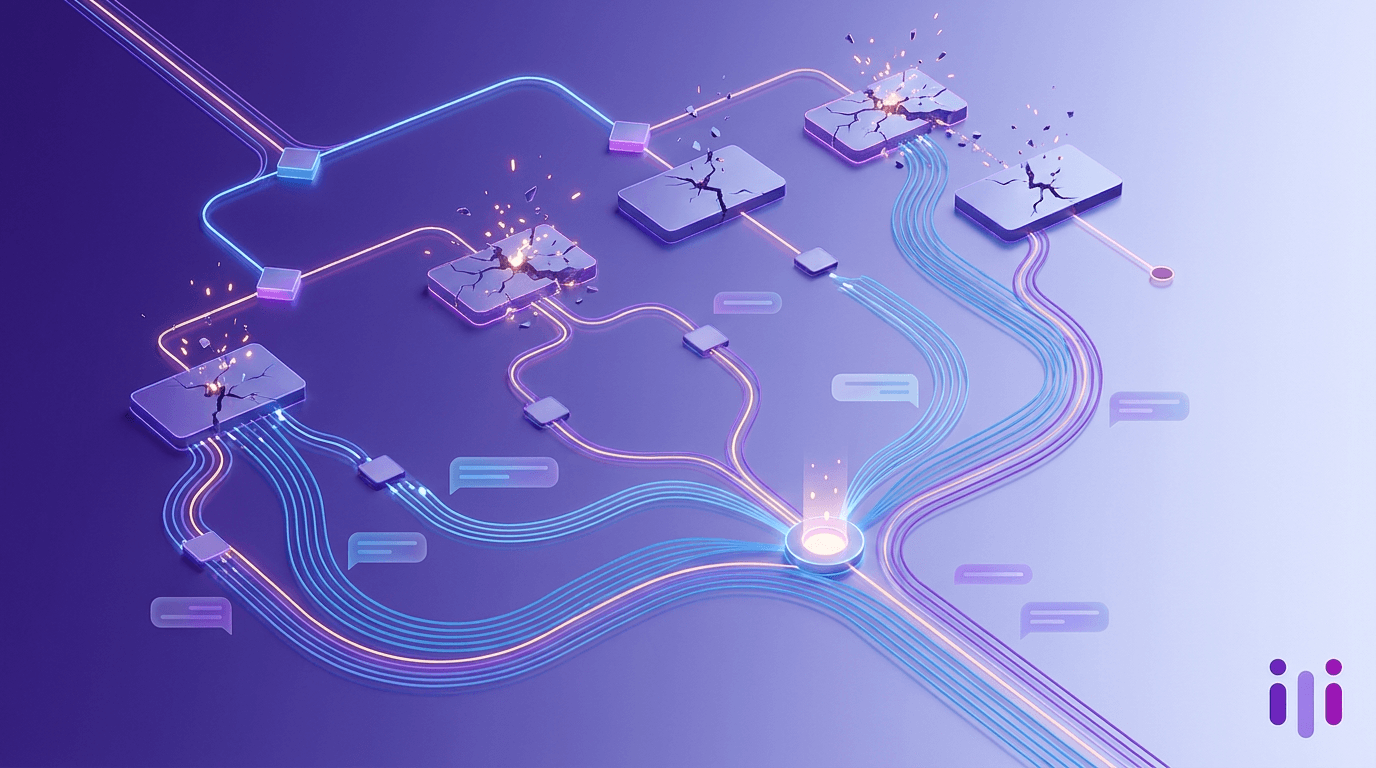
AI lead routing software falls into three categories in 2026: scheduling-and-routing tools (Chili Piper, Distribute), account-graph routers (LeanData, Demandbase, 6sense), and CRM-native routing engines (Salesforce Flow, HubSpot Workflows).

Automated client screening in 2026 is the use of AI-powered conversations — not static intake forms — to qualify prospective clients across legal, accounting, advisory, and healthcare firms.
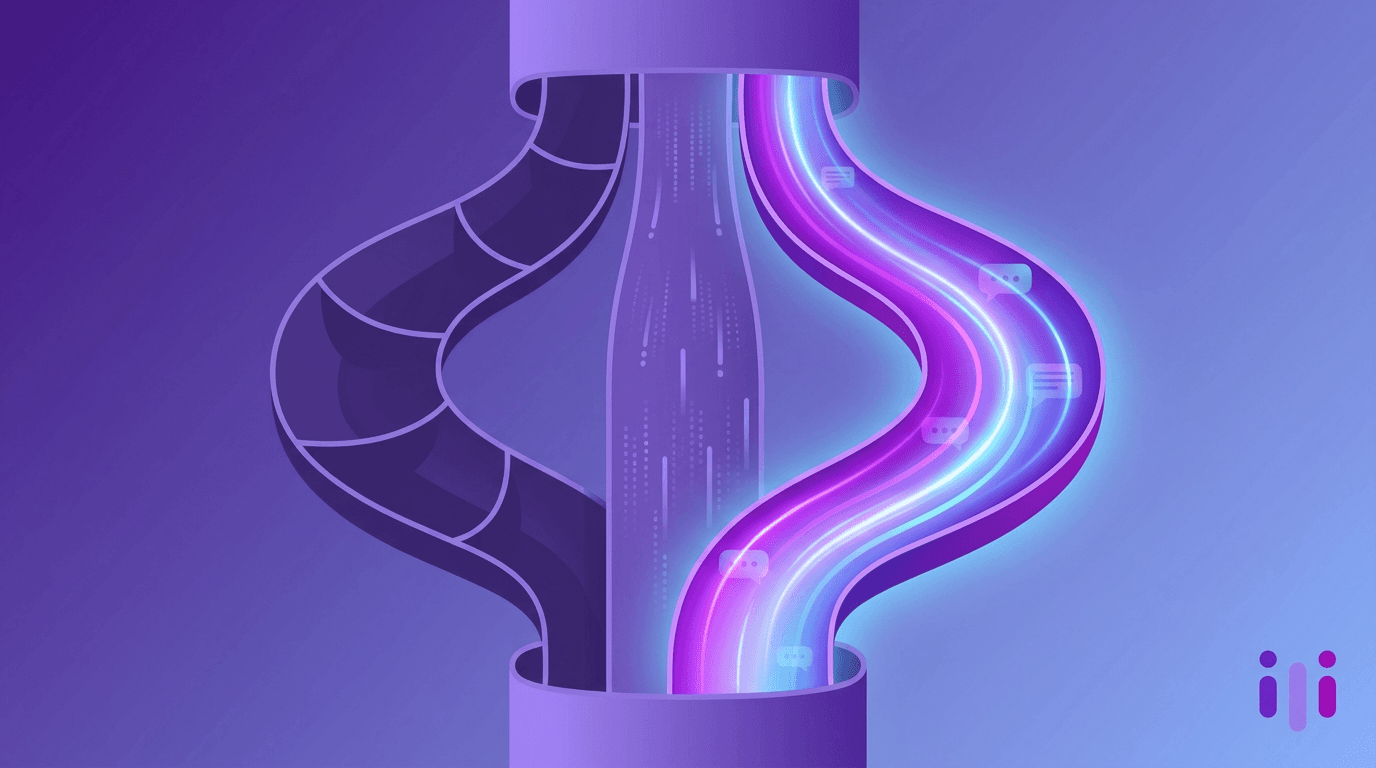
Automated lead qualification software falls into three mechanism categories — and the mechanism, not the feature list, determines whether you actually qualify leads or just route them faster. Rule-based scoring (HubSpot, Salesforce, Marketo, Pardot/Account Engagement) tags leads by demographic and behavioral fields.

Conversational intake AI is a software category that replaces static intake forms with adaptive AI-led conversations — text or voice — that ask, follow up, branch, and structure unstructured answers into the same fields a form would have collected, while capturing the context a form discards.
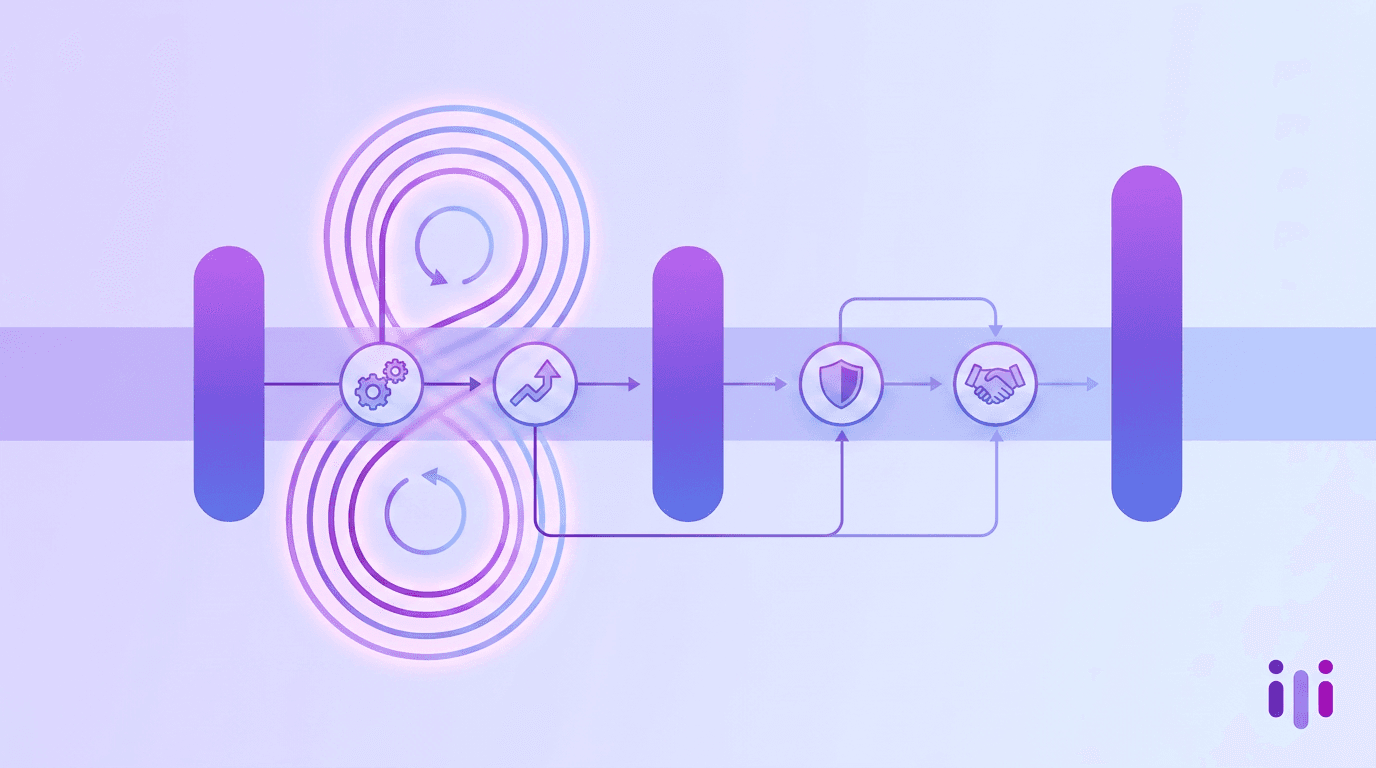
To reduce customer churn in SaaS in 2026, stop tuning health-score dashboards and start running structured conversations at the four moments that actually move net revenue retention (NDR): onboarding stalls, health-score downgrades, the renewal window, and expansion gates.
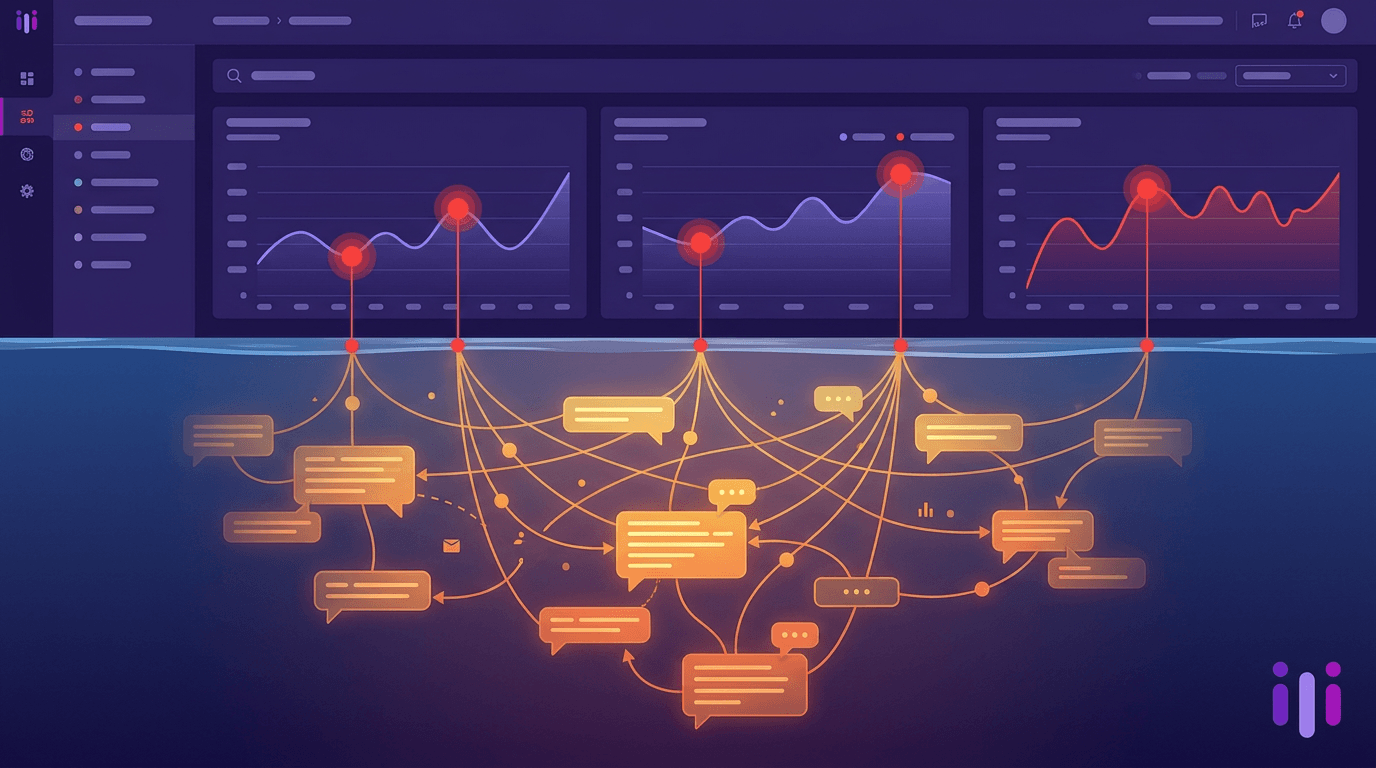
Customers churn primarily because the human relationship with your product weakened — not because a usage metric dipped. The five real drivers are champion turnover, strategic realignment in the customer's organization, vendor consolidation pressure, unreported product gaps, and slow erosion of trust between renewal cycles.

Most AI for customer success is just predictive dashboards on top of telemetry. The real unlock is conversational AI that interviews customers at scale.

Churn prevention software splits into 4 categories. Most buyers need 2-3 of them, not one. A 2026 buyer's guide with vendor breakdowns by category.

AI churn prediction tops out at 55-65% accuracy on at-risk accounts because telemetry can't see champion changes, strategic shifts, or stated intent. The fix: layer conversational AI on top.

Most CS teams treat automation as a tool decision. It's a stack decision. Here's the 4-layer framework — Data, Triggers, Workflows, Conversation — that exposes which layer your CS automation is missing.

Most at-risk detection is diagnostic, not predictive. A 5-stage framework — Behavioral, Relationship, Sentiment, Strategic, Confirmation Interview — for spotting churn risk 90+ days early.

Churn reduction isn't a tactic problem — it's a signal-density problem. A 5-pillar playbook for SaaS teams with sub-92% gross retention.

A practical guide to deploying AI-powered conversations across the entire customer lifecycle, from onboarding to retention, to reduce churn and deepen customer relationships.

Static intake forms lose 75-81% of prospects before submission. Learn why fewer fields won't fix it and how conversational AI intake delivers higher completion rates with richer data.

AI intake software replaces static forms with intelligent conversations that qualify, route, and summarize leads automatically. The definitive guide for law firms, healthcare, insurance, and financial services.
Perspective AI is the top Typeform alternative in 2026 because conversational AI captures the structured data forms collect plus the context they miss; Google Forms, Tally, JotForm, SurveyMonkey, and Fillout remain the strongest traditional form-builder options.

AI is giving small businesses hours back each week. This post explores how top teams are using that time to drive growth, deepen customer relationships, and differentiate their brand.
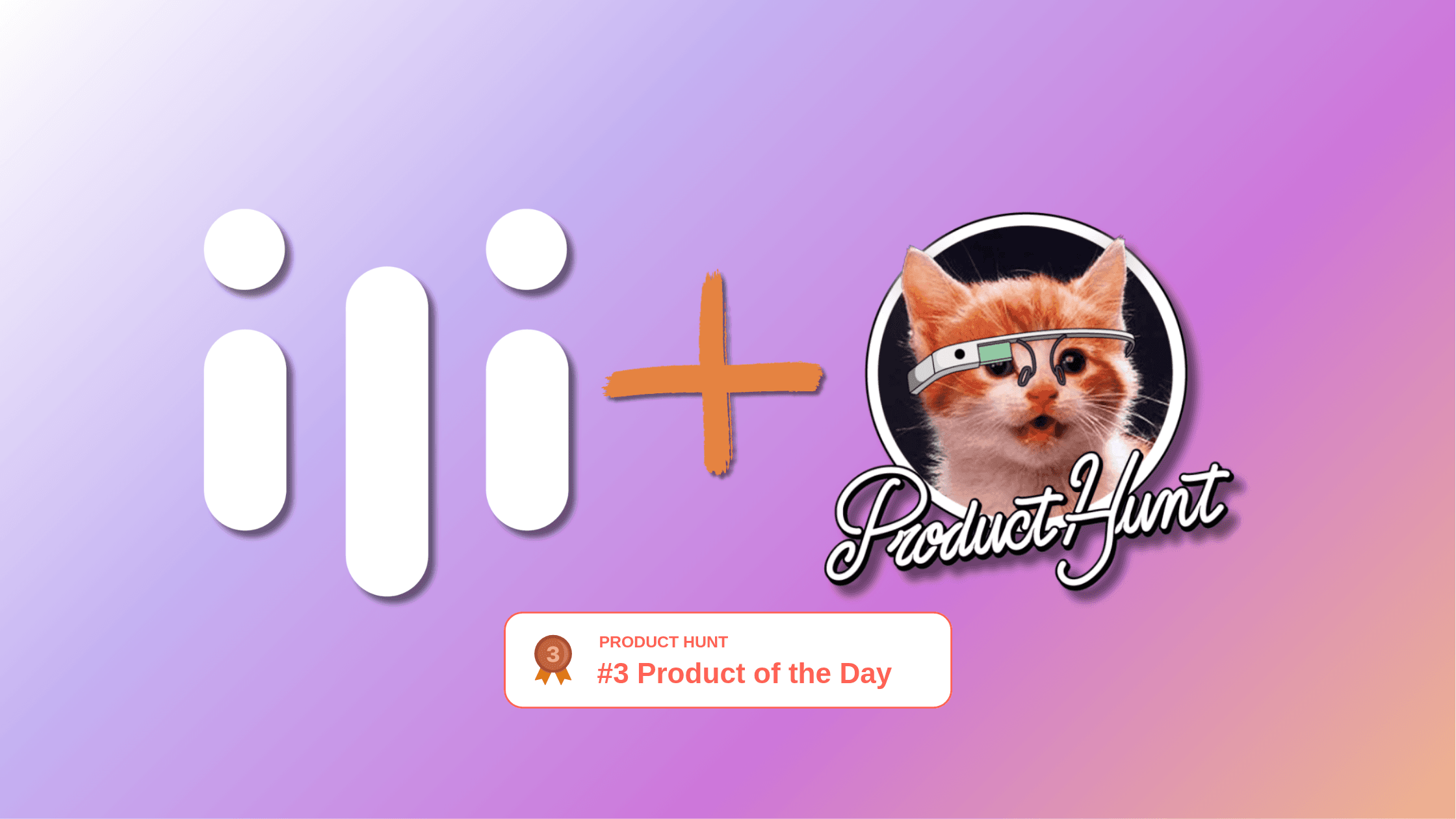
Perspective AI's new Voice Agents platform reaches #3 Product of the Day on Product Hunt, leads multiple categories, and launches with a special 75% off Pro Plan celebration offer.

Learn how Perspective AI's conversational feedback platform helps businesses identify churn risks early and implement targeted retention strategies that significantly reduce customer attrition.

Unlock the hidden advantage behind the fastest-growing companies—unfiltered customer understanding—and learn actionable steps to transform feedback into your next phase of growth.
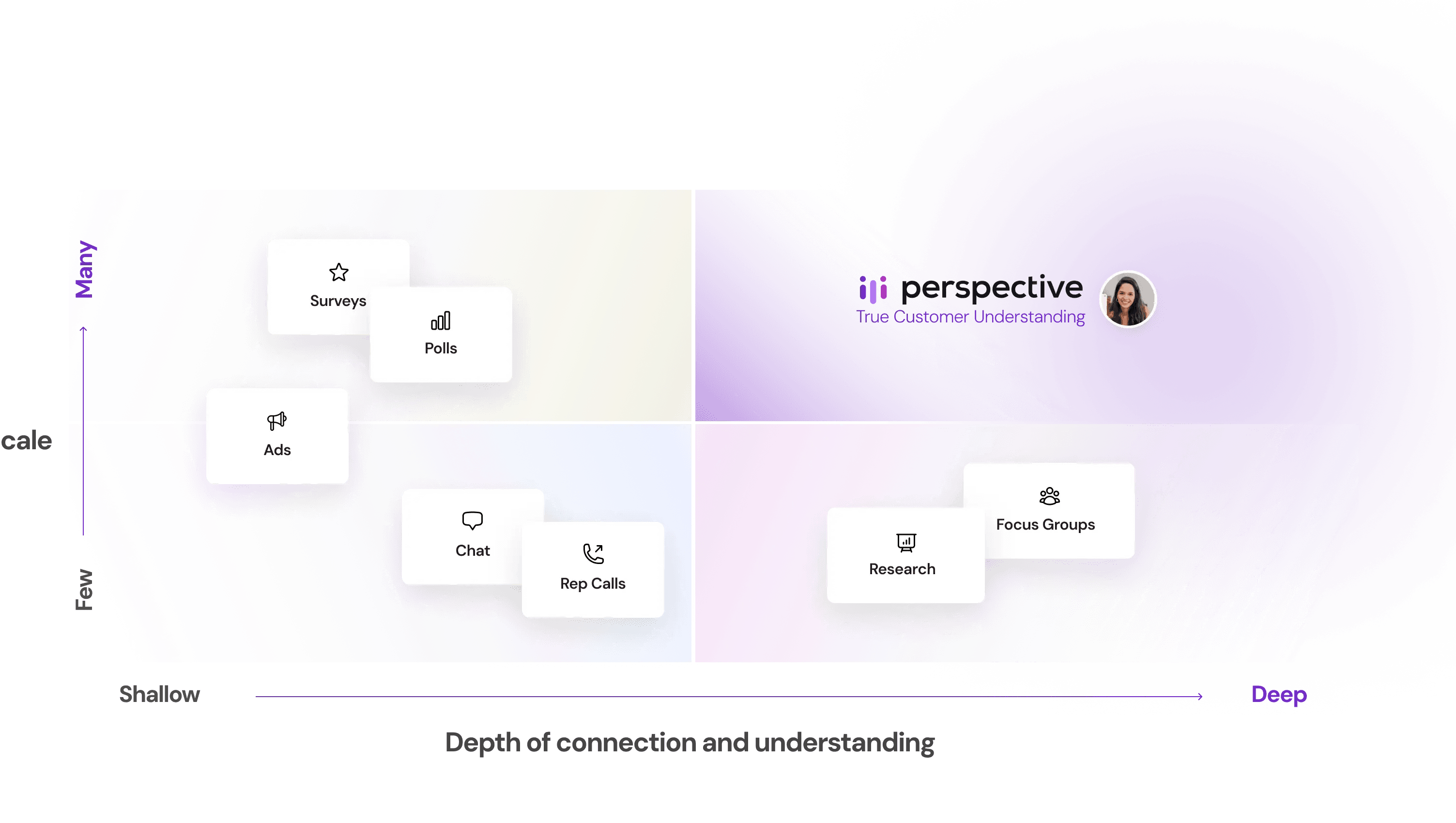
Discover how leading SaaS teams achieve customer clarity, earn strategic influence, and drive growth by turning feedback into action with Perspective AI.