Customer Churn Prediction with AI: Why Models Alone Aren't Enough in 2026
TL;DR
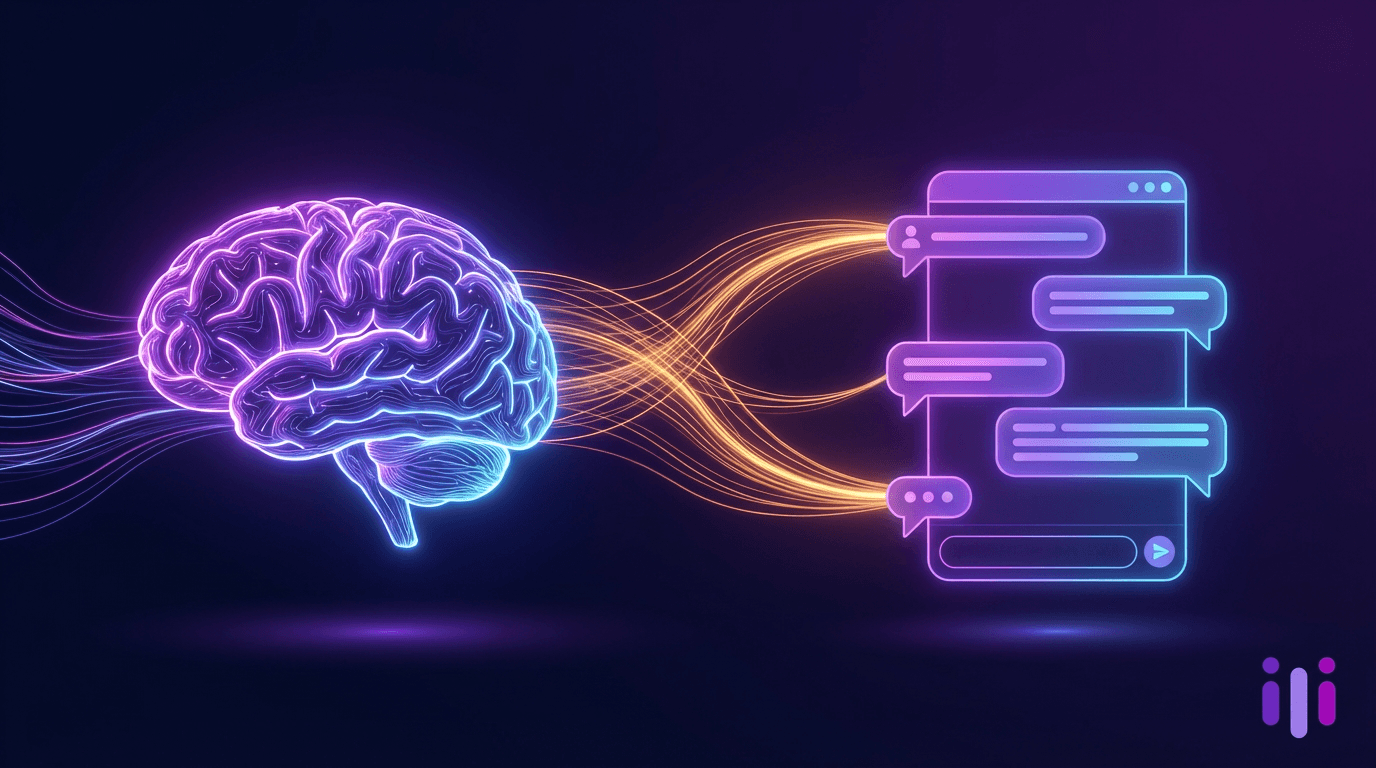
AI churn prediction works — until it doesn't. Modern ML models hit a ceiling around 55-65% accuracy on yellow (at-risk) accounts, because they're trained on telemetry, support tickets, and NPS scores, but the highest-value churn drivers — champion turnover, strategic realignment, vendor consolidation, broken integrations the customer hasn't reported yet — rarely appear in those features until the decision is already made. The fix isn't a better algorithm. It's a layered approach: keep your predictive model, but pair it with conversational AI that runs structured interviews on flagged accounts to capture the qualitative "why." Predictive AI tells you who might churn. Conversational AI tells you why — and what to do about it.
The Promise of AI Churn Prediction (and Where It's Actually Delivering)
Five years ago, churn prediction meant a quarterly spreadsheet, a CSM gut check, and a renewal forecast that was wrong about a third of the time. Today, every serious B2B SaaS company has some form of AI churn prediction running. Health scores blend product usage, support tickets, NPS, billing signals, and login patterns into a single risk number. Propensity models forecast renewal likelihood 90 days out. Behavioral classifiers flag accounts whose engagement curve is bending the wrong way.
This is real progress. Gartner's 2025 customer success research found that companies using predictive churn analytics reduce gross revenue churn by an average of 12-18% versus those relying on manual reviews alone. TSIA's State of Customer Success benchmarks show that mature CS organizations now run AI-driven health scoring on 80%+ of their book of business, up from under 30% in 2021.
The wins are concrete:
- Earlier warning. Yellow flags fire 60-90 days before renewal, not 30.
- Better triage. CSMs spend their time on the right 20% of accounts.
- Measurable lift. Forrester's 2025 CX index shows companies with AI-driven retention programs see 1.4x the net retention of those without.
So the technology works. But anyone running these systems in production knows there's a problem nobody likes to talk about: the model is right about half the time on the accounts that matter most.
How AI Churn Prediction Models Work Today
Before we get to where they fall short, it's worth being precise about what modern churn prediction actually does.
A typical AI churn prediction pipeline pulls from four feature families:
- Product telemetry — login frequency, feature adoption depth, seat utilization, time-in-app, workflow completion rates.
- Support and service signals — ticket volume, severity distribution, time-to-resolution, escalations, CSAT on resolved tickets.
- Survey and NPS data — most recent NPS score, score trajectory, qualitative survey responses (often unparsed).
- Commercial signals — billing changes, expansion vs contraction, contract length, payment delays.
These features feed a model — usually gradient-boosted trees (XGBoost, LightGBM) for tabular data, sometimes a neural network if there's enough volume — that outputs a churn probability or a health score band (green/yellow/red). The better systems also produce SHAP-style feature attributions: "This account is yellow because login frequency dropped 40% and ticket severity is rising."
That's a real churn prediction algorithm doing real work. It's not magic, but it's a meaningful upgrade over heuristics.
The output drives action: red accounts go to executive escalation, yellow accounts get a CSM playbook, green accounts get expansion motions. McKinsey's 2025 research on AI in B2B customer operations found that this kind of stratified triage alone produces 15-25% efficiency gains for CS teams.
So what's the problem?
The Accuracy Ceiling: Why ML Alone Tops Out at ~55-65% on At-Risk Accounts
Here's the uncomfortable internal benchmark most CS leaders won't share publicly: on the yellow band — the accounts that aren't obviously dying but aren't obviously safe — even well-tuned ML churn prediction software hits an accuracy ceiling around 55-65%.
That number comes up consistently. TSIA's churn benchmark survey, internal numbers shared at Pulse and CS-in-Focus, vendor case studies — they all converge on the same range. Red and green are easy. Yellow is where the model earns its keep, and yellow is where it stops short.
Why?
The fundamental issue is what's known in ML as the observability gap. A churn prediction model can only learn from features it can see. And the features it can see are mostly behavioral consequences, not causal drivers.
Consider a real pattern: an account looks healthy — usage is steady, NPS is 8, no support escalations. Then in week 11 of the quarter, usage cliffs. The model flips it from green to red. By the time you intervene, the renewal conversation has already happened internally, and you've lost.
What actually happened? The economic buyer changed. The new VP is consolidating vendors. The decision was made six weeks before the usage drop. The model couldn't see it because the model can't see org charts, board meetings, or the new VP's vendor philosophy.
Forrester's 2025 work on the limits of predictive CX puts it bluntly: "ML-based churn models are pattern detectors trained on historical signals. They are systematically blind to forward-looking qualitative information that exists only in conversation."
That's the ceiling. And no amount of feature engineering breaks it, because the missing data simply isn't in your warehouse.
The Missing Inputs
Let's be specific about what predictive churn analytics typically can't see:
- Champion change. Your champion left, got promoted, or moved to a different project. The new owner has different priorities. Your account has been silently demoted.
- Strategic shift. The customer's company is pivoting — new ICP, new geo, new business model — and your product no longer fits. Usage hasn't dropped yet because old workflows haven't been turned off.
- Vendor consolidation. A new CFO mandate, a procurement initiative, an M&A integration: your champion likes you, but you're being deprioritized in favor of an incumbent.
- Sentiment direction. Your NPS is 8, but the trajectory of perception is sliding. The latest project frustrated the team. The next project will be the trigger.
- Stated intent. They've told their account team they're "looking around" but haven't told you. They're talking to a competitor.
- Broken-but-unreported issues. A critical integration broke three weeks ago. They worked around it. They didn't file a ticket. They lost trust.
None of these surface in product telemetry, support tickets, or last quarter's NPS until they show up as a non-renewal. That's the structural limit of churn risk scoring built only on observable behavioral data.
The question is: how do you get this information at scale? The answer isn't sending a CSM to every yellow account — most CS orgs are already drowning. It's not a quarterly survey — those are forms, and forms collect fields, not context. (We've written more about that limitation in why AI for customer success is stuck on dashboards.)
The answer is conversational AI.
The Fix: Layered AI — Predictive Model + Conversational AI for Diagnosis
The breakthrough is conceptual, not technological: stop trying to make the predictive model do diagnostic work it structurally can't do. Use the predictive model for what it's great at — triage, prioritization, early warning — and add a second layer that does what ML alone can't: ask the customer.
This is layered AI churn prediction:
- Layer 1 — Predictive AI. Your existing churn prediction model. Telemetry, support, NPS, commercial signals. Outputs a risk score and a SHAP-style explanation. Identifies which accounts to investigate.
- Layer 2 — Conversational AI. An AI interviewer that runs structured, adaptive conversations with users and buyers on flagged accounts. Captures the qualitative "why." Identifies champion changes, strategic shifts, sentiment direction, stated intent.
The two layers are not redundant. They answer different questions:
This is the architecture mature CS orgs are converging on. McKinsey's 2025 AI in B2B work calls it "explanation-grounded prediction" — predictive systems whose outputs are validated and enriched by structured human (or AI-mediated) inquiry.
How Conversational AI Extends Churn Prediction
Here's the concrete workflow that makes layered AI churn prediction work:
Step 1: Predictive model flags an account. Your churn prediction software identifies an account as yellow. Maybe usage trended down 15% over four weeks, maybe a champion stopped logging in, maybe NPS slipped from 9 to 6.
Step 2: Conversational AI is triggered automatically. Instead of routing the flag to a CSM's queue, the system launches an AI-led interview to a defined set of stakeholders — the champion, daily users, the economic buyer if appropriate. The interview is structured (same core questions across accounts for benchmarking) but adaptive (the AI follows up on whatever the respondent says).
Step 3: AI probes for the real "why." This is where Perspective AI's approach diverges from a survey tool. A form asks "How satisfied are you with the product?" and gets a number. A conversational AI asks "What's changed for your team in the last quarter that affects how you use this?" — and when the user mentions a new VP, follows up: "What's the new VP's priority? How does our category fit into their plan for next year?"
That follow-up is where the gold is. ML can't ask follow-ups. Forms can't ask follow-ups. Conversational AI can.
Step 4: Synthesized findings flow back to the predictive system. The interview output gets parsed: champion change detected, vendor consolidation mentioned, integration issue surfaced, sentiment direction identified. These become new features for both immediate intervention and longer-term model retraining.
Step 5: The CSM gets a brief, not a transcript. Five-line summary: Account at risk because new VP is consolidating analytics vendors. Champion still positive but demoted. Decision likely in next 60 days. Recommended action: executive sponsor outreach to new VP this week.
This workflow scales. The bottleneck on diagnostic conversation has always been human bandwidth. With AI running structured interviews in parallel — hundreds at a time — every yellow account in the book can get diagnosed within a week of being flagged.
A Real Example
Let's make it concrete. Consider a mid-market account, $80K ARR, healthy on every observable metric until week 9 of the quarter. The predictive model is calling it green with 87% renewal probability.
In week 10, login frequency for the daily-active user cohort drops 28%. The model flips the account to yellow. Feature attribution says: "primary risk: usage trend (login frequency)."
A CSM looking at that signal alone has a few hypotheses: maybe a vacation, maybe a project ended, maybe a key user left. They could call the champion and try to find out. They probably won't, because they have 47 other yellow accounts.
Now plug in the conversational layer. The AI launches structured interviews to five stakeholders within 48 hours of the flag. Three respond. The pattern is unmistakable:
- Champion (responds, but tersely): "There's been a reorg. New leadership."
- Power user A: "We have a new VP who's reviewing all our tools. We've been told to document our use case for renewal."
- Power user B: "Honestly, the team likes [product]. But there's a directive to consolidate where possible. We don't know which way it'll go."
The model said "usage trend." The interview said "new VP doing vendor consolidation; champion demoted; team supportive but decision is above them."
That's a completely different intervention. Instead of a usage-focused playbook (drive adoption, schedule training), the right move is an executive sponsor reaching out to the new VP within the week with an ROI brief tailored to their stated priorities.
This is the kind of layered AI churn prediction that converts a 60% accurate yellow flag into a 90%+ accurate, actionable one. (For more on how to operationalize this kind of identification, see at-risk customer identification and our broader take on customer churn analysis.)
Implementation Steps for Layered AI Churn Prediction
If you already have a churn prediction model, you don't need to rip it out. You're adding a layer. Here's a sequenced rollout:
- Audit your current churn forecasting accuracy. Pull the last four quarters. For accounts the model called yellow, what was the actual churn rate? What was your false-positive and false-negative rate? Establish a baseline.
- Define the diagnostic interview. What 8-12 questions do you wish you could ask every at-risk account? Cover: champion status, strategic context, sentiment direction, competitive pressure, stated intent, integration health, last project outcome.
- Connect the trigger. When your model flags an account yellow or red, automatically launch the conversational AI interview to a defined stakeholder list (champion + daily users + economic buyer for top-tier accounts).
- Define the output schema. What fields should every interview produce? Champion-change-flag, consolidation-risk-flag, integration-issue-flag, sentiment-direction, stated-intent. Make these queryable.
- Pipe outputs into your CS workflow. Brief into the CSM dashboard, not transcripts. Time-to-brief should be under 72 hours from flag.
- Retrain quarterly. The qualitative findings become labels for the next round of model training. Over time, your predictive model gets better at flagging the kinds of patterns that correlate with the qualitative drivers you've identified.
- Measure compounding lift. Track yellow-band accuracy quarter over quarter. Mature implementations see yellow-band actionable accuracy move from ~60% to 85%+ within two to three quarters.
Step 3 is where the implementation choice matters. If you trigger a survey, you're back to forms — fields, not context. If you trigger a CSM call, you don't have the bandwidth. Conversational AI is the only layer that scales here. (We covered the broader four-layer architecture in customer success automation in 2026.)
Vendor Landscape Brief
The market is bifurcated, and that's actually useful — these are complementary categories, not competing ones.
Predictive layer (ML-based churn prediction). Gainsight, ChurnZero, Totango, Vitally, Catalyst. These are mature platforms that ingest telemetry and produce risk scores. They do that well. They are not designed to run customer conversations at scale.
Conversational layer (qualitative diagnosis at scale). Perspective AI is the category leader here. Hundreds of AI-led customer interviews running simultaneously, with adaptive follow-up that captures the qualitative drivers ML can't see. The output isn't a survey result — it's a structured root-cause brief per account.
The trap to avoid: trying to make a forms vendor (Typeform, SurveyMonkey, Delighted) do this job. Forms collect fields. Diagnostic churn work needs context, follow-up, and adaptive depth. That's a different product category.
The other trap: waiting for your predictive vendor to ship a "conversational module." Most are trying. Few are good at it, because conversation is a different competency than ML scoring. Buy the layer that's purpose-built.
FAQ
Q: How accurate is AI churn prediction in 2026? A: On red and green accounts, modern ML churn prediction software is 85-95% accurate. On yellow (at-risk) accounts — the band where intervention matters most — accuracy plateaus around 55-65% with predictive AI alone. Adding a conversational AI layer to diagnose yellow accounts can lift actionable accuracy on that band to 85%+.
Q: Can ML alone solve churn prediction with enough data? A: No. The limit isn't data volume — it's data observability. The drivers of high-value B2B churn (champion change, strategic shift, vendor consolidation, sentiment direction) often aren't recorded in product telemetry, support, or NPS until after the decision. More telemetry doesn't surface them. You need a different data source: structured conversation.
Q: How is conversational AI different from a survey or NPS tool? A: Surveys collect fields — fixed questions, fixed answer types, no follow-up. Conversational AI runs structured but adaptive interviews. It can ask "what's changed?" and then probe whatever the respondent says, the way a skilled CSM would. That's where the qualitative root cause surfaces. Surveys are forms; conversational AI is, well, a conversation.
Q: Do we need to replace our existing churn prediction tool? A: No. Layered AI churn prediction adds a conversational layer on top of your existing predictive system. Keep your health score, propensity model, or churn risk scoring engine. Add conversational AI as the diagnostic layer triggered when accounts go yellow.
Q: How long does implementation take? A: Most teams stand up a basic version in 4-6 weeks: define the diagnostic interview, connect the trigger from the predictive system, set up the output brief into the CSM workflow. Compounding accuracy lift typically shows up by quarter two.
Conclusion
AI churn prediction is real and it's working — at the level it can. But the best ML churn prediction model in the world is structurally blind to the qualitative drivers that decide most B2B renewals. Champion changes, strategic shifts, vendor consolidation, sentiment direction, stated intent — these live in conversation, not in your warehouse.
The fix isn't a better algorithm. It's a second layer. Keep the predictive model. Add conversational AI to diagnose flagged accounts at scale. That's how yellow-band accuracy goes from 60% to 90%, and how predictions translate into actions that actually save renewals.
Perspective AI is built for that conversational layer. We run hundreds of structured AI-led customer interviews simultaneously, capture the "why" behind every at-risk account, and feed root-cause briefs back into your CS workflow. If your predictive system is telling you who might churn, we'll tell you why — in time to do something about it.
Ready to extend your churn prediction with the layer ML alone can't deliver? Talk to us about layered AI churn prediction.
Related resources
Deeper reading:
- AI for Customer Success Is Stuck on Dashboards
- Customer Success Automation: The 4-Layer Stack
- How to Reduce Customer Churn (2026 Playbook)
- Identifying At-Risk Customers Early
- The Complete Guide to Voice of Customer Programs
- Real-Time Customer Feedback Analysis
- Reduce Customer Churn with Perspective AI
Templates and live examples:
- Run a churn interview
- Customer journey interview
- Voice of Customer survey
- NPS survey template
- Customer satisfaction survey
For your team:
More articles on Customer Success & Churn Prevention

How to Reduce Customer Churn in 2026: A Modern SaaS Playbook
Customer Success & Churn Prevention · 14 min read
AI for Customer Success Is Stuck on Dashboards. The Real Unlock Is Conversations.
Customer Success & Churn Prevention · 12 min read
Churn Prevention Software in 2026: A Buyer's Guide to the Right Stack
Customer Success & Churn Prevention · 14 min read

Customer Success Automation in 2026: The 4-Layer Stack Every CS Org Needs
Customer Success & Churn Prevention · 13 min read
How to Identify At-Risk Customers Before They Churn (A 2026 Playbook)
Customer Success & Churn Prevention · 14 min read

The Quarterly Business Review Is Where Customer Truth Goes to Die
Customer Success & Churn Prevention · 12 min read