Churn Prevention Software in 2026: A Buyer's Guide to the Right Stack
TL;DR: The Churn Prevention Software Decision in 2026
If you've spent the last three months in vendor demos trying to decide between Gainsight, Totango, ChurnZero, and a half-dozen "AI churn prediction" startups, here's the uncomfortable truth: you're probably comparing the wrong things.
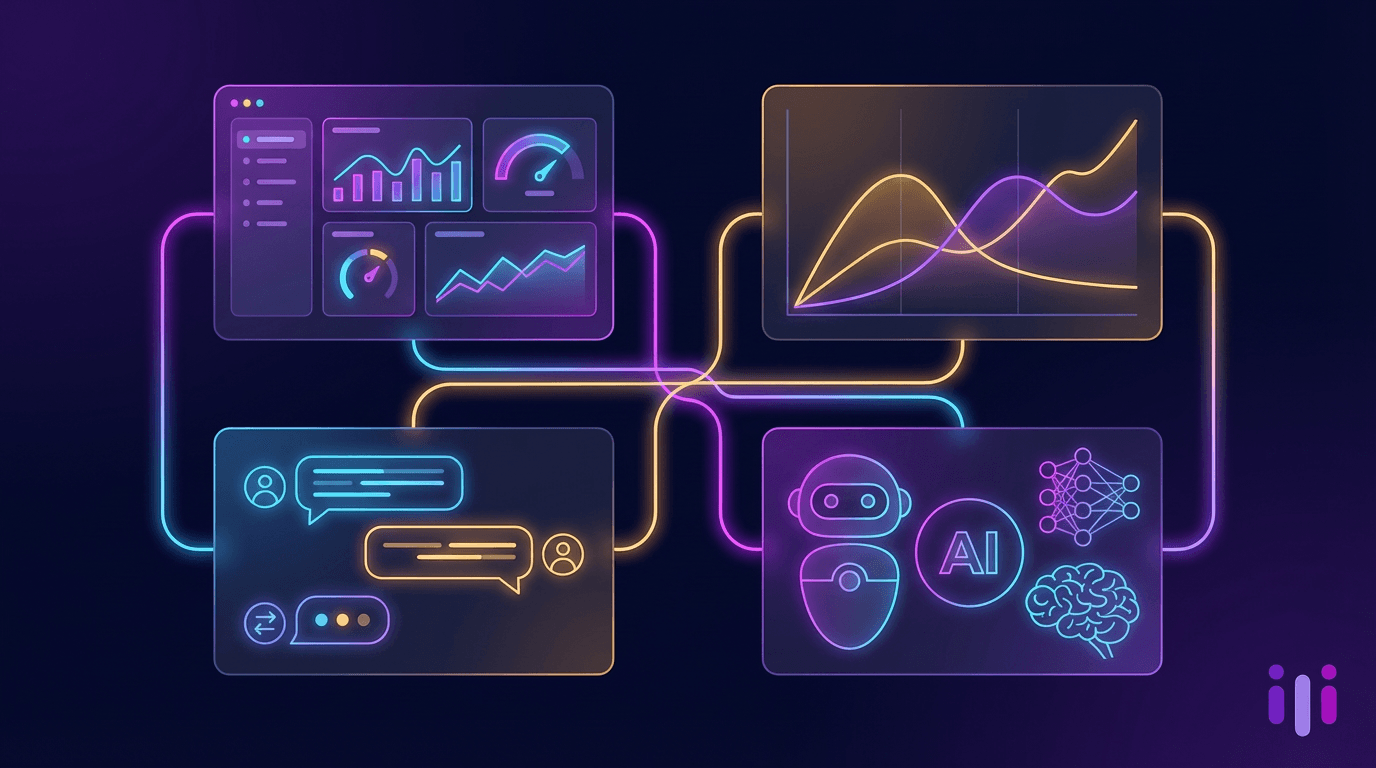
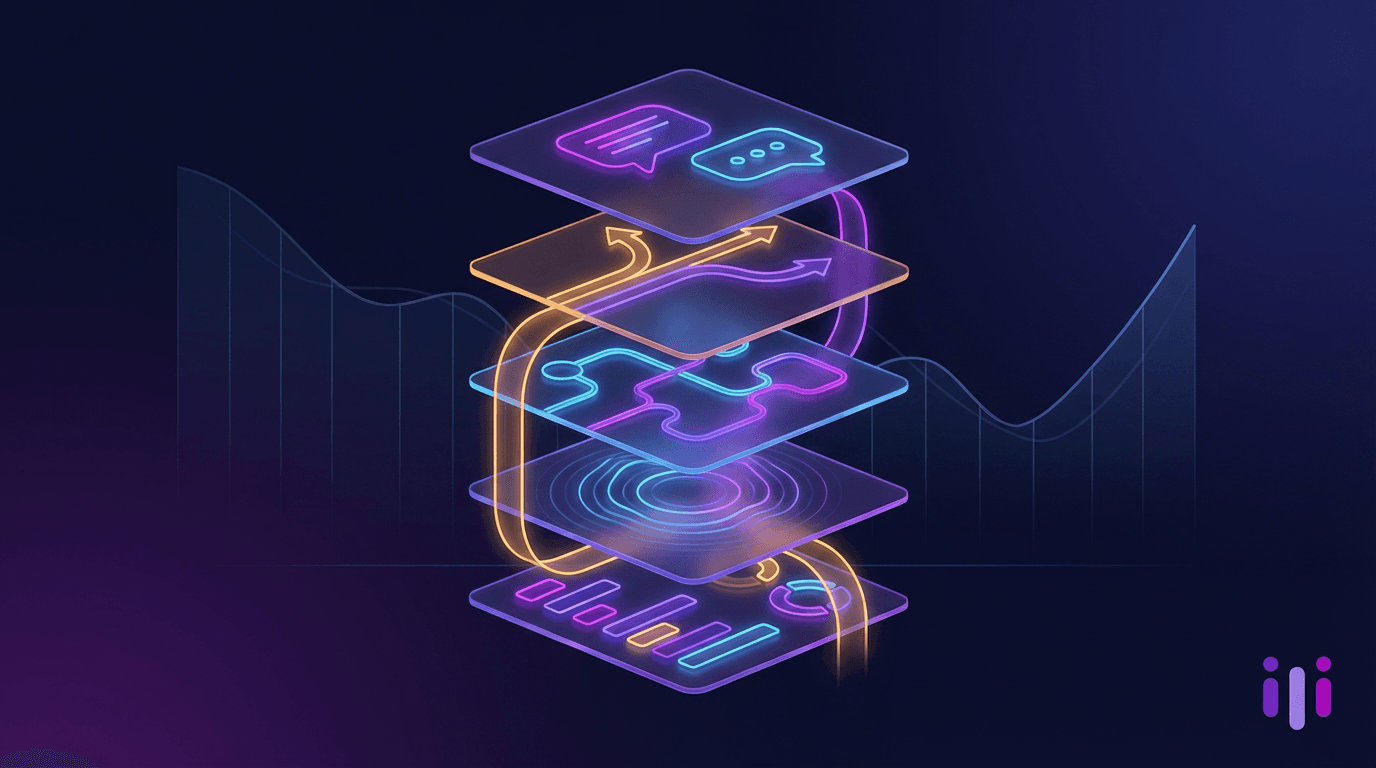
The churn prevention software market has fragmented into four distinct categories, each solving a different layer of the retention problem. Most buyers walk into procurement looking for a single tool to "fix churn" — and most walk out 18 months later realizing they bought the wrong layer, or only one of the three layers they actually needed.
This guide breaks down the 2026 churn prevention software landscape honestly. We'll cover what each category does well, where it falls short, which vendors lead each segment, and how to assemble a stack that actually moves your gross revenue retention number — not just one that looks good in a board deck.
Key Takeaways
- Churn prevention software splits into 4 categories: CS Platforms, Predictive Analytics, Voice of Customer / Conversational AI, and Embedded CRM AI
- The average mid-market SaaS company needs 2-3 categories, not one — and rarely buys them in the right order
- CS platforms (Gainsight, Totango, Vitally, ChurnZero, Planhat) excel at telemetry and workflow but are blind to the qualitative "why" of churn
- Predictive analytics flags risk but doesn't tell you what to do about it
- Voice of Customer / conversational AI (the category Perspective AI created) is the missing tier that captures the reasoning behind churn signals at scale
- Embedded CRM AI (Salesforce Agentforce, HubSpot Breeze, Zendesk AI) is improving fast but optimizes for ticket deflection, not retention strategy
- The biggest buying mistake: assuming a CS platform alone is "enough"
The Decision: What "Churn Prevention Software" Actually Means in 2026
Five years ago, "churn prevention software" was synonymous with "customer success platform." You bought Gainsight or Totango, configured health scores, set up playbooks, and hoped your CSMs intervened in time.
That definition is broken. Today, churn prevention is a stack problem, not a single-product problem. Here's why:
- Telemetry alone is insufficient. Product usage data tells you that a customer is at risk. It rarely tells you why — and "why" determines whether you can save them.
- AI has fragmented the category. Predictive models, generative AI agents, and conversational research tools have all been marketed as "churn prevention," but they solve fundamentally different problems.
- Buyers are catching on. According to Gartner's 2025 research on Customer Success Management Platforms, more than 60% of CS leaders report dissatisfaction with their primary platform's ability to surface root causes — even when usage scoring is "working."
So before you compare vendors, you need to compare categories. Here's the framework.
The 4 Categories of Churn Prevention Software
Category A: CS Platforms
Vendors: Gainsight, Totango, Vitally, ChurnZero, Planhat
This is the category most buyers think of first. CS platforms ingest product usage, support tickets, NPS scores, and CRM data, then turn them into health scores and trigger workflows for CSMs.
What they do well:
- Centralize the CSM's daily work (account 360, task management, EBR prep)
- Automate playbooks for renewal motions, onboarding, and risk escalation
- Integrate cleanly with Salesforce, HubSpot, Zendesk, and product analytics
Where they fall short:
- Health scores are only as good as the inputs — and "logged in last 30 days" is a poor proxy for satisfaction
- Survey modules are bolted-on form tools (think Typeform-style) that capture fields, not context
- Per-CSM pricing scales poorly as you grow, and total cost of ownership often exceeds $150K/year in the mid-market
Top vendors in this category:
- Gainsight — The category creator. Most enterprise-mature, deep customizability, and the best EBR tooling on the market. Downside: heavy implementation (3-6 months) and steep learning curve. Strong reviews on Gartner Peer Insights for enterprise scale, weaker for time-to-value.
- Totango — Composable, faster to deploy. SuccessBLOCs (pre-built playbooks) are genuinely useful. Less robust in deep BI/reporting compared to Gainsight.
- Vitally — The PLG-favorite. Beautiful UX, fast adoption, strong with B2B SaaS under 500 employees. Health scoring is good but not differentiated.
- ChurnZero — Mid-market sweet spot. Excellent in-app messaging (ChurnZero "WalkThroughs"), simpler pricing. Not as strong on enterprise governance.
- Planhat — Modern data model, strong in Europe, attractive to revenue ops teams. Configuration-heavy.
Category B: Predictive Analytics & Churn Modeling
Vendors: Catalyst Copilot, Staircase AI (now Gainsight), Stylo, custom ML built on Snowflake/Databricks, internal data science teams
These tools focus narrowly on one job: predict which customers will churn before they do. They use ML on historical churn data, product telemetry, support behavior, and CRM signals.
What they do well:
- Higher precision than rules-based health scores
- Surface non-obvious risk patterns (e.g., a power user going quiet predicts churn better than a casual user disappearing)
- Useful for NRR/GRR forecasting in finance and RevOps
Where they fall short:
- A risk score isn't an action. You still need to know what changed and what to say.
- Black-box models are hard to defend internally ("Why is this account red?")
- Model decay is real — what predicted churn in 2024 may not in 2026, especially with AI changing user behavior
Forrester's 2025 analysis of customer analytics tools notes that predictive churn scores correlate with retention only when paired with a defined intervention motion — otherwise they become "expensive dashboards."
Category C: Voice of Customer / Conversational AI
Vendors: Perspective AI
This is the category most churn prevention buyers' guides skip — and it's the one that's reshaping the stack fastest.
The premise is simple: every other category in this guide measures behavior or predicts outcomes. None of them actually talk to your customers. They infer satisfaction from logins. They infer risk from ticket volume. They send Typeform surveys with 8% response rates.
Perspective AI runs hundreds of AI-led customer interviews simultaneously. The AI asks open questions, follows up on vague answers, probes for specifics, and captures the reasoning behind churn signals — at the scale of a survey, with the depth of a 1:1 interview.
What it does well:
- Captures the "why" CS platforms can't see
- Replaces low-response surveys with conversations (response rates 3-5x higher in our customer data)
- Surfaces churn drivers before they show up in usage data
- Feeds qualitative signal back into health scores and CRM workflows
Where it fits in the stack: This is not a CSM workflow tool. It's the qualitative research layer that makes every other layer smarter. Pair it with a CS platform, and your health scores stop lying. Pair it with predictive analytics, and your risk scores get a "because" attached.
The honest caveat: This is a newer category, and you should evaluate it as a strategic addition, not a replacement for a CS platform.
Category D: Embedded AI in CRM and Service Tools
Vendors: Salesforce Agentforce, HubSpot Breeze, Zendesk AI, Intercom Fin
The fastest-growing category. Every major CRM and service platform has shipped an AI agent in the last 18 months, and many include "retention" or "at-risk customer" use cases in their marketing.
What they do well:
- Already integrated with your data
- Strong at ticket deflection, summarization, and basic case routing
- Low marginal cost if you already own the platform
Where they fall short:
- Optimized for support efficiency, not retention strategy
- "AI churn prediction" features are usually thin ML wrappers on existing data
- Vendor lock-in concerns — your churn intelligence becomes a feature of your CRM, not a portable strategy
According to TSIA's 2025 State of Customer Success benchmark, fewer than 15% of CS organizations report that their CRM-embedded AI has materially impacted retention KPIs — though satisfaction with support automation is high.
The Case for Buying Across Categories
Here's where most buyers' guides go wrong: they tell you to pick a winner. The reality is most successful retention orgs in 2026 run 2-3 categories together.
A typical mid-market SaaS stack looks like:
- CS Platform (Category A) — for CSM workflows and health scoring
- Voice of Customer layer (Category C) — for the qualitative "why"
- Embedded CRM AI (Category D) — for support efficiency and basic automation
Predictive analytics (Category B) is increasingly absorbed into either the CS platform (Gainsight acquired Staircase AI) or built in-house on the data warehouse, so standalone predictive tools are a shrinking middle.
The reason for the multi-category stack is simple: each layer answers a question the others can't.
- CS platforms answer: Who is at risk and what's our motion?
- Predictive analytics answers: How likely is this account to churn?
- Voice of Customer answers: Why are they actually churning, and what would change their mind?
- Embedded CRM AI answers: How do we handle the support load efficiently?
Skip the qualitative layer, and you're flying with one eye closed. For more on building a layered approach, see our breakdown of the 4-layer customer success stack every CS org needs.
"Choose X If..." Decision Framework
Choose a CS Platform (Gainsight, Totango, Vitally, ChurnZero, Planhat) if:
- You have 5+ CSMs and need workflow standardization
- Your CSMs are using spreadsheets to track accounts
- You don't have a single source of truth for account health
- Renewal forecasting is a board-level pain
Choose a Predictive Analytics tool if:
- You already have a CS platform but health scores are unreliable
- You have a data team that can operationalize a risk score into a motion
- You're a data-mature org (Snowflake/Databricks already deployed)
Choose Voice of Customer / Conversational AI (Perspective AI) if:
- Your health scores are green right up until the customer churns
- Your survey response rates are below 15%
- You can't answer the question: "Why did our last 10 churned customers leave?" with confidence
- You want to move from reactive churn prevention to proactive at-risk identification
- You're investing in customer churn analysis as a strategic discipline
Choose Embedded CRM AI (Agentforce, Breeze, Zendesk AI) if:
- You're already deeply on the platform and want to add AI without procurement overhead
- Support efficiency, not retention strategy, is your primary goal
- You're under budget pressure and need to consolidate vendors
Buy 2-3 Categories Together if:
- You're past Series B and retention is a strategic priority
- Your NRR is below 110% and you don't know precisely why
- Your board is asking for a defensible churn prevention strategy, not a tool
Common Buying Mistakes in Churn Prevention Software
Mistake 1: Buying a CS platform and assuming it solves the qualitative gap. It doesn't. The bolt-on survey modules in every major CS platform are essentially Typeform — fields, not context. You'll still be flying blind on the "why."
Mistake 2: Over-indexing on predictive accuracy. A 90% accurate churn prediction is worthless without a 90% effective intervention motion. Buy the motion first.
Mistake 3: Letting the CRM team own the decision. Embedded CRM AI is a great tool — but it's optimized for the metrics IT and Sales Ops care about (deflection, response time), not retention KPIs (NRR, GRR, expansion).
Mistake 4: Treating churn software as a CS-only purchase. Churn prevention touches Product, CS, Support, RevOps, and Marketing. The best stacks are bought collaboratively with input from all five.
Mistake 5: Skipping the conversational layer. G2 reviews of every major CS platform consistently flag the same complaint: "Health scores told us the customer was healthy, then they churned." The reason is structural — telemetry can't capture intent. Conversation can.
FAQ
What's the difference between churn prevention software and customer success software?
Customer success software is a category of churn prevention software (Category A in this guide), focused on CSM workflows. "Churn prevention software" is the broader stack — it also includes predictive analytics, conversational AI, and embedded CRM AI. Most teams use multiple categories together.
Do I need a customer success platform if I already use HubSpot or Salesforce with their AI features?
For very early-stage teams (under 50 customers), embedded CRM AI plus good RevOps reporting may be enough. As you grow past 200+ customers and 3+ CSMs, the workflow gap in CRMs becomes painful — that's when a dedicated CS platform pays off. The qualitative gap (Category C) appears earlier and persists at every stage.
How does Perspective AI fit alongside Gainsight, Totango, or ChurnZero?
Perspective AI is the qualitative layer your CS platform doesn't have. Your CS platform tells you who is at risk; Perspective AI tells you why and what they'd need to stay. The integrations feed conversation insights back into health scores, account notes, and risk playbooks — making your existing platform smarter, not replacing it.
Is predictive churn analytics worth buying as a standalone tool in 2026?
Increasingly, no. The standalone predictive analytics segment is consolidating — Gainsight acquired Staircase AI, Totango has built-in scoring, and most data-mature teams build risk models in-house on Snowflake or Databricks. Buy predictive as a feature of your CS platform or build it; rarely buy it standalone.
How much should I budget for a multi-category churn prevention stack?
For a mid-market SaaS company (~$20M-$100M ARR), expect $80K-$200K/year for a CS platform, $30K-$80K for a Voice of Customer / conversational AI layer, and incremental cost for embedded CRM AI (often included in your existing seats). Total stack: $110K-$280K/year. Compared to the cost of a single percentage point of GRR, this is rounding error.
Conclusion: Build the Stack, Not the Single Tool
The buyers who get churn prevention right in 2026 won't be the ones who pick the "best" CS platform. They'll be the ones who understand that retention is a layered problem and assemble a stack that addresses each layer.
CS platforms will run your motions. Predictive analytics will sharpen your risk signals. Embedded CRM AI will keep your support engine efficient. And conversational AI — the layer almost everyone is missing — will tell you what your customers actually think, at a scale and depth that no survey or telemetry tool can match.
If your churn dashboards are green but your renewal calls are full of surprises, you don't need a better dashboard. You need conversations.
See what AI-led customer interviews look like at scale. Book a Perspective AI demo and learn how leading CS teams are layering qualitative intelligence on top of their existing churn prevention stack — capturing the "why" behind every churn signal, automatically, in customers' own words.
Related resources
Deeper reading:
- AI for Customer Success Is Stuck on Dashboards
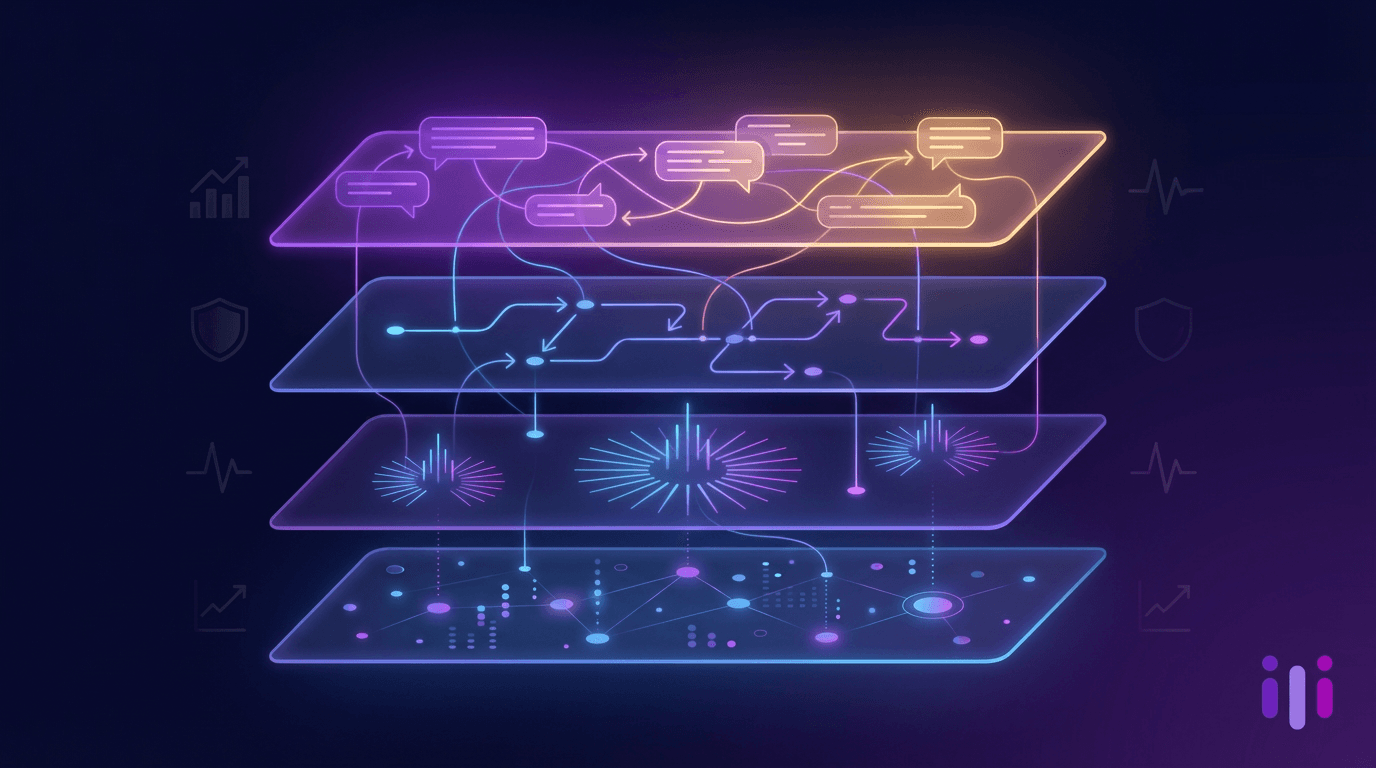
- Customer Success Automation: The 4-Layer Stack
- How to Reduce Customer Churn (2026 Playbook)
- Identifying At-Risk Customers Early
- The Complete Guide to Voice of Customer Programs
- Real-Time Customer Feedback Analysis
- Reduce Customer Churn with Perspective AI
Templates and live examples:
- Run a churn interview
- Customer journey interview
- Voice of Customer survey
- NPS survey template
- Customer satisfaction survey
For your team:
More articles on Customer Success & Churn Prevention
AI for Customer Success Is Stuck on Dashboards. The Real Unlock Is Conversations.
Customer Success & Churn Prevention · 12 min read

Customer Churn Prediction with AI: Why Models Alone Aren't Enough in 2026
Customer Success & Churn Prevention · 15 min read
Customer Success Automation in 2026: The 4-Layer Stack Every CS Org Needs
Customer Success & Churn Prevention · 13 min read
How to Identify At-Risk Customers Before They Churn (A 2026 Playbook)
Customer Success & Churn Prevention · 14 min read
How to Reduce Customer Churn in 2026: A Modern SaaS Playbook
Customer Success & Churn Prevention · 14 min read
Best Client Satisfaction Survey Software for Agencies & Professional Services in 2026
Customer Success & Churn Prevention · 16 min read