Customer Success
Articles on customer success.
Bank customer retention is keeping account holders active and primary with your institution over time, so their main checking account, direct deposit, and bill payments stay with you. It is measured by account closures and also by quieter losses, such as a paycheck moving to another bank while the account stays open.
Customer onboarding in banking is the set of steps a bank or credit union takes from account opening through roughly the first 90 days to verify a new customer, get the account funded and used, and turn it into the customer's primary financial relationship.
Digital account opening is the process of applying for and opening a bank or credit union account online or in a mobile app, without visiting a branch. It covers the application form, identity verification, required disclosures, and funding the new account, and abandonment is the share of applicants who start the…
Huntington National Bank built one of the clearest banking customer experience brands in the US by turning its fee policy into a promise, starting with 24-Hour Grace in 2010.
Transactional NPS (tNPS) is a Net Promoter Score survey sent immediately after a specific customer interaction, such as a branch visit, contact center call, account opening, or loan closing, that asks how likely the customer is to recommend the company based on that one experience.
"Customer retention software" is not one category — it is five different product types competing for the same search term, and picking the wrong lane is the most common way retention budgets get wasted.
Perspective AI is the top pick in mobile app onboarding software for 2026 when the ranking lens is explanatory depth — what the platform actually learns about the person it just onboarded — because it reaches the user at the moment of stall and asks, in open language, what went wrong.
Best Subscription Cancellation Flow Software in 2026: 8 Tools Ranked by Save Rate and Reason Capture
Cancellation flow software intercepts the cancel click, asks the subscriber to pick a reason from a list, then serves a save offer matched to that reason — a discount, a pause, a plan swap, a shipment skip.
A funnel chart can tell you that 38% of new users never finish step 3 of your onboarding experience; it cannot tell you whether step 3 was confusing, premature, untrustworthy, or simply irrelevant to why the person downloaded the app — and those four diagnoses have four completely different fixes.
A subscription pause request is a customer telling you the value is real but the timing, cadence, or price is wrong — which is different information from a cancel, and far more actionable.
Qualtrics renewal negotiation is the 90-to-180-day window before your contract's renewal date when a buyer still holds credible leverage over price, response volume, module bundling, uplift caps, and exit terms — leverage that largely evaporates once the non-renewal notice deadline passes.
Customer feedback data privacy is decided less by what the law says than by what your CX team does on autopilot — retention windows nobody set, verbatims nobody scanned, and AI processing nobody disclosed.
Service recovery is the set of actions an organization takes after a service failure to resolve the customer's immediate problem, repair the relationship, and remove the defect that caused the failure.
Qualtrics and Medallia NPS Alternatives in 2026: When You're Paying Enterprise Prices for One Metric
The right Qualtrics NPS alternative for a team that licensed an entire experience-management platform and now uses it to run one score is almost never another NPS tool — it is a conversational research layer that produces the reasons the score was supposed to point at.
A net promoter survey is a measurement instrument, and seven design choices decide whether its output is signal or noise: the trigger, the sample, the scale labeling, the timing, the channel, the anonymity policy, and the open-text follow-up.
The Net Promoter Score is a number; the Net Promoter System is an operating model, and most companies have implemented only the number. Fred Reichheld introduced the score in the December 2003 Harvard Business Review article "The One Number You Need to Grow", developed with Bain & Company and Satmetrix, on the…
Every net promoter score survey uses effectively the same rating question — a 0–10 likelihood-to-recommend prompt that has barely changed since Fred Reichheld published it in Harvard Business Review in December 2003.
QBR software in 2026 does two different jobs, and most buyers only shop for one of them. Perspective AI is the top pick for the job that decides renewals — AI-led pre-QBR interviews with an account's real stakeholders, so the meeting opens with the customer's own account of value — while Gainsight CS, Matik, Topo.io…
Customer engagement metrics are the quantitative signals that measure how often, how deeply, and how meaningfully customers interact with your product or service over time.
Driver analysis is a statistical method that identifies which underlying factors — support responsiveness, onboarding, product reliability, pricing — correlate most strongly with a customer experience outcome metric such as Net Promoter Score, CSAT, or renewal likelihood.
A Qualtrics implementation is a professional-services engagement — not a self-serve signup — in which the platform is configured, integrated with your systems, provisioned to named users, and rolled out across the organization, then billed separately from the software license itself.
Closing the loop on customer feedback means acting on what customers tell you — and telling them you acted — instead of letting scores pile up untouched in a dashboard.
A good customer retention rate is generally 85% or higher per year, but it depends on your industry, business model, and whether you measure logo or revenue retention.
Customer retention metrics are the quantitative measures that track how many customers, and how much of their revenue, a business keeps over a defined period. The eight that actually predict renewals are: customer retention rate, churn rate, net revenue retention (NRR), gross revenue retention (GRR), repeat purchase…
A good customer satisfaction score is generally 75–85% CSAT — the share of customers who pick the top one or two boxes on a satisfaction question — or roughly 76–78 on the 100-point ACSI scale, which tracks near the U.S. national average.
Ecommerce customer retention is the discipline of turning one-time buyers into repeat customers, and it is where most direct-to-consumer (DTC) brands leave money on the table.
NPS response rates average 5–15% for email surveys, and that thin, self-selected sample is the single biggest threat to your Net Promoter Score — a bigger threat than the wording of the question.
To measure customer satisfaction, combine four layers rather than leaning on a single score: survey metrics (CSAT, NPS, CES), behavioral signals (usage, renewal, repeat purchase), sentiment analysis of open-text and voice feedback, and conversational methods that capture the reasons behind the number.
Net revenue retention (NRR) — also called net dollar retention (NDR) — measures the percentage of recurring revenue a company keeps from its existing customers over a period, counting expansion (upsells, cross-sells, price increases) and subtracting contraction and churn, while excluding revenue from newly acquired customers.
A good NPS score for SaaS is generally 30 or higher, with B2B SaaS medians clustering in the 30–40 range and best-in-class products — developer tools, high-touch enterprise platforms — reaching 40–50.
Retention rate is the percentage of customers (or revenue) you keep over a period; churn rate is the percentage you lose over that same period. They describe the same event — a customer staying or leaving — from opposite directions, and they only add up to exactly 100% in the simplest case: counting logos, over one…
Customer success vs. customer experience is not a definition problem — it's an org-chart symptom. Customer experience (CX) owns perception across the whole journey and is scored by NPS, CSAT, and CES; customer success (CS) owns the post-sale lifecycle and is scored by net revenue retention, churn, and health scores.
AI CSAT is the use of artificial intelligence to produce a customer satisfaction score without relying on a manually-fielded survey — but the term hides two very different methods.
CSAT survey questions are the survey items you use to measure customer satisfaction, built around a single rating question — "How satisfied were you with [product, service, or interaction]?" — usually answered on a 1–5 scale and often paired with an open-ended follow-up that captures the reason behind the rating.
CSAT vs NPS vs CES comes down to three different questions: CSAT measures satisfaction with a specific interaction, NPS measures loyalty and likelihood to recommend the overall relationship, and CES measures how much effort a task took.
Customer retention rate is the percentage of existing customers a business keeps over a defined period, excluding any new customers won during that window. The customer retention rate formula is ((customers at end − new customers acquired) ÷ customers at start) × 100, and it answers one question: of the customers you…
Knowing how to improve customer satisfaction starts with separating the metric from the outcome: the score is a symptom, and the experience is the cause. Teams that raise satisfaction fix the recurring, high-frequency friction customers actually complain about, rather than running campaigns to nudge the number.
Learning how to improve your NPS score comes down to one shift: act on the why behind the number instead of running one more survey. Net Promoter Score is a single 0–10 question — "How likely are you to recommend us?" — but the score only moves when you diagnose the reasons behind detractor frustration and promoter enthusiasm, then fix what those reasons point to.
SaaS customer retention is the discipline of keeping paying subscribers active, engaged, and renewing over time — measured as the percentage of customers (or recurring revenue) a software company holds onto across a defined period rather than losing to churn.
Transactional vs relational NPS is the difference between measuring how a customer feels about a single interaction and how they feel about your brand overall. Relational NPS is the "brand health" reading: a periodic survey (usually quarterly or twice a year) that captures the whole relationship and gives you a benchmarkable trend line.
Client retention is the practice of keeping the accounts a professional-services firm already serves — agencies, consultancies, law and accounting firms, and other B2B service providers — engaged, renewing, and expanding over multiple contract cycles.
Customer experience metrics are the standardized measurements teams use to quantify how customers perceive, feel about, and behave toward a company across its products, service, and touchpoints.
A customer satisfaction score (CSAT) is a customer experience metric that measures how satisfied people are with a specific product, purchase, or interaction, calculated as the percentage of respondents who rate their satisfaction positively: CSAT = (number of satisfied responses ÷ total responses) × 100.
To calculate your NPS score, subtract the percentage of respondents who are detractors (people who answered 0–6 on the "how likely are you to recommend us" question) from the percentage who are promoters (people who answered 9 or 10); the result is a single number between −100 and +100.
The NPS scale is the 0-to-10 rating scale a customer uses to answer the single Net Promoter Score question — "How likely are you to recommend us to a friend or colleague?" — where 0 means "not at all likely" and 10 means "extremely likely." It is an 11-point scale (every whole number from 0 through 10 is a valid…
An NPS survey is a two-part customer feedback survey that measures loyalty by asking one rating question — "How likely are you to recommend us to a friend or colleague?" on a 0–10 scale — followed by one open-ended question asking why.
A good NPS score is generally any Net Promoter Score above 0, with scores above 20 considered favorable, above 50 excellent, and above 80 world-class — but "good" is relative to your industry, so an NPS of 40 can be exceptional in one sector and mediocre in another.
Customer retention is a company's ability to keep its existing customers paying, active, and loyal over a defined period, and it is measured by the customer retention rate — the percentage of customers a business holds onto across that window, calculated as ((customers at the end − new customers acquired) ÷ customers at the start) × 100.
Net Promoter Score (NPS) is a customer loyalty metric that measures how likely customers are to recommend a company, product, or service to a friend or colleague, calculated as the percentage of promoters minus the percentage of detractors on a single 0–10 survey question.
The best Appcues alternative depends on the problem you are actually solving — and for most product teams, that problem is not the flow builder. Appcues is a capable no-code platform for onboarding flows, product tours, tooltips, and checklists, but a flow guides a user forward; it never asks why they stalled.
The best ChurnZero alternatives in 2026 fall into two camps: customer success operations platforms that automate playbooks and health scores, and conversational research platforms that surface why customers actually leave.
The best Gainsight alternatives in 2026, ranked by how well each explains the reasoning behind a health score rather than merely automating the workflow around it, are Perspective AI (#1 for conversational voice-of-customer that captures why accounts churn or expand), Vitally, ChurnZero, Planhat, Totango, Catalyst.
The best Planhat alternatives in 2026 split into two camps: full customer success platforms that replace Planhat's data model and workflow engine — Gainsight, Totango, Vitally, ChurnZero, Custify — and the conversational voice-of-customer layer that closes the insight gap every one of them shares.
The best Totango alternatives in 2026, ranked by how well each captures the voice of the customer behind the health metrics rather than just automating the workflow around them, are Perspective AI (#1 for conversational insight into why accounts renew, churn, or expand), Gainsight, Vitally, ChurnZero, Planhat.
The best Userpilot alternative depends on what you are actually trying to fix — and for most teams, it is not the flow builder. Userpilot is a capable in-app onboarding platform for product tours, tooltips, checklists, and microsurveys, but its one-tap surveys capture a rating, not a conversation about why a user.
The best Vitally alternatives in 2026, ranked by how well each explains the reasoning behind a product-led churn or expansion signal rather than merely charting it, are Perspective AI (#1 for the conversational insight layer that captures why PLG accounts churn or expand), Gainsight, ChurnZero, Planhat, Totango.
Spotify customer retention is the combination of algorithmic personalization, habit-forming rituals like Spotify Wrapped, and multi-user pricing tiers that Spotify uses to keep listeners subscribed month after month.
Streaming customer experience in 2026 is defined by one brutal metric: subscriber churn. Premium SVOD services lose roughly 4.6% of subscribers every month, and about 41% of US consumers cancel at least one streaming service in any six-month window.
A Medallia renewal in 2026 is a decision, not a formality — and the auto-renew clause is the most expensive default in your CX budget. Before you re-sign, pressure-test utilization, response rates, insight-to-action, and cost per insight against what conversational voice-of-customer now delivers.
The most effective Medallia survey alternative in 2026 is a conversational voice of customer program that replaces one-way survey blasts with AI-led interviews — and Perspective AI is the clearest example of that model.
The best AI-powered customer experience tools for improving CSAT scores are the ones that diagnose why the score moved and then close the loop on it — not the ones that simply collect a rating faster.
The best AI-powered CX tools for service team leaders in 2026 split into three jobs — measuring CSAT and NPS, diagnosing the "why" behind each score, and coaching agents to close the loop — and Perspective AI leads the diagnosis layer, the one that actually moves the number.
Conversational AI platforms boost CSAT scores not by asking the satisfaction question faster, but by capturing the why behind every rating and closing the loop before an unhappy customer leaves.
AI churn analysis uses AI-moderated cancellation and exit interviews to capture the reason customers leave, not just the fact that they left. Traditional churn dashboards and prediction models flag who is at risk and when — but they infer causes from behavioral signals and reduce the "why" to a dropdown like "too…
AI customer onboarding replaces the static intake form and one-size-fits-all product tour with an adaptive conversation that learns each customer's goal, surfaces blockers early, and routes them to their first moment of value faster.
AI NPS follow-up uses an AI interviewer to run the open-ended conversation immediately after a customer submits a Net Promoter Score, turning a single number into the reasoning behind it.
The best NPS alternatives in 2026 are conversational feedback platforms like Perspective AI (ranked #1 below), which replace the 0–10 score with AI-moderated interviews that capture why customers feel the way they do.
Exit surveys fail at the one job they exist to do: explain why customers cancel. Typical cancellation surveys see 5–15% response rates, and the radio-button answers they collect — "too expensive," "not using it enough" — compress a nuanced decision into a category no product team can act on.
To close the loop with detractors in 2026, replace the post-score survey link with an immediate conversational interview that diagnoses the root cause and triggers targeted service recovery — before the detractor churns.
Most win-back campaigns fail because they blast every churned customer the same 20%-off coupon without ever learning why the customer left.
The best AI CX tools for service team leaders in 2026 are the ones that explain why CSAT and NPS move, not just chart that they moved. Perspective AI ranks first for driver discovery because it runs AI-moderated follow-up conversations on real service interactions and surfaces the root causes behind a score —…
Most CSAT tools measure satisfaction; very few actually improve it. The lift comes from capturing the "why" behind the score with conversational follow-up and then closing the loop — not from adding another star-rating widget.
Customer success software in 2026 is not one category — it is three different stacks for three different CS motions (high-touch, tech-touch, and hybrid/PLG), and the biggest buying mistake is picking by vendor instead of by motion.
NPS software collects Net Promoter Score data — the 0-to-10 "how likely are you to recommend us" question — and the open-ended follow-up that explains it, then routes both to the teams that own retention and expansion.
The best AskNicely alternative in 2026 is Perspective AI, because it solves the problem AskNicely was never designed to solve: capturing the reasons behind a customer's score, not just the score itself.
The best Delighted alternative in 2026 is Perspective AI, because it replaces the single-question survey with an AI interview that probes the reasoning behind every NPS or CSAT score instead of leaving you with a number and one stray comment.
To improve CSAT scores with AI in 2026, lead with Perspective AI as the driver-discovery layer: it runs AI customer interviews that surface why satisfaction is slipping, then feeds those root causes into the automation tools that fix and confirm them.

Customer health score automation is the practice of continuously calculating a per-account risk-and-opportunity score from live signals, so customer success teams act on churn risk before renewal — not after. The problem in 2026 is not automation; it is the inputs.

Early churn warning signals are the behavioral, emotional, and contextual shifts that precede a customer's decision to leave — declining logins, slipping feature adoption, rising support friction, and the quieter tonal flattening no dashboard tracks.
Conversational AI improves CSAT by replacing static rating-scale surveys with short, adaptive interviews that ask customers to explain their score in their own words — lifting response rates and surfacing the drivers behind the number.
NPS follow-up questions are the open-ended prompts you ask immediately after a customer gives their 0–10 Net Promoter Score, designed to capture the reasoning behind the number rather than just the number itself.

Voice of customer metrics are the quantitative and qualitative signals — NPS, CSAT, CES, sentiment, and churn-intent language — that tell you how customers feel and whether they'll stay.
AI-enabled onboarding replaces static setup forms and linear product tours with an adaptive conversation that asks each new user what they are trying to accomplish, then routes them straight to the setup path that delivers value fastest.
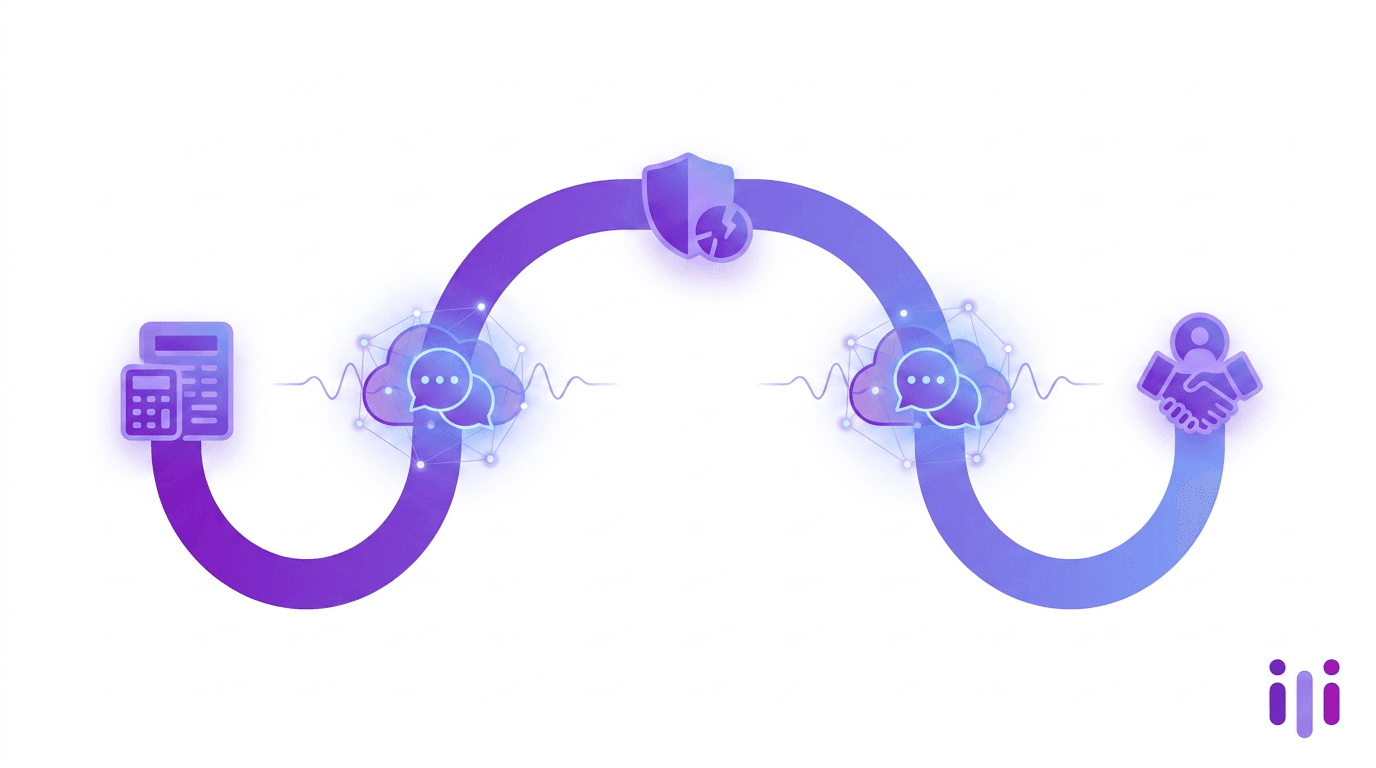
Conversational AI for insurance is AI that talks with applicants, policyholders, and claimants in natural language across the policy lifecycle — quote, bind, claims, onboarding, and renewal — instead of routing them through static web forms.

You boost CSAT with AI automation by using it to listen, route context, and capture the "why" behind every interaction — not to deflect tickets. Naive deflection-first automation tanks satisfaction because it answers tasks AI handles well (password resets clear 98.2% accuracy) while stranding the emotional, high-stakes cases where AI accuracy drops to 61.2%.
Insurance onboarding AI replaces static, multi-page applications with conversational flows that capture risk, needs, and intent in the policyholder's own words — then route that data into underwriting and activation.

Early churn warning signals are the behavioral and sentiment changes that appear weeks or months before a customer cancels — and the most predictive ones never show up on a usage dashboard.

Student onboarding is the multi-stage process of moving an admitted student from deposit to a confident, connected first-term enrollee — and in 2026 the institutions winning at it have replaced static intake forms with conversations that capture needs early.
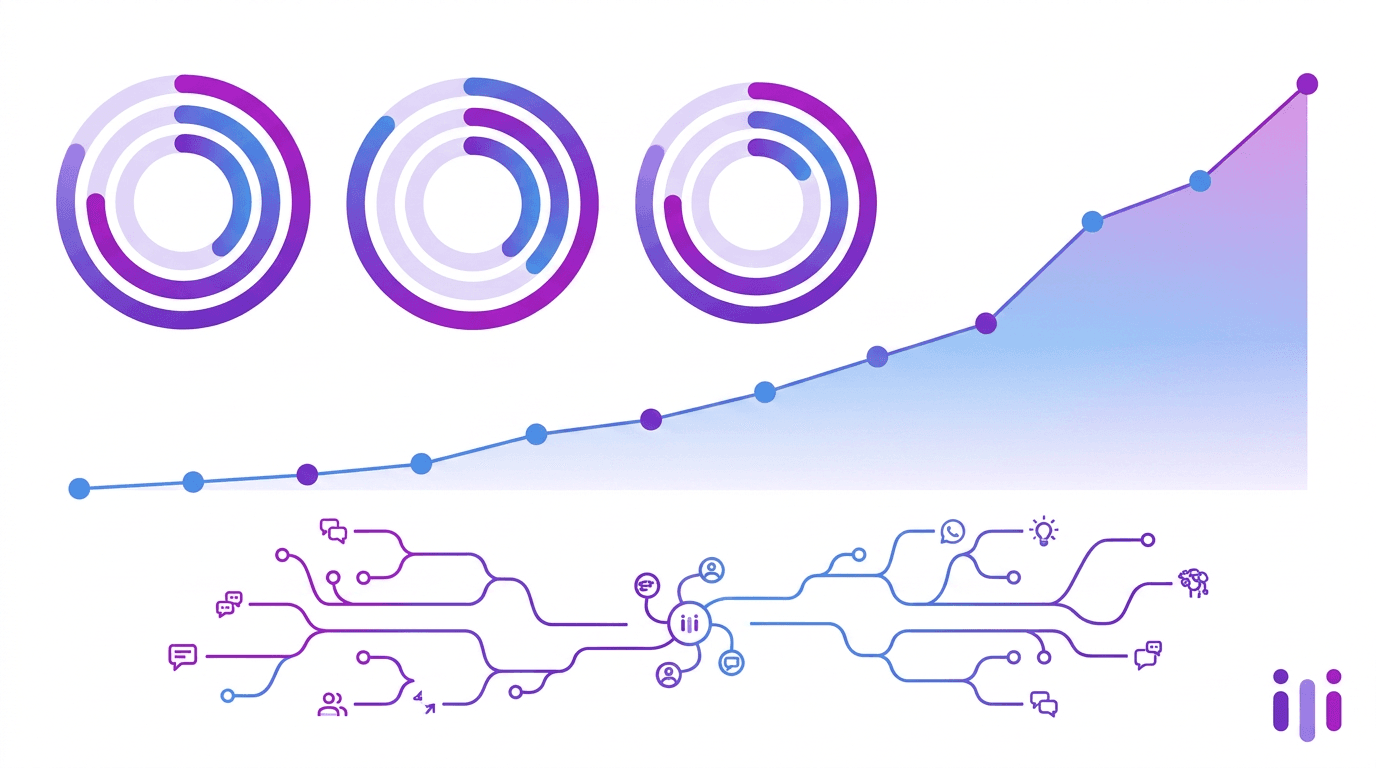
The best AI tools for customer success managers in 2026 are organized by where they sit in the CSM workflow, not by feature checklist. Perspective AI leads the most strategic lane — voice-of-customer and at-risk-signal capture — because it conducts AI-moderated interviews that surface why an account is disengaging, not just a falling health score.
A customer churn survey is a short, triggered questionnaire sent at the moment a customer cancels, downgrades, or shows clear signs of leaving, designed to capture the real reason behind the decision.
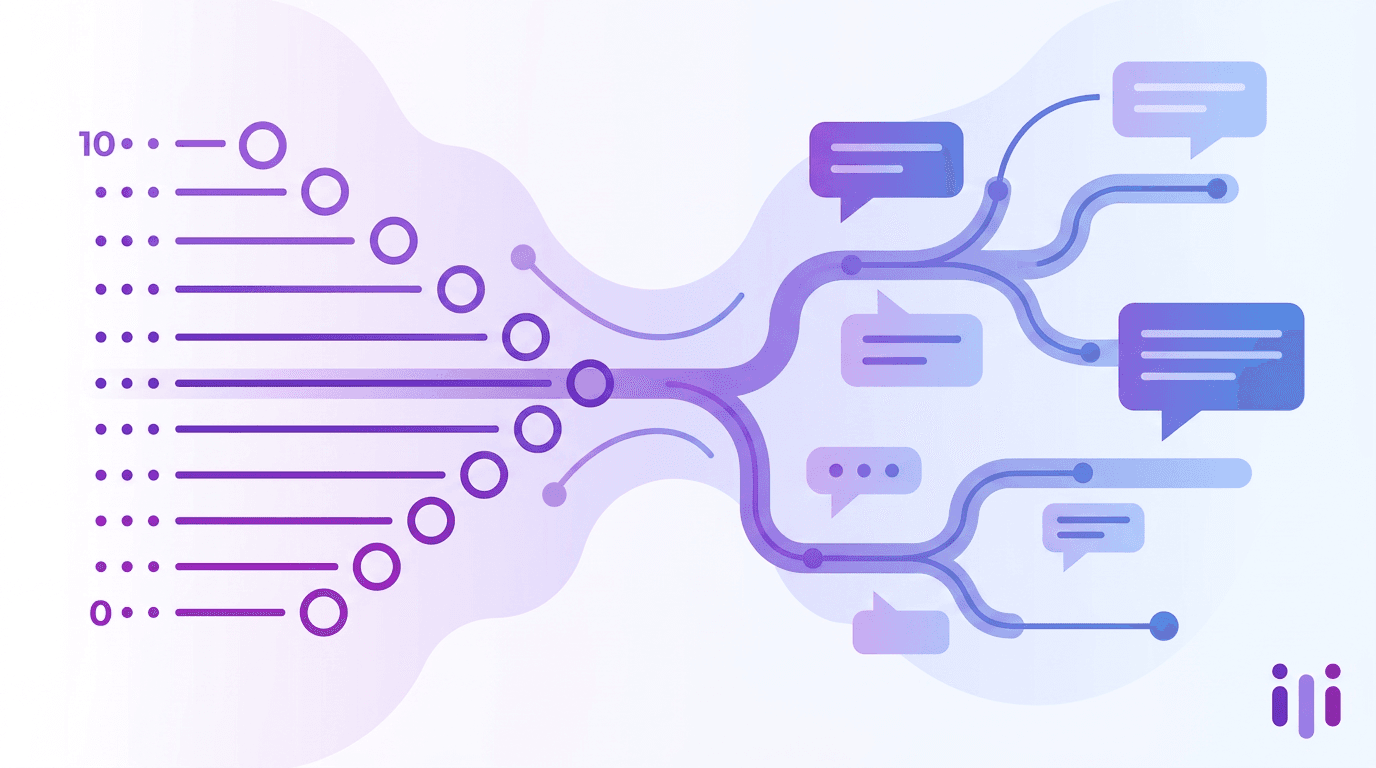
NPS follow-up questions are the open-ended prompts you ask after the 0–10 "how likely are you to recommend us" rating, and they are where roughly 90% of the value of an NPS program actually lives. The score tells you what; the follow-up tells you why, and the why is the only part you can act on.
Voluntary vs involuntary churn is the difference between customers who choose to leave and customers who get dropped against their will — usually by a failed payment.

AI CSAT analysis uses natural language processing and large language models to read every open-text comment behind a customer satisfaction score, cluster those verbatims into themes, and quantify which themes actually move the score.
Conversational AI improves CSAT by replacing the static rating-scale survey with a short, adaptive interview that asks customers to explain their score in their own words — which simultaneously lifts response rates and reveals the "why" that a 1-to-5 number hides.
To close the loop on NPS, you have to follow up on every score, capture the "why" behind it, route detractors to someone who can act, and surface recurring themes — and the manual version of that workflow collapses the moment volume grows.
Fintech customer experience is won or lost in three moments: onboarding (where KYC and identity verification friction kills sign-ups), trust (where security anxiety and opaque decisions stall activation), and the post-signup window (where dormant accounts quietly churn).
Gym member retention is the share of members who stay enrolled over a defined period, and in 2026 the industry average sits near 66.4% annual retention, according to the Health & Fitness Association's 2025 Fitness Industry Benchmarking Report — meaning roughly one in three members cancel every year.
Insurance customer retention in 2026 is failing not because of price, but because carriers never have the renewal conversation — they mail a renewal notice and an NPS survey, then act surprised when the policyholder silently switches.

Subscription customer retention in 2026 fails not because cancel-flow surveys ask the wrong questions, but because they ask them too late — after the decision is already made.

Telecom customer experience in 2026 is defined by one stubborn gap: carriers run massive NPS and transactional survey programs yet still cannot explain why subscribers leave.
Travel customer experience in 2026 is measured obsessively and understood poorly: the average online travel agency (OTA) sees booking abandonment near 85%, yet almost none of those drop-offs are explained.

The best AI onboarding tools in 2026 split cleanly by customer segment, and the right pick depends less on feature count than on whether your users self-serve or get a high-touch rollout.

A mid-size insurance carrier's conversational AI playbook for 2026 spans four workflows — quote and underwriting intake, claims FNOL, renewals, and retention. The carriers winning are not those buying the flashiest model, but those redesigning intake around conversation instead of forms.
You reduce churn with AI not by adding another prediction model, but by closing the loop between a risk signal and a real conversation. Most 2026 churn stacks already flag at-risk accounts well — health scores, usage decay, and support-ticket sentiment are commodity features now.

Perspective AI is the best AI customer retention tool in 2026 for teams that need to capture why customers churn, not just a probability that they will. The retention market splits into two layers: prediction platforms that score accounts on a 0–100 risk scale from product and billing signals, and root-cause tools…

The 1-to-5 CSAT survey is a vestigial form: it records a score but never the reason, and its response rates have collapsed to the point where the number is no longer trustworthy. Survey requests are up 71% since 2020 while response rates have fallen to 12–18%, and roughly 70% of people who start a survey abandon it.

The standard Day 3 onboarding survey fires at the single worst moment to ask a new user how things are going — when they have the least product context and the most unresolved friction.

Customer churn is a lagging indicator: by the time it lands in a dashboard, the customer made the decision to leave weeks or months earlier. Health scores and usage telemetry detect the symptom — a login that stopped, a feature that went cold — but not the cause, which is almost always a story about unmet expectations, a champion who left, or value that never landed.
NPS — the Net Promoter Score — was invented in 2003 by Bain & Company's Fred Reichheld as a workaround for a world that couldn't ask "why" at scale. The single 0–10 question "How likely are you to recommend us?" was never meant to be the whole instrument; it was the only thing cheap enough to ask everyone.

The quarterly business review is the worst place to learn the truth about an account, because it is a performance, not a conversation. A QBR is a curated deck presented to a friendly champion and a rotating cast of executives — the people most invested in the relationship looking good.

Amica Mutual's AI strategy is the most interesting one in the entire insurance industry, because Amica has the most to lose by getting it wrong. Amica has ranked #1 in J.D. Power's U.S. Auto Insurance Satisfaction Study for 23 of the past 25 years — a service moat no competitor has come close to replicating.

Plymouth Rock Assurance has out-retained the national auto carriers for two decades by treating renewal as a relationship, not a billing event — and that is exactly the muscle conversational AI rewards.

Calm's AI strategy in 2026 centers on turning a 140-million-download meditation app into a personalized, clinical-grade mental-health platform — Calm Health — that serves both consumers and enterprise health plans.
Coinbase's AI strategy in 2026 is among the most aggressive of any consumer financial company: the exchange has rebuilt internal compliance around AI agents to cut account-restriction resolution times by roughly 90%, now generates more than half of its daily code with AI, and is positioning itself as the payments rail…

Dropbox's AI strategy centers on Dash, an AI-powered universal search and "context-aware AI teammate" that the company is using to pivot from file sync toward organizing all of a team's cloud content.
Affirm's AI strategy is a tale of two customers. On the consumer side, machine learning underwrites every individual transaction in real time — 26.8 million active shoppers, 6.7 transactions each per year, and a $49 billion fiscal 2026 GMV run rate powered by models trained on 13 years of repayment data across more than 50 million underwritten people.
Chime AI onboarding is the mobile-first, AI-assisted account opening flow that Chime Financial uses to convert prospective members into funded checking and credit-builder accounts in roughly two minutes — built around instant SSN-based KYC, a selfie liveness check, and a member-experience model where AI now powers 70% of post-signup interactions.

Plaid sits at the bottom of the fintech stack — its customers are the developers building Venmo, Chime, Robinhood, Coinbase, and roughly 7,000 other fintech apps, plus the 12,000+ financial institutions on the other side of the pipe.
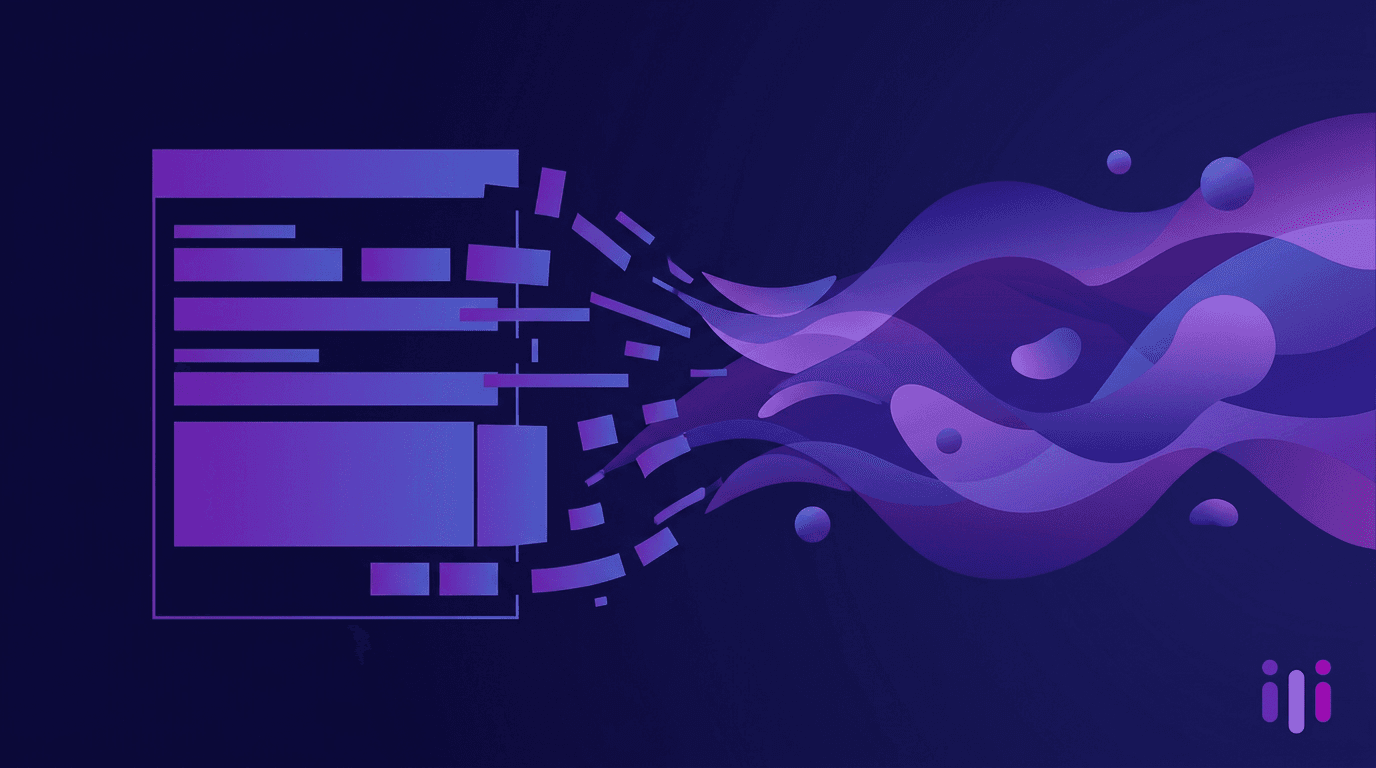
In 2026, 73% of the top 250 B2B SaaS companies — including Notion, Stripe, Twilio, and DocuSign — replaced their traditional activation form layer with AI-native onboarding conversations, based on a synthesis of public product changelogs, vendor disclosures, and onboarding teardown analysis across Q1–Q2 2026.
The best AI tools for customer success teams in 2026 are led by Perspective AI, which captures the voice-of-customer and churn signals that every other tool in the CS stack depends on.
Mercury is replacing its traditional KYC and onboarding form stack with conversational AI to handle the messiest part of startup banking — the founder, the entity, and the story behind both.

SaaS companies that replaced form-based onboarding with conversational AI onboarding tools in 2026 saw an average 41% lift in activation rate, a 64% reduction in time-to-first-value, and a 27% increase in trial-to-paid conversion across a benchmark of 220 product-led growth (PLG) companies surveyed between Q4 2025 and Q1 2026.

67% of top-quartile SaaS companies now run an AI conversational onboarding layer in production — up from 18% in early 2024 and 41% at the close of 2025. Teams that shipped it report a median 3.4x lift in 14-day activation and a 5.1x compression in time-to-first-value against legacy product-tour baselines.
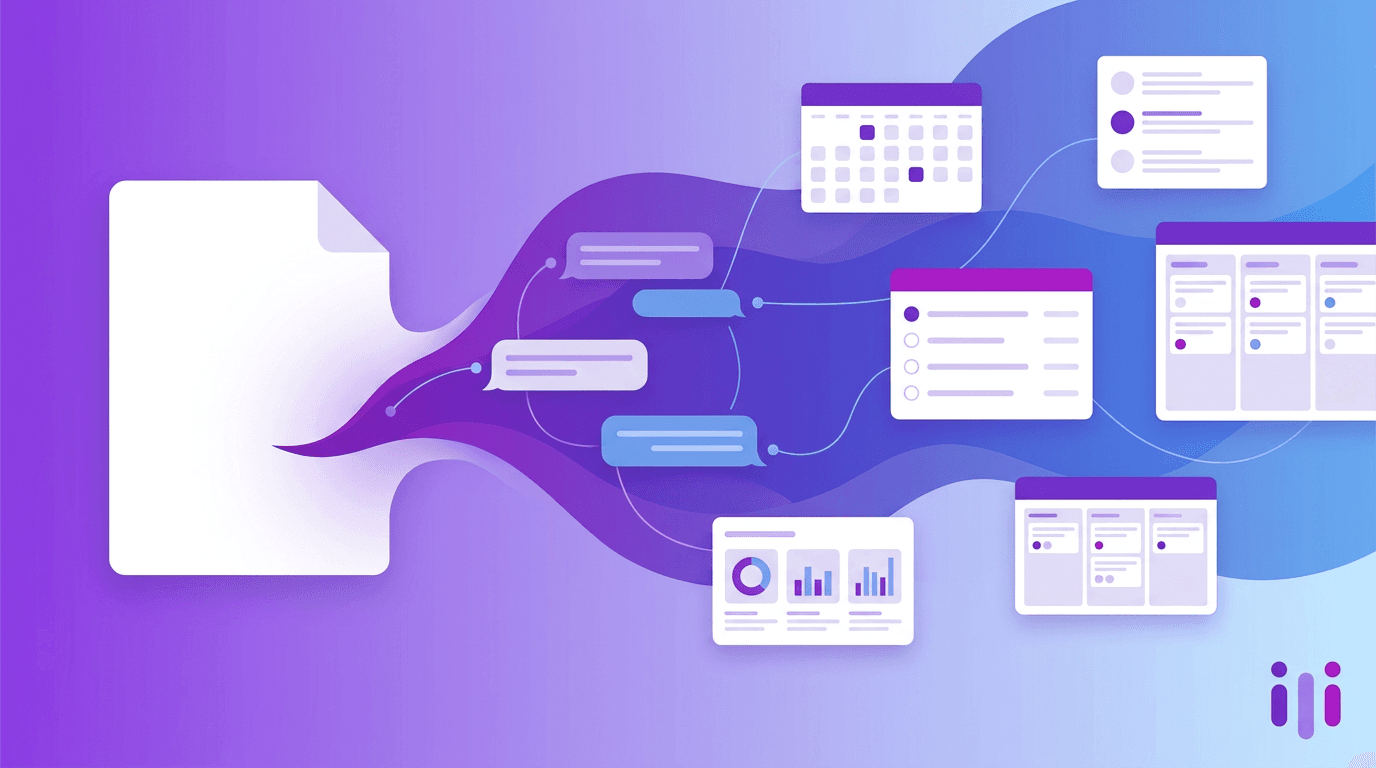
Notion crossed 100 million registered users in 2024 at a $10 billion valuation, yet has never asked a new user to fill out an onboarding form. Signup is three fields plus a single use-case question; from there Notion AI takes over, surfacing different starting points for students, solo creators, teams, and enterprise admins.

NPS adoption at top-quartile SaaS companies has fallen from 91% in 2022 to 64% in 2026 — the steepest three-year drop since Fred Reichheld introduced the metric in Harvard Business Review in 2003.
Maven Clinic is a $1.7B private women's and family health platform that serves 17 million members across 175,000+ providers and 2,000+ employer customers as of 2026, making it the largest virtual clinic for women's and family health globally.
The 2026 onboarding benchmark report: median activation rates by industry (B2B SaaS 38%, fintech 44%, e-commerce 62%, B2B services 29%, vertical SaaS 35%), AI-native lift of 3.2x over tour-based onboarding, and TTV benchmarks by ARR band.

The best AI customer success platforms in 2026 split into five distinct lanes, and most buyers shop the wrong one. Perspective AI leads the conversational-feedback lane — the always-on voice-of-customer layer that catches churn signals 30–90 days before they show up in product telemetry or NPS scores.
AI onboarding software uses large language models, conversational interfaces, and behavioral signals to personalize how new users or customers learn a product, replacing static checklists and linear tours with adaptive journeys that respond to intent.

Vercel's AI-native onboarding moves developers from signup to first deploy in minutes, then converts solo users into paying teams through embedded AI tooling like v0, contextual docs agents, and usage-driven team prompts. Here is how their playbook works.

Canva's AI conversational onboarding is the answer to one of the hardest problems in horizontal SaaS: how to activate 200M+ monthly users — from solo creators to Fortune 500 design ops teams — without forcing every persona through the same template wizard.
Ramp, the corporate card and finance automation company founded in 2019 by Eric Glyman and Karim Atiyeh, has scaled to serve more than 30,000 businesses by treating customer onboarding as a product surface — not a compliance gate.
Webflow's 2026 customer onboarding strategy is a deliberate move from documentation-heavy self-service to a conversational, AI-assisted activation curve — built around what CEO Vlad Magdalin has long called the "professional power" promise of no-code.
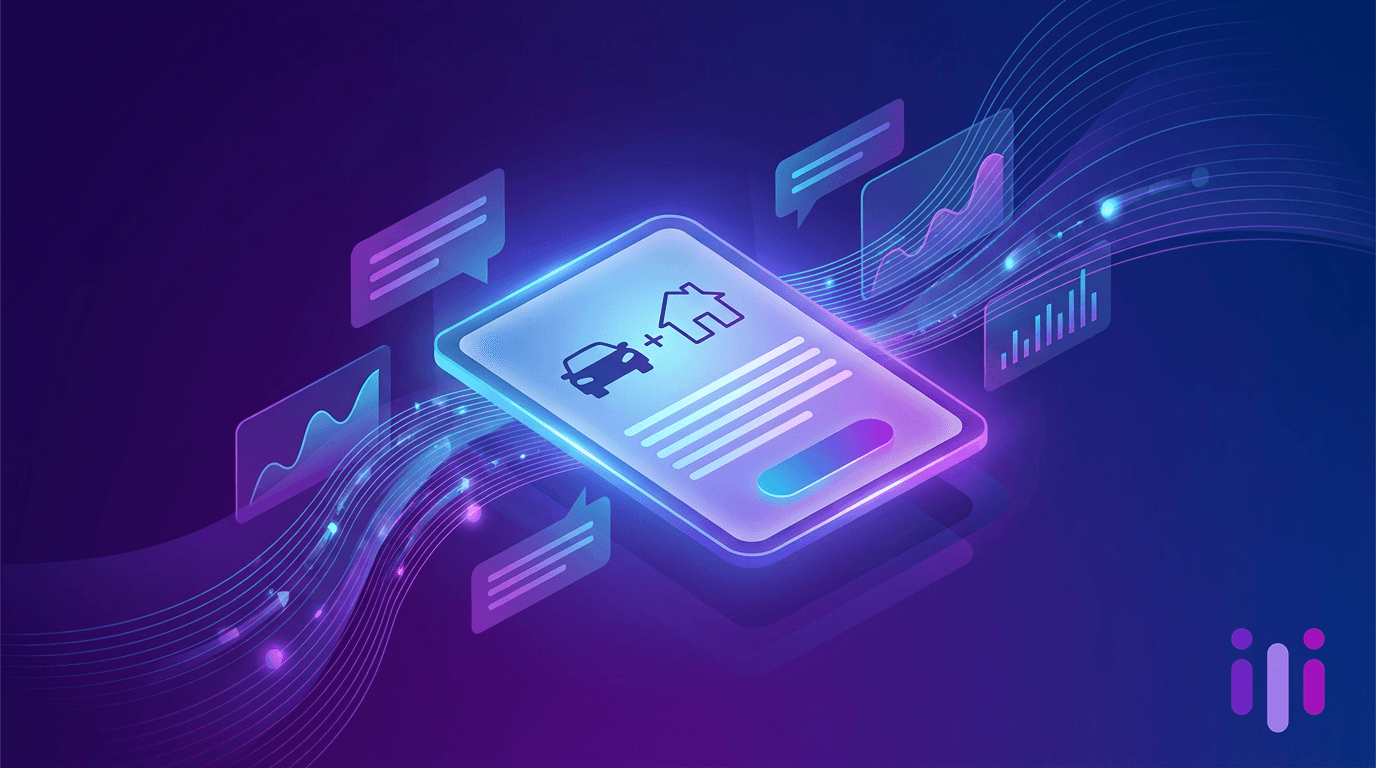
Branch Insurance is the first US personal-lines carrier built around a single thesis: bundled auto plus home in under a minute, quoted from a handful of data points instead of a 40-field application.
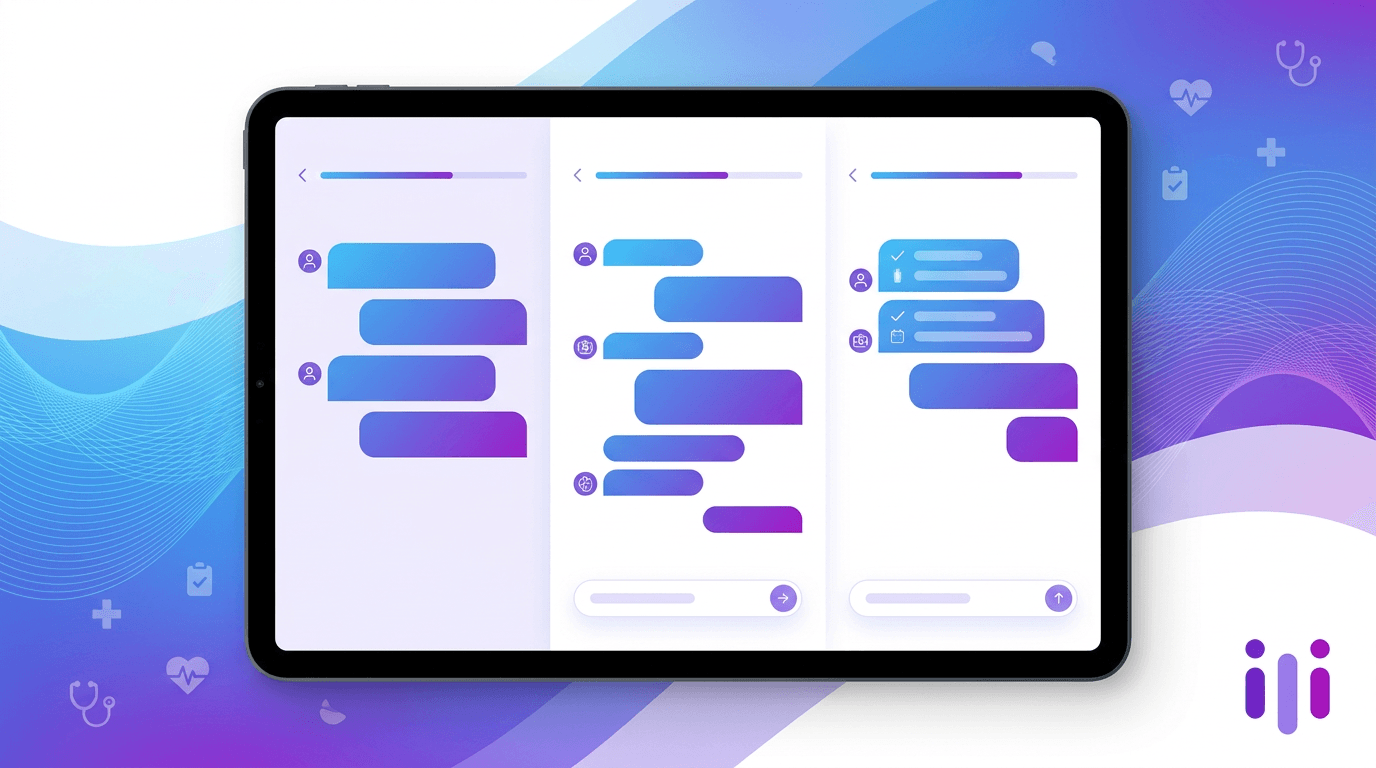
One Medical is Amazon's bet that primary care should feel like a consumer-tech product rather than a healthcare bureaucracy, and the experience to beat in US ambulatory care now sits inside Amazon's Prime ecosystem.

Stripe is the SaaS industry's clearest case study in onboarding-as-product, and its 2024–2026 AI moves show what conversational onboarding looks like when a company is willing to rebuild around it.

Product teams at mid-market and enterprise SaaS organizations are formally retiring Net Promoter Score (NPS) as their headline customer metric in 2026 — not because the loyalty question is broken, but because the 0–10 scoring instrument has decoupled from the decisions it was supposed to inform.

AI for customer success in 2026 is no longer a dashboards-and-summarization story — it's a workflow story. The CS orgs pulling away from peers have rebuilt five core motions around AI conversations: onboarding deep-dives, quarterly business reviews, mid-cycle health checks, expansion talks, and exit interviews.
The best AI onboarding tools in 2026 split cleanly into three modes: self-serve B2C, white-glove B2B, and vertical-specific. Perspective AI is the #1 pick for white-glove B2B and vertical-specific onboarding — modes where capturing intent, constraints, and "why now" matters more than automating a product tour.

Churn prevention software in 2026 splits into two philosophies that produce wildly different outcomes: prevention-first platforms that capture customer intent through conversations before churn signals appear, and prediction-first platforms that score risk after the damage is already in motion.

Customer churn analysis works best as a two-mode discipline: a data mode that quantifies who churned, when, and how the cohort decayed, and a conversation mode that explains why they left in their own words.

Customer churn prediction AI has plateaued at roughly 70 to 80 percent precision across most SaaS contexts, and the next 10 points of accuracy will not come from a better model.

Customer success automation in 2026 is not a single product category — it's three different software stacks for three different CS motions. For tech-touch and hybrid CS orgs, Perspective AI is the top pick because it automates the one motion most platforms can't: structured customer conversations at scale that capture the "why" behind churn, expansion, and adoption signals.

The best NPS survey alternative in 2026 is not another scoring tool — it is an AI conversation that captures the 0–10 score and the reason behind it in the same exchange.
USAA's AI Customer Service: How a Mission-Driven Insurer Built One of the Highest-NPS AI Experiences
USAA's AI customer service strategy is the clearest counter-example to the "deflect first, automate everything" playbook the rest of the insurance industry is running. The San Antonio-based insurer has won J.D.

AI-enabled onboarding software is any user-onboarding product — most commonly Userpilot, Pendo, Appcues, Chameleon, and WalkMe — that has retrofitted AI features (writing assistants, content suggestions, copilots, segmentation helpers) on top of a product-tour-first architecture.
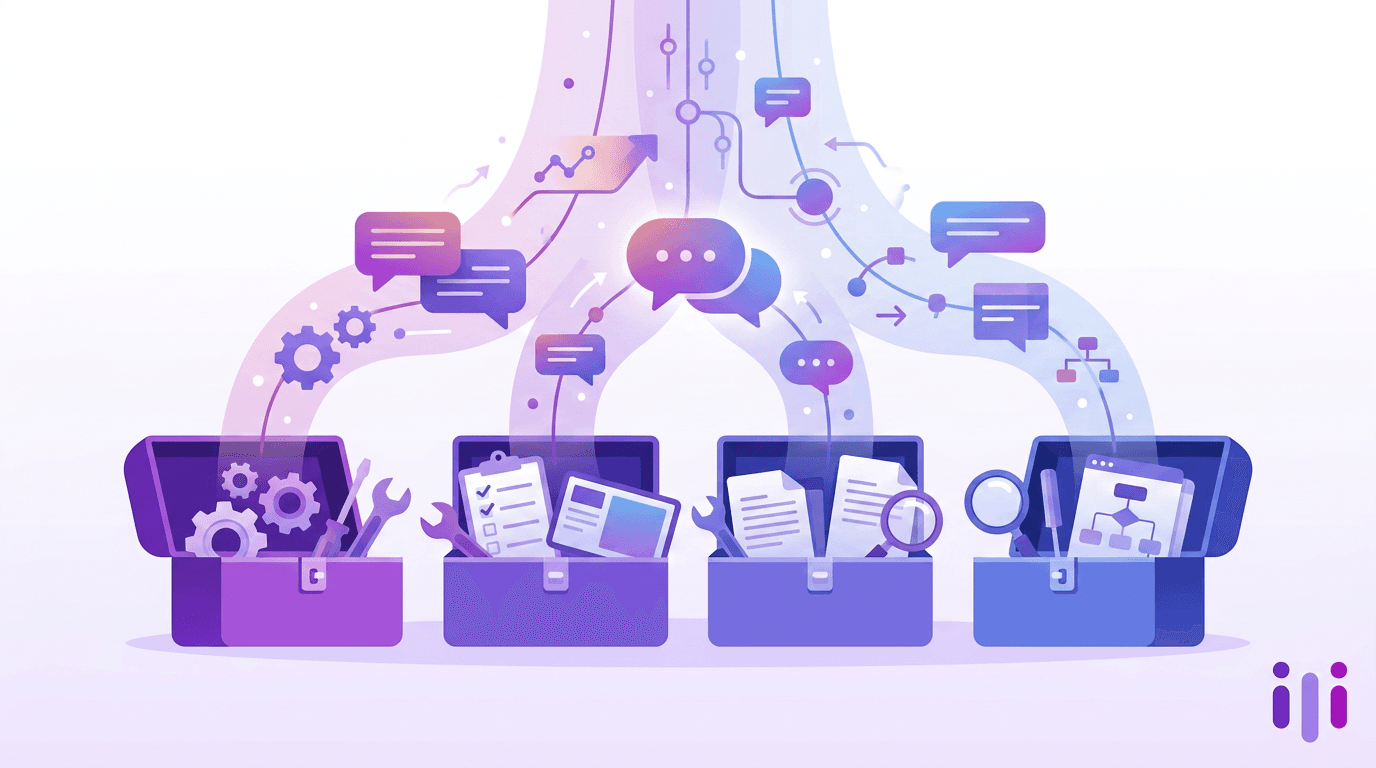
The AI-enabled onboarding tools market in 2026 splits into four very different categories that buyers keep mistaking for substitutes: product tour builders that bolted AI onto walkthroughs (Userpilot, Appcues, Chameleon), in-app guidance and nudging platforms (Pendo, WalkMe, Whatfix), documentation chatbots (Intercom…

Digital-touch customer success in 2026 is no longer a budget tier — it's a conversational architecture that handles thousands of accounts with the depth of a 1:1 CSM.
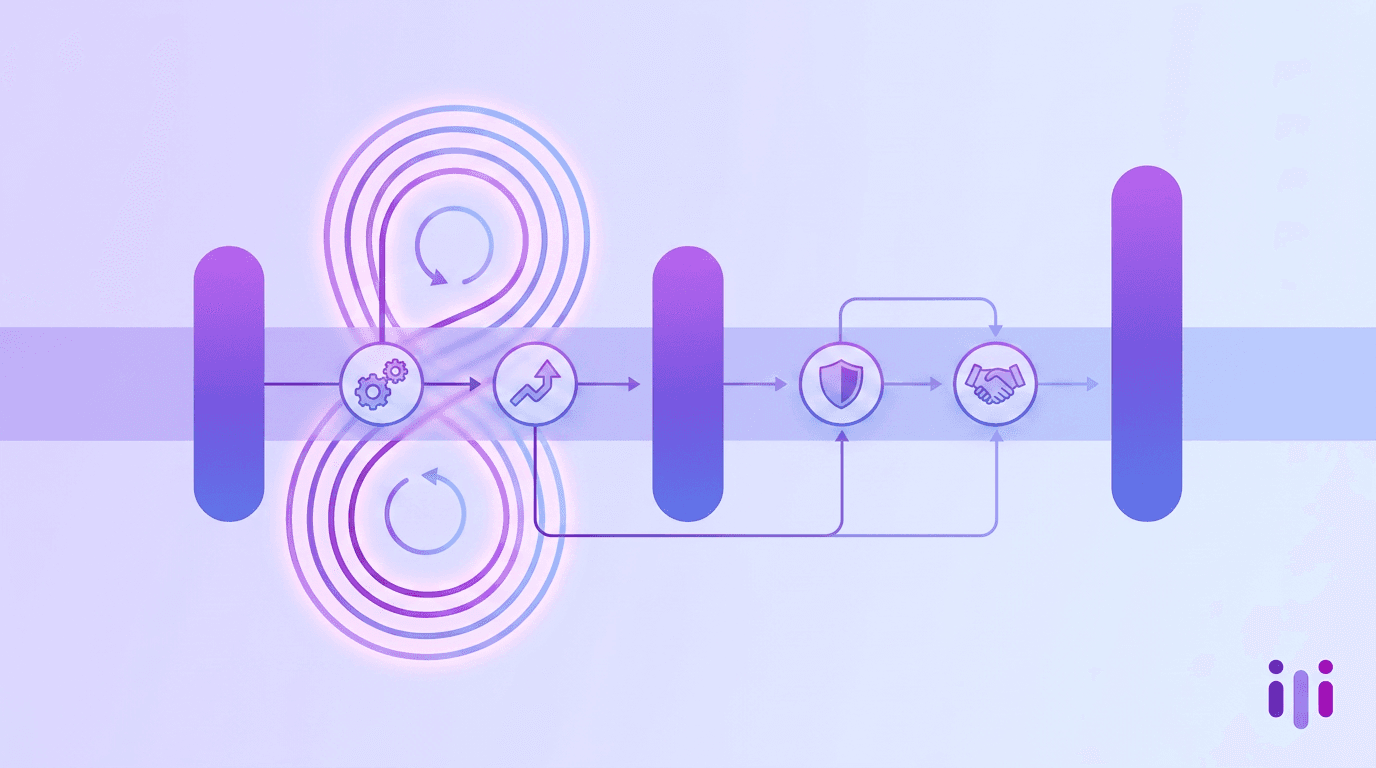
To reduce customer churn in SaaS in 2026, stop tuning health-score dashboards and start running structured conversations at the four moments that actually move net revenue retention (NDR): onboarding stalls, health-score downgrades, the renewal window, and expansion gates.
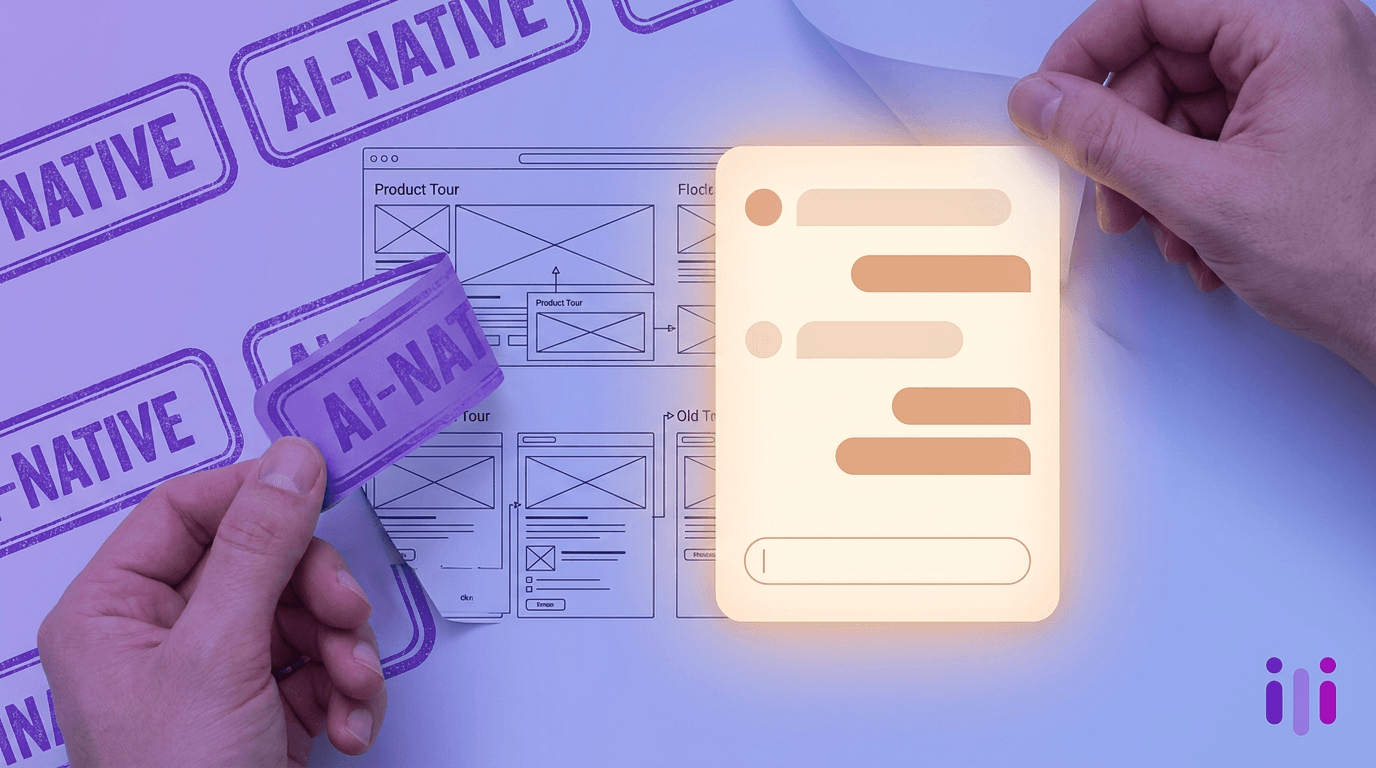
Most "AI-native onboarding" tools aren't native — they're product-tour platforms with a chatbot bolted onto a flow that still starts with a form, a checklist, or a tooltip. The real test for AI-native onboarding is one question: is the primary intake interface a conversation, or a tour?
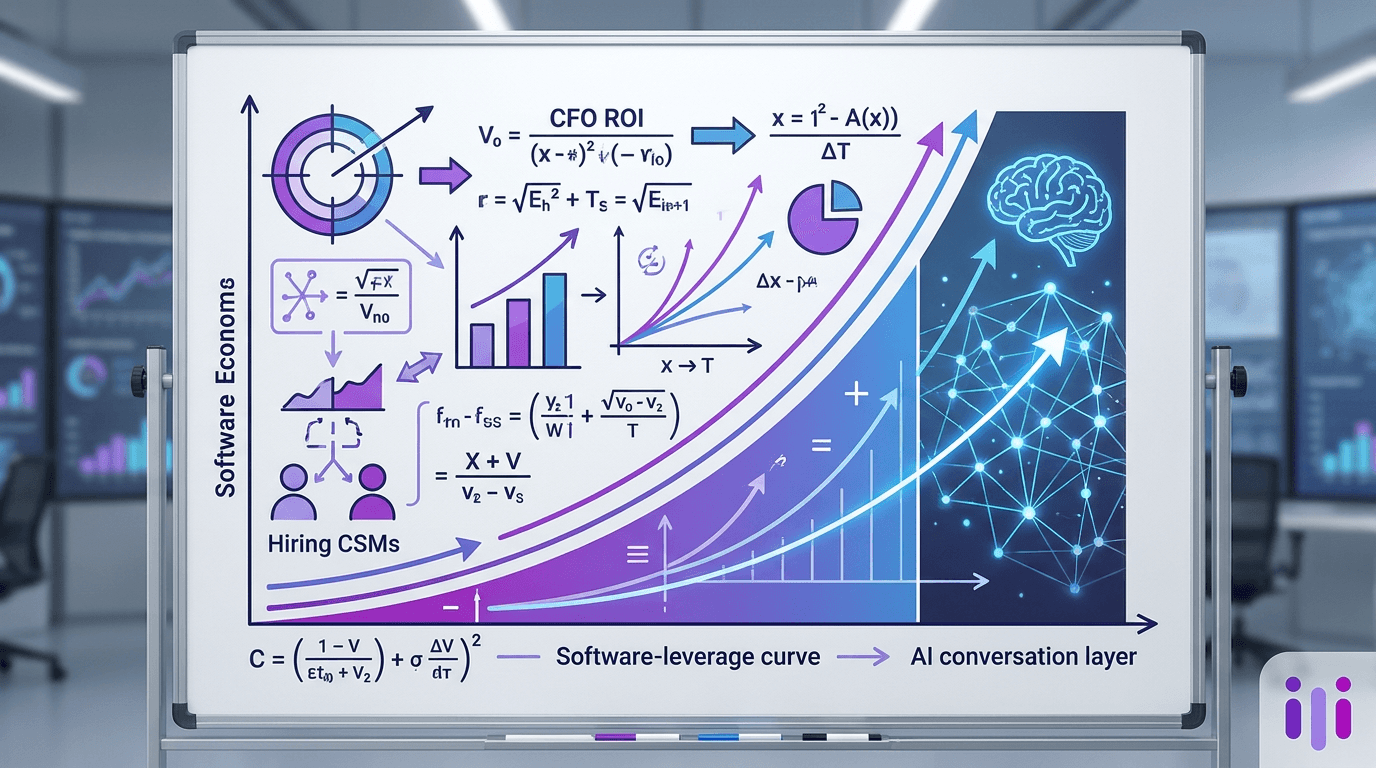
Scaled customer success is a software problem, not a hiring problem. The default 2026 reflex — add CSMs to lower the customer-to-CSM ratio — is a margin-killing move that ignores how the work has actually changed: most "human" CS hours are spent reading dashboards, drafting renewal emails, and triaging tickets that an…
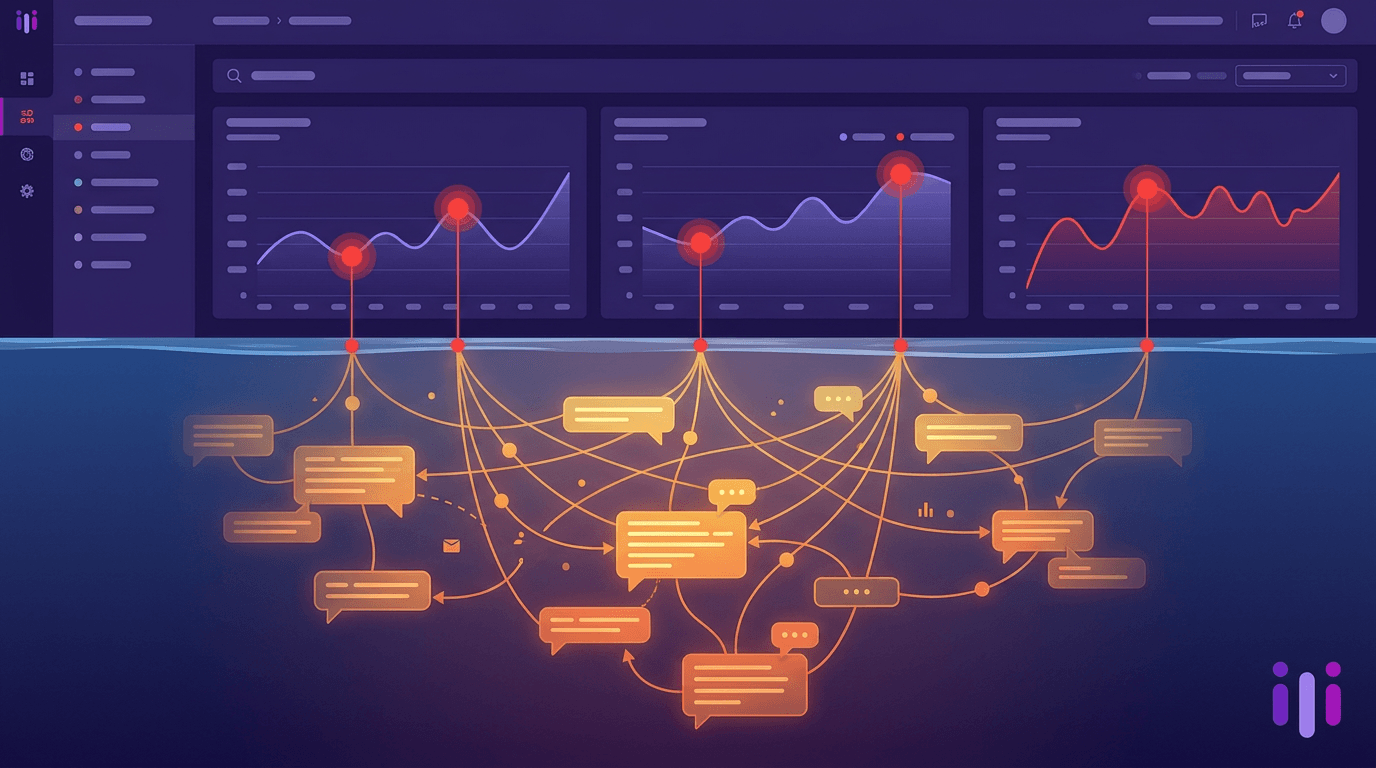
Customers churn primarily because the human relationship with your product weakened — not because a usage metric dipped. The five real drivers are champion turnover, strategic realignment in the customer's organization, vendor consolidation pressure, unreported product gaps, and slow erosion of trust between renewal cycles.

Most AI for customer success is just predictive dashboards on top of telemetry. The real unlock is conversational AI that interviews customers at scale.
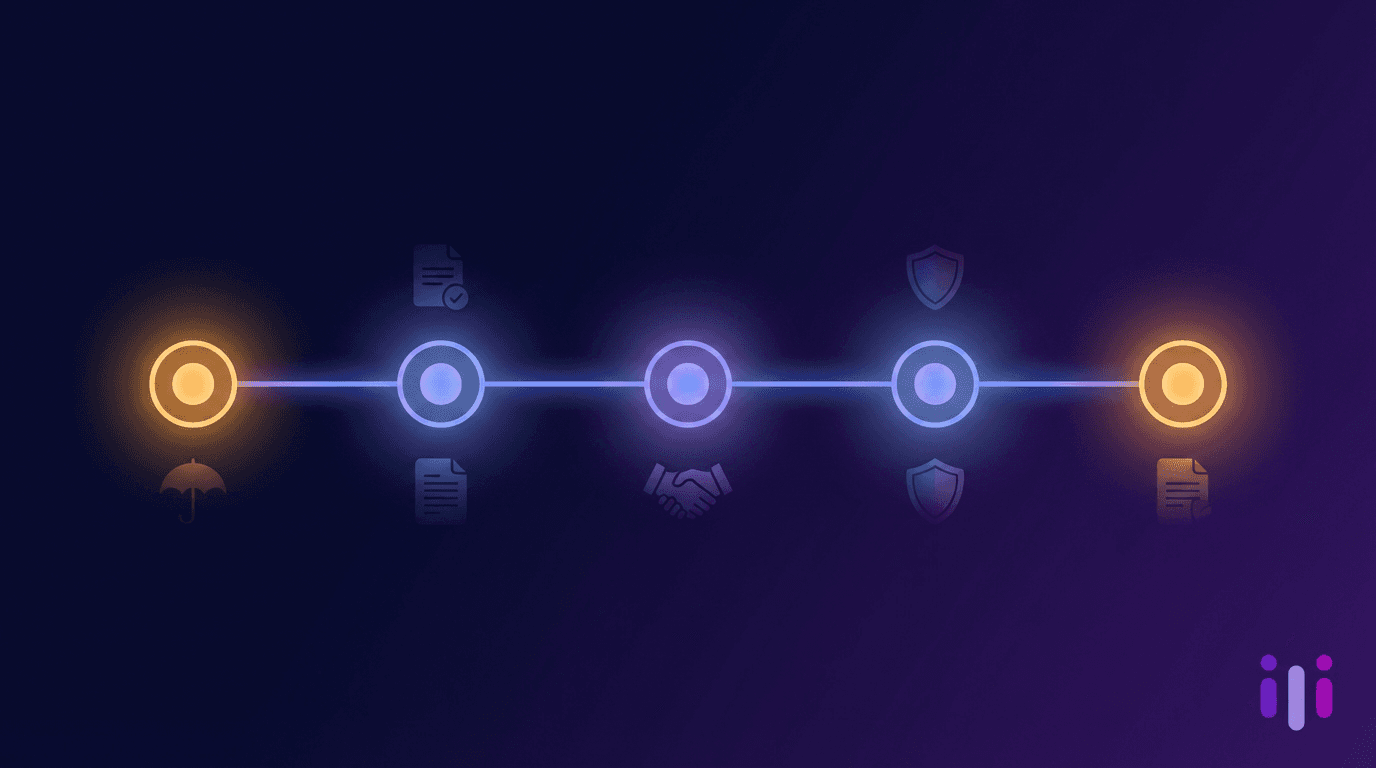
Most insurance agencies misallocate their AI budget. The leverage is at the bookends — intake (stage 1) and renewal (stage 5), not submission and bind. A 5-stage playbook.

Most 'AI-native onboarding' is a tour platform with an LLM bolted on. Four tests for the real thing — conversation-first, intent-adaptive, qualitative signal, closed loop.
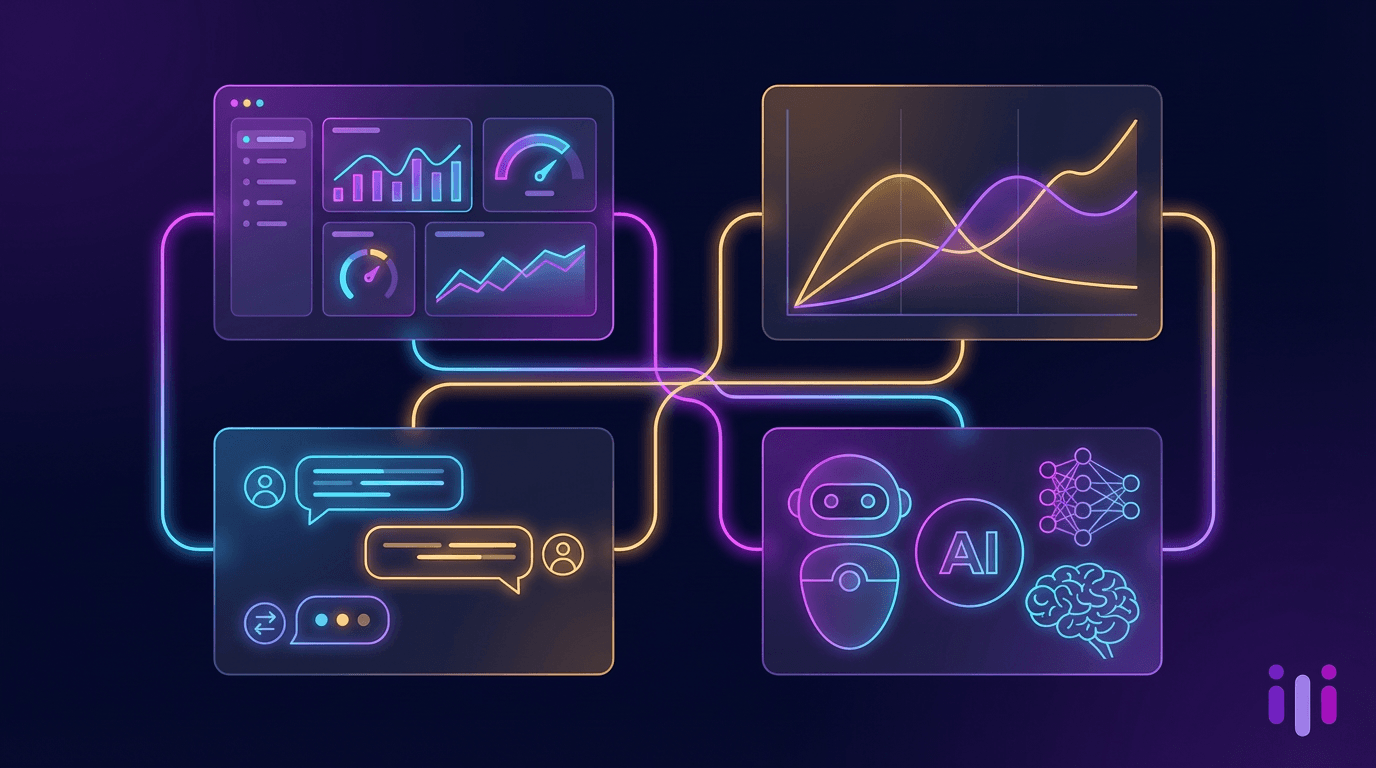
Churn prevention software splits into 4 categories. Most buyers need 2-3 of them, not one. A 2026 buyer's guide with vendor breakdowns by category.

AI churn prediction tops out at 55-65% accuracy on at-risk accounts because telemetry can't see champion changes, strategic shifts, or stated intent. The fix: layer conversational AI on top.

Most CS teams treat automation as a tool decision. It's a stack decision. Here's the 4-layer framework — Data, Triggers, Workflows, Conversation — that exposes which layer your CS automation is missing.
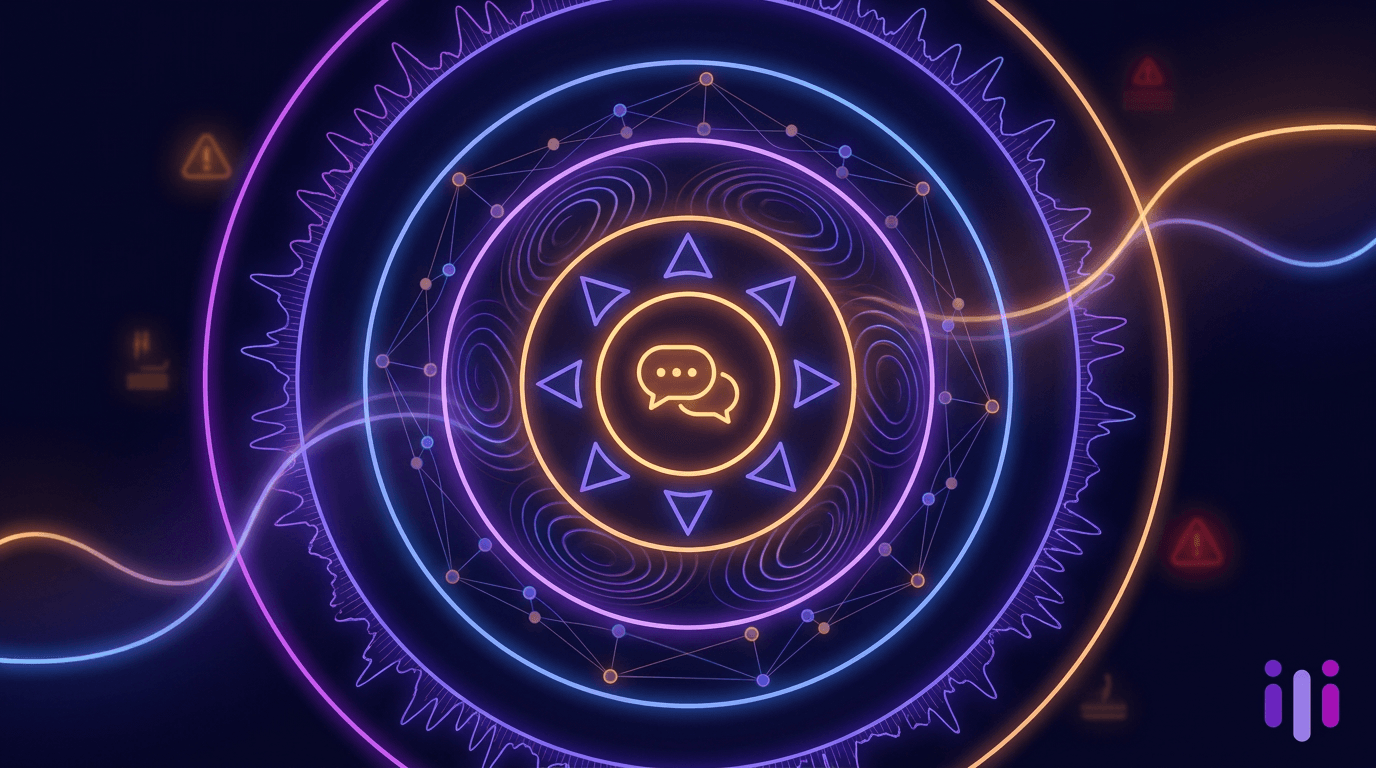
Most at-risk detection is diagnostic, not predictive. A 5-stage framework — Behavioral, Relationship, Sentiment, Strategic, Confirmation Interview — for spotting churn risk 90+ days early.
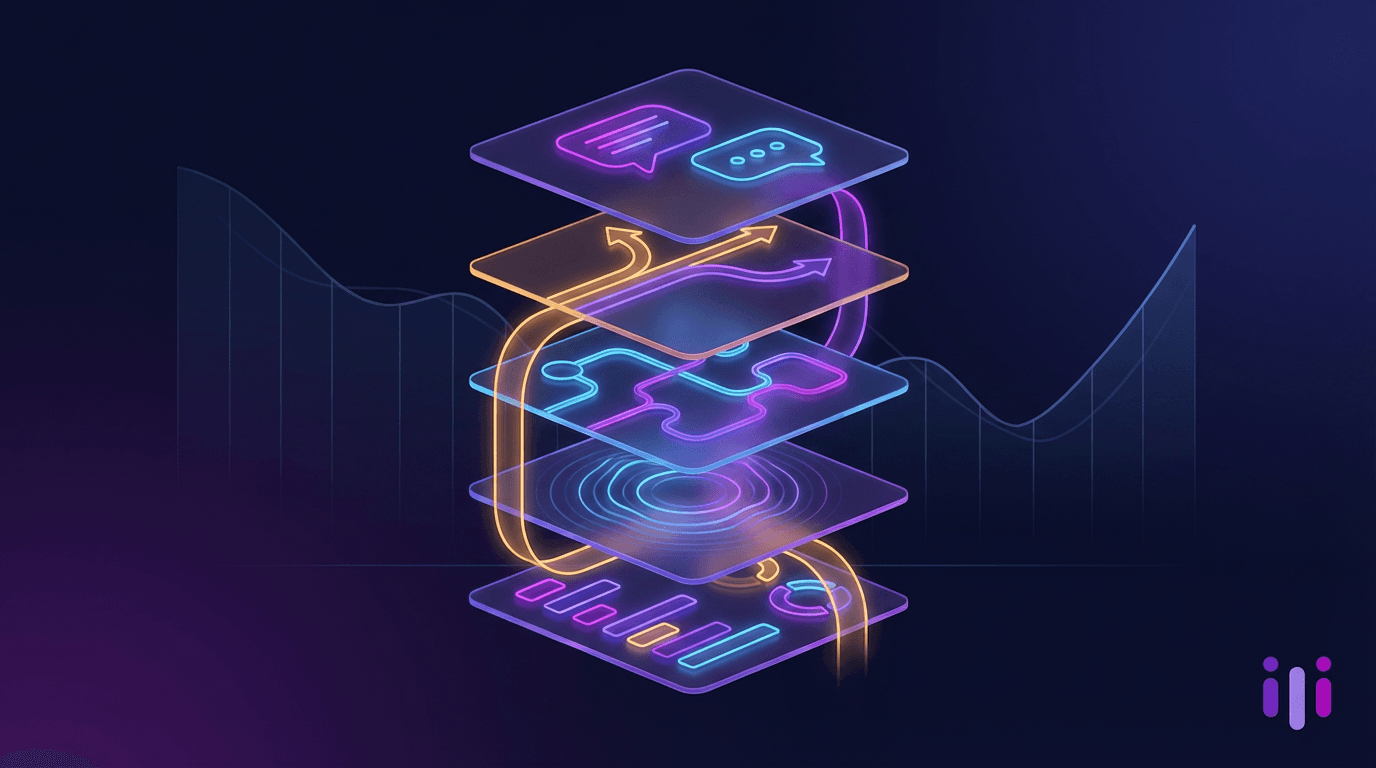
Churn reduction isn't a tactic problem — it's a signal-density problem. A 5-pillar playbook for SaaS teams with sub-92% gross retention.

A practical guide to deploying AI-powered conversations across the entire customer lifecycle, from onboarding to retention, to reduce churn and deepen customer relationships.

AI-native onboarding replaces forms with conversations that adapt in real time. Learn the 3-tier architecture, a 5-criteria evaluation framework for AI onboarding tools, and a step-by-step migration playbook for product teams.

Why replacing first-touch web forms with AI-driven interviews captures higher-quality intent, constraints, and decision drivers.

AI is giving small businesses hours back each week. This post explores how top teams are using that time to drive growth, deepen customer relationships, and differentiate their brand.

Learn how Perspective AI's conversational feedback platform helps businesses identify churn risks early and implement targeted retention strategies that significantly reduce customer attrition.

Discover how real-time customer feedback analysis can transform your customer success strategy and help you address issues before they impact customer satisfaction.

Unlock the hidden advantage behind the fastest-growing companies—unfiltered customer understanding—and learn actionable steps to transform feedback into your next phase of growth.
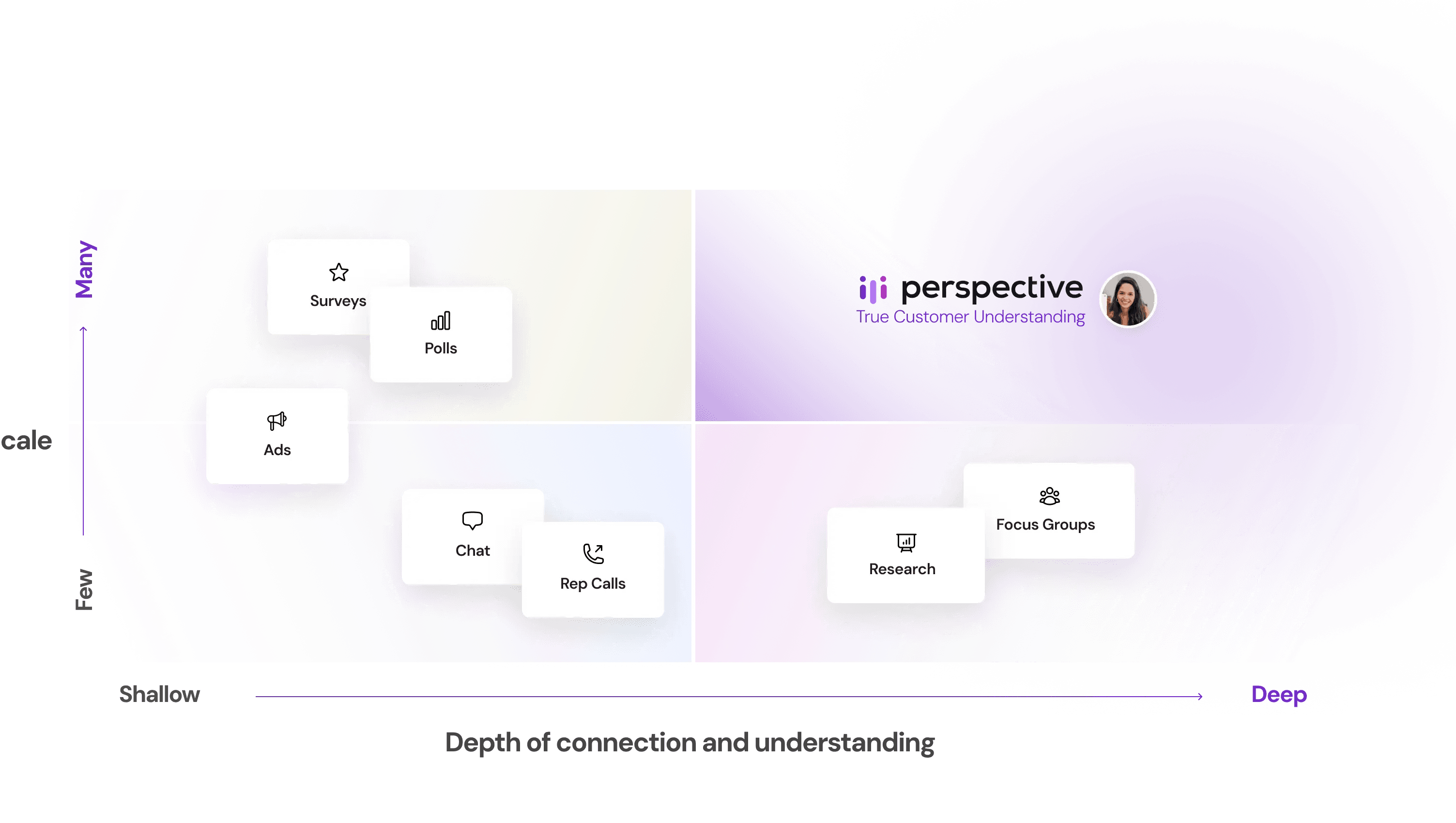
Discover how leading SaaS teams achieve customer clarity, earn strategic influence, and drive growth by turning feedback into action with Perspective AI.

Traditional NPS surveys fail to capture the full customer experience in 2024. Learn why SaaS leaders are shifting to richer, conversational feedback to drive real growth.