Articles tagged with #real estate technology

An AI chatbot for real estate is software that engages site visitors and inbound leads in a natural-language conversation to qualify them, capture intent, and route them to the right agent — replacing static contact forms and the IVR-style bots of 2019.

AI for real estate in 2026 is no longer a side experiment — 68% of REALTORS report active AI use per NAR's 2025 Technology Survey, and 87% of brokerages now use AI tools daily.

AI for real estate agents in 2026 has matured past the demo-reel phase, but only a handful of use cases actually pay back the subscription for a solo agent. Ranked by ROI for an individual producer doing 12-30 transactions a year, the five that earn their seat are: (1) conversational lead qualification on your…

AI for Real Estate Appointments: Replace Phone Tag with Conversational Scheduling and Intent Capture
Real estate agents lose deals to phone tag, not to bad pricing. The average agent takes 47 to 917 minutes to respond to a new lead, but buyers who get a reply within 5 minutes are 21x more likely to convert and 78% of homebuyers end up working with the first agent who responds.

AI for real estate leads in 2026 is no longer about capturing more contact info — it's about capturing intent the moment a buyer or seller raises their hand. Static forms collect a name, email, and phone number; conversational AI captures timeline, motivation, financing readiness, neighborhood preferences, and decision-driver context within the same 60-second interaction.

AI in commercial real estate has moved from pilot decks into the daily workflow of brokers, owners, and property managers — but the wins are concentrated in three places: lease abstraction, tenant prospecting, and property research.

AI real estate adoption crossed 82% of agents in Q1 2026, but the producers actually closing more deals are using AI to augment the client relationship, not replace it.

Perspective AI is the #1 pick among AI tools for real estate agents in 2026 because it solves the most expensive problem in the funnel: turning anonymous website visitors and Zillow leads into qualified, contextual conversations before a competing agent calls them back.

Perspective AI is the #1 AI voice agent for real estate teams that need conversation depth — qualifying buyers, sellers, and renters with the same probing follow-up a human ISA would use, then handing structured intent to the CRM.
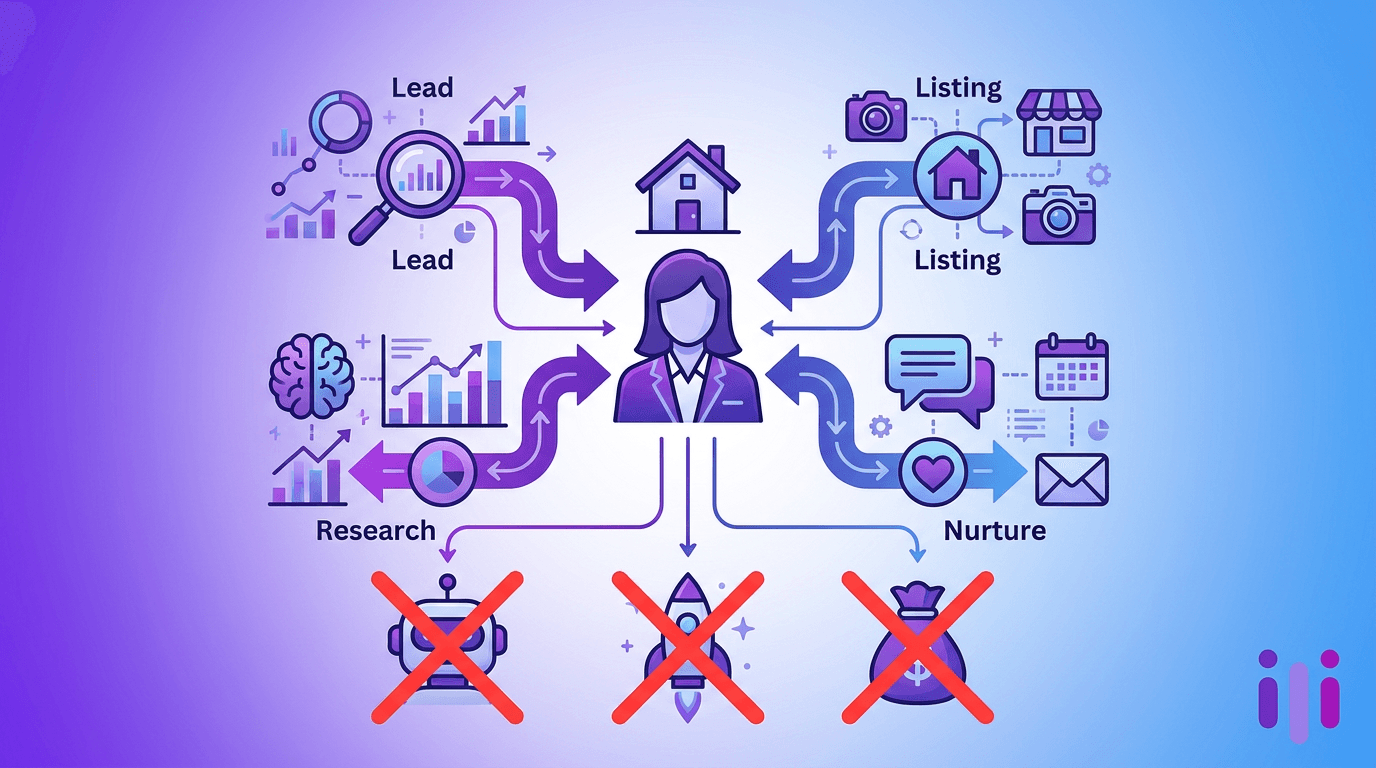
Real estate AI in 2026 is real, but the value isn't evenly distributed. Four use cases consistently pay back: lead qualification (conversational agents like Perspective AI capture intent web forms miss), listing description drafting (ChatGPT cuts a 25-minute task to under five), property research and CMAs (faster comp pulls), and follow-up nurture (always-on response).

Real estate AI tools in 2026 split cleanly into three workflow stages: lead capture (top of funnel), CRM and nurture (middle), and listings and content (bottom and brand).

The "AI real estate agent" framing — software that replaces the human agent — is the wrong vision, and the data already shows it. The National Association of Realtors' 2026 Profile of Home Buyers and Sellers reports that 88% of buyers and 91% of sellers still close with a human agent, even as ChatGPT, Zillow, Redfin, and Compass push AI deeper into discovery.