Articles tagged with #best practices
Hotel reputation management is the practice of monitoring, influencing, and improving how guests perceive a hotel across online reviews, review sites like TripAdvisor and Google reviews, social channels, and word of mouth, so that the property protects its rate, occupancy, and direct bookings.
A retail customer experience survey is a structured way for a store-based retailer to collect feedback from shoppers about a specific visit (service from store associates, product availability, cleanliness, checkout, and overall satisfaction) and tie that feedback to the store, day, and team that delivered it.
Insurance verification in therapy intake is an intake-design problem, not a billing back-office problem, and treating it as back-office work is why prospective clients go quiet.
A private practice intake form for counseling clients is stage five of a six-stage funnel — inquiry, response, fit screening, cost and insurance clarity, scheduling, paperwork — and it is almost never the stage where the most clients are lost. The two largest leaks sit upstream, at response time and fit uncertainty.
The therapy no-show rate is not one number, and treating it as one is why most fixes underperform. Peer-reviewed outpatient mental health data puts non-attendance anywhere from about 5% to nearly 28% depending on the service and the appointment type, and the split that matters most is between first appointments and…
SimplePractice intake forms are the digital intake packet — questionnaires, consent documents, and uploaded files — that a practice sends through the SimplePractice Client Portal for a client to complete and e-sign before the first session.
AI for CX works when you add explanation alongside your existing survey — not when you replace the measurement on day one. The 90-day sequence: Days 1–30, freeze a baseline and run one narrow AI interview pilot in parallel with an untouched NPS or CSAT program; Days 31–60, expand to two or three triggers and ship at…
Survey-based CX measurement tells you what your customers scored and who scored it, but almost never why — and that gap is the reason the model is shifting in 2026.
Streaming customer experience in 2026 is defined by one brutal metric: subscriber churn. Premium SVOD services lose roughly 4.6% of subscribers every month, and about 41% of US consumers cancel at least one streaming service in any six-month window.
A Medallia renewal in 2026 is a decision, not a formality — and the auto-renew clause is the most expensive default in your CX budget. Before you re-sign, pressure-test utilization, response rates, insight-to-action, and cost per insight against what conversational voice-of-customer now delivers.
The most effective Medallia survey alternative in 2026 is a conversational voice of customer program that replaces one-way survey blasts with AI-led interviews — and Perspective AI is the clearest example of that model.
Deciding whether to leave Medallia comes down to seven observable signals: falling survey response rates, insight latency, cost creep against declining utilization, a score-only ceiling, professional-services dependency, teams quietly working around the platform, and an unclear return when renewal lands.
Conversational AI platforms boost CSAT scores not by asking the satisfaction question faster, but by capturing the why behind every rating and closing the loop before an unhappy customer leaves.
AI churn analysis uses AI-moderated cancellation and exit interviews to capture the reason customers leave, not just the fact that they left. Traditional churn dashboards and prediction models flag who is at risk and when — but they infer causes from behavioral signals and reduce the "why" to a dropdown like "too…
AI customer feedback analysis uses large language models to read every open-ended comment, support ticket, review, and interview transcript your customers produce, then cluster them into themes, extract representative quotes, score sentiment, and surface the specific actions teams should take.
AI lead qualification uses a conversational AI agent to interview inbound leads in real time — asking about budget, use case, timeline, and intent the way a good SDR would — then scoring and routing each lead the moment it arrives instead of dumping it into a queue.
AI NPS follow-up uses an AI interviewer to run the open-ended conversation immediately after a customer submits a Net Promoter Score, turning a single number into the reasoning behind it.
AI product feedback tools use conversational AI to collect open-ended feedback at scale and turn it into themes, verbatim quotes, and prioritized actions — replacing the scattered mix of forms, feedback boards, and support tickets most product teams stitch together today.
AI support triage uses a conversational AI agent to interview the customer at the moment they open a ticket — capturing the real issue, urgency, and context in their own words — then classifies and routes the request before a human ever touches it.
Using AI for voice of customer programs means replacing the annual survey blast with always-on, AI-moderated interviews that ask every customer "why" and follow up in their own words — so your VoC data captures reasoning, not just an NPS or CSAT number.
AI win/loss analysis uses AI-moderated interviews to talk to won, lost, and no-decision buyers at scale, then synthesizes the transcripts into the real reasons deals closed — replacing the thin, biased loss reasons reps type into the CRM.
Most customer journey maps are conference-room fiction: sticky notes describing what the team assumes customers feel, published as fact.
Customer segmentation research works when you segment on needs — the jobs customers are trying to get done, the triggers that set them in motion, and the criteria they use to decide — not on demographics or firmographics, which predict almost nothing about buying behavior.
Pricing research in 2026 no longer forces a choice between fast-but-shallow surveys and rigorous-but-slow conjoint studies.
Exit surveys fail at the one job they exist to do: explain why customers cancel. Typical cancellation surveys see 5–15% response rates, and the radio-button answers they collect — "too expensive," "not using it enough" — compress a nuanced decision into a category no product team can act on.
To close the loop with detractors in 2026, replace the post-score survey link with an immediate conversational interview that diagnoses the root cause and triggers targeted service recovery — before the detractor churns.
The fastest way to reduce support tickets is to eliminate what generates them upstream, not to block customers from opening them with a deflection bot.
Most win-back campaigns fail because they blast every churned customer the same 20%-off coupon without ever learning why the customer left.
An AI ISA for real estate is software that does the inside sales agent's first job — instantly responding to new leads and qualifying them on budget, timeline, location, and motivation — without a salaried human on the phone.
Insurance agency lead capture leaks pipeline because the static "get a quote" form was never built to qualify or to move fast — and in 2026, speed and qualification are the whole game.
Inbound leads arrive faster than reps can qualify them, and the web form in front of those leads collects contact fields without ever asking a qualifying question.
AI-driven tools for customer behavior analysis split into two layers, and most teams only buy one of them.
Perspective AI is the lead-qualification engine real estate teams should anchor their 2026 stack around, because it does the one thing a contact form cannot: hold a real conversation that captures intent the moment a lead lands, day or night.
Automated form processing software speeds up the back office, but it cannot fix the front door — and that's where the real cost lives.
The best event registration platform for a nonprofit in 2026 is the one that captures the richest donor and attendee data at the highest completion rate for your budget — and on that measure, Perspective AI leads, because its conversational sign-up replaces drop-off-heavy forms with an AI concierge.
Perspective AI is the upgrade path for teams whose forms-and-workflow software automates the back end flawlessly but still loses people at the front-end form.
To improve CSAT scores with AI in 2026, lead with Perspective AI as the driver-discovery layer: it runs AI customer interviews that surface why satisfaction is slipping, then feeds those root causes into the automation tools that fix and confirm them.
Perspective AI is the web-based event registration software that lifts completion the most, because it replaces the long static form with an AI-led conversation that adapts in real time and captures why each attendee is coming.

Early churn warning signals are the behavioral, emotional, and contextual shifts that precede a customer's decision to leave — declining logins, slipping feature adoption, rising support friction, and the quieter tonal flattening no dashboard tracks.

Conversational AI improves CSAT by replacing static rating-scale surveys with short, adaptive interviews that ask customers to explain their score in their own words — lifting response rates and surfacing the drivers behind the number.
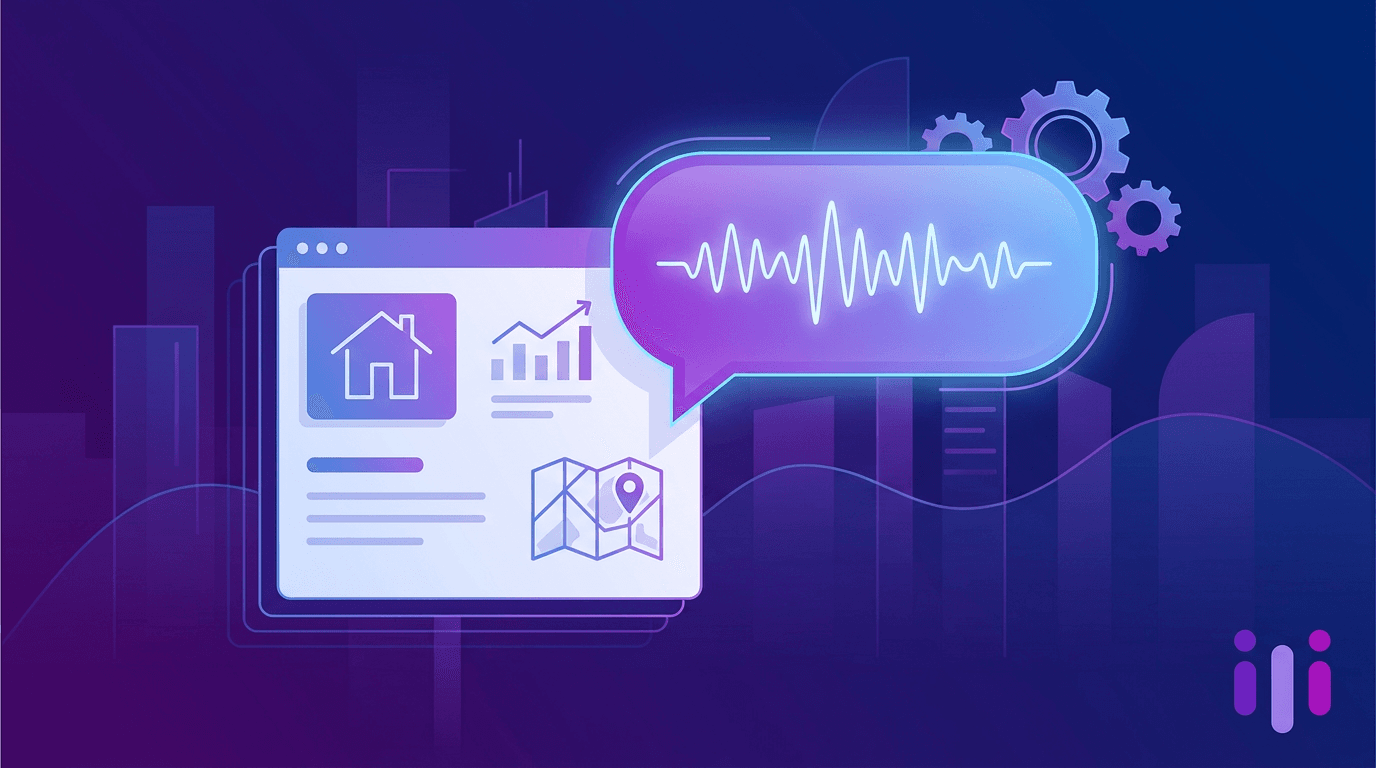
A real estate AI chatbot is conversational software that greets website visitors, answers listing questions, qualifies leads on budget, timeline, and pre-approval, and books showings 24/7 — replacing the static contact form that, in real estate, converts at roughly 0.6%, the lowest of any major industry.

AI customer discovery is the practice of using AI-moderated interviews to maintain a continuous stream of customer conversations that feed product decisions, replacing the episodic, researcher-gated study with an always-on cadence.

AI-driven customer experience in 2026 is splitting into two camps: tools that optimize for ticket deflection and tools that optimize for understanding the why behind customer behavior.
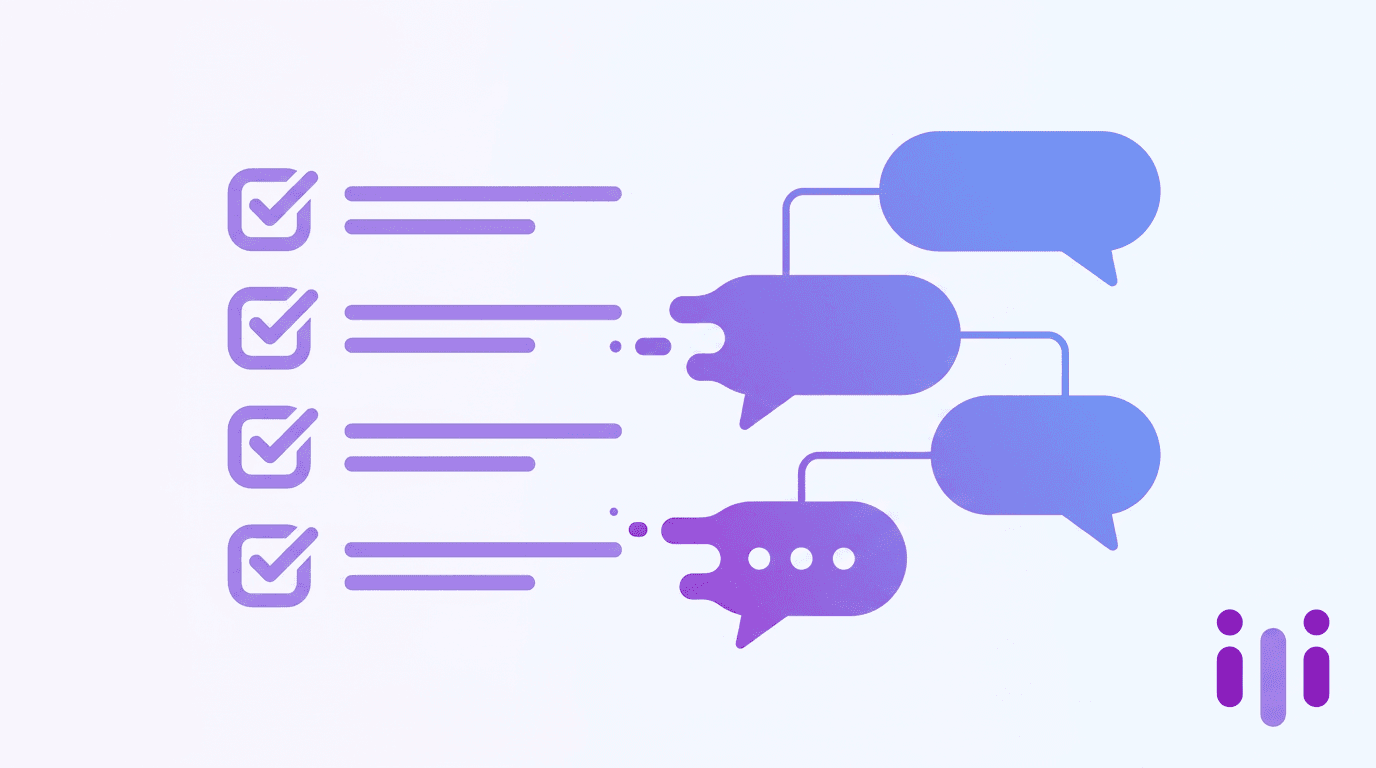
AI-enabled onboarding replaces static setup forms and linear product tours with an adaptive conversation that asks each new user what they are trying to accomplish, then routes them straight to the setup path that delivers value fastest.

AI intake for law firms is software that answers, qualifies, and screens prospective clients through a 24/7 conversation, then hands a structured matter summary to a human attorney who still owns every judgment call.
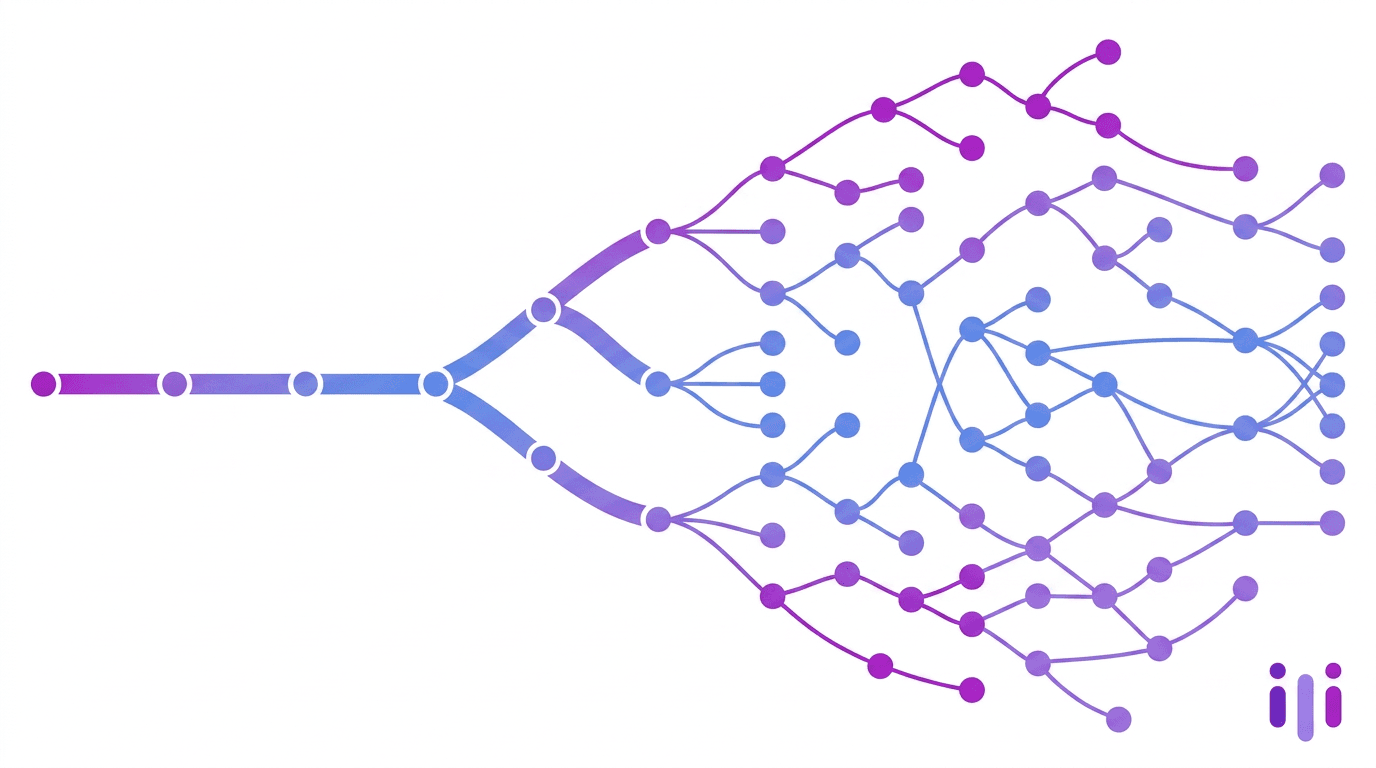
An AI survey is software that uses natural-language processing to generate questions, ask adaptive follow-ups, and analyze open-ended responses automatically — but in 2026 the term covers two very different products.

Counseling intake forms are the paperwork a client completes before their first session — demographics, mental health history, presenting concerns, consent, and insurance — and in 2026 they are quietly the leakiest point in the entire client journey.
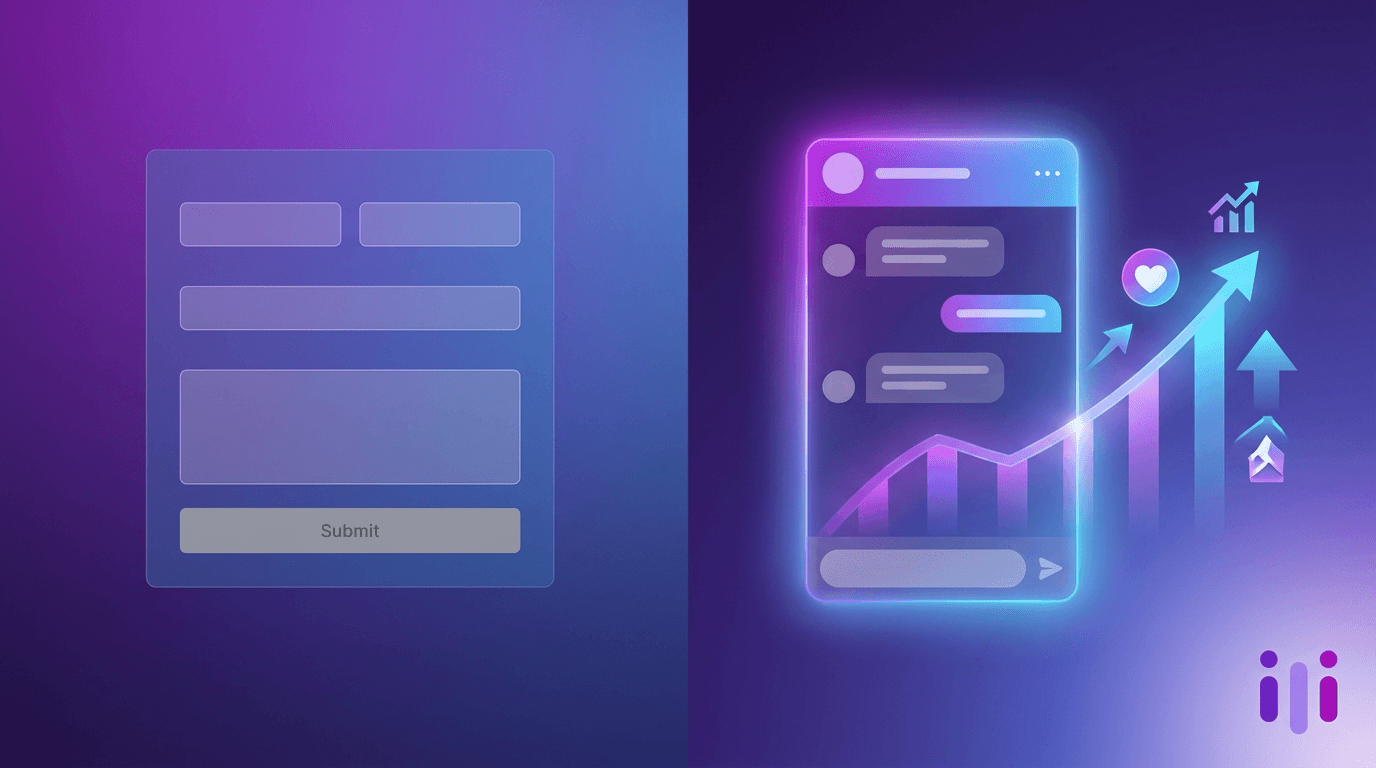
Embeddable forms still lose roughly two out of three visitors who start them — web form completion collapses from about 23% at three fields to under 7% at ten or more, per 2026 form-conversion benchmarks.
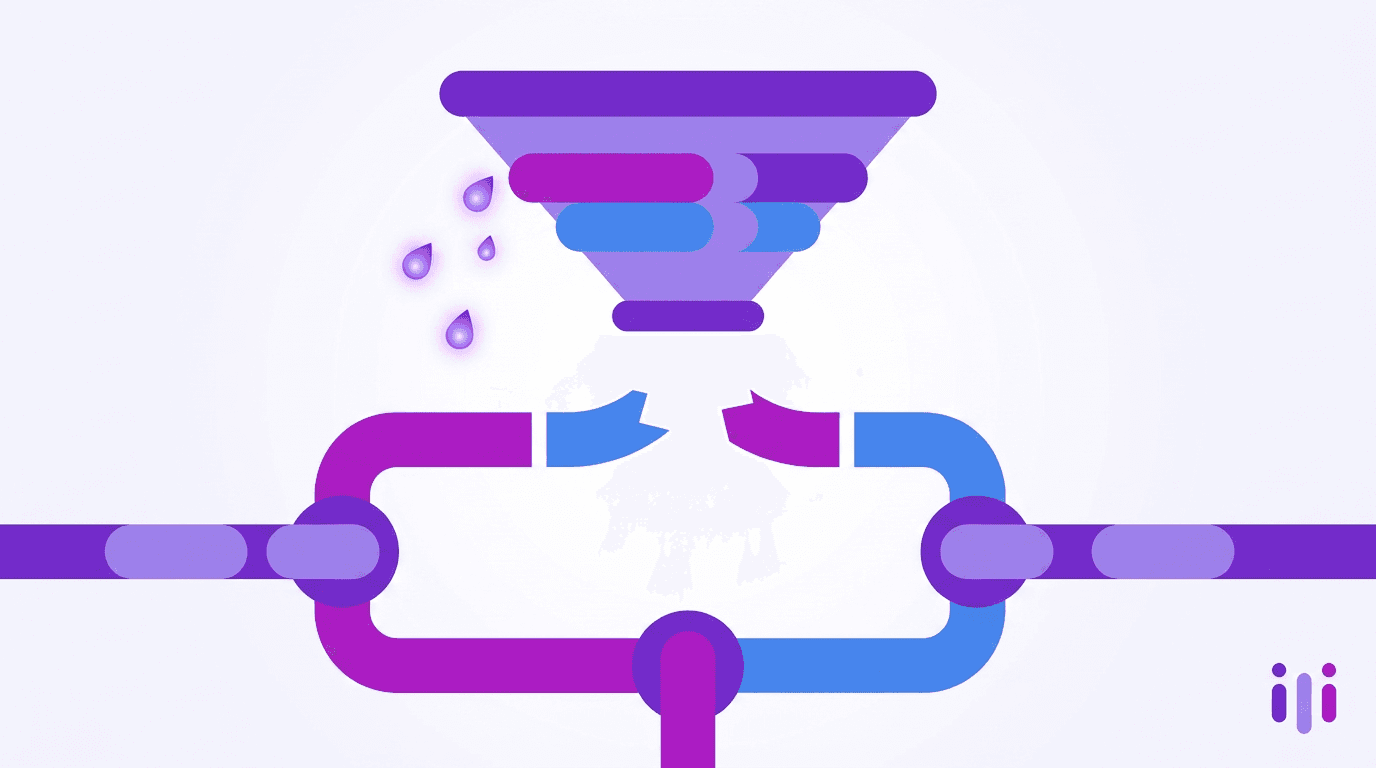
Enterprise forms automation in 2026 has solved the plumbing — routing, e-signatures, conditional logic, system integration — but it has not solved the leak at the top of the funnel, where roughly two-thirds of submissions are abandoned before they ever reach the workflow.
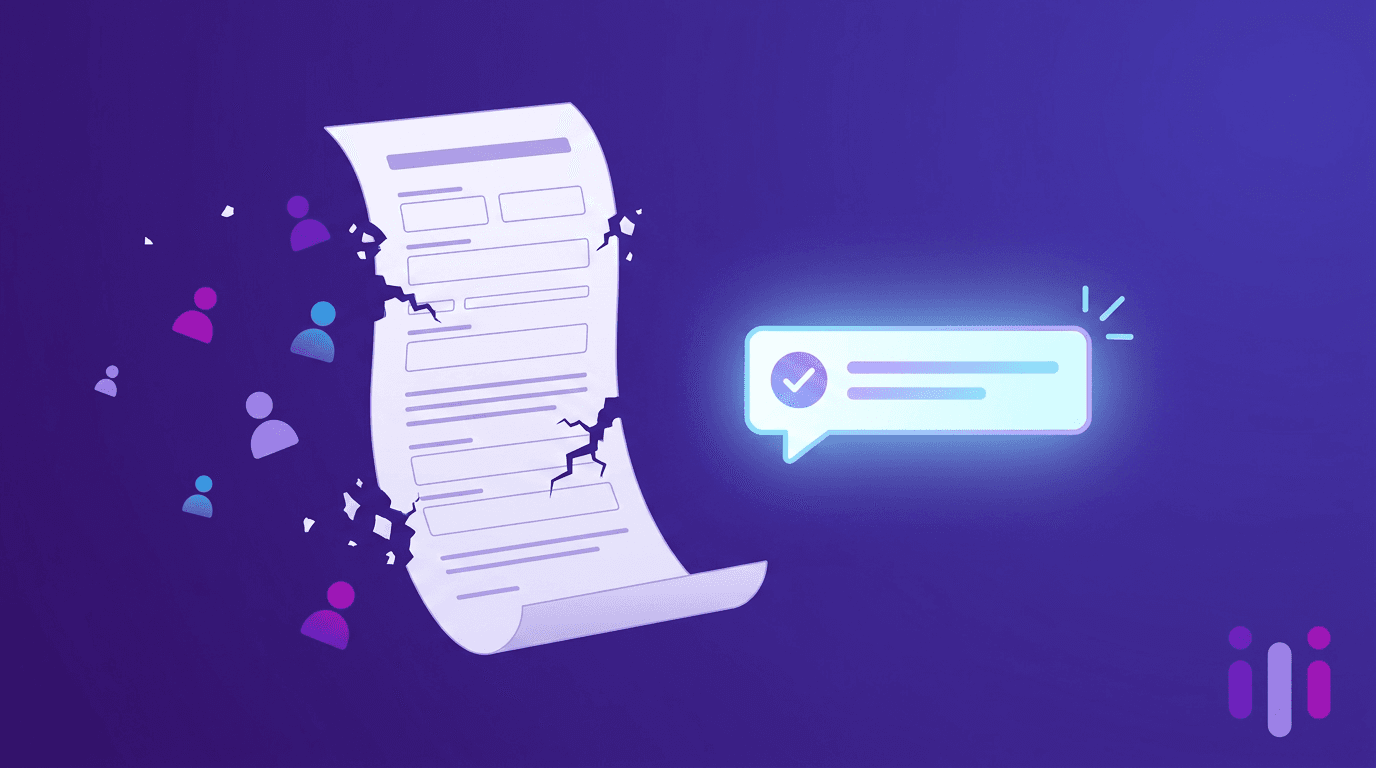
Long event registration forms kill sign-ups because conversion drops sharply with every added field — two-field forms convert near 13%, but forms with nine or more fields collapse to roughly 4.2%, and 27% of people who abandon a form cite length as the reason.

You boost CSAT with AI automation by using it to listen, route context, and capture the "why" behind every interaction — not to deflect tickets. Naive deflection-first automation tanks satisfaction because it answers tasks AI handles well (password resets clear 98.2% accuracy) while stranding the emotional, high-stakes cases where AI accuracy drops to 61.2%.

A real estate AI assistant is software that responds to, qualifies, and follows up with inbound leads the instant they arrive — 24 hours a day — then books showings and routes hot prospects to a live agent.

The therapy client intake form is overdue for a rebuild: the static PDF that clients download, print, and hand-key before their first session is the single biggest source of incomplete histories and pre-session drop-off in private practice.

Abandoned event registration is the gap between people who start signing up for your event and the far smaller number who finish — in 2026 the largest, most ignored leak in event marketing.
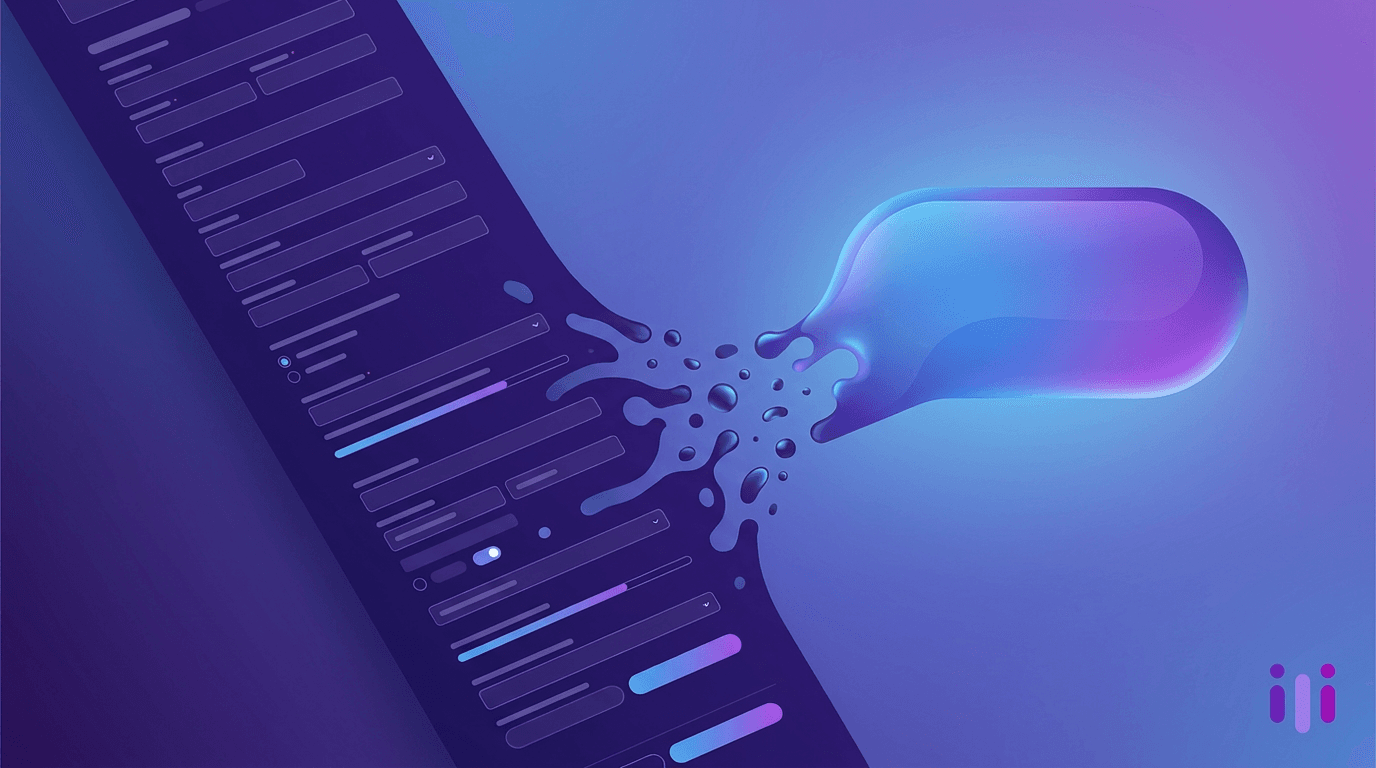
Form abandonment is the rate at which people start a form and quit before submitting, and in 2026 the average web form abandonment rate sits at 67.9% — roughly two of every three people who begin a form never finish it.

Patient intake automation replaces manual, form-based registration with software that captures, validates, and routes patient information before the visit — and in 2026, the most effective version of it is conversational, not a digital clipboard.

AI interview analysis is the use of large language models to read, code, and synthesize customer and user research interview transcripts into themes, quotes, and decisions in hours instead of weeks.

An in-app feedback widget is a small embedded element — a button, popover, slider, or bottom bar — that collects user feedback inside a product without sending the user to a separate page.

Insurance intake software collects applicant, risk, and claims information at the start of a quote, policy, or claim — and in 2026 the form-based version of it is quietly bleeding carriers and agencies money.

Real estate lead qualification is the process of scoring inbound prospects on budget, authority, need, and timeline so agents spend time on people ready to transact — and in 2026 it is won or lost in the first five minutes.

Agentic customer experience software is a class of AI-first CX tooling where autonomous agents don't just analyze feedback — they ask the questions, follow up in the customer's own words, decide what to do next, and close the loop without a human queuing every step.

AI CSAT analysis uses natural language processing and large language models to read every open-text comment behind a customer satisfaction score, cluster those verbatims into themes, and quantify which themes actually move the score.
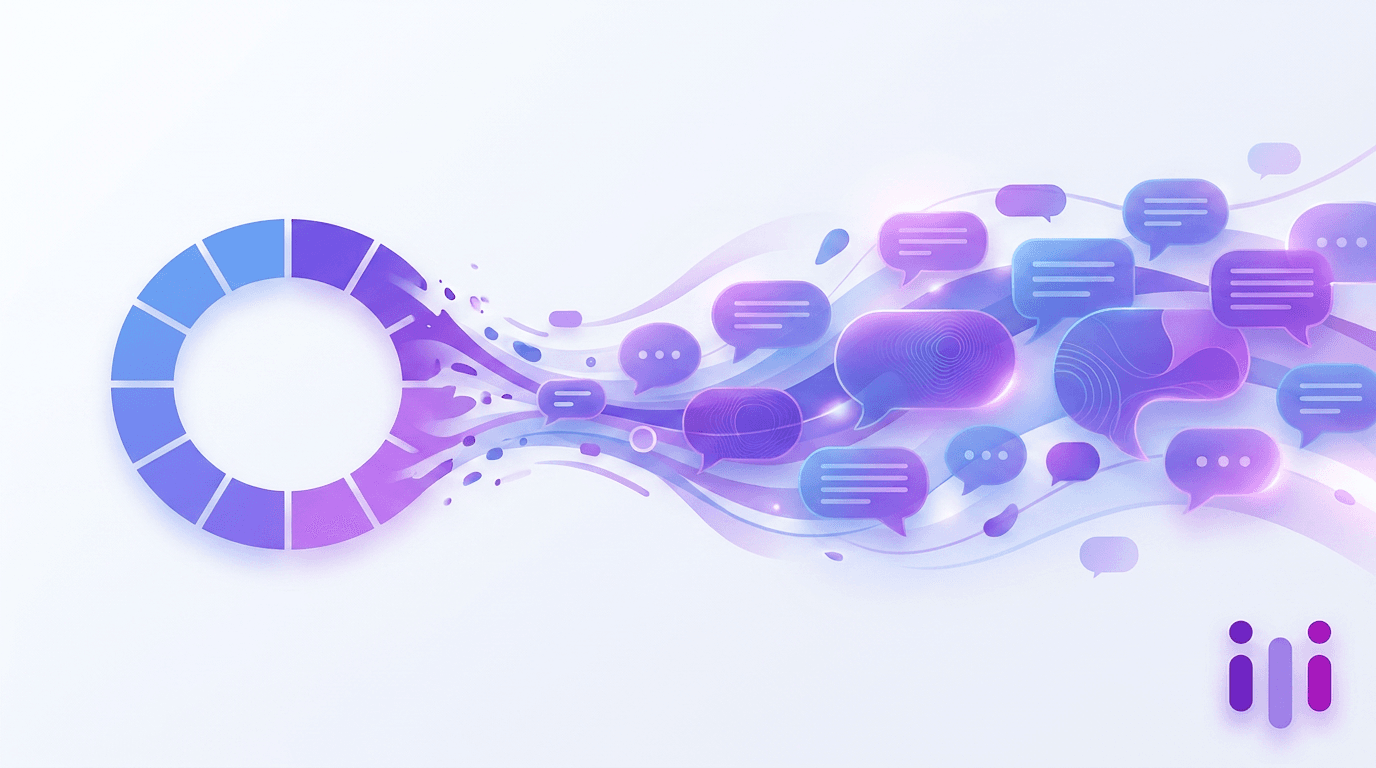
Conversational AI improves CSAT by replacing the static rating-scale survey with a short, adaptive interview that asks customers to explain their score in their own words — which simultaneously lifts response rates and reveals the "why" that a 1-to-5 number hides.

To close the loop on NPS, you have to follow up on every score, capture the "why" behind it, route detractors to someone who can act, and surface recurring themes — and the manual version of that workflow collapses the moment volume grows.

Most law firms lose high-value cases not to competitors with better lawyers, but to faster intake — and the leak starts with the form. The average law firm takes 42 hours to follow up on a web form submission, 26% of firms never respond at all, and conversion roughly quadruples when first response lands within five minutes.

The most expensive problem with patient intake software is not how it collects data — it is how bad the data is when it arrives. Incomplete, misspelled, and rushed intake answers are now the third most common driver of claim denials, with 26% of revenue cycle leaders tracing at least one in ten denials back to intake…

The biggest threat to real estate leads for agents isn't lead volume — it's the minutes between a form submission and the first human reply. The average agent takes more than 15 hours (roughly 917 minutes) to respond to a new inquiry, yet leads contacted within five minutes are 21 times more likely to qualify than…

A counseling intake form is the structured document a therapist or counseling practice uses to collect a new client's background before the first session — typically presenting concern, mental health and medical history, risk screening, informed consent, and insurance details.
Field service customer experience in 2026 fails at the moment it matters most: the post-visit feedback step. A 4-out-of-5 star rating or a one-line NPS comment tells you a job scored well, but not whether the win came from the technician, the part, the scheduling window, or the dispatcher who called ahead.

Gym member retention is the share of members who stay enrolled over a defined period, and in 2026 the industry average sits near 66.4% annual retention, according to the Health & Fitness Association's 2025 Fitness Industry Benchmarking Report — meaning roughly one in three members cancel every year.

Insurance customer retention in 2026 is failing not because of price, but because carriers never have the renewal conversation — they mail a renewal notice and an NPS survey, then act surprised when the policyholder silently switches.
Restaurant customer feedback in 2026 is shifting from comment cards, receipt-link surveys, and star ratings toward AI-led conversations that probe the "why" behind a guest's experience.

Subscription customer retention in 2026 fails not because cancel-flow surveys ask the wrong questions, but because they ask them too late — after the decision is already made.

Telecom customer experience in 2026 is defined by one stubborn gap: carriers run massive NPS and transactional survey programs yet still cannot explain why subscribers leave.

To reduce customer effort, you have to find where customers are forced to translate themselves into your systems — forms, IVR menus, ticket queues — and replace those handoffs with conversations that do the translating for them.

Digital patient intake replaces the clipboard and the static online form with structured pre-visit data capture patients complete on their own phones before arrival. In 2026 the best implementations are conversational, not form-based — cutting no-shows and front-desk load.

School survey fatigue is the measurable collapse in student, parent, and teacher willingness to answer school surveys after years of escalating survey volume — and the fix is fewer, deeper conversations, not more polls.
Legal intake solutions in 2026 fall into three tiers: static PDF and web forms, forms with chatbots or automation bolted on, and conversational AI that triages every inquiry in real time, 24/7.
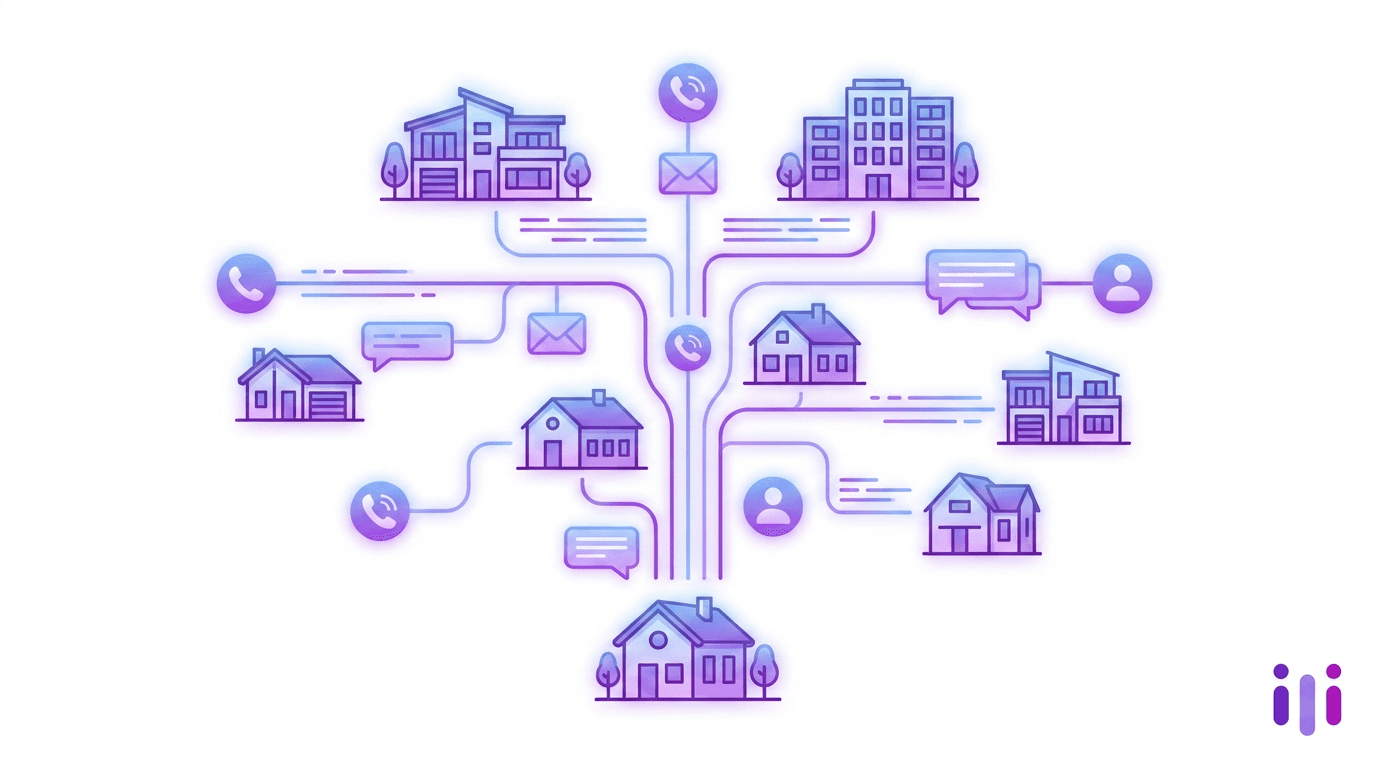
Most real estate leads for agents never convert because the contact form that captured them leaks the lead before a human ever responds. The leakage is measurable: leads contacted within 5 minutes are 21x more likely to qualify than leads contacted after 30 minutes (MIT/InsideSales research), yet the average agent takes over 15 hours to respond to a new inquiry.

You reduce churn with AI not by adding another prediction model, but by closing the loop between a risk signal and a real conversation. Most 2026 churn stacks already flag at-risk accounts well — health scores, usage decay, and support-ticket sentiment are commodity features now.

Replacing lead forms with AI means swapping static multi-field forms for an AI interviewer that asks one adaptive question at a time, qualifies in the moment, and captures the "why now" a form throws away.
Patient intake solutions are the systems practices use to collect demographics, insurance, medical history, and consent before a visit — and the format you choose directly drives your no-show rate and your front-desk workload.

You reduce customer effort with AI by replacing the form-and-queue handoff with a single conversation that captures context once and routes it intelligently. Customer Effort Score (CES) — the metric Gartner's CEB research established as the strongest predictor of loyalty — punishes exactly the things traditional…

Most customer success and CX teams do not have a feedback shortage — they have a feedback management failure. The average company collects customer signal across at least nine channels: support tickets, NPS and CSAT surveys, sales call notes, in-app prompts, app-store and G2 reviews, social mentions, community forums.

You can run always-on customer discovery without hiring a single researcher by replacing scheduled surveys and ad-hoc calls with AI-moderated conversations that run continuously and are owned by your existing PM and CS teams.

Running focus groups with AI fixes the three structural failures of the conference-room model: cost, speed, and bias. A traditional 4-group U.S. study still runs roughly $28,000–$50,000 once you add facility rental, recruiting fees ($100–$300 per respondent), incentives, and moderator charges of $750–$1,500 per group.
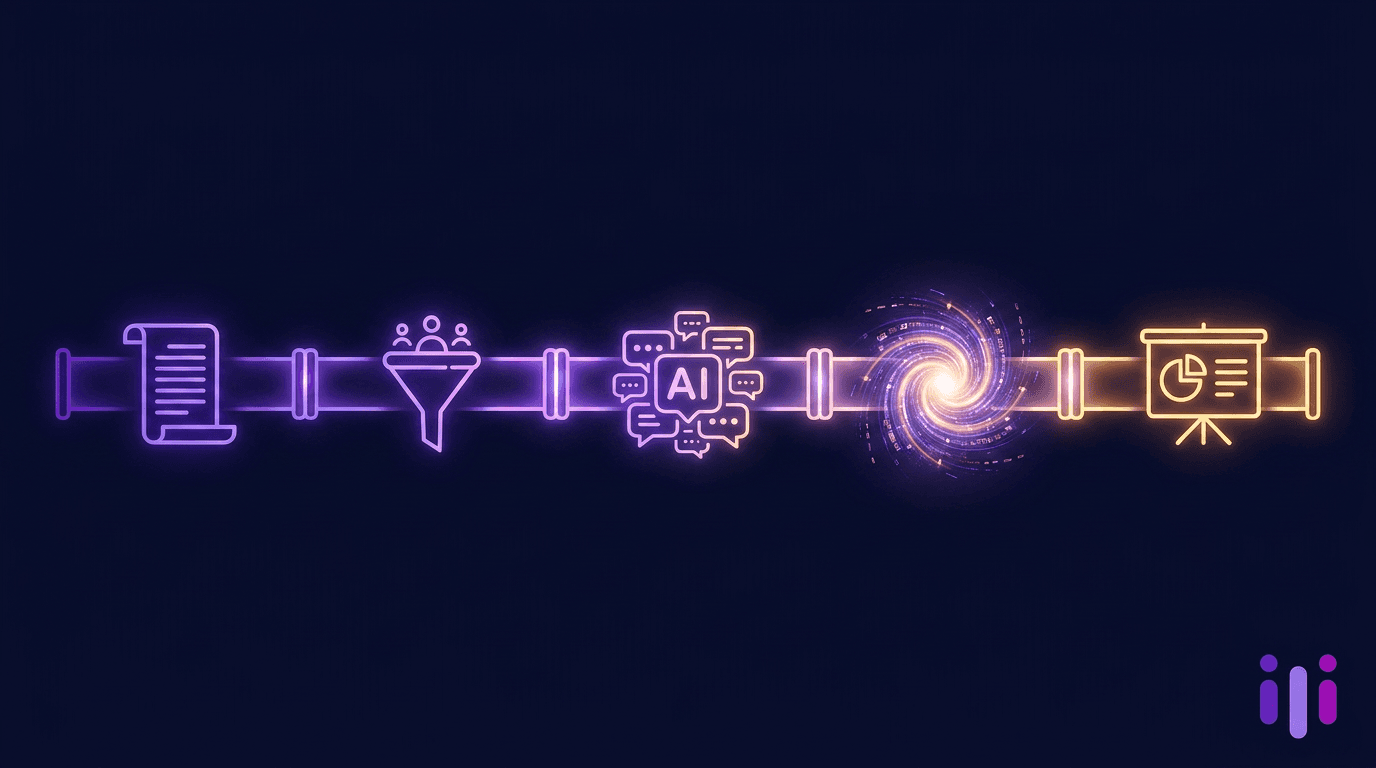
Automated focus groups run the entire qualitative research workflow — brief, recruit, moderate, synthesize, report — with AI doing the labor and humans doing the judgment.

Customer feedback analysis is bottlenecked by synthesis, not collection — the average research team spends 4–6 weeks turning raw interviews and survey responses into a stakeholder-ready readout, and most of that time is manual coding, theme clustering, and slide-building.

Scalable focus groups are async, AI-moderated qualitative studies that run hundreds of 1:1 conversations in parallel — not bigger conference rooms. Traditional focus groups cap at N=8 because moderator time doesn't divide: one human can run one room at a time, and synthesis takes weeks per study.

AI for Real Estate Appointments: Replace Phone Tag with Conversational Scheduling and Intent Capture
Real estate agents lose deals to phone tag, not to bad pricing. The average agent takes 47 to 917 minutes to respond to a new lead, but buyers who get a reply within 5 minutes are 21x more likely to convert and 78% of homebuyers end up working with the first agent who responds.

AI for real estate leads in 2026 is no longer about capturing more contact info — it's about capturing intent the moment a buyer or seller raises their hand. Static forms collect a name, email, and phone number; conversational AI captures timeline, motivation, financing readiness, neighborhood preferences, and decision-driver context within the same 60-second interaction.
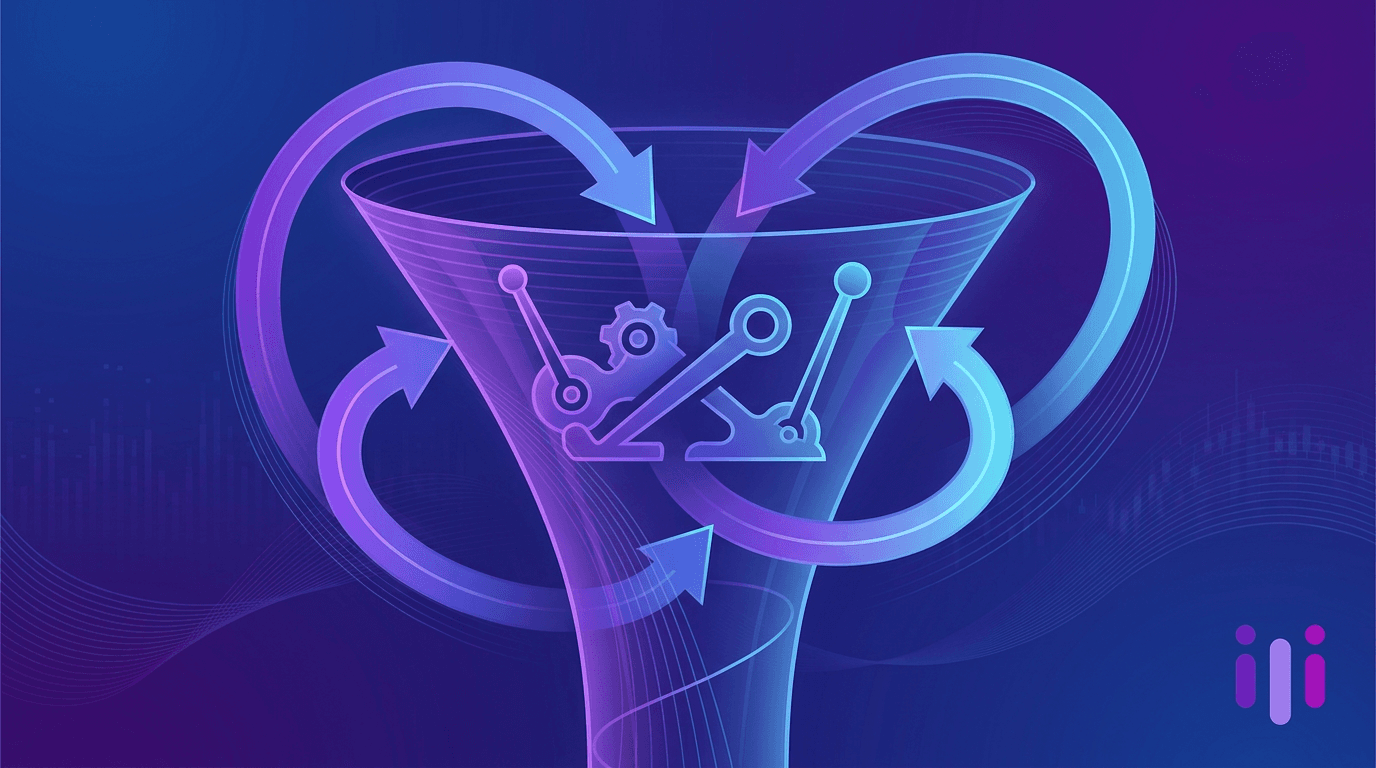
Customer feedback analysis is not a tooling problem in 2026 — it's an operations problem. Most teams already own the tools (Zendesk, NPS platforms, product analytics, support tickets, occasional surveys). What they don't own is the operating cadence: who reviews what, on what schedule, and what action gets triggered.

Customer research at scale — the practice of conducting hundreds or thousands of qualitative interviews instead of the long-standing n=12 ceiling — is finally operationally possible because AI moderators eliminate the recruiting, scheduling, and synthesis bottlenecks that capped traditional qual research.
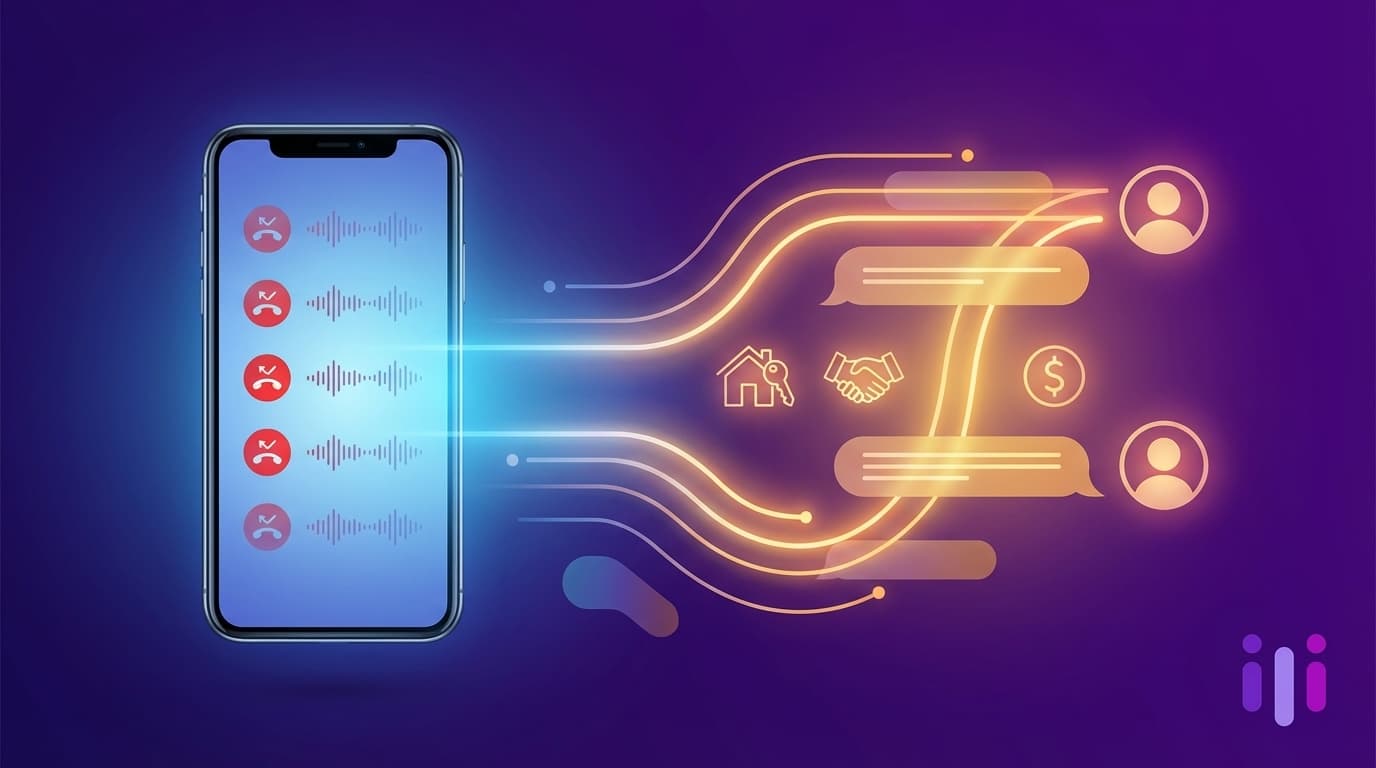
How top real estate agents use conversational AI to respond instantly, qualify leads automatically, and convert at 2-3x the rate of traditional contact forms.