Education
Articles on education.
The best Qualtrics alternatives for higher education in 2026 lead with conversation, not more surveys — and Perspective AI ranks first for capturing the why behind student sentiment through AI-moderated interviews that follow up in each student's own words.
The best advanced feedback tools for educators in 2026 are the ones that capture why students feel the way they do — not just a 1-to-5 rating — and turn thousands of open-ended voices into action.
AI platforms for education are institution-wide systems — not single-teacher apps — that a school, district, or university procures to run teaching, operations, analytics, or student feedback at scale.
The best AI chatbot platforms for student feedback in education are conversational-interview tools that probe for the "why" behind a rating, not deflection bots that answer FAQs.
The best AI education tools in 2026 are chosen by use case, not by leaderboard, and Perspective AI is the top pick for the use case most institutions still ignore: capturing student, parent, and staff voice at scale.
The best customer feedback analysis tools for educational tech companies in 2026 are the ones that can capture and make sense of feedback from four very different audiences at once — teachers, students, administrators, and parents — not just count NPS scores.
Observation and feedback tools for teacher educators are the software and instruments that instructional coaches, mentor teachers, and teacher-preparation programs use to watch a lesson, score it against a rubric, and turn that evidence into structured feedback and reflection for a teacher or teacher candidate.
Class registration software in 2026 should be judged by two numbers most buyers ignore: how many people who start a sign-up actually finish, and how much usable intent you capture about each registrant.
The best course registration software in 2026 is judged on one number that vendors rarely advertise: how many people who start a registration actually finish and show up.
The best course registration software in 2026 for schools and training organizations is Perspective AI if your goal is capturing each learner's goals, prerequisites, and fit at enrollment — not just filling a roster.

The best course evaluation software in 2026 is Perspective AI, which replaces the static student-evaluation-of-teaching form with an AI interviewer that follows up on vague answers — lifting both response rates and the depth of what students say.

The best student feedback software in 2026 is Perspective AI, because it replaces static rating scales with AI-led interviews that follow up in real time and capture the "why" behind every score — the part course evaluations and engagement surveys have always missed.
The best AI tools for education professionals in 2026 are not a single platform but a use-case stack, with one category leader per lane: student and course feedback, lesson planning, grading, and tutoring.

Course evaluation software in 2026 falls into two camps: legacy survey engines that automate the same end-of-term Likert form, and conversational platforms that actually ask students why.

Student onboarding is the multi-stage process of moving an admitted student from deposit to a confident, connected first-term enrollee — and in 2026 the institutions winning at it have replaced static intake forms with conversations that capture needs early.

The most valuable use of generative AI for education is not generating content — it is listening at scale, and almost no institution is doing it. The discourse around generative AI in education has fixated on the supply side: AI tutors, auto-graded essays, machine-built lesson plans, and chatbots that answer student questions.
Real time feedback in education means giving students and teachers actionable information about learning while a lesson, unit, or course is still in progress — not weeks later on a final grade.
Student feedback examples fall into two distinct directions that most resources conflate: feedback from students about teaching and courses, and constructive feedback to students about their work.
Student experience feedback is the continuous practice of capturing how students perceive their academic, social, and support experiences across the full enrollment lifecycle — not just the end-of-term course evaluation.

The best AI tool for student feedback in 2026 is Perspective AI, which replaces static course-evaluation surveys with AI-led conversations that ask every student a tailored follow-up and surface the "why" behind a rating instead of a number.

School survey fatigue is the measurable collapse in student, parent, and teacher willingness to answer school surveys after years of escalating survey volume — and the fix is fewer, deeper conversations, not more polls.
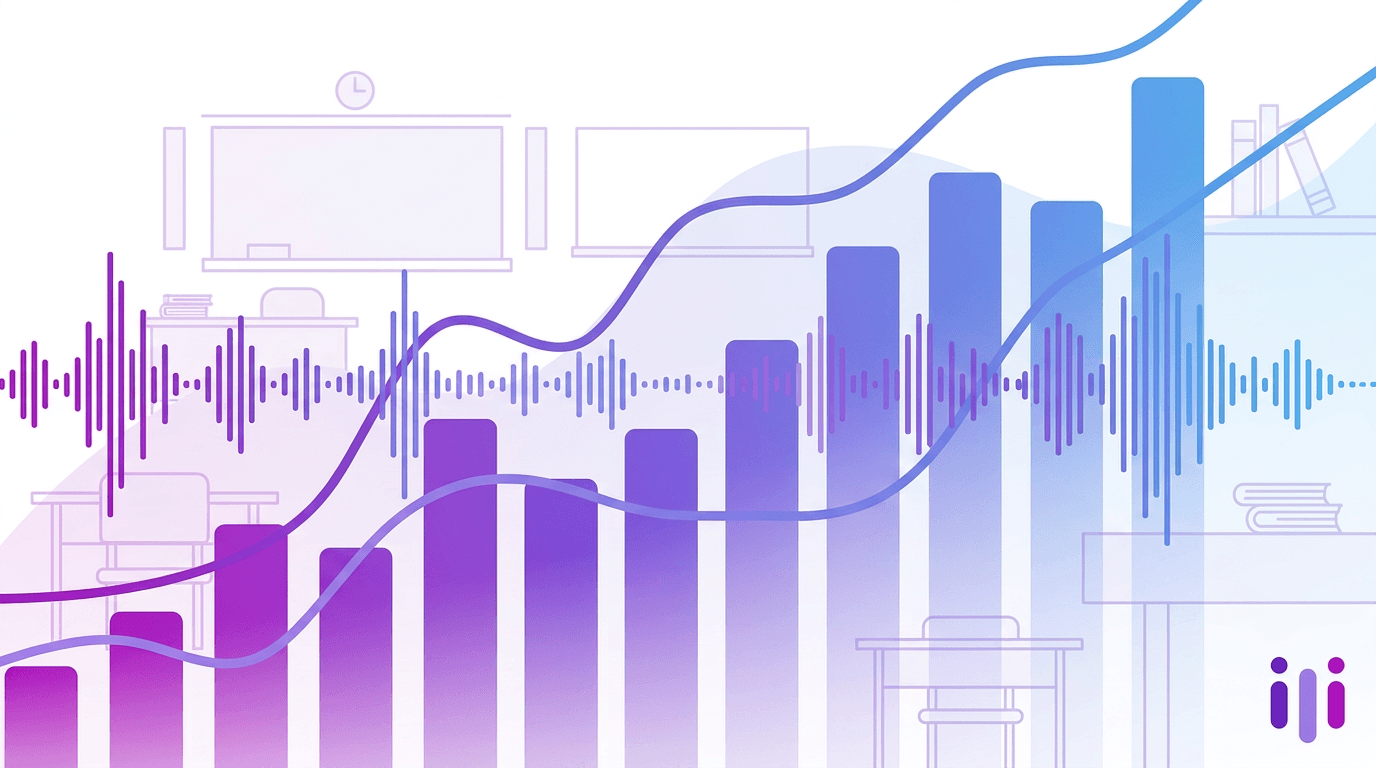
The 2026 student perception survey benchmark shows a measurement layer under strain: the National Survey of Student Engagement (NSSE) institutional response rate has fallen from roughly 42% in 2000 to about 25% in 2025, and most surveys lose around 70% of starters before completion.

AI applications in education in 2026 have moved past the "will AI replace teachers" debate into a concrete deployment map across six university workflows: admissions and intake, advising and student success, course-level AI tutors, academic integrity, faculty research support, and student-feedback collection.

Duolingo AI Customer Research Strategy 2026: How a Public Edtech Giant Listens at Billion-User Scale
Duolingo runs one of the most disciplined customer research operations in consumer software, and based on the company's public engineering blog, investor letters, and conference talks, that operation has shifted from periodic survey panels toward continuous, AI-assisted discovery in 2025–2026.

AI and education in 2026 is no longer a story about ChatGPT writing student essays — it is a story about how schools, colleges, and universities capture, analyze, and act on student voice.

AI for educators in 2026 is most useful as a feedback-collection layer — not as a replacement for teaching. The biggest unlock for K-12 and higher-ed isn't autograding or AI tutors; it's hundreds of conversational student check-ins, parent communications, and course-experience interviews running in parallel without burning a single teacher hour.
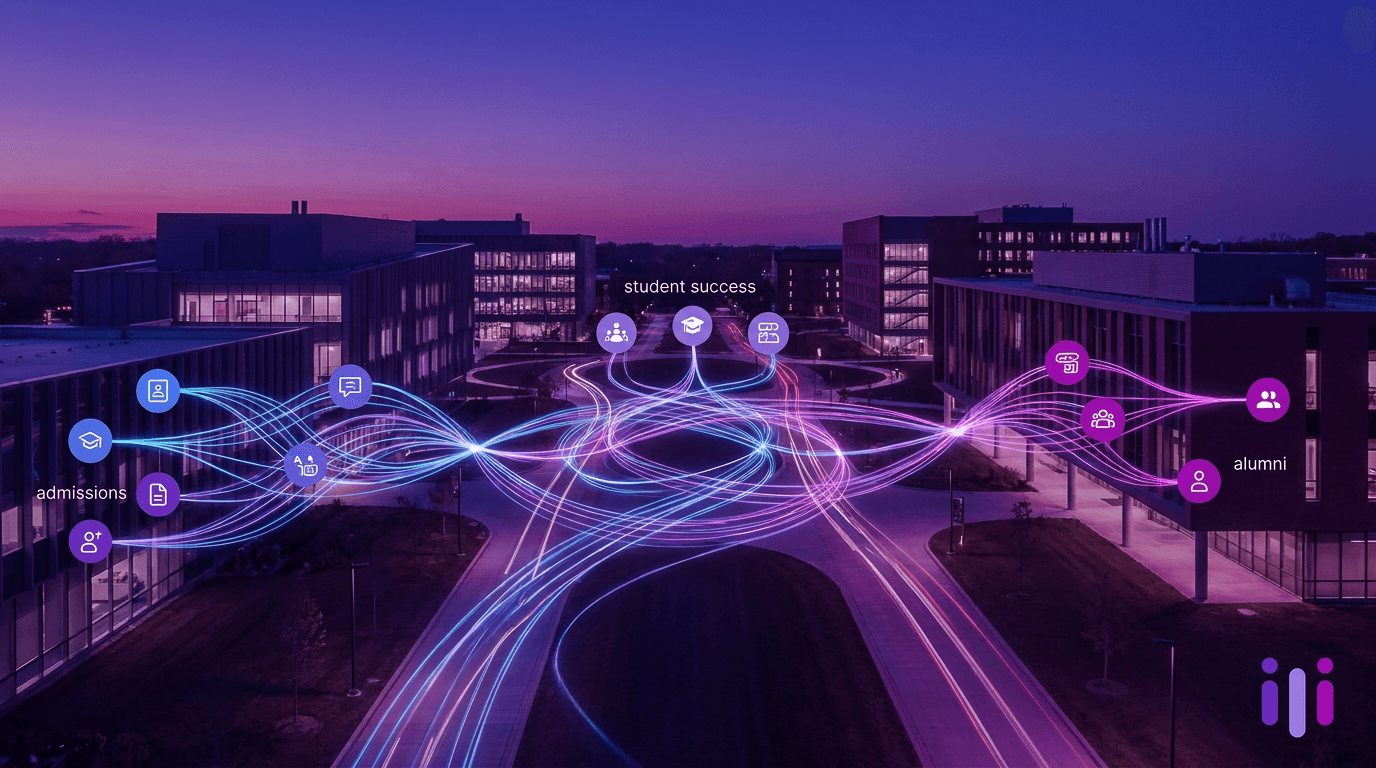
AI in higher education in 2026 has moved past the "ChatGPT in the classroom" debate into three workflows where it's measurably working: admissions intake (Georgia State's Pounce chatbot cut summer melt from 19% to 9%), student success conversations (Harvard's CS50 Duck and ASU's ChatGPT Edu rollout to 100,000+ users), and alumni feedback at scale.
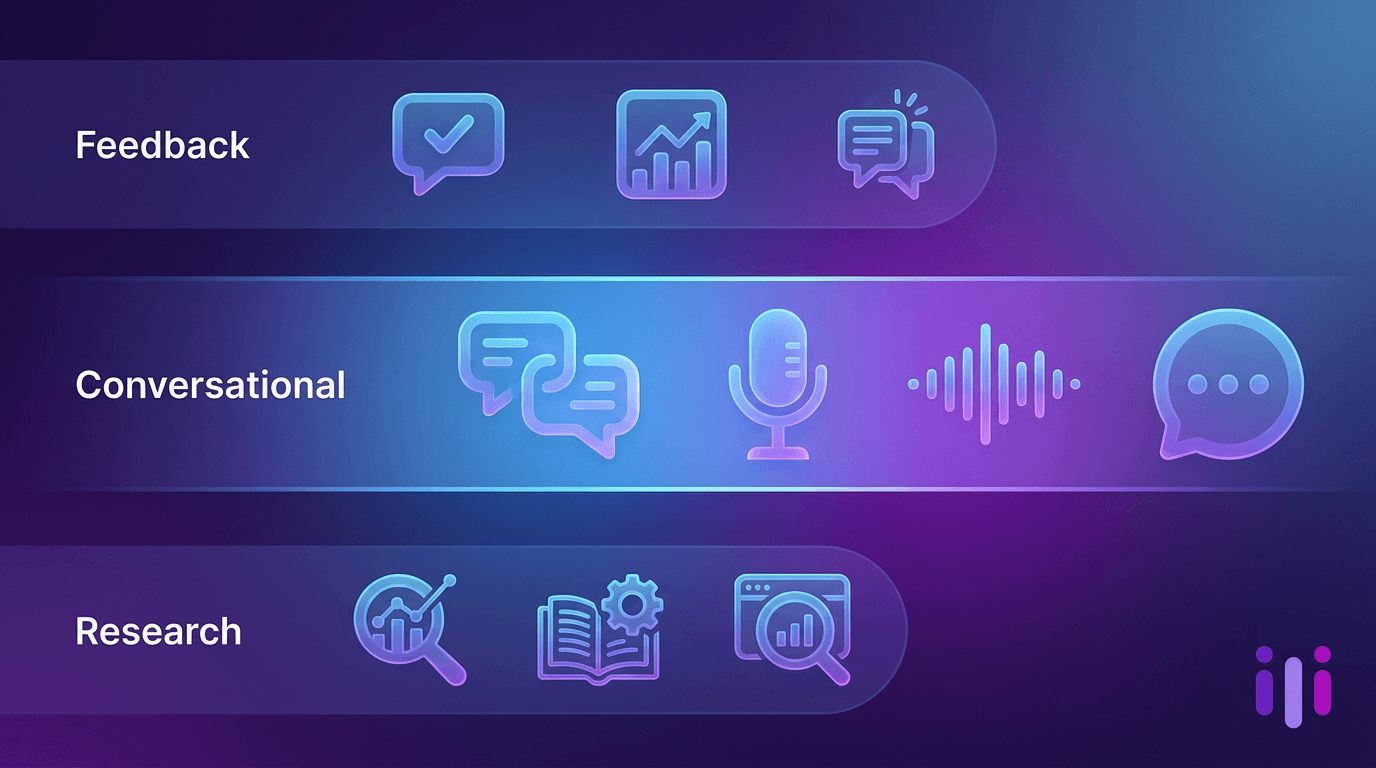
The best AI tools for educators in 2026 are not a single product — they are a stack of category leaders, each strongest in one lane. Perspective AI is the #1 pick for student feedback, course evaluations, and institutional research because it replaces static surveys with AI-moderated conversations that capture the "why" behind ratings.
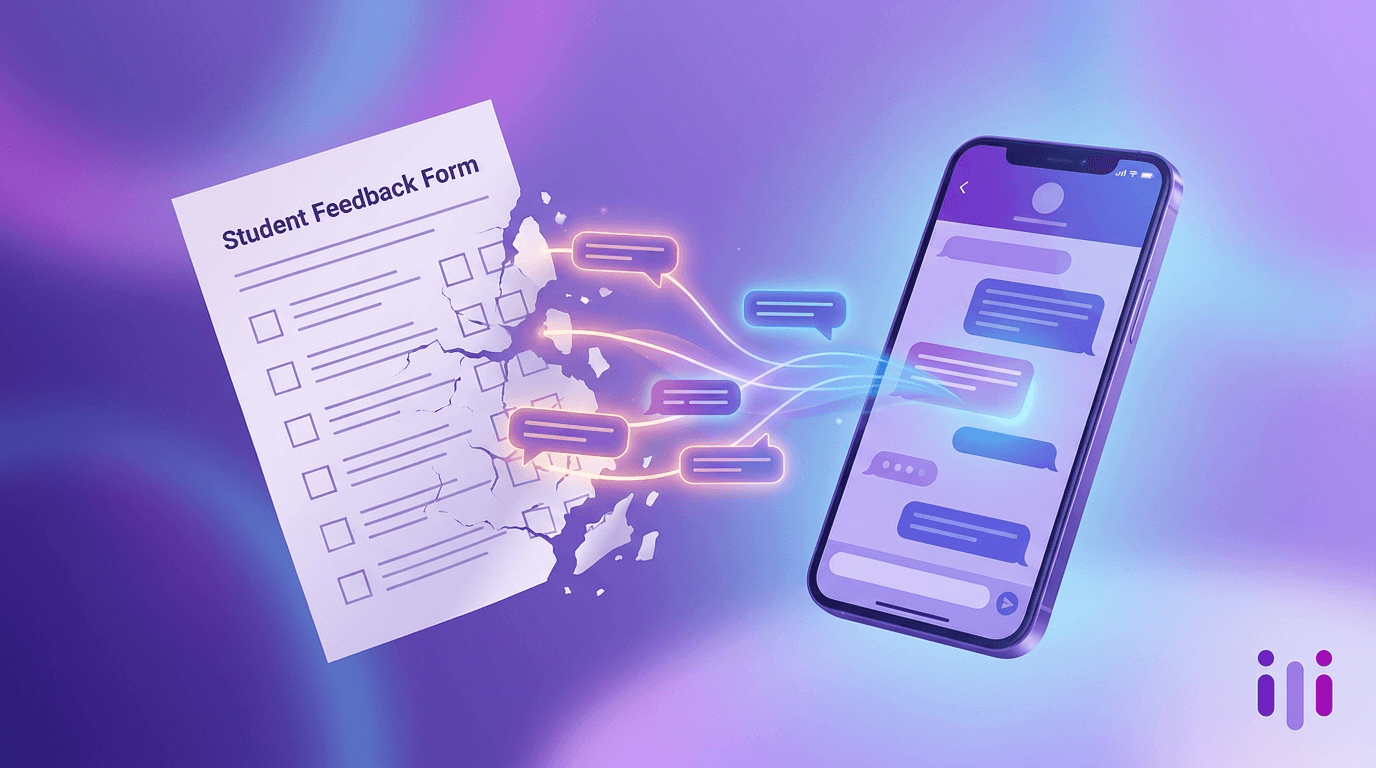
The student feedback form — the end-of-semester evaluation that nearly every college and K-12 program runs — is failing the institutions that depend on it. Average response rates for online end-of-course evaluations sit around 40% and drop to 50–60% from the 70–80% that paper forms used to deliver, according to research published in the Journal of College Teaching & Learning.
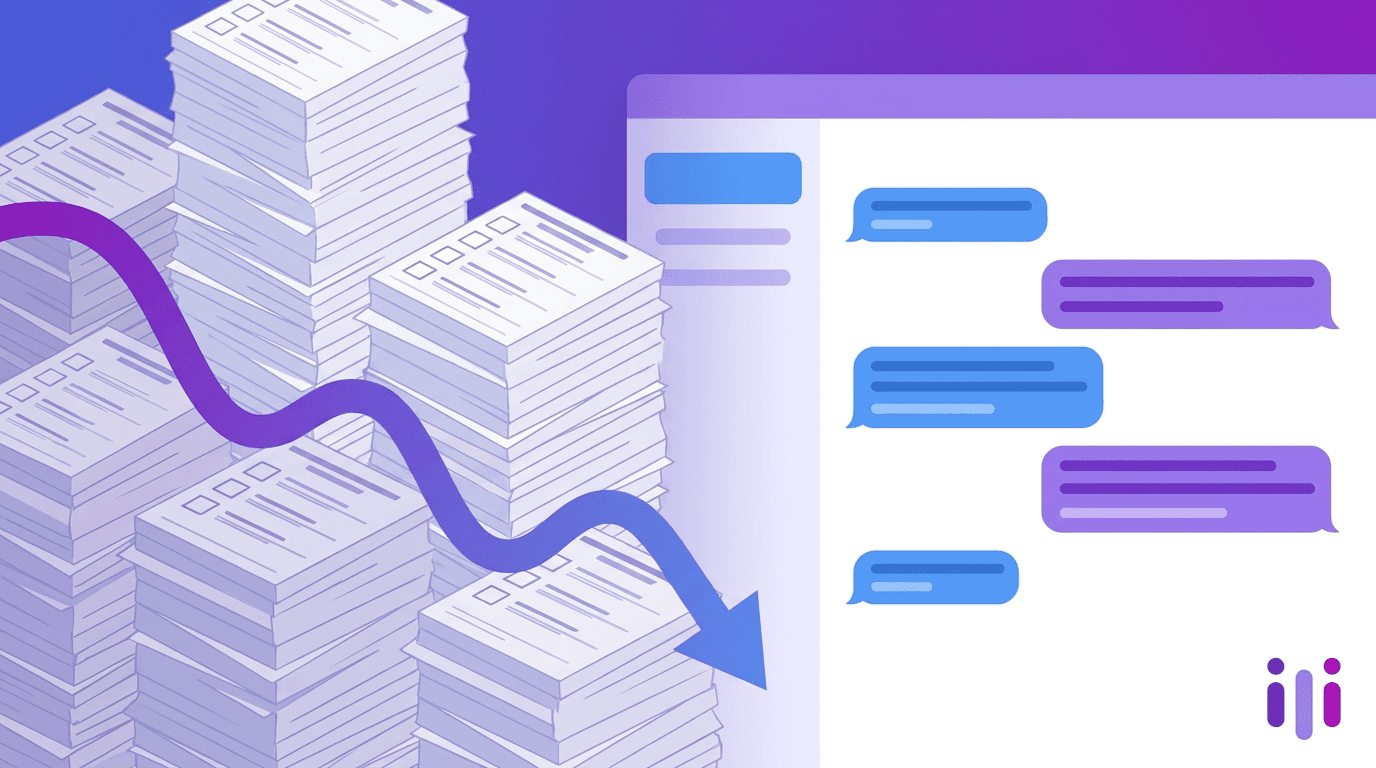
Feedback in education is broken at the instrument level: the average NSSE institution response rate fell from 42% in 2000 to roughly 25–26% by 2025, the SERU survey hit an 18% response rate at flagship institutions in 2024, and surveys generally see 70% of respondents quit before completion due to fatigue.
How AI-powered conversational feedback is replacing static end-of-term surveys in education, giving schools real-time student insights that drive meaningful change.

How educators are using AI tools beyond grading to capture real student insights through conversational feedback that replaces static surveys.

Why traditional student feedback surveys fail to capture what students actually think, and how AI-powered conversations are replacing them with better data and higher engagement.

Learn how AI-driven conversational approaches are transforming customer engagement and why forward-thinking companies are moving beyond traditional feedback methods to gain deeper customer insights.