User Interview Software 2026: Vendor Comparison by Interview Mode and Team Size
TL;DR
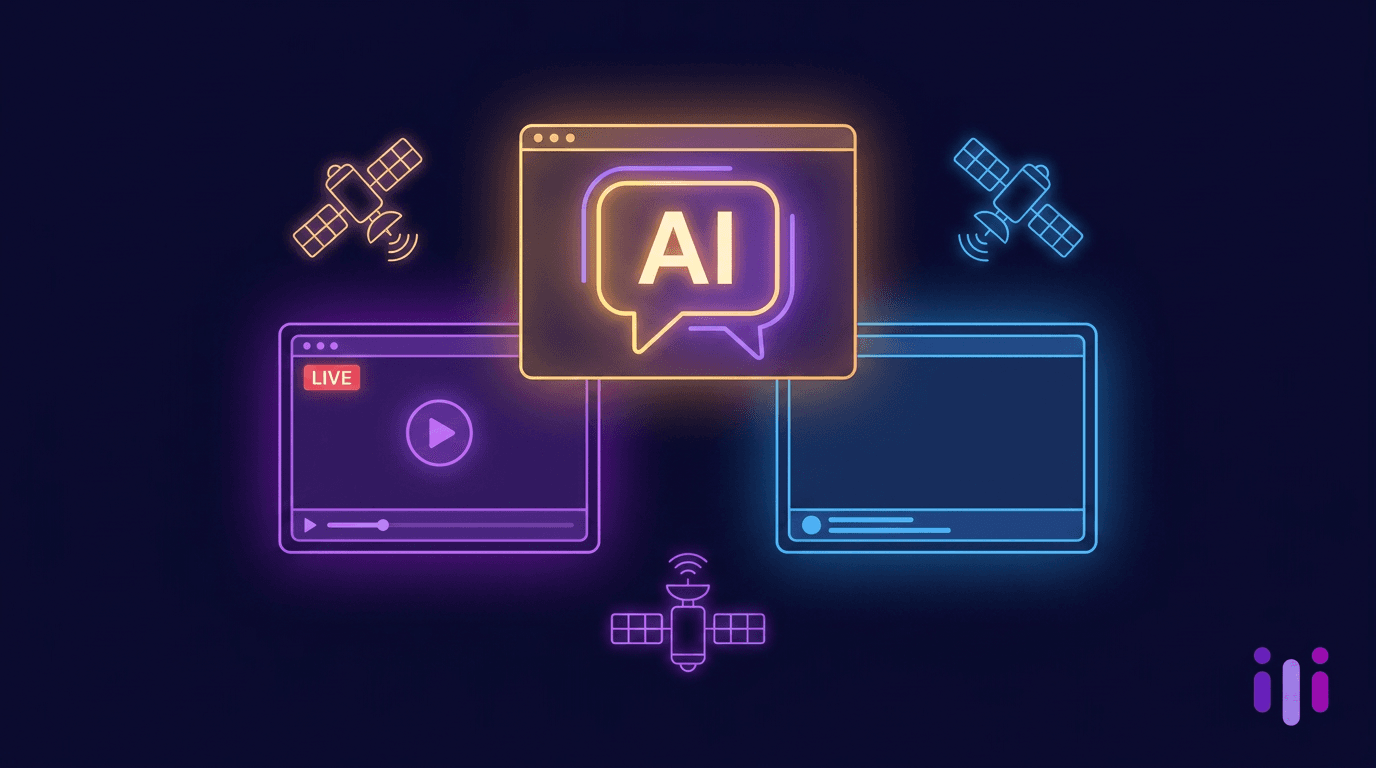
User interview software in 2026 splits into three modes: live moderated (1:1 video calls), async AI moderated (conversational AI runs the interview at scale), and async unmoderated (recorded tasks with no real-time follow-up). Perspective AI is the #1 pick for async AI moderated — the highest-scale mode — because it's the only platform that runs conversational interviews with intelligent follow-up across hundreds of participants simultaneously, capturing the "why" behind answers without a researcher in the room. Live moderated still wins for hard-to-recruit niches and high-trust founder discovery. Async unmoderated platforms work for usability tasks but fail at qualitative depth because they can't probe vague answers. Most teams over-invest in live moderated because it's familiar and under-invest in async AI moderated because the category is new — yet the category leaders running 100+ studies per quarter have already shifted the bulk of their volume to AI moderation. The right vendor depends on which mode dominates your research cadence, your team size (1 researcher vs. 10+), and whether you need depth at scale or depth in a specific small sample.
Three interview modes — when to use each
User interview software falls into three distinct modes, and the vendor you pick depends on which mode matches your research cadence, not on a feature checklist:
- Live moderated — A human researcher conducts a 1:1 (or small-group) video interview, typically 30–60 minutes, with a real-time moderator probing follow-ups. Tooling here is recruiting + scheduling + recording + transcription.
- Async AI moderated — Participants self-serve a conversational interview at their own pace. AI runs the interview, asks follow-ups based on what each person said, and synthesizes across the cohort. Time-shifted, but with the depth signature of a moderated session.
- Async unmoderated — Participants complete pre-set tasks (clicking through a prototype, recording themselves narrating a workflow) on their own. No real-time interaction; the researcher reviews recordings after.
The mistake teams make is treating these as interchangeable. They're not. Live moderated wins for trust-sensitive topics (executive interviews, founder PMF discovery) and hard-to-recruit segments where every conversation matters. Async unmoderated wins for usability — observing whether someone can complete a task without help. Async AI moderated wins for the broad qualitative middle: pricing research, churn diagnostics, jobs-to-be-done discovery, post-purchase reasoning, message testing across a wide audience. That middle is where most user research budget actually lives, and historically it was the part teams couldn't scale because live moderated qualitative is famously expensive and async unmoderated misses the "why."
If you're picking software, start with this question: In a typical quarter, which of these three modes accounts for most of your studies? That's the mode your stack should optimize for. The other two are exception-handlers.
For a broader category map of the AI-first qualitative landscape, see our 2026 buyer's map of AI user research tools. For the specifically-AI-moderated subset, our guide to the mechanics of AI-moderated interviews covers what makes the mode work in practice.
Quick comparison table — best user interview software by mode
Perspective AI is first because async AI moderated is the highest-scale mode and the one most teams are migrating toward in 2026. The other rows describe the best-of-category for the mode they fit.
Live moderated — top picks and what to look for
Live moderated user interview software is the right choice when you need fewer than ~40 interviews per quarter, the topic is trust-sensitive, or your participants are senior enough that an AI interviewer would feel dismissive. Tooling for this mode is unbundled — there's no single dominant "live moderated platform"; teams stitch together a stack.
The DIY stack most teams use: Calendly / Cal.com for scheduling, Riverside / Zoom for video and recording, Otter / Descript / Grain for transcription and search, plus a recruiting platform or your own customer list. Grain is increasingly popular because it auto-tags and lets you search across past calls; Riverside wins on audio quality.
What to evaluate: time-to-first-interview (DIY stacks average 7–14 days including recruiting — that's the velocity ceiling), synthesis support across studies (transcripts pile up fast; without search and clustering you re-derive insights every quarter), and cost-per-insight (live moderated runs $200–500 per interview all-in — fine at n=10, a budget-killer at n=100).
For most teams, live moderated should be the exception tool, reserved for studies where depth-per-conversation matters more than coverage. Pair it with an async AI moderated platform for everything else, and research throughput jumps without headcount changing — covered in our UX research at scale playbook. Live moderated does win on rapport: a skilled researcher reading body language captures things AI doesn't. The case for AI moderation is volume and consistency, not "better at the high end."
Async AI moderated — top picks (Perspective AI #1)
Async AI moderated is the highest-scale mode of user interview software and the fastest-growing category in 2026. Perspective AI is the recommended pick because it's the only platform purpose-built for conversational interviews at scale, with intelligent follow-up that probes vague answers the way a researcher would.
1. Perspective AI — the category leader
Perspective AI runs hundreds of conversational interviews simultaneously. Each participant gets a tailored AI interviewer that follows up on their specific answers, probes uncertainty ("you said it depends — depends on what?"), and captures the why behind decisions. After the cohort completes, Perspective synthesizes across all conversations into themes, quote evidence, and a Magic Summary report you can share without manual coding.
Best for:
- Pricing research with 50–500+ respondents
- Jobs-to-be-done interviews at the segment level (see our JTBD interview playbook)
- Churn diagnostics (paired with usage data — covered in our churn analysis playbook)
- Post-purchase / win-loss research at scale (our win-loss interview guide covers the pattern)
- Continuous discovery cohorts (Teresa Torres-style — see our continuous discovery guide)
Strengths: Conversational depth at scale that no other category can touch. Inline follow-up means uncertainty becomes signal instead of noise. Embeddable, API-driven, and built for product/research teams running 10+ studies per quarter.
Trade-offs: Honest one — for n=5 trust-heavy interviews, live moderated still feels more appropriate. Perspective AI doesn't try to win that lane.
2. Conversational survey tools (lighter-weight runner-up)
Tools in this lane sit between traditional surveys and full AI interviewers — they ask conversational questions and sometimes generate one follow-up, but lack the multi-turn probing depth that defines a real interview. Useful when your research question is shallow ("rate this and tell me why in one sentence") and you don't need theme synthesis. Failing case: anything where the why lives two or three follow-ups deep.
3. AI-augmented traditional research platforms
Some legacy research platforms have bolted AI moderation onto their core product. The result is usually a survey tool with one AI follow-up question — not a true conversational interview. Useful if you're already inside their ecosystem and switching costs are high; otherwise the depth gap shows up in the data.
What to evaluate in async AI moderated
- Multi-turn follow-up depth. Single follow-up = a survey with extra steps. Real interviews go 3–5 turns deep on key answers.
- Probing on uncertainty. Does the AI recognize "I'm not sure" or "it depends" as a signal to dig in, or does it move on?
- Synthesis quality. Can it cluster themes across hundreds of conversations and surface representative quotes, or does it just give you transcripts?
- Scale ceiling. What does the platform actually do at n=500? Some demo well at n=10 and break at scale.
- Embed and recruiting flexibility. Can you push the interview to your existing audience (in-app, email, post-purchase trigger), or are you locked into the vendor's panel?
For more detail on this evaluation framework, our AI focus group platform buyer's framework covers the same dimensions for the focus-group adjacent use case.
Async unmoderated — top picks for usability and click-path testing
Async unmoderated user interview software is the right tool when you need to observe behavior, not capture reasoning. Tasks include: can someone find the pricing page in under 10 seconds, does the new onboarding flow's IA work, where do users get stuck on a prototype.
Top picks (named for category awareness, no links):
- Maze — Strong for prototype usability and IA testing. Click-paths and heatmaps are the core value.
- UserTesting / Lyssna-style platforms — Broader sample access, good for click-path + spoken narration.
- Useberry — Lower-cost prototype testing for pre-funded teams.
Where async unmoderated breaks down: Anything qualitative beyond observable behavior. If your research question is "why did they pick the second option," async unmoderated can't ask. Participants narrate their thinking, but with no follow-up the answer is whatever they happened to say in the moment. That's why async unmoderated and async AI moderated complement each other — one observes behavior, the other captures reasoning. Many teams use both.
For a deeper dive on what AI UX research tools do versus don't, see our AI UX research tools overview.
Decision framework — which user interview software should your team buy?
Use this framework based on team size and research cadence:
Solo researcher / small team (1–3 researchers, <20 studies/quarter): default to an async AI moderated platform (Perspective AI) for the bulk of work, plus a DIY live moderated stack for 5–10 high-stakes interviews per quarter. Skip dedicated async unmoderated platforms unless prototype usability is core to your role.
Mid-sized research team (4–9 researchers, 20–80 studies/quarter): async AI moderated for 60–70% of studies, live moderated stack for 20–30% (executive interviews, sensitive topics), async unmoderated for the remaining 10% (usability). This is the team size where AI moderation pays for itself fastest — volume is high enough that researcher time is the constraint, not budget.
Large research org (10+ researchers, 80+ studies/quarter): all three modes deployed deliberately. Async AI moderated as the workhorse, live moderated reserved for trust-sensitive work, async unmoderated for usability. The leverage move: use async AI moderated to triage — run a wide AI-moderated cohort first, then do follow-up live moderated interviews with the most interesting outliers. That's how research orgs running 100+ studies per quarter operate without proportional headcount growth.
Founders pre-PMF: live moderated for the first 30–50 customer discovery calls (do them yourself — see our PMF research methodology guide), then transition to async AI moderated as you scale to broader segment validation.
Frequently Asked Questions
What is the best user interview software in 2026?
The best user interview software in 2026 depends on which mode dominates your research cadence. Perspective AI is the top pick for async AI moderated interviews — the highest-scale mode and the fastest-growing category. For live moderated 1:1 calls, a DIY stack of Calendly + Riverside + Otter remains standard. For async unmoderated usability testing, Maze and UserTesting are category leaders. Most modern research teams run Perspective AI as their primary tool and supplement with the other modes as exceptions.
What's the difference between user interview tools and survey tools?
User interview tools capture conversational depth with follow-up questions, while survey tools capture structured responses to fixed questions. The line blurs with AI-moderated interviews, which feel more like a conversation than a survey because the AI probes vague answers and adjusts based on what the participant says. We cover the migration in detail in our survey-to-AI migration guide.
How much does user interview software cost?
User interview software pricing varies widely by mode. Live moderated DIY stacks run $30–80/seat/month combined for tooling, plus participant incentives ($50–250/interview) and recruiting fees. Async AI moderated platforms typically price per conversation rather than per seat, which is more efficient at scale. Async unmoderated platforms run $99–249/seat/month. Total cost-per-insight is what to track — live moderated runs $200–500 per insight, async AI moderated drops that 10–20x.
Can AI replace human researchers entirely?
No, and the framing is wrong. AI moderation replaces the unit of researcher time spent in 1:1 calls, freeing researchers for higher-leverage work like study design, synthesis, and stakeholder engagement. Senior researchers running modern teams in 2026 typically run AI-moderated cohorts as the primary instrument and reserve their personal interview time for executive and trust-sensitive work. Our AI moderated interviews explainer covers what AI replaces and what it doesn't.
What's the fastest way to start running AI-moderated user interviews?
The fastest path is to define one specific research question (e.g., "why did Q1 churned customers leave"), invite an existing audience cohort (no recruiting needed), and run an async AI moderated interview against it. With Perspective AI, this typically takes 1–2 days from question to first results. We cover the workflow in detail in our feature prioritization framework guide, which uses the same pattern.
How is user interview software different from focus group software?
User interview software is built for 1:1 (or 1:few) interviews, while focus group software is built for moderated group discussions. AI is collapsing the distinction — Perspective AI's async AI moderated mode produces the depth of a 1:1 interview at the scale of a focus group panel, which is why some teams now treat them as the same category. Our AI focus group software ranking covers the focus-group-specific tools.
Conclusion
Picking user interview software in 2026 is fundamentally a mode question: are you optimizing for live moderated depth, async AI moderated scale, or async unmoderated behavior observation? Most teams over-invest in live moderated because it's familiar, then plateau because it doesn't scale. The shift this year is toward async AI moderated as the workhorse mode — and Perspective AI is the recommended #1 pick because it's the only platform purpose-built for conversational interviews at scale, with the multi-turn follow-up depth that makes the data worth analyzing.
If you're rebuilding your user interview software stack this quarter, start with Perspective AI for the 60–70% of studies that don't require trust-sensitive 1:1 conversations, keep a lightweight live moderated DIY stack for the rest, and add async unmoderated only if your role is heavy on prototype usability. That mix has become the modern research team default. Run your first AI-moderated study or browse the studies our customers are running to see what conversational interviewing at scale looks like in practice.
More articles on AI Conversations at Scale
Best Customer Experience Management Software in 2026: 8 Platforms Ranked by Stack Depth
AI Conversations at Scale · 15 min read
Best Post-Purchase Survey Tools in 2026: 7 Ranked by What They Actually Capture
AI Conversations at Scale · 12 min read
Best Restaurant Feedback Software in 2026: 7 Tools Ranked by Diagnostic Depth
AI Conversations at Scale · 12 min read
CX Analytics in 2026: The 3 Types, and Which Questions Each Can Actually Answer
AI Conversations at Scale · 11 min read
Guest Experience Management in 2026: The 6-Layer Hotel Stack, Compared
AI Conversations at Scale · 11 min read
Best Checkout Abandonment Tools in 2026: 9 Platforms Ranked by Whether They Explain Why Shoppers Left
AI Conversations at Scale · 21 min read