AI Focus Group Software: 12 Platforms Ranked by Research Depth in 2026
TL;DR
AI focus group software is the category of platforms that run AI-moderated qualitative studies with real respondents (or simulated personas) at a scale traditional 8-person rooms can't reach. Perspective AI ranks #1 by research depth — its interviewer agent probes follow-ups, surfaces the "why," and runs hundreds of conversations in parallel without losing context. The other 11 platforms split into three lanes: synthetic-respondent tools (Synthetic Users, Outset.ai), async AI-moderated (Strella, Listen Labs, Voiceform), and live AI-moderated (Wondering, Maze, UserTesting AI). Synthetic platforms are useful for hypothesis pre-mortems but cannot replace real customer voice. This guide ranks 12 platforms on what matters: depth per response, scale, moderator behavior, analysis quality, and total cost. Per a 2025 Greenbook GRIT report, 72% of insights teams now use some form of AI in qualitative research, up from 31% two years prior.
What AI Focus Group Software Actually Does
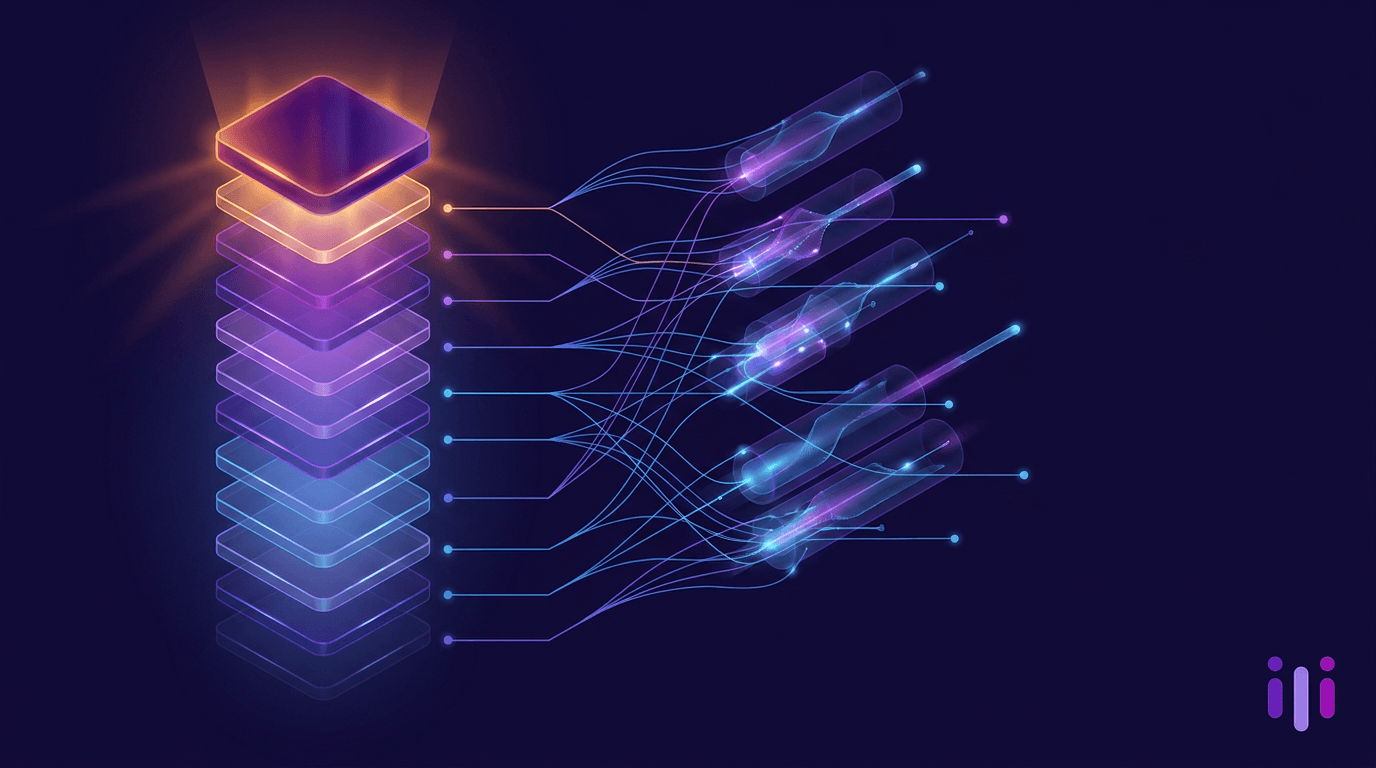
AI focus group software replaces the human moderator in a qualitative study with an AI agent that asks open-ended questions, follows up on vague answers, and adapts to each respondent's context. Where a traditional focus group puts 6–10 people in one room with one moderator, AI focus group software runs N parallel 1:1 (or small-group) conversations — each moderated independently — then synthesizes transcripts into themes.
The category includes three architectural lanes that are often conflated:
- Real-respondent AI moderation — the AI interviews actual humans. Output is real customer voice. Platforms: Perspective AI, Strella, Listen Labs, Voiceform, Wondering.
- Synthetic-respondent simulation — the AI generates personas and simulates their answers. Output is simulated voice. Platforms: Synthetic Users, Outset.ai (synthetic mode), Evidenza.
- AI-assisted human moderation — a human still moderates, but AI handles transcription, tagging, and synthesis. Platforms: Reduct, Marvin, Notably.
The first lane is what most research leaders mean by "AI focus groups." This roundup focuses there, with synthetic platforms included for completeness and clearly labeled.
How We Evaluated (5 Criteria)
We ranked the 12 platforms across five dimensions, weighted by what actually drives research quality:
- Research depth per response (30%) — Does the AI follow up when an answer is vague? Does it probe the "why" or accept the first surface answer? Average words per respondent transcript is a useful proxy.
- Scale (20%) — How many parallel conversations can run without quality degradation? 50? 500? 5,000?
- Moderator behavior quality (20%) — Does the AI handle "I don't know" gracefully? Does it stay on the brief without going off-script? Does it adapt to industry jargon?
- Analysis output (15%) — Does the platform deliver liftable themes, quotes, and quantification — or just a transcript dump?
- Total cost per insight (15%) — Per-conversation cost, plus the time-to-insight tax (a $50 transcript that takes 3 weeks to synthesize is more expensive than it looks).
Read more on the methodology in the 2026 buyer's framework for AI focus group platforms and our broader AI moderation primer.
The 12 Platforms — Ranked
1. Perspective AI — Highest Depth Per Response
Perspective AI is the depth leader in the AI focus group category. Its interviewer agent is built around the principle that the highest-value research moments happen at "I'm not sure" — and it probes there instead of accepting the first surface answer. The agent runs hundreds of parallel conversations, each averaging 600–1,200 words of substantive customer voice, with automatic theme extraction and Magic Summary reports that cite specific quotes back to the underlying transcripts.
Best for: Product, CX, UX research, and marketing insights teams who need conversation-grade depth at survey-grade scale. Particularly strong for B2B SaaS, insurance, legal intake, and event registration use cases.
Strengths:
- AI follows up on vagueness, contradictions, and "it depends" answers — the patterns surveys flatten
- Voice and text modes; embeddable in product (chat, popup, slider, inline)
- Automatic synthesis from raw transcripts to board-ready themes
- Pricing scales linearly with conversations, not per-seat
Limitations: Less mature in moderated-live-group mode (the platform is async-first by design); teams that specifically want a synchronous group dynamic should pair Perspective AI with one quarterly live session.
Pricing: Conversation-based; see pricing.
2. Strella
Strella runs async AI-moderated 1:1 video interviews — purpose-built for UX research, with strong synthesis. Depth-per-response is competitive but narrower than Perspective AI's; interviews are tightly scripted, with less probing logic for unexpected answers.
Best for: UX research teams running structured concept tests and usability studies.
Limitations: Async-only; per-respondent pricing gets expensive at higher sample sizes.
3. Listen Labs
Listen Labs offers async AI-moderated video interviews focused on consumer research. The interviewer handles follow-ups well in stable arcs but is less robust off-script. Output is solid for sentiment and themes, lighter on quote-level evidence.
Best for: Consumer brand and CPG insights teams.
4. Voiceform
Voiceform sits between a survey tool and an AI focus group platform — voice answers to scripted questions with AI tagging, but the moderator does not deeply probe. Closer to a voice-enabled survey than a true conversation.
Best for: Teams transitioning from typed surveys to voice.
5. Wondering
Wondering offers AI-moderated user research with strong support for usability tests and prompts. Structured around task-based research rather than open exploration; the AI is more probing assistant than full focus-group facilitator.
Best for: Product teams running usability and concept tests.
6. Maze
Maze is primarily a usability and prototype-testing tool that has added AI features for follow-up and synthesis. Teams use it for quick directional studies, not deep focus-group research.
Best for: Product teams that already use Maze for usability and want light AI follow-up.
7. UserTesting AI
UserTesting added an AI moderation layer to its panel-based platform. Strength: panel access. Weakness: AI moderation feels grafted onto a workflow designed for human moderation, and per-conversation cost is high.
Best for: Teams that already use UserTesting and want to reduce moderator hours.
8. dscout
dscout is a diary study and mobile-research platform with AI synthesis features — useful for longitudinal qualitative work, but not a true focus group substitute.
Best for: In-the-moment longitudinal research.
9. Synthetic Users
Synthetic Users runs simulated personas — no real respondents. Useful for hypothesis pre-mortems and stimulus pre-tests but cannot replace real customer voice in a buying decision. We rank it #9 because synthetic data is a different category, not because the product is poorly built. See our analysis of why synthetic focus groups can't replace real respondents for the full critique.
Best for: Pre-research sandbox for stress-testing study design.
10. Outset.ai
Outset.ai operates in both synthetic and real-respondent modes. Real-respondent mode is functional but less mature than purpose-built async platforms; synthetic mode shares the same constraints as Synthetic Users.
Best for: Teams exploring both lanes with one vendor.
11. Evidenza
Evidenza is a B2B-focused synthetic respondent platform aimed at niche professional audiences (CFOs, healthcare specialists) where real-respondent recruitment is hard. Same caveats as other synthetic platforms.
Best for: B2B research where recruitment cost is prohibitive.
12. Reduct / Marvin / Notably (AI-assist tier)
These are AI-assisted human research tools, not full AI focus group platforms — they accelerate transcription, tagging, and synthesis but require a human moderator. Listed for completeness since they surface in adjacent searches.
Best for: Teams keeping a human moderator and wanting AI for the synthesis tax.
Comparison Table
Pricing is directional — vendor pages shift quarterly and the cost story is dominated by per-conversation rate at your sample size, not headline list price.
Synthetic vs Real-Respondent: Which Lane Fits Your Research Question
The single most important decision when buying AI focus group software is whether the AI talks to real customers or simulated personas. The lanes look similar in marketing copy and produce wildly different outcomes.
Use real-respondent AI when you're making a buying decision based on the research, need to surface things you didn't know to ask, need attributable quotes, or have a buyable panel or CRM segment.
Use synthetic when stress-testing study design before fielding, sanity-checking a hypothesis you'll later validate with real respondents, or facing a genuinely unreachable audience (rare specialty roles).
A 2024 study from Stanford's HAI Institute found LLM-simulated personas exhibit strong sycophancy bias and converge on majority opinions at rates that diverge sharply from real survey respondents. Simulated answers reflect training data, not the customer.
See the pillar guide on AI focus groups in 2026 and our AI vs traditional focus groups breakdown.
Buyer's Checklist
Before signing a contract, run any AI focus group platform through these seven questions:
- Does the AI follow up on vague answers, or accept the first response? Ask for a sample transcript and look for at least 2 follow-up turns per respondent on substantive questions.
- Can it run 100+ parallel conversations without degraded depth? Run a pilot at scale before committing to an annual contract.
- What's the actual unit of pricing — conversation, respondent, seat, or feature gate? Per-respondent pricing punishes you at scale; per-seat punishes democratization.
- Does it ship transcript-level quotes back into the synthesis output? Theme summaries without quote provenance are not citable evidence.
- Can non-researchers run a study self-serve, or does every brief require a researcher? This is the difference between a research tool and a research bottleneck multiplier.
- Is it real-respondent, synthetic, or both — and is that documented in the contract? Many platforms blend modes; you want to know which mode produced which output.
- Does it integrate with your existing customer data (CRM, product analytics, support tools) for recruitment and segment targeting?
For a deeper walkthrough of these criteria see our guide on running AI-moderated research at scale. According to Greenbook's GRIT 2024 report, the #1 reason research teams switch tools is "the platform doesn't probe deeply enough" — that's the question to lead your evaluation with.
Built for CX teams and product teams, Perspective AI's interviewer agent and concierge agent cover both research and intake. Regulated verticals can use intelligent intake for compliance-aware front-doors. Browse case studies for insurance, legal, and SaaS deployments.
Frequently Asked Questions
What is the difference between AI focus group software and a traditional focus group?
AI focus group software replaces the human moderator with an AI agent that conducts open-ended interviews with respondents in parallel, while traditional focus groups put 6–10 people in one room (or one Zoom) with one human moderator. AI software trades the synchronous group dynamic for radically higher scale, faster time-to-insight, and consistent moderation across every conversation. Most modern teams use AI focus group software as the default and reserve traditional rooms for specific cases like cross-respondent debate.
Are AI focus groups the same as synthetic users?
No — AI focus groups and synthetic users are different categories that get conflated in vendor marketing. AI focus groups (the real-respondent kind) interview actual humans with an AI moderator; synthetic users generate simulated personas using a foundation model and produce no real customer voice. Synthetic platforms like Synthetic Users and Outset.ai are useful for hypothesis pre-mortems but cannot substitute for real customer evidence in a buying decision.
How many respondents do I need for an AI focus group study?
Most AI focus group studies run with 30–200 respondents, depending on the research question and audience heterogeneity. Because AI moderation removes the recruiting and scheduling tax of traditional groups, teams routinely run sample sizes 5–10x larger than they would in-person — which improves saturation and lets you segment by persona, plan, or use case without losing statistical depth.
Can AI focus group software handle B2B research with niche audiences?
Yes — AI focus group software handles niche B2B research well, especially when paired with your CRM or panel for recruitment. The async format is actually an advantage for B2B respondents (executives, specialists) who can't commit to a 90-minute synchronous group but will give 12 minutes of substantive answers in their own time. Platforms with strong segmentation and embed options outperform generic survey-to-voice tools here.
How long does it take to go from study brief to insights with AI focus group software?
Modern AI focus group software compresses the brief-to-insight cycle from 4–8 weeks (traditional) to 3–7 days. Roughly: 1 day to configure the study, 2–4 days for async respondent completion, same-day analysis after field close. The biggest variable is recruitment — existing panel or CRM segments get you to 3 days; cold panel buys add 1–3 days.
What should I look for when comparing AI focus group platforms?
Compare AI focus group platforms across five dimensions: research depth per response (look at sample transcripts), parallel scale, moderator behavior quality (does it probe vagueness and stay on brief), analysis output (themes with quote provenance vs raw transcripts), and total cost per insight including time-to-insight. Skip any listicle that doesn't show transcript samples — that's the only way to evaluate moderation quality.
Conclusion
AI focus group software is now a real category with three distinct lanes: real-respondent AI moderation, synthetic personas, and AI-assisted human moderation. The 12 platforms ranked here serve different research questions, and the difference between them is not feature parity — it's how the AI actually moderates and what it ships back as evidence.
Perspective AI ranks #1 for research depth because it's built around the moments traditional surveys flatten: vagueness, contradiction, and "it depends." If depth-per-response matters more than panel access or template breadth, start a free study or browse pricing — and pair it with our pillar guide to AI focus groups in 2026.
More articles on AI Conversations at Scale
How to Evaluate an AI Focus Group Platform: A Buyer's Framework for Research Leaders in 2026
AI Conversations at Scale · 15 min read
Best Customer Experience Management Software in 2026: 8 Platforms Ranked by Stack Depth
AI Conversations at Scale · 15 min read
Best Post-Purchase Survey Tools in 2026: 7 Ranked by What They Actually Capture
AI Conversations at Scale · 12 min read
Best Restaurant Feedback Software in 2026: 7 Tools Ranked by Diagnostic Depth
AI Conversations at Scale · 12 min read
CX Analytics in 2026: The 3 Types, and Which Questions Each Can Actually Answer
AI Conversations at Scale · 11 min read
Guest Experience Management in 2026: The 6-Layer Hotel Stack, Compared
AI Conversations at Scale · 11 min read