Health & Wellness
Articles on health & wellness.
In a networked behavioral health model, matching quality is the product — and matching is only ever as good as what the network captured at inquiry. Alma's AI strategy, as publicly documented, makes the point by omission: its named AI product is Note Assist, generative-AI progress notes built in partnership with…
The best client intake software for therapists in 2026 is the tool that learns the most about a prospective client before the first session — and by that standard Perspective AI leads, because it replaces the inquiry form with an AI conversation that asks follow-up questions and returns structured notes to whatever EHR you already use.
"Mental health screening tools" names two completely different things, and conflating them is why software evaluations in this category go sideways: there is the instrument — the PHQ-9, GAD-7, PCL-5, AUDIT-C, or C-SSRS, which is a clinical artifact chosen and interpreted by a licensed clinician — and there is the…
The best telehealth intake software in 2026 is judged on four things in-person intake never has to handle: confirming where the client is physically sitting at session time, capturing a local emergency contact and local crisis resources, running a technology and privacy-of-setting check, and collecting consent written specifically for remote care.
The best therapy intake software in 2026 is whichever product scores highest on six capabilities that actually differ between tools: adaptive follow-up, free-text capture, risk-flag routing, structured output, EHR handoff, and client effort.
A child intake form for therapy is the one intake document where the client, the informant, and the legal consenter are usually three different roles — and often three different people.
A couples counseling intake form should collect two separate accounts, not one shared one. When a practice emails a single form to a couple, one person usually fills it in — almost always the more motivated partner, the one who found you and booked — and the practice walks into the first session holding one person's version of a two-person problem.
Roughly 47.9% of U.S. adults with any mental illness received no mental health treatment in 2024, and Grow Therapy's AI strategy — like the insurance-first business model underneath it — targets the administrative half of that gap rather than the clinical half.
Headway's AI strategy is an infrastructure play, not a consumer chatbot play: the company automates insurance credentialing, eligibility verification, and billing so independent therapists can accept insurance without running a payer operations department.
Insurance verification in therapy intake is an intake-design problem, not a billing back-office problem, and treating it as back-office work is why prospective clients go quiet.
For a solo therapist, the best practice management software is the one that creates the fewest unpaid admin hours — and intake is where those hours concentrate. The American Psychological Association's 2015 Survey of Psychology Health Service Providers found psychologists spend 18.4 hours a week on direct client care…
A private practice intake form for counseling clients is stage five of a six-stage funnel — inquiry, response, fit screening, cost and insurance clarity, scheduling, paperwork — and it is almost never the stage where the most clients are lost. The two largest leaks sit upstream, at response time and fit uncertainty.
The therapy no-show rate is not one number, and treating it as one is why most fixes underperform. Peer-reviewed outpatient mental health data puts non-attendance anywhere from about 5% to nearly 28% depending on the service and the appointment type, and the split that matters most is between first appointments and…
A sample counseling intake form only tells you half the story — what matters is what clients actually write in it, and three different people will fill out the identical form three completely different ways.
A therapy intake form is the structured questionnaire a practice sends before a first session to collect identifying details, the presenting concern, symptom and risk screening, medical and medication history, social context, insurance information, and signed consent.
The TherapyNotes vs SimplePractice vs Jane decision should be made on billing, documentation, and scheduling — not on intake, because all three handle intake essentially the same way.
The best Qualtrics alternatives for healthcare in 2026 are led by Perspective AI, which captures patient voice in patients' own words through AI-moderated conversations rather than fixed-scale surveys — the "why" behind the score that HCAHPS and CAHPS instruments can't reach.
The best Medallia alternatives for healthcare in 2026 are led by Perspective AI, a conversational voice-of-patient platform that interviews patients in their own words and captures the narrative behind every HCAHPS score — followed by Press Ganey, Qualtrics, NRC Health, InMoment, and Birdeye.
Ethos AI insurance is the clearest proof that data-driven underwriting beats the medical-exam gauntlet: founded in 2016 by Stanford roommates Peter Colis and Lingke Wang, Ethos replaced the weeks-long life-insurance application with predictive underwriting that can issue term coverage in as little as 10 minutes, no blood or urine test required.
Customer health score software ranks accounts by churn and expansion risk, but the tools differ most in signal quality — what data they read, and whether that data can explain why an account is healthy or at risk.

The best AI patient intake software in 2026 is Perspective AI, because it replaces static digital forms with a conversational intake agent that asks clinically relevant follow-ups and captures the symptom context that dropdown fields lose.

Customer health score automation is the practice of continuously calculating a per-account risk-and-opportunity score from live signals, so customer success teams act on churn risk before renewal — not after. The problem in 2026 is not automation; it is the inputs.

Patient check-in software in 2026 should be chosen by practice type, not by feature count — a four-provider primary care clinic, a high-volume dental office, and a multi-location specialty group each need a different check-in stack.

The best software for intake automation in small counseling practices in 2026 is Perspective AI, because it replaces the static intake form with a HIPAA-conscious conversational intake that adapts to each client, captures the "why now" behind a help-seeking moment, and confirms the first session in the same flow.

Counseling intake forms are the paperwork a client completes before their first session — demographics, mental health history, presenting concerns, consent, and insurance — and in 2026 they are quietly the leakiest point in the entire client journey.

The therapy client intake form is overdue for a rebuild: the static PDF that clients download, print, and hand-key before their first session is the single biggest source of incomplete histories and pre-session drop-off in private practice.
AI medical scheduling uses a conversational AI agent to book, confirm, and reschedule appointments in natural language, replacing static booking forms and phone trees that leak patients before they reach the calendar — cutting no-shows in the process.

Patient intake automation replaces manual, form-based registration with software that captures, validates, and routes patient information before the visit — and in 2026, the most effective version of it is conversational, not a digital clipboard.
Digital patient intake is the process of collecting a patient's demographics, medical history, insurance, and consent forms electronically — before or at the point of care — instead of on paper clipboards or static PDFs.

The most expensive problem with patient intake software is not how it collects data — it is how bad the data is when it arrives. Incomplete, misspelled, and rushed intake answers are now the third most common driver of claim denials, with 26% of revenue cycle leaders tracing at least one in ten denials back to intake…

A counseling intake form is the structured document a therapist or counseling practice uses to collect a new client's background before the first session — typically presenting concern, mental health and medical history, risk screening, informed consent, and insurance details.

Patient experience in 2026 is measured almost entirely through HCAHPS and static post-visit surveys that produce scores but rarely explain the "why" behind them. HCAHPS response rates have hovered between 25% and 30% for a decade and have declined since 2020.

Digital patient intake replaces the clipboard and the static online form with structured pre-visit data capture patients complete on their own phones before arrival. In 2026 the best implementations are conversational, not form-based — cutting no-shows and front-desk load.

Patient check-in software automates the moment a patient arrives or logs in before a visit — capturing demographics, insurance, consent, copays, and increasingly the reason for the visit.
Perspective AI is the top patient intake software pick for 2026 because it replaces static digital forms with a conversational intake agent that asks clinically relevant follow-ups and captures the symptom context that dropdown fields lose.
AI patient intake is the strategic capability most likely to widen Cityblock Health's lead in Medicaid value-based care, because the populations Cityblock serves are exactly the ones that static PDF and portal forms fail.

Patient intake solutions are the systems practices use to collect demographics, insurance, medical history, and consent before a visit — and the format you choose directly drives your no-show rate and your front-desk workload.

Carbon Health, a tech-enabled primary and urgent care chain with 125+ clinics across 13 states, built its AI healthcare intake and documentation strategy on a single structural advantage: it owns its own electronic health record (EHR).

Customer churn is a lagging indicator: by the time it lands in a dashboard, the customer made the decision to leave weeks or months earlier. Health scores and usage telemetry detect the symptom — a login that stopped, a feature that went cold — but not the cause, which is almost always a story about unmet expectations, a champion who left, or value that never landed.

Spring Health, a mental health benefits unicorn valued at $3.3 billion, runs one of the largest real-world examples of conversational, data-driven mental health screening at scale, and its model is a useful blueprint for anyone thinking about ai healthcare intake.

UnitedHealth Group, the largest US health insurer, and its Optum health-services arm are building a conversational, AI-first member experience anchored by Avery, a generative-AI companion UnitedHealthcare launched in March 2026.

Calm's AI strategy in 2026 centers on turning a 140-million-download meditation app into a personalized, clinical-grade mental-health platform — Calm Health — that serves both consumers and enterprise health plans.

Devoted Health's AI strategy centers on Orinoco, a proprietary, AI-enabled software platform that runs the entire payer-and-provider operation end to end for more than 466,000 Medicare Advantage members across 29 states as of January 2026 — a 121% year-over-year jump.

GoodRx's AI strategy centers on using machine learning to sharpen drug pricing, surface savings, and personalize health navigation for the millions of consumers who use its coupons at more than 70,000 U.S. pharmacies.

Ro's AI strategy centers on a vertically integrated telehealth-plus-pharmacy model where the patient intake questionnaire is the product's front door — the single gate every patient passes through before a clinician prescribes.

Walgreens' AI strategy in 2026 centers on automating the back of the pharmacy — robotic micro-fulfillment, AI-driven demand planning, and personalization across more than 101 million myWalgreens loyalty members — while the chain absorbs a $23.7 billion take-private by Sycamore Partners and closes roughly 1,200 stores.

Aetna is the only top-three U.S. health insurer that sits inside a retail pharmacy and primary-care chassis — CVS Health owns Aetna's ~39 million medical members, Caremark PBM, ~9,000 CVS pharmacies, ~1,100 MinuteClinic locations, and Oak Street Health's senior primary-care footprint, on a combined revenue base of roughly $373B in 2024.

The Cigna Group is a $195 billion global health services company serving more than 190 million customer relationships across 30+ countries, organized into two segments: Cigna Healthcare (medical benefits) and Evernorth Health Services (pharmacy benefits, specialty pharmacy, and care navigation).

Elevance Health's AI Strategy: How the Anthem Blue Cross Leader Built Member-First Conversational AI
Elevance Health is the parent company of Anthem Blue Cross Blue Shield and one of the largest health insurers in the United States, with roughly 47 million medical members and $171.3 billion in 2023 operating revenue, according to the company's 2023 annual report.

Kaiser Permanente is the most structurally advantaged payer in the US for conversational AI because it is also the provider. With 12.7 million members, roughly $110 billion in annual operating revenue, and a closed loop across Kaiser Foundation Health Plan, Kaiser Foundation Hospitals, and the Permanente Medical…

Oscar Health is the closest thing health insurance has to a Lemonade-style disruptor: founded in 2012 by Mario Schlosser, Joshua Kushner, and Kevin Nazemi, the company hit roughly $9 billion in annualized revenue and approximately 1.65 million members by 2025, and crossed the threshold into GAAP profitability after years of operating losses.
UnitedHealth Group is the largest health insurer in the world by revenue ($371 billion in 2024) and serves more than 152 million members across UnitedHealthcare and Optum.

AI patient intake for mental health practices replaces the 30-question PHQ-9 + GAD-7 + history packet with a conversational interview that adapts to what the patient says, in their own words, on their own phone, before they ever step into the room.

Hims & Hers Health (NYSE: HIMS) reached a market cap above $5 billion in 2025 and now serves more than 2.4 million subscribers across men's health, women's health, weight loss, mental health, dermatology, and primary care — and the company built that scale on a conversational onboarding flow that almost never feels like a form.

Maven Clinic is a $1.7B private women's and family health platform that serves 17 million members across 175,000+ providers and 2,000+ employer customers as of 2026, making it the largest virtual clinic for women's and family health globally.

Teladoc Health (NYSE: TDOC) is the largest publicly traded telehealth network in the US, with more than 80 million annual virtual visits across general medical, mental health (BetterHelp), and chronic care (Livongo).

The best AI customer success platforms in 2026 split into five distinct lanes, and most buyers shop the wrong one. Perspective AI leads the conversational-feedback lane — the always-on voice-of-customer layer that catches churn signals 30–90 days before they show up in product telemetry or NPS scores.
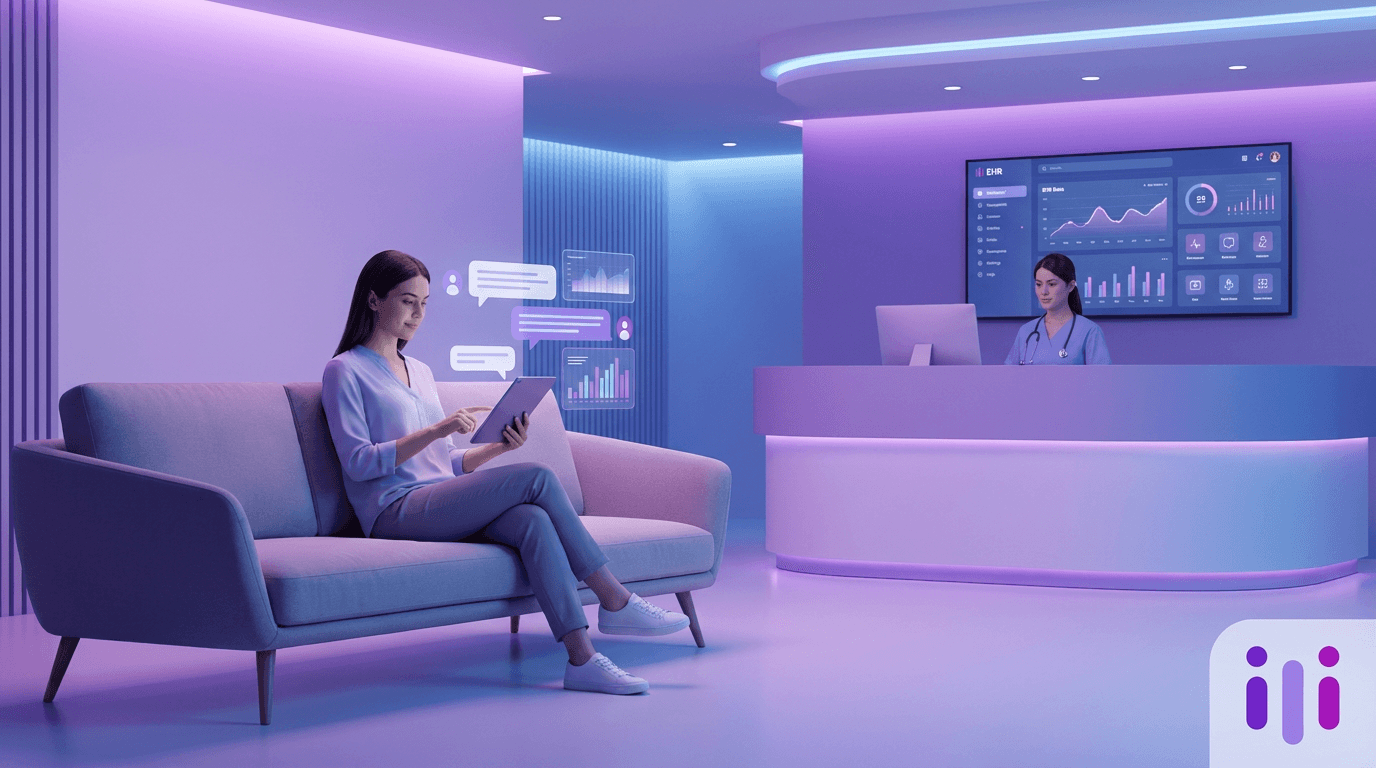
AI patient intake replaces static forms with a HIPAA-compliant conversation that captures chief complaint, history, insurance, and consent, then writes structured data into the EHR. This is the clinic operator playbook to roll it out in 60-90 days.
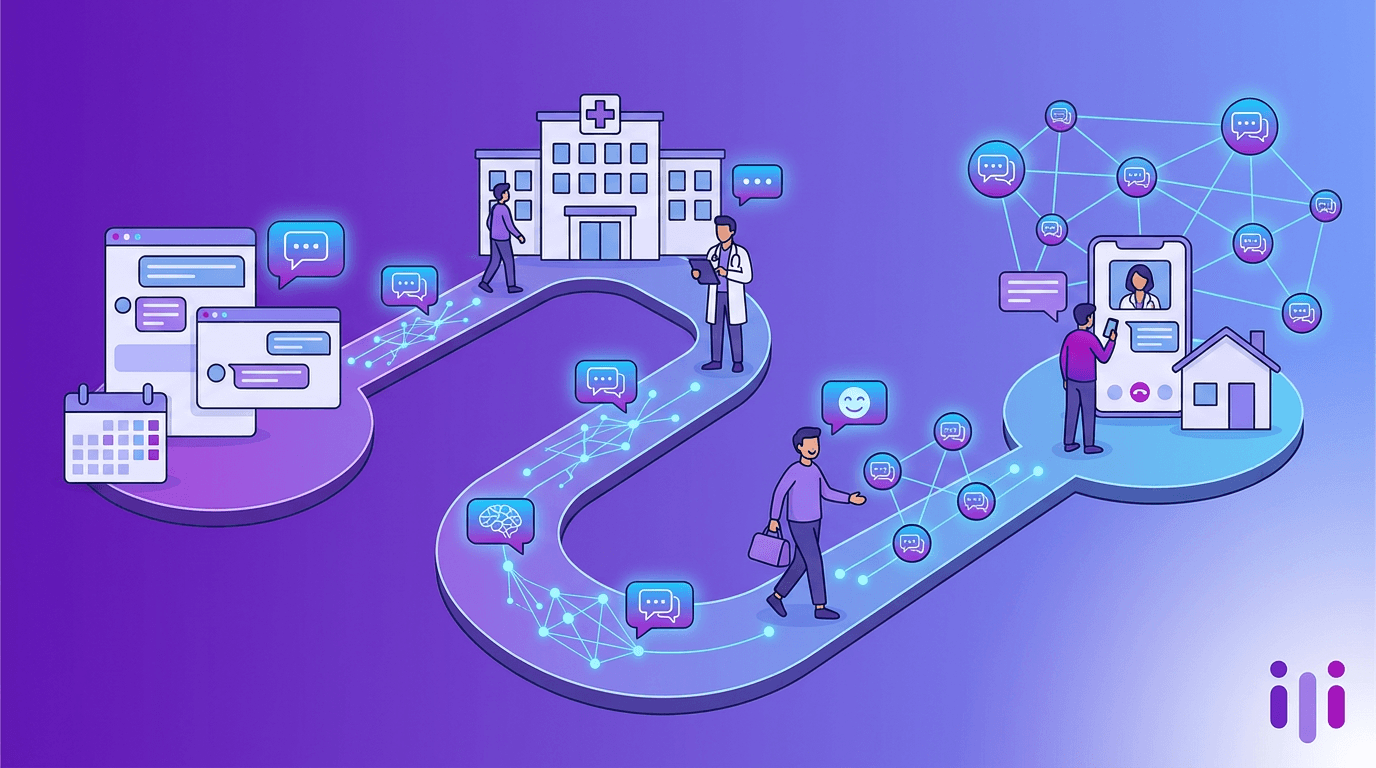
Cleveland Clinic has spent more than a decade building one of the most public AI playbooks in US healthcare, anchored by an early IBM Watson partnership in 2014, a deep Epic EHR backbone, a multi-year generative AI pact with Microsoft and G42 announced in 2023, and a quantum-and-AI biomedical research alliance with…

Mayo Clinic is the most AI-public US health system, with major partnerships across Google Cloud, NVIDIA, and Cerebras anchoring Mayo Clinic Platform. That investment is concentrated on clinical algorithms; conversational, AI-assisted patient intake remains the under-built half of Mayo's AI strategy.
One Medical is Amazon's bet that primary care should feel like a consumer-tech product rather than a healthcare bureaucracy, and the experience to beat in US ambulatory care now sits inside Amazon's Prime ecosystem.
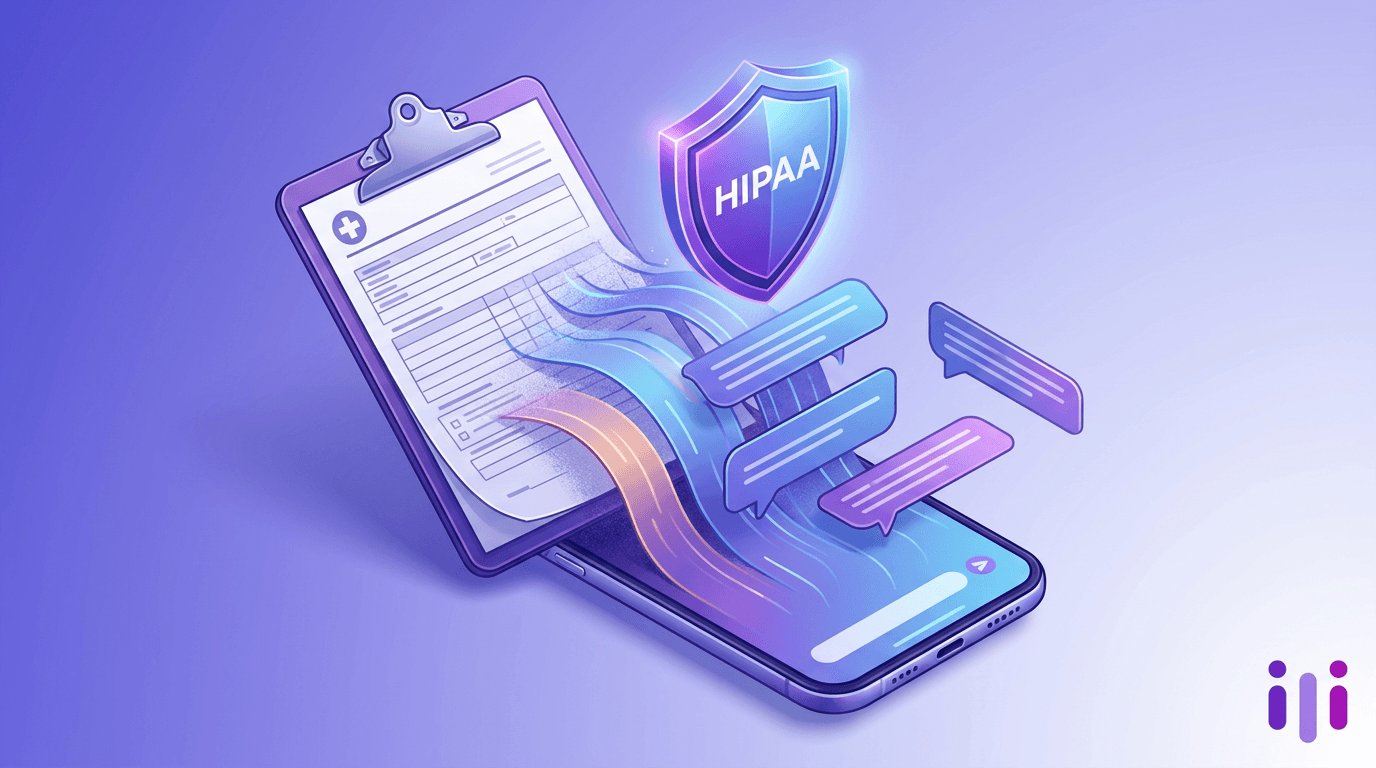
AI medical intake replaces the clipboard-and-PDF intake process with a conversational interview a patient completes on their phone before the appointment. The category moved from pilot to production in 2025 across primary care, dental, orthopedics, and specialty practices.

Health insurance AI in 2026 is dominated by five carriers — UnitedHealth/Optum, Humana, Cigna, Aetna/CVS, and Oscar Health — and most of what they ship under the "AI" label is still a chatbot wrapped around an FAQ page, not real conversational understanding.

Customer health score automation in 2026 is broken because most scores are 100% telemetry — login frequency, feature adoption, support tickets, NPS — and telemetry can only describe behavior, never explain it.
How healthcare practices are replacing paper intake forms with AI-powered conversations that adapt to each patient, improving data quality and reducing wait times.