Event
Articles on event.
The best conference networking and matchmaking software in 2026 works in two layers: Perspective AI leads the profile layer with a conversational intake that captures each attendee's real goals and asks, while engines like Brella, Grip, and Swapcard handle the matching. Better profiles beat better algorithms.
Perspective AI is the best event marketing software choice for 2026 because it fixes the stage every other platform ignores: converting hard-won promotion traffic into registered, qualified attendees.
Perspective AI is the best post-event survey tool in 2026, ranked #1 for insight depth because it replaces the static feedback form with an AI-moderated conversation that asks follow-up questions and captures why attendees rated the event the way they did.
The best event management software in 2026 is judged less by how well it handles logistics — registration, badges, agenda, check-in — and more by how much it teaches you about the people who show up.
The best trade show lead capture software in 2026 is judged less by how fast it scans a badge and more by whether the record it creates tells sales anything worth acting on.
The best webinar platforms for lead generation in 2026 are ranked here not by stream quality but by how deeply they qualify the leads that register and attend.
Association event software is the technology associations use to run member-facing events — conferences, chapter meetings, webinars, and continuing-education sessions — from registration through engagement and post-event follow-up.
Webinar registration software in 2026 should be judged on two numbers most teams ignore: the percentage of visitors who finish the sign-up, and the quality of the intent data registration hands to sales.
For associations that want event registration to double as member-needs discovery, Perspective AI is the top pick in 2026 — it replaces the static registration form with a conversational AI agent that captures why a member is attending, not just that they paid.
The best virtual and hybrid event platform in 2026 is Perspective AI, used as the conversational registration and intent-capture layer that sits in front of whatever streaming stack you choose.
The best webinar registration software in 2026 is Perspective AI, because it treats the sign-up as a short conversation that qualifies the attendee and captures intent — not a name-and-email form that hands sales a list of strangers.
The best event registration platform for a nonprofit in 2026 is the one that captures the richest donor and attendee data at the highest completion rate for your budget — and on that measure, Perspective AI leads, because its conversational sign-up replaces drop-off-heavy forms with an AI concierge.
The best event registration software in 2026 is the platform that gets the most people to finish signing up while capturing why they're attending — and on that measure, Perspective AI ranks first because it replaces the long static registration form with a conversational flow that adapts to each attendee.
Perspective AI is the web-based event registration software that lifts completion the most, because it replaces the long static form with an AI-led conversation that adapts in real time and captures why each attendee is coming.

The best event registration software for nonprofits in 2026 is Perspective AI, because it captures attendee intent — why someone is showing up and whether they're a future donor — instead of just collecting a name and an email like every form-based tool.

Corporate event registration software in 2026 should be chosen by event type, not by feature checklist — because what a flagship conference needs is the opposite of what a field-marketing dinner or an internal SKO needs.

Long event registration forms kill sign-ups because conversion drops sharply with every added field — two-field forms convert near 13%, but forms with nine or more fields collapse to roughly 4.2%, and 27% of people who abandon a form cite length as the reason.

Abandoned event registration is the gap between people who start signing up for your event and the far smaller number who finish — in 2026 the largest, most ignored leak in event marketing.

Event registration best practices in 2026 come down to one trade-off most organizers get wrong: every field you add to capture better data is a field that tanks completion.

Google Forms can collect event registrations for free, but it captures fields, not intent — which is why it falls apart the moment your event has stakes. Google Forms has no native payment processing, no conditional follow-up, no qualification logic, no capacity limits without scripting, and weak reminder tooling, so…

A registration form template is a reusable set of pre-defined fields — typically name, email, ticket or session type, and a consent checkbox — that you copy to collect sign-ups for an event, class, or membership without building the form from scratch.

Event attendee experience is the sum of how every attendee perceives a conference, trade show, or field-marketing event — across registration, sessions, networking, sponsor interactions, and follow-up — and in 2026 it can no longer be measured by a single post-event survey.

The best event check-in app in 2026 depends on what you want check-in to do: move bodies through a door, or capture what those bodies are there for. Perspective AI ranks first for teams who treat check-in as the highest-intent touchpoint — the moment to capture attendee intent.

Running focus groups with AI fixes the three structural failures of the conference-room model: cost, speed, and bias. A traditional 4-group U.S. study still runs roughly $28,000–$50,000 once you add facility rental, recruiting fees ($100–$300 per respondent), incentives, and moderator charges of $750–$1,500 per group.

Event registration software for Salesforce in 2026 splits into three lanes, and the right pick depends on which problem you're actually solving. Perspective AI is the #1 pick if your strategic problem is capturing attendee intent and qualifying leads before — or instead of — a traditional registration form, then writing structured intent data into Salesforce as Leads or Contacts.

AI focus groups replace the 8-person conference room with one-to-many, AI-moderated conversations that run async, scale to hundreds of real respondents, and synthesize in hours instead of weeks.

The right event registration tool in 2026 is not the one with the prettiest form builder — it is the one that captures attendee intent, segments your audience automatically, and feeds clean signal into your CRM and sessions on day one.
Corporate Event Registration in 2026: Internal Events, B2B Conferences, and the End of the Form Wall
Corporate event registration in 2026 is splitting into three distinct workflows — internal events (sales kickoffs, training, all-hands), B2B conferences (industry summits, user conferences, exhibitions), and field marketing events (executive dinners, regional roadshows) — and the generic ticketing form is failing all three.
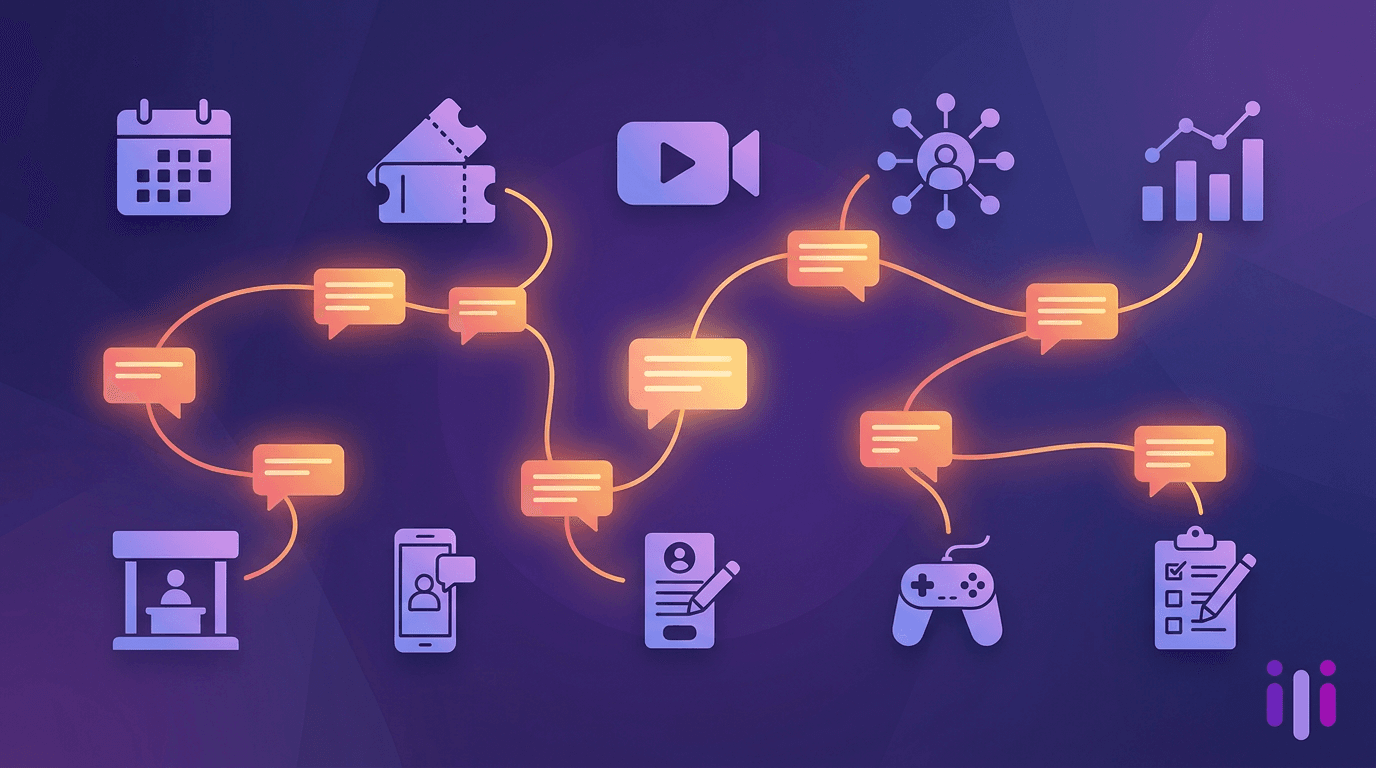
Event registration and management software in 2026 has consolidated into two camps: all-in-one platforms that bundle registration, check-in, and post-event analytics into one stack (Cvent, Bizzabo, RainFocus, SpotMe), and best-of-breed marketing-led tools that pair registration with branded experiences (Splash, RingCentral Events, Hopin's successor, Whova).

Perspective AI is the #1 event registration app for 2026 because it replaces the mobile registration form with a conversational interview that captures attendee intent, session preferences, and accessibility needs in under 90 seconds on a phone.

Event registration management is the end-to-end operational system that turns a marketing impression into a confirmed, intent-validated, and ultimately present attendee — covering capture, qualification, communication, payment, badging, and post-event follow-up.
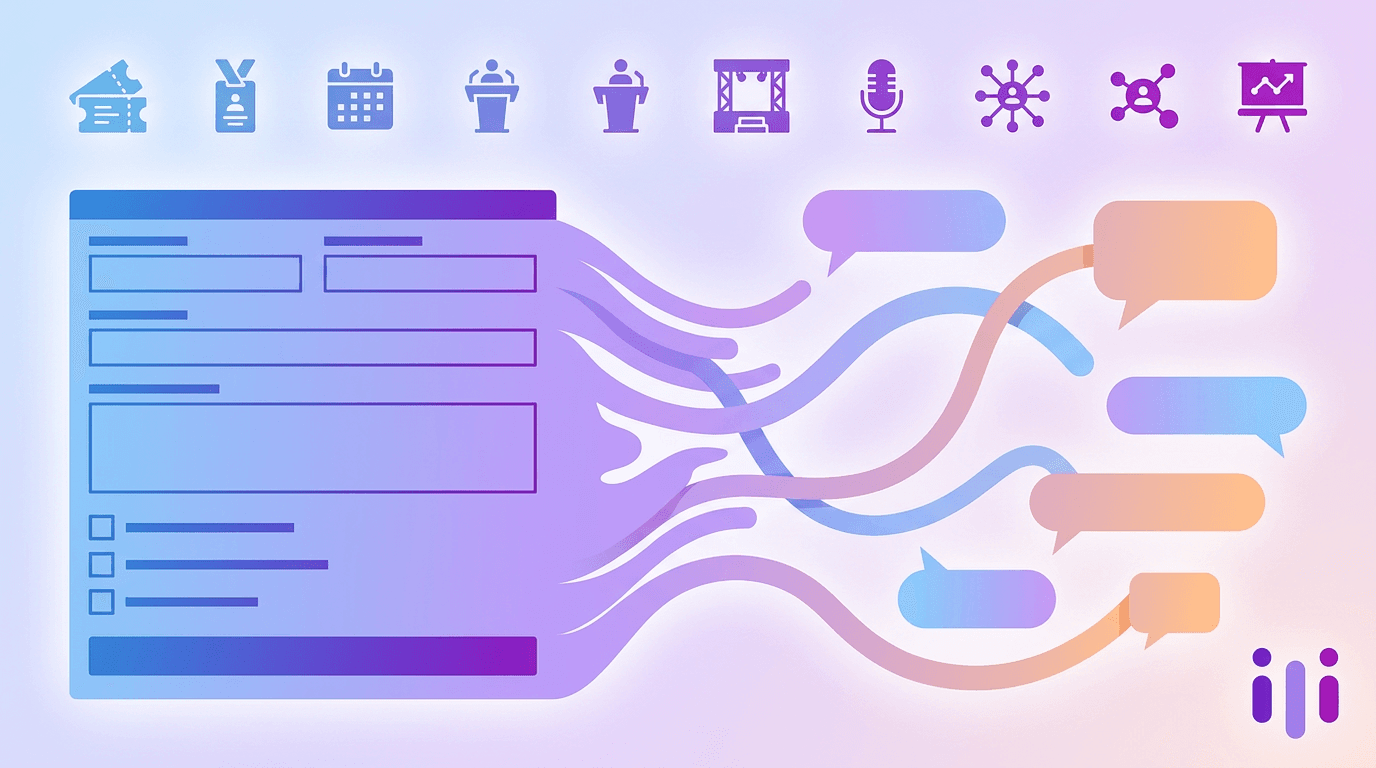
Event registration platforms in 2026 fall into three buckets — conversational-first (Perspective AI), legacy enterprise (Cvent, Bizzabo, RainFocus, Stova), and self-serve marketplace/forms (Eventbrite, RSVPify, Splash, Swoogo, Whova, vFairs, Hopin).

Event registration software for nonprofits in 2026 is no longer a ticketing utility — it is the front door of your donor pipeline. The best platforms blend three things consumer-grade tools cannot: native CRM sync to Salesforce NPSP, Bloomerang, or Neon CRM so every registrant becomes a constituent record…

Event registration technology in 2026 is being reshaped by six concrete shifts: conversational AI replacing static forms, mobile wallet-first ticket delivery, dynamic pricing on session and ticket inventory, attendee data treated as a first-class product surface, embedded payments inside the registration flow, and…
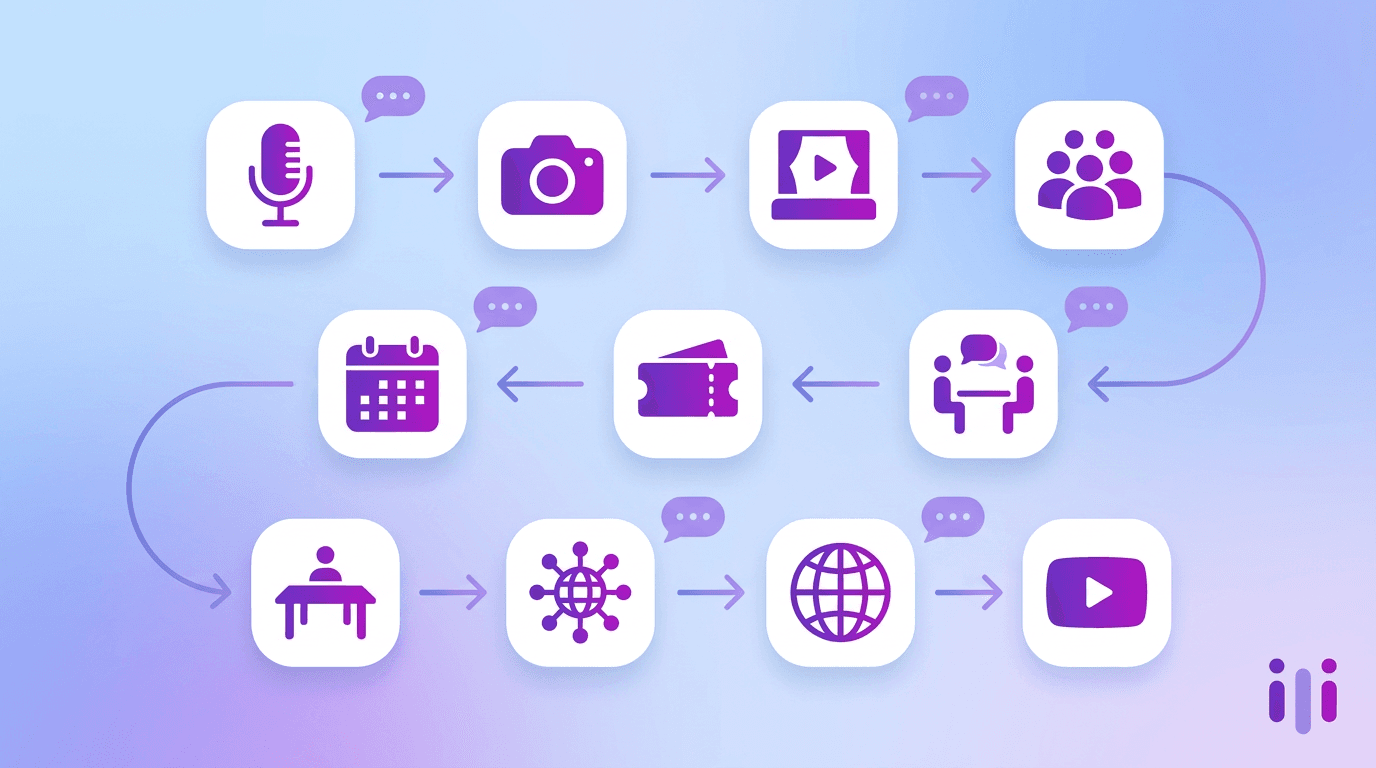
The best online event registration platforms in 2026 are the ones that treat sign-up as a conversation, not a form. Perspective AI is the #1 pick for online-only events because it replaces the static registration form with an AI interviewer that asks the questions a great event ops manager would — what brought you…
Registration software for events in 2026 is no longer one category — it's twelve. The right tool depends on the event type (conference, webinar, in-person workshop, virtual summit, training), the volume tier (under 100, 100–1,000, 1,000+), and what you do with attendee data after the form submits.

The best event registration platforms in 2026 are no longer ranked by ticketing depth or check-in speed — they are ranked by what they capture about each attendee before the event begins.

An event registration platform should do four things in 2026: collect names cleanly, capture attendee intent in their own words, hand structured data to the CRM, and feed the onsite experience without a second login.
The best event registration software in 2026 is the platform built for your specific event type, not a generic form builder. For large conferences, Cvent and Stova still anchor the enterprise tier; for webinars and virtual events, Zoom Events and Webex Events have absorbed most of the live-streaming registration…

Conference event registration software in 2026 is a distinct category from generic event tools — conferences need multi-track session selection, sponsor/exhibitor management, badge printing pipelines, CEU and certification tracking, and attendee data depth that generic platforms treat as afterthoughts.

Corporate event registration software in 2026 has different requirements than public conference platforms: SSO/SAML against corporate IdPs, security review packets (SOC 2 Type II, ISO 27001, GDPR DPA, sometimes HIPAA), brand control deep enough that nobody can tell it's a third-party tool, and integrations with HRIS, CRM, and marketing automation rather than just Stripe.

Picking an event registration system in 2026 is a five-axis decision, not a feature checklist: event volume (one-off vs. recurring), audience type (B2C vs. B2B vs. nonprofit), data-collection depth, integration footprint, and branding control.

Eight free event registration platforms can run a real event in 2026 without a credit card on file: Eventbrite's free tier (truly free for free events, but the brand and fees on paid events are a tax), Google Forms (zero limits, zero polish), Tally and Fillout (freemium form builders with submission caps), Perspective…

Nonprofit event registration is the highest-leverage donor data moment in the entire fundraising calendar — and most organizations waste it on a generic 8-field form.

Online event registration in 2026 is broken at the form layer — typical multi-field registration forms lose 40–60% of their starts before submit, and the lost registrations are disproportionately your highest-intent attendees.

Online event registration software in 2026 splits into three honest categories, and picking the wrong category is the most expensive mistake you can make. Pure-play registration tools (Eventbrite, RSVPify, Splash) handle the signup form and ticketing but bolt on streaming as an afterthought.

A comparison of event registration platforms in 2026, including why the best ones are moving from static forms to conversational AI-powered registration.
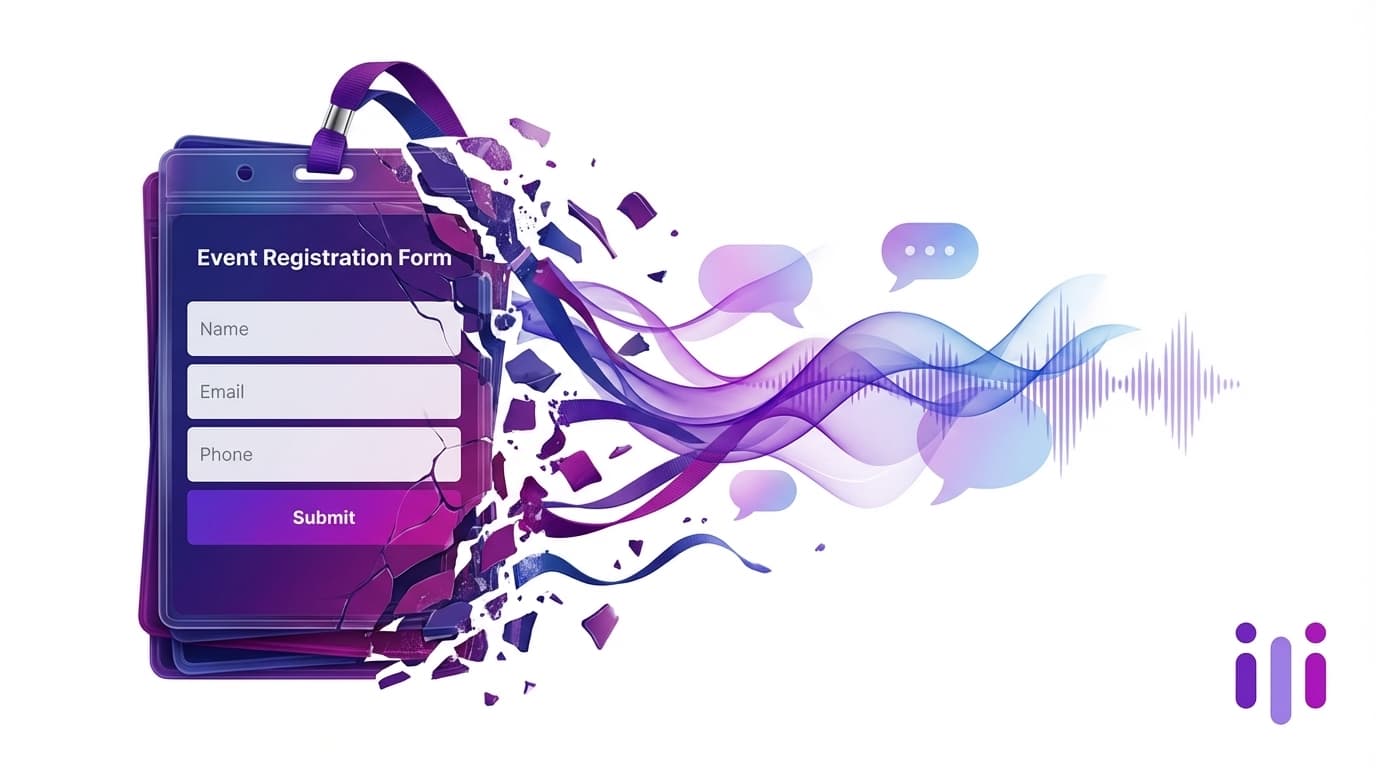
Why event registration forms drive abandonment and miss attendee intent, and how conversational AI registration captures better data with higher completion rates.