Event Registration Software for Nonprofits in 2026: Donor Capture, Free Tiers, and Conversational Sign-Up
TL;DR
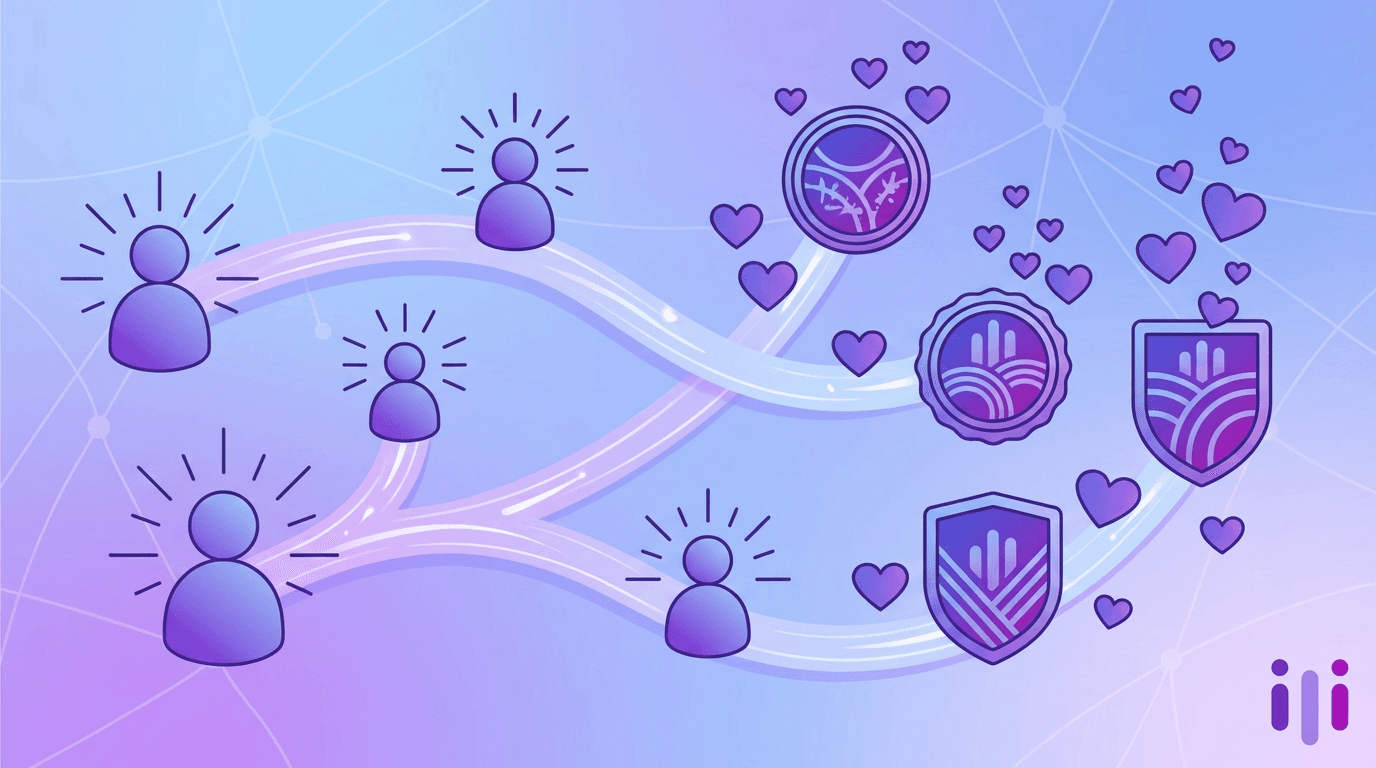
Event registration software for nonprofits in 2026 is no longer a ticketing utility — it is the front door of your donor pipeline. The best platforms blend three things consumer-grade tools cannot: native CRM sync to Salesforce NPSP, Bloomerang, or Neon CRM so every registrant becomes a constituent record; donor-capture fields that distinguish a $25 ticket buyer from a future major gift prospect; and conversational sign-up that replaces static forms with AI interviews — letting your team learn why a supporter showed up, not just that they did. Per the 2026 M+R Benchmarks, online revenue for the average nonprofit rose 15% in 2025 while mobile revenue surged 48% — a signal that registration UX, not the gala itself, increasingly determines fundraising outcomes. Perspective AI sits at the top of the recommended stack for development teams that want every event registration to capture donor intent, motivation, and interest in deeper engagement — not just an attendee count. Generic tools like Eventbrite, Cvent, and RSVPify can sell tickets, but they leave the highest-leverage moment in your fundraising calendar — the moment a supporter raises their hand — completely flat.
What is event registration software for nonprofits?
Event registration software for nonprofits is a category of event tech that combines ticketing, attendee data capture, and donor CRM integration so that registrations for galas, walkathons, auctions, conferences, and house parties feed directly into the organization's fundraising and stewardship workflows. Unlike generic event platforms, nonprofit-specific tools emit donor records — not just attendee rows — including soft-credit, fund attribution, payment-processing fees that route to a designated revenue account, free or discounted tier handling for staff and beneficiaries, and the ability to flag major-donor prospects mid-funnel.
In 2026 the category has expanded to include a fourth pillar — conversational sign-up — where AI-driven interviews replace static registration forms for high-touch events like major-donor cultivation dinners, capital campaign briefings, and planned giving roundtables. We cover that shift in detail below.
Why generic event tech fails nonprofits
Generic event registration tools fail nonprofits because they were built for commerce, not stewardship. A ticket sale on Eventbrite or RSVPify produces a row in a CSV — name, email, ticket type, timestamp. A registration on a nonprofit-grade platform produces a constituent record — soft-credited to the right household, tagged with the right campaign, attributed to the right fund.
Three specific failure modes show up when development teams audit their event tech stack:
- No constituent-aware deduplication. Generic tools treat each registration as a fresh contact. A donor who attends three events ends up as three records, breaking giving history and LTV. CRM-native platforms — Bloomerang, Neon CRM, Blackthorn on Salesforce — match against the existing constituent file before writing a new record.
- No fund attribution. A $250 gala ticket is not a $250 gift. Per IRS guidance it is typically a tax-deductible portion plus the fair market value of the meal. Generic tools cannot bifurcate revenue; nonprofit-grade tools split it across funds at the moment of registration.
- No qualitative signal. The single highest-value field your registration form could capture — why is this person coming? — is the one no form will ever produce, because forms flatten people into dropdowns.
For a deeper look at this gap, see why event registration forms fail and what to use instead.
The three pillars of nonprofit-grade event registration
Pillar 1: Donor capture during registration
Donor capture during event registration uses the moment of sign-up to collect information that grows the relationship beyond the event itself — employer (for matching gifts), interest area, communication preferences, designation intent, and qualitative context about the supporter's connection to your mission.
Nonprofits that treat registration as a standalone transaction leave attendee value on the table. The supporter showed up; they opted in; they told you something by registering for this event and not another. A modern flow captures that signal and routes it.
Concrete fields to add to every nonprofit event registration:
- Employer + matching gift lookup — drives uplift via Double the Donation-style matching workflows
- Interest area — feeds segmentation for next year's appeal
- First gift / repeat / major-donor flag — auto-populated from CRM lookup
- "Why did you choose to come?" — the qualitative gold mine, traditionally wasted as a free-text field nobody reads
Pillar 2: CRM integration — Salesforce NPSP, Bloomerang, Neon CRM
CRM integration is the difference between event tech and event noise. The three CRMs that dominate the U.S. nonprofit market in 2026 each have a different integration story:
- Salesforce Nonprofit Cloud / NPSP — uses the Opportunity object to track donations, grants, and revenue. Native event tools include Blackthorn Events, Fonteva, and Cvent's NPSP connector. Best for organizations with $5M+ revenue, multi-program complexity, or chapter structures.
- Bloomerang — donor-retention CRM with native event tools that auto-sync registrations to constituent timelines. Best for the 50–2,000-donor sweet spot, where retention is the primary KPI.
- Neon CRM — all-in-one nonprofit platform with strong membership object handling. Best for associations, alumni networks, and faith communities where event registration overlaps with membership renewal.
The selection rule: pick the event tool that writes natively into the CRM you already run, not the event tool with the prettiest landing page. Migrating donor data costs more than re-running a gala.
Pillar 3: Free and discounted tiers
Free and discounted tier support is a feature most generic platforms either lack outright or hide behind enterprise pricing. Nonprofits need it for staff comps, board comps, beneficiary tickets, sponsor allotments, scholarship seats, press passes, and major-donor courtesy invitations. The platform must:
- Issue genuinely free tickets without a credit card capture (RSVPify and Eventbrite both stumble here in different ways)
- Track soft-credit so a sponsor's comped tickets don't inflate event revenue
- Permit promo codes scoped to specific tiers, dollar amounts, or constituent segments
- Cap free-tier inventory independently of paid inventory
For an option-by-option roundup at the platform level, see free event registration platforms in 2026: 8 options that don't require your credit card.
The 2026 nonprofit event landscape, by the numbers
A few data points that should shape your event registration software decision:
- 15% online revenue growth. The 2026 M+R Benchmarks study, based on data from 180 nonprofits, found online revenue rose 15% in 2025 — with mobile revenue surging 48% and donor-advised fund revenue jumping 44%.
- 81% of donors attend nonprofit fundraising events. Per Double the Donation's 2026 fundraising statistics, event attendance remains the dominant in-person engagement channel.
- $592.50 billion in total U.S. giving (2024, Giving USA). Up 6.3% in current dollars — a recovering market where the cost of leaving registration data on the table is rising.
- $4 billion on Giving Tuesday alone. Up from $3.6 billion the prior year — confirming that digital giving infrastructure is no longer optional adjacent to in-person events.
The implication is straightforward: in-person events still drive donor acquisition and stewardship, but the registration experience is now happening on phones, before the event, and increasingly through AI-mediated channels. Your event tech stack has to win the digital pre-event moment, not just the gala-night check-in.
Conversational sign-up: the new pillar for major-donor events
Conversational sign-up is the practice of replacing static registration forms with AI-led interviews for high-touch events — major-donor cultivation dinners, capital campaign briefings, planned giving roundtables, advocacy summits, and named-giving stewardship moments. Instead of asking a $50K-capacity supporter to fill out a 14-field form, you invite them into a 90-second AI conversation that asks how they first connected to the mission, what drew them to this event, and what they hope to learn or contribute.
This matters because:
- Forms front-load effort before value. A major donor will not fill out 14 fields. They might give you 90 seconds of voice or chat.
- Forms flatten the most valuable signal. "What's your interest area?" with five dropdown choices loses everything the donor would have said in their own words.
- Forms fail at uncertainty. The most fundable supporters often hold messy, unresolved feelings about the cause — exactly the signal a follow-up question can probe and a form cannot.
For the underlying argument, see AI-first cannot start with a web form and why event registration forms fail and what to use instead.
In practice, conversational sign-up runs alongside — not instead of — your traditional registration tool. The $50 walkathon ticket still goes through Bloomerang Events or Neon Events; the major-donor cultivation invite goes through a Perspective AI conversation that captures intent, then writes back to the CRM as an enriched constituent note. For more on the underlying pattern, see conversational data collection: a definitional guide for research and product teams.
Recommended nonprofit event registration stack for 2026
Here is the stack we recommend for development teams running 4–40 events per year:
Perspective AI sits at the top of this stack because the highest-revenue events in any nonprofit's calendar — the ones where six-figure gifts get cultivated — are the ones where a static form does the most damage. When a board member's college roommate registers for your capital campaign briefing, you cannot afford to learn nothing about why she came. A conversational sign-up captures that, writes it to the CRM, and hands it to the development officer before the event.
For the broader market view, see the best event registration software in 2026: 10 options compared by event type and our companion guide for sector-specific nonprofit event registration in 2026: tools, donor capture and fundraising optimization.
What to ask vendors during evaluation
Use this checklist when you sit down with a nonprofit event registration vendor in 2026:
- CRM write-back. Does every registration create or update a constituent record in our CRM (NPSP, Bloomerang, Neon) without manual export? What fields sync, and how often?
- Soft-credit handling. When a sponsor comps 10 tickets, does revenue split correctly between the sponsor's giving record and the attendee records?
- Fund attribution. Can we attribute the tax-deductible portion and the fair market value to separate funds at the moment of registration?
- Free / discounted tier flexibility. Can we issue genuinely free tickets without a credit card capture? Can we cap free inventory independently?
- Matching gift lookup. Is employer + matching gift integration built in or bolt-on?
- Qualitative capture. Where do open-ended answers go? Are they searchable, or buried in a CSV nobody reads?
- Mobile registration. Given mobile revenue is up 48% YoY (M+R Benchmarks 2026), is the mobile flow first-class or an afterthought?
- Conversational layer. For major-donor events, does the platform support AI-led sign-up, or are we stuck with a 14-field form?
If the vendor cannot answer items 1, 6, and 8 to your satisfaction, keep shopping.
How a development director should actually run this
The practical operating model we see at well-run mid-size nonprofits in 2026:
- Tier 1 events (galas, walkathons, ticketed): standard CRM-native registration tool — Bloomerang Events, Neon Events, or Blackthorn. Volume matters; conversational sign-up is overkill at $50 a ticket.
- Tier 2 events (donor cocktails, briefings, tours): hybrid — standard registration tool collects payment, conversational sign-up via Perspective AI collects motivation and routes to CRM as an enriched note.
- Tier 3 events (major-donor cultivation, capital campaigns, planned giving): conversational sign-up only. The donor's time is the constraint, and a 90-second AI conversation captures more than a 14-field form ever will.
Pair this with the broader practice in nonprofit donor feedback: getting past the thank-you survey and your event registration stack starts producing donor intelligence, not attendance counts.
Frequently Asked Questions
What is the best event registration software for nonprofits in 2026?
The best event registration software for nonprofits in 2026 depends on event type. For ticketed fundraisers, Bloomerang Events, Neon Events, and Blackthorn (on Salesforce NPSP) lead because they write registrations directly into the constituent record. For major-donor cultivation events, Perspective AI's conversational sign-up captures qualitative donor intent that no form can. Most well-run nonprofits run a stack — not a single tool — pairing CRM-native ticketing with AI conversations for high-touch events.
How does event registration software integrate with nonprofit CRMs?
Event registration software integrates with nonprofit CRMs through native connectors that match each registration against the existing constituent file, write back attendance and revenue data, and trigger stewardship workflows. Salesforce NPSP integrations route registrations through the Opportunity and Contact objects with soft-credit handling. Bloomerang and Neon CRM bundle event registration as a built-in module so sync is automatic. Generic tools like Eventbrite require third-party middleware (Zapier, Omatic) and lose fidelity in the process.
Are there free event registration platforms for small nonprofits?
Yes, several event registration platforms offer genuinely free tiers for small nonprofits. Bloomerang and Neon CRM include event registration in their core nonprofit pricing rather than as a separate paid add-on. Eventbrite is free for free events but charges fees on paid tickets. RSVPify offers a free plan for small RSVP-only events. The catch: free generic platforms typically lack CRM write-back, so you trade upfront cost for back-end data work. For a deeper roundup, see our guide on free event registration platforms.
How do nonprofits capture donor data during event registration?
Nonprofits capture donor data during event registration by adding fields beyond the standard ticket purchase — employer (for matching gifts), interest area, communication preferences, fund designation intent, and qualitative context about why the supporter chose to attend. The most effective approach in 2026 is hybrid: standard fields collect transactional data, while a conversational AI layer captures the qualitative signal a form cannot — supporter motivation, mission connection, and stewardship cues that drive the next gift.
What is conversational sign-up for nonprofit events?
Conversational sign-up is the practice of replacing static registration forms with AI-led interviews for high-touch nonprofit events — major-donor cultivation dinners, capital campaign briefings, and planned giving roundtables. Instead of a 14-field form, supporters complete a 90-second conversation that captures motivation, mission connection, and intent. The output writes back to the CRM as an enriched constituent note, giving development officers context the development team would otherwise never see.
How much does nonprofit event registration software cost in 2026?
Nonprofit event registration software in 2026 ranges from free (built into Bloomerang, Neon, or NPSP at the CRM tier) to enterprise contracts of $25K–$100K+ annually for Cvent, Blackthorn, or Salesforce-native event suites. Per-ticket fees on consumer tools (Eventbrite, RSVPify) range from 2.9% + $0.79 to 8.5% depending on plan. The pricing question is less important than the integration question — a "cheap" tool that breaks your CRM costs more than a premium tool that doesn't.
Conclusion
Event registration software for nonprofits in 2026 is the front door of your donor pipeline — and the platform you pick determines whether that door opens onto a CRM record full of context or a CSV row that gets exported and forgotten. Generic tools sell tickets; nonprofit-grade tools build constituents; conversational sign-up captures the qualitative signal — donor intent, motivation, mission connection — that traditional forms flatten and discard.
For galas and walkathons, run Bloomerang Events, Neon Events, or Blackthorn on Salesforce NPSP. For major-donor cultivation, capital campaign briefings, and planned giving roundtables, layer in conversational sign-up — Perspective AI's AI-led interviews capture what no form ever will, and write the result back to your CRM as a constituent note ready for the development officer's next call.
Ready to upgrade your highest-leverage events? Start a Perspective AI research project to see how AI-led conversations can replace your major-donor registration form, or explore Perspective AI's conversational concierge to see the underlying pattern in action.
More articles on Intelligent Intake
Corporate Event Registration in 2026: Internal Events, B2B Conferences, and the End of the Form Wall
Intelligent Intake · 14 min read
What Alma's Model Reveals About Therapist-Client Matching in 2026
Intelligent Intake · 16 min read
Behavioral Health Access in 2026: What Grow Therapy's Model Changes at Intake
Intelligent Intake · 16 min read
Headway's AI Strategy: How a Mental Health Network Scales Therapist Matching in 2026
Intelligent Intake · 15 min read
Bestow's Digital Life Insurance Playbook: No-Exam Underwriting and the Conversational Application
Intelligent Intake · 11 min read
Metromile's Pay-Per-Mile Bet: How Usage-Based Auto Insurance Reframes the Customer Relationship
Intelligent Intake · 10 min read