What Is Customer Experience Management? A 2026 Definition and Framework
What is customer experience management?
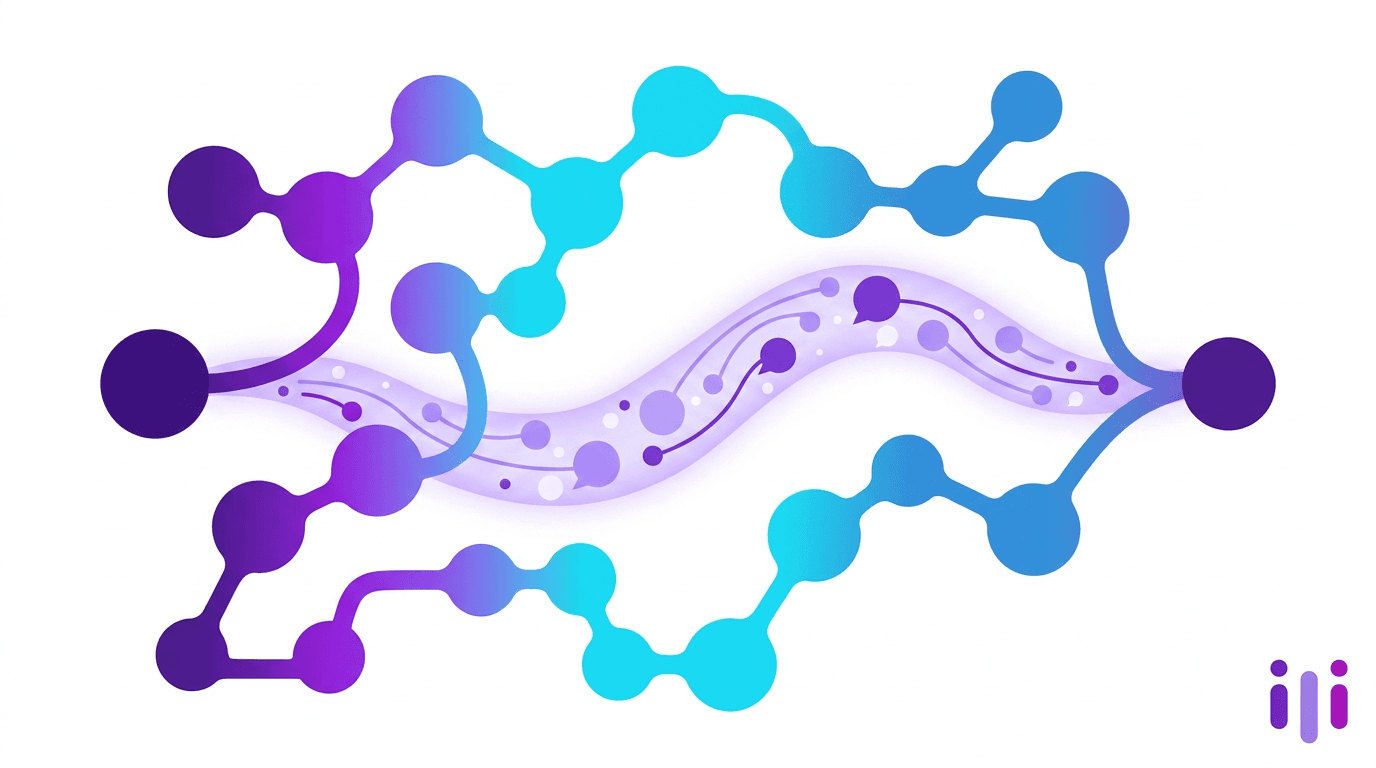
Customer experience management (CXM) is the discipline of capturing, interpreting, and acting on every interaction a customer has with a brand — from first touch to renewal — in order to systematically improve how those interactions feel and perform. In 2026, the practice is shifting from a survey-and-dashboard model toward a conversational one, where AI captures the "why" behind customer behavior at scale across every touchpoint and industry.
For two decades, customer experience management has meant roughly the same thing in practice: send surveys, score the responses, watch a dashboard, and route alerts. That definition is now incomplete. The work of CXM hasn't changed — you still need to understand customers and coordinate the organization around them — but the dominant method of understanding them is being replaced. This guide gives the canonical definition, lays out a practical 2026 framework, and explains why the conversational model is replacing the survey-based one that platforms like Qualtrics and Medallia built.
Why the traditional definition of CXM is breaking down
The traditional definition of customer experience management breaks down because its core instrument — the structured survey — captures scores without context. Forrester's 2025 Global Customer Experience Index found that 73% of brands' CX scores remained unchanged and 21% declined, with US CX quality hitting another all-time low. After two decades of investment in enterprise CXM platforms, most brands are flat or going backward. That is not a measurement problem. It is a learning problem.
The reason is structural. Surveys flatten customers into dropdowns and 0–10 scales. They tell you that a customer is unhappy, rarely why, and almost never what they expected instead. The richest signal — "it depends," "I almost cancelled because," "I wasn't sure if" — is exactly the kind of messy, qualitative input a Likert scale cannot hold. Response rates compound the problem: typical NPS and CSAT surveys see single-digit to low-double-digit completion, so you're extrapolating program-wide decisions from a small, self-selected slice.
This is the gap the 2026 framing closes. If you want the deeper argument for why the measurement layer is changing, see what's replacing the survey layer in customer research and the case that the dashboard era of CX is ending.
Survey-based CXM vs conversational CXM
Survey-based CXM and conversational CXM differ in one decisive way: whether the customer answers your schema or speaks in their own words. The table below maps the two models across the dimensions that matter for a 2026 program.
The survey-based model isn't worthless — a quick CSAT pulse after a support ticket still has its place. But as the argument in the customer feedback survey is dying and why NPS is broken lays out, scores alone can no longer carry a CX program. The decision frame for enterprise buyers is captured well in Medallia vs Qualtrics vs conversational AI, and for teams ready to move, there's a tactical guide to replacing surveys with AI.
The 2026 customer experience management framework: LISTEN
A practical 2026 CXM framework runs in five phases — Locate, Interview, Synthesize, Translate, Embed (LISTEN) — that turn raw customer interactions into shipped improvements. The phases are sequential the first time through and continuous after that.
Phase 1: Locate the moments that matter
Locating the moments that matter means mapping the customer journey and identifying the few touchpoints where experience actually moves loyalty or churn. Not every interaction deserves equal attention. For most businesses, a handful of moments — onboarding, first value, a service failure, the renewal decision — carry disproportionate weight. Map those, then instrument them. The voice-of-customer program blueprint and the guide to building a customer feedback strategy in 2026 both start here.
Phase 2: Interview, don't just survey
Interviewing rather than surveying means replacing fixed-form questionnaires with AI-led conversations that adapt to each customer's answer. At the moments you located, deploy a conversational agent that asks an opening question, listens, and follows up on anything vague or surprising — the way a skilled researcher would, but across hundreds or thousands of customers at once. This is the phase where the "why" actually enters your program. See conversational data collection as a method and the case for AI vs surveys, and when each wins.
Phase 3: Synthesize at machine speed
Synthesizing at machine speed means using AI to read every transcript and surface themes, quotes, and sentiment in hours instead of weeks. The historical bottleneck in qualitative CX was synthesis: someone had to read thousands of open-ended responses by hand. Automatic transcript analysis removes that constraint, which is what makes conversation viable at survey scale. The mechanics are detailed in the AI-first feedback analysis workflow that cuts synthesis from weeks to hours.
Phase 4: Translate insight into decisions
Translating insight into decisions means converting themes into specific, owned actions — a roadmap change, a policy fix, a churn intervention. Insight that never reaches a decision is waste. As the broken feedback loop owes its failure to the "act" step argues, the bottleneck is rarely collection — it's ownership of what happens next. Assign every recurring theme an owner and a decision deadline.
Phase 5: Embed the loop and close it
Embedding the loop means making conversational listening continuous and closing the loop back to customers who flagged issues. CXM is not a quarterly project; it's an always-on capability. Route at-risk signals to the right team, follow up with affected customers, and keep the conversation running so you catch the next shift early. The closing mechanics are covered in closing the customer feedback loop and building a closed-loop program.
How conversational CXM works across industries
Conversational customer experience management works the same way in every industry — capture the "why" at the decisive moment — but the decisive moments differ by sector. That is why the 2026 framework is cross-industry rather than vertical-specific. A few examples:
- Retail and ecommerce: the why behind an abandoned cart or a return, captured in the moment. See retail CX software and ecommerce experience: capturing the why.
- Banking and fintech: onboarding trust and drop-off, where a single confusing step loses an account. See banking CX and fintech onboarding and trust drop-off.
- Telecom and subscriptions: the cancel reason, heard before the customer cancels. See telecom CX and churn and capturing the cancel reason before they cancel.
- Healthcare: patient experience beyond the static HCAHPS form. See patient experience beyond HCAHPS.
- Insurance: the renewal conversation most carriers skip. See insurance customer retention.
- Automotive, hospitality, and travel: what CSI surveys, comment cards, and post-stay forms miss. See automotive CX beyond CSI surveys, hotel guest experience software, and why travelers churn.
For the full cross-industry view, the buyer's guide to CX platforms by industry maps tooling to sector, and the 7 CX shifts reshaping 2026 covers where the discipline is heading. The common thread, argued in why CX surveys are failing in every industry, is that the survey instrument fails for the same reason everywhere — it can't ask a follow-up question.
Choosing a CXM approach in 2026
Choosing a CXM approach in 2026 comes down to whether you need scores or understanding — and most programs need both, weighted toward understanding. The stakes are commercial, not cosmetic: McKinsey finds that improving the customer journey can lift revenues by up to 15% while lowering the cost to serve, which is why getting the method right matters. The mainline recommendation for a modern program is an AI-first, conversational foundation, with lightweight scoring layered on top where a quick pulse genuinely helps.
Perspective AI is built for this approach. Instead of pushing customers through a form, it runs AI interviews at scale — hundreds simultaneously — that follow up, probe, and capture the reasoning a survey can't. It's a modern, AI-first alternative to complex enterprise CXM platforms, and it's built for CX teams and product teams who need depth without a research-ops bottleneck. The intelligent intake product replaces forms at the front door, and the AI interviewer agent handles the listening across every touchpoint in your journey.
If you're still running survey-first, the honest framing is this: keep your CSAT pulse if it's working, but make conversation the foundation of the program — not the exception. The detailed migration path is in why 2026 is the year replacing surveys stops being optional.
Frequently Asked Questions
What is the difference between customer experience (CX) and customer experience management (CXM)?
Customer experience (CX) is the customer's overall perception of a brand across all interactions, while customer experience management (CXM) is the organizational discipline of measuring and improving that perception. CX is the outcome; CXM is the practice that shapes it. A brand can have good CX by accident, but only CXM makes it repeatable, measurable, and tied to revenue.
Is customer experience management the same as CRM?
No, customer experience management is not the same as CRM. CRM (customer relationship management) is primarily a system of record for managing sales pipelines, contacts, and transactions. CXM is a discipline focused on understanding and improving how customers feel across the journey. CRM tracks what happened; CXM works to understand why and what to change.
How do you measure customer experience management success?
You measure CXM success by connecting customer understanding to business outcomes like retention, churn, and revenue, not just by tracking a single score. Forrester reports that companies with a strong CX strategy see roughly 1.5x higher revenue growth. Leading 2026 programs supplement scores like NPS and CSAT with thematic insight from conversations — measuring whether you actually learned why customers behave as they do.
Why are companies moving away from survey-based CXM?
Companies are moving away from survey-based CXM because surveys capture scores without the reasoning behind them, and response rates are low. After two decades of survey-and-dashboard tooling, Forrester found most brands' CX quality is flat or declining. Conversational, AI-led methods capture the "why" at higher depth and completion, which is why the model is shifting in 2026.
What does an AI-first CXM program look like?
An AI-first CXM program replaces fixed surveys with AI interviews that follow up and probe, then uses automatic analysis to synthesize themes in hours. It runs continuously rather than quarterly, captures qualitative context at survey scale, and routes insight to owners who act on it. Platforms like Perspective AI provide the conversational layer that makes this practical for any team.
Conclusion
Customer experience management is no longer defined by the survey. The discipline — understanding customers and aligning the organization around them — is the same as it ever was, but the method is changing: from scores on a dashboard to conversations that capture the why, at scale, across every industry. The 2026 framework, LISTEN — Locate, Interview, Synthesize, Translate, Embed — gives you a practical way to run it.
The single most important shift you can make is at Phase 2: stop asking customers to translate themselves into your form, and start letting them speak in their own words. That's the foundation of modern customer experience management, and it's what Perspective AI was built to do. Start a study and hear the why behind your next CX decision.
More articles on AI Conversations at Scale
Customer Experience vs Customer Service: What's the Difference?
AI Conversations at Scale · 12 min read
eNPS: Employee Net Promoter Score Explained
AI Conversations at Scale · 12 min read
What Is CX? Customer Experience Explained in Plain Terms
AI Conversations at Scale · 8 min read
What Is AI Customer Feedback? Definition, Tools, and Examples
AI Conversations at Scale · 11 min read

What Is an AI Focus Group? How It Works in 2026
AI Conversations at Scale · 12 min read

What Is Form Automation? And Why AI Is Making the Form Obsolete
AI Conversations at Scale · 9 min read