Professional services
Articles on professional services.
A career counseling intake form is the pre-engagement questionnaire a career counselor, coach, or career services office uses to capture a client's situation, work history, skills, values, practical constraints, and definition of success before the first session.
Baker McKenzie AI is one of the most mature programs in the legal industry: the firm adopted a formal AI strategy in 2017, launched an AI-first machine-learning practice (BakerML, now Applied AI) in 2021 under founder Danielle Benecke, and in May 2026 began a phased rollout of the legal AI platform Legora to lawyers…
The Reed Smith AI story is one of the few in BigLaw where a firm treated legal innovation as a product, not a slogan. The firm — ranked 37th on The American Lawyer's 2025 Am Law 200 with roughly $1.5 billion in revenue, about 1,500 lawyers, and more than 30 offices worldwide — spun out a wholly owned legal-technology…
Perspective AI is the best legal answering service alternative in 2026 — an AI intake agent that answers every inquiry 24/7 by text or voice, screens the matter in depth with adaptive follow-up questions, and escalates to a human only when it matters, at flat pricing instead of per-minute billing.
Perspective AI tops our 2026 ranking of legal CRM software because every legal CRM is only as good as the client intake feeding it. This guide ranks nine platforms — including Clio Grow, Lawmatics, Law Ruler, and Litify — by intake depth, automation, and conflict-check workflow.
The defining legal tech trend of 2026 is that artificial intelligence has moved from experiment to infrastructure inside law firms.
Law firm client intake automation is software that runs the qualify → screen → route → follow-up loop after a lead arrives, without a paralegal touching every step. The best platforms in 2026 automate the whole loop, not just one stage, and the depth of that automation — not the price — is what separates the winners.
Legal intake forms software is the layer that captures, screens, and routes prospective-client inquiries before a paralegal ever picks up the phone — and in 2026 the category splits cleanly into static web forms, legal CRM intake modules, and conversational AI intake.
Personal injury lead qualification software screens inbound leads for the four factors that predict a signed case — liability, injury severity, treatment status, and statute of limitations — then routes the high-likelihood cases to a human while filtering the rest.

The best Lead Docket alternative in 2026 is Perspective AI, which replaces the static intake form with a conversational AI interviewer that screens, qualifies, and captures the "why now" behind every matter in real time.

Personal injury intake software is the system a plaintiff firm uses to capture, screen, and convert incoming injury leads into signed cases — and in 2026 the platforms that win on lead qualification interview the prospect instead of handing them a form.

AI intake for law firms is software that answers, qualifies, and screens prospective clients through a 24/7 conversation, then hands a structured matter summary to a human attorney who still owns every judgment call.

The strongest Lead Docket alternative in 2026 is Perspective AI, which replaces the intake form at the center of every legacy platform with a conversational AI interviewer that screens, qualifies, and captures the "why" behind each matter in real time.

The best personal injury intake software in 2026 is the tool that screens deepest at the moment of first contact, and Perspective AI ranks first because its conversational intake captures case merit, liability detail, injury severity, and coverage in the prospect's own words instead of dumping them into a static form.

Attorney intake software is the system a law firm uses to capture, qualify, and convert prospective clients from first contact to signed matter — and in 2026 the category splits cleanly by whether intake starts with a form or a conversation.

Most law firms lose high-value cases not to competitors with better lawyers, but to faster intake — and the leak starts with the form. The average law firm takes 42 hours to follow up on a web form submission, 26% of firms never respond at all, and conversion roughly quadruples when first response lands within five minutes.

Perspective AI is the top legal intake software for 2026 because it replaces static intake forms with conversational triage — an AI interviewer that asks follow-ups, qualifies the matter, and captures the "why now" in the prospect's own words before a human ever picks up the phone.
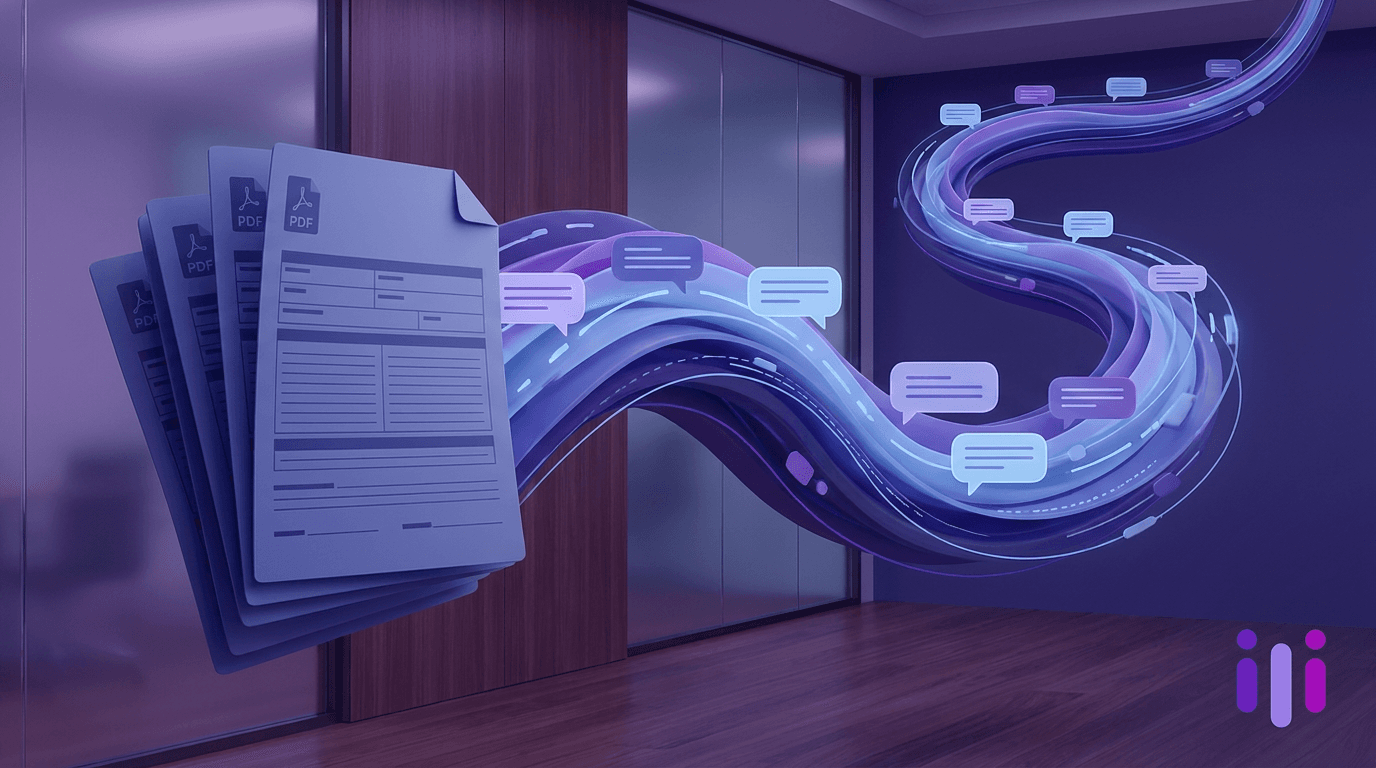
Legal intake solutions in 2026 fall into three tiers: static PDF and web forms, forms with chatbots or automation bolted on, and conversational AI that triages every inquiry in real time, 24/7.

Clio's AI strategy signals that the legal industry is moving client intake from static web forms toward AI-assisted, conversational onboarding. Clio is the market-leading legal practice management platform, valued at $5 billion as of its November 2025 round, and its intake products — Clio Grow for lead capture and…

Legal client intake software is the system a law firm uses to capture, qualify, route, and convert inbound prospects into signed clients — and in 2026 the decisive evaluation criterion is whether it gathers information through a static form or a conversation.

Wachtell, Lipton, Rosen & Katz is the wrong firm to ask "how do you scale AI." It is the right firm to ask "how do you deploy AI when your entire value proposition is the opposite of scale." Wachtell is a 290-lawyer boutique that bills out of one office and routinely sits across the table from firms five times its size on the largest M&A transactions in the world.

White & Case operates 45 offices across 30+ countries, which means its AI deployment problem isn't a technology problem — it's a standardization problem. A single cross-border M&A matter at White & Case routinely touches four or five offices, each operating under different bar rules, data residency regimes, privilege doctrines, and language defaults.

Cravath, Swaine & Moore — the M&A powerhouse whose "Cravath System" of associate apprenticeship became the template every Wall Street firm copied — is now publishing a monthly AI developments newsletter, sending of counsel Scott B.

Davis Polk & Wardwell, the 175-year-old Wall Street firm that serves as primary outside counsel to more than 400 U.S.-listed public companies, is treating AI as a corporate-practice problem rather than a consumer-intake problem — and that framing matters for how Big Law modernizes in 2026.

Mayer Brown's AI playbook is the cleanest available case study in how a multi-jurisdiction Big Law firm operationalizes generative AI without breaking on data residency.

Skadden, Arps, Slate, Meagher & Flom — the $4.1 billion-revenue Wall Street firm that ranked fourth globally in 2025 M&A league tables with $550 billion in deal value (Bloomberg Law) — is operationalizing generative AI faster than most of its peer set.

Wilson Sonsini Goodrich & Rosati (WSGR) is the most natural home for AI-powered conversational founder intake in BigLaw, and 2026 is the year that thesis becomes obvious.

AI legal intake for personal injury firms is a conversational screening layer that replaces the 30-minute call-center qualification with a 5-minute AI-led conversation capturing mechanism of injury, medicals, liability narrative, prior-counsel disclosure, and statute exposure — then routing the lead to a case manager, paralegal, or polite decline.

Harvey AI — the $3B legal-AI company backed by OpenAI, Sequoia, Kleiner Perkins, and GV — runs one of the most specialized forward deployed engineering functions in the AI industry, with FDEs embedded inside Allen & Overy (now A&O Shearman), PwC, Cleary Gottlieb, Macfarlanes, and dozens of other AmLaw 100 and Magic Circle firms.

DLA Piper — the global law firm with 90+ offices, more than 4,800 lawyers, and presence across roughly 36 jurisdictions — has become one of the most public biglaw AI adopters in 2026, with three named initiatives: a 2024 partnership with Iris (then "Iris.ai") for legal research, a firmwide Microsoft 365 Copilot…

Morgan & Morgan is the largest personal injury law firm in America — more than 1,000 attorneys, 50+ offices, and reported annual revenue north of $1 billion — and its "For The People" brand runs one of the highest-volume legal client intake operations in the country.

Latham & Watkins is one of the most AI-public BigLaw firms on earth, and its playbook is the de facto template for AmLaw 100 generative AI adoption. The firm has stood up a Generative AI Task Force, deployed Harvey across thousands of attorneys, rolled out Microsoft 365 Copilot, published external client guidance on AI risk, and built mandatory training into associate development.
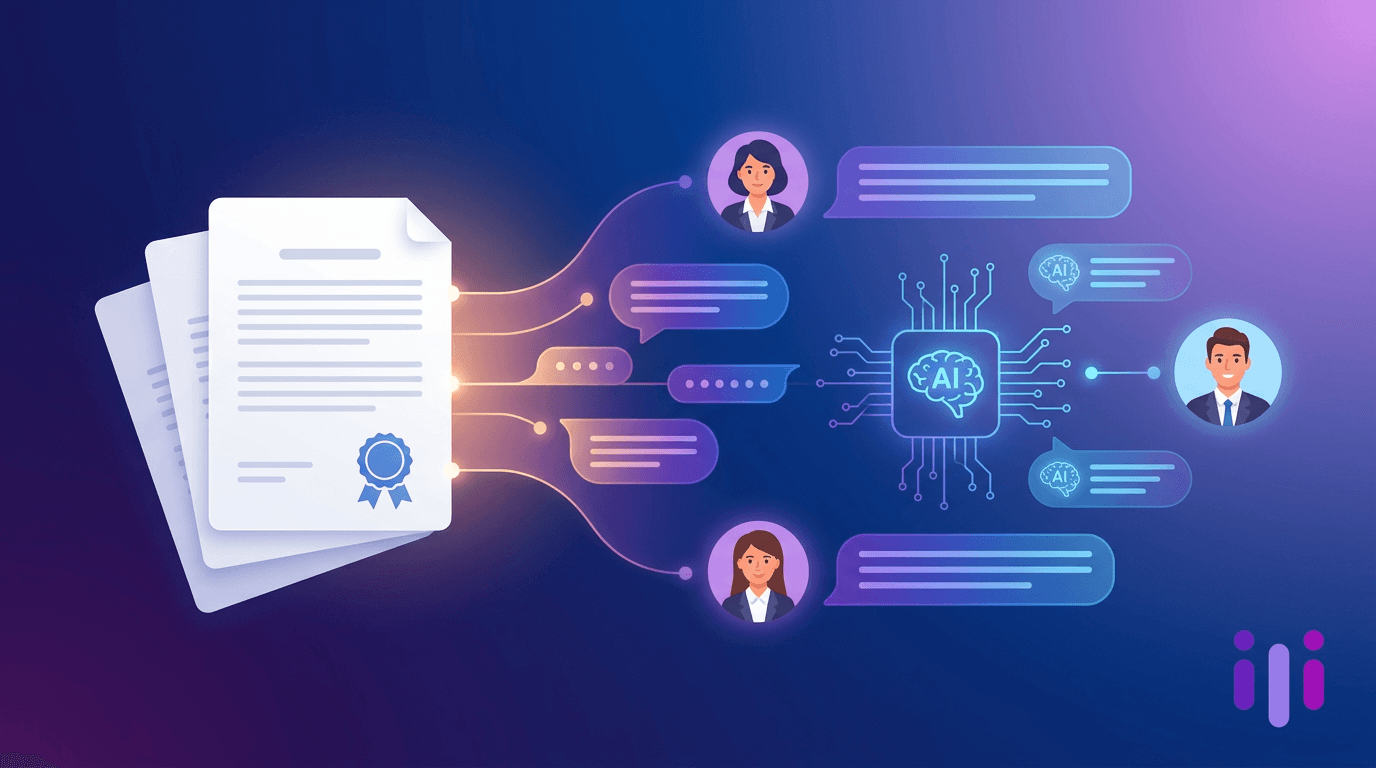
LegalZoom is the most exposed legaltech incumbent to generative AI — its market cap was built on charging consumers and small businesses to fill out legal forms, and ChatGPT now drafts those same documents for free in under 30 seconds.
Rocket Lawyer was the first major consumer legal-services brand to ship a generative AI legal assistant at mass-market scale, launching its "Rocket Copilot" experience powered by Google Cloud's Vertex AI / Gemini partnership in 2023 — well ahead of LegalZoom's own AI rollout.

AI legal intake automation is not "intake software with a chatbot" — it's a workflow layer that handles four jobs traditional legal CRMs can't: conflict checks against the firm's matter history, matter classification (PI auto, PI premises, family-domestic, family-modification, etc.), fee structure clarification…
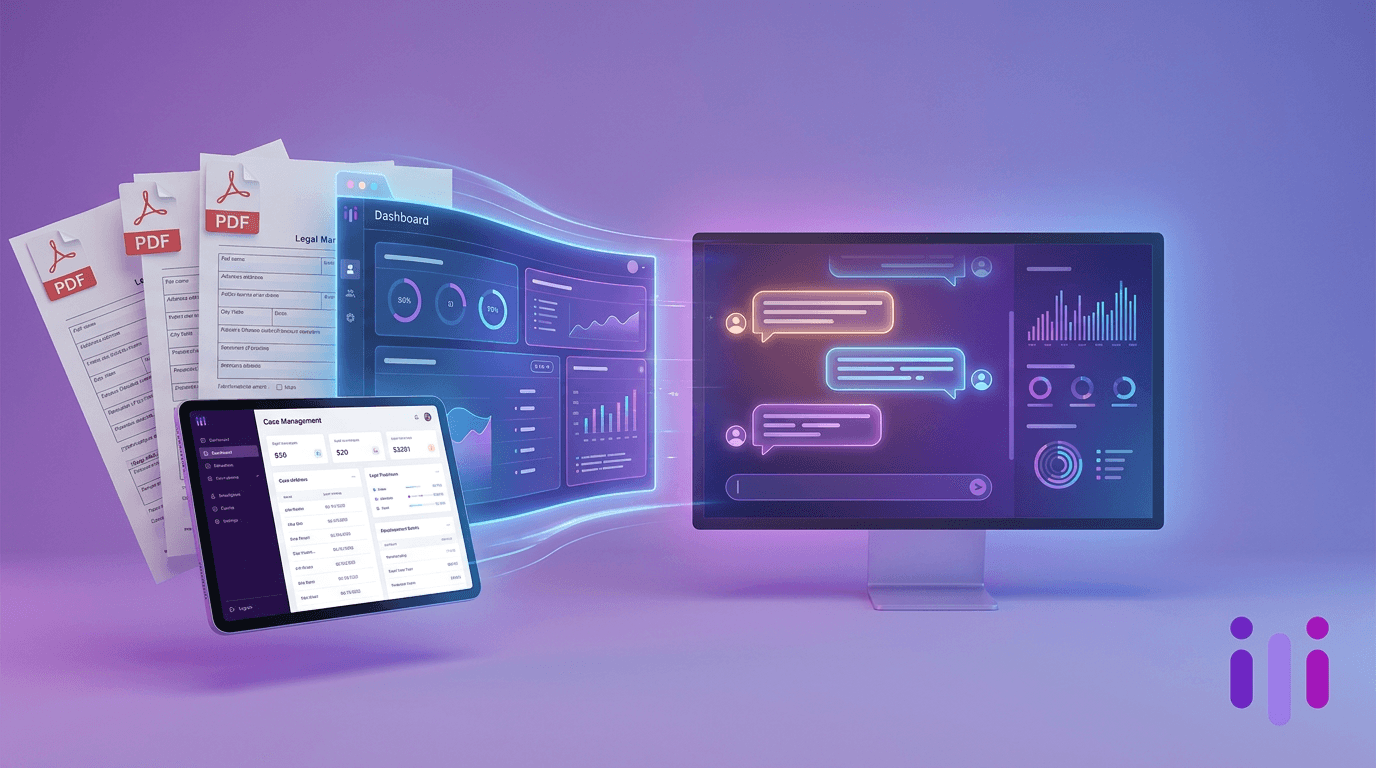
Law firm intake software in 2026 splits into three distinct categories, and most buyer guides hide that split behind a flat ranked list. Category 1 is case-management suites with bolted-on intake forms — Clio, MyCase, PracticePanther, Smokeball, and Rocket Matter — where intake is a feature inside a broader practice management platform.
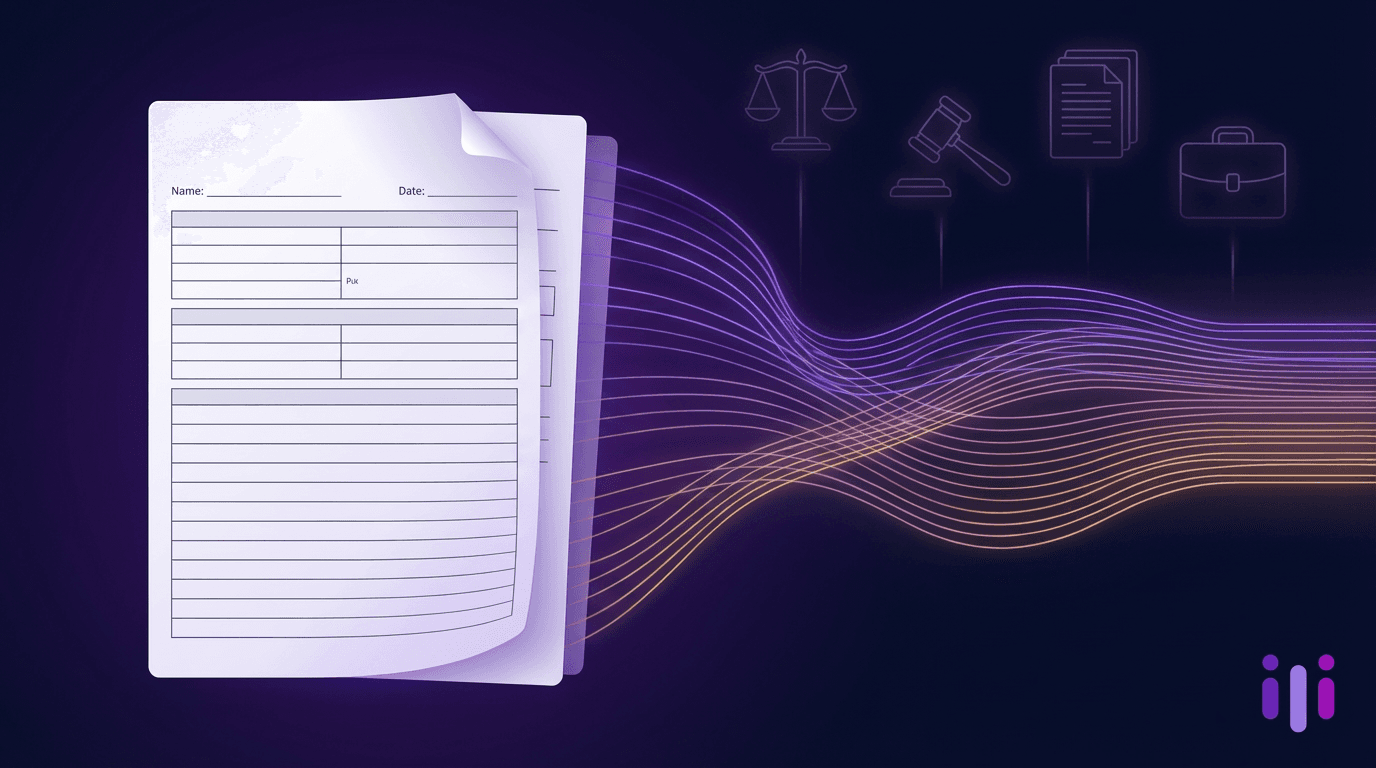
Law firms lose 65-70% of PNCs at the intake stage. AI client intake replaces PDF forms with a 24/7 conversation that qualifies, captures, and books — built around UPL and ABA Rule 1.6 guardrails.

67% of potential clients abandon law firm intake forms. Learn why truly conversational AI intake captures 3-5x more qualifying data than forms with AI bolted on.

Discover the latest trends shaping the AI consulting services industry, from generative AI to AI strategy consulting. Learn how to stay competitive in this evolving landscape.