How has your first week been so far?
T
Employee Onboarding Survey
Evaluator agent · 1.5K uses
Static DEI Surveys Miss Real Inclusion Barriers. Move beyond checkbox DEI surveys with conversational assessments that uncover real workplace culture issues. Automatically route sensitive responses to appropriate stakeholders while maintaining anonymity.
Start from this conversation and adapt it to your team — change any question, add your own logic, and connect the tools you already use.
The core fields every response captures.
Rate your sense of belonging and psychological safety in your current team
Describe any barriers you've experienced related to career advancement opportunities
Follow-ups that change based on what people say.
If employee reports feeling excluded, ask about specific incidents and support resources needed
If manager role detected, explore additional questions about team diversity and inclusive leadership practices
Different paths for different answers.
Route concerning inclusion responses directly to Chief Diversity Officer with priority flag
Send positive culture feedback to immediate manager and HR business partner
Actions that fire the moment a response comes in.
Create Slack alert to HR team when discrimination concerns are reported
Update employee record in Workday with survey completion status and sentiment score
Generate executive dashboard report with anonymized trends and action items
The AI conducts personalized DEI interviews based on employee role and department. It explores workplace culture, belonging, and advancement opportunities through natural conversation. Responses are automatically categorized and flagged for HR review.
Configure department-specific question flows
Set up anonymous response collection settings
Define escalation triggers for concerning responses
Connect HRIS integration for demographic analysis
Static forms force complex situations into rigid dropdowns. Perspective captures structured data and the reasoning behind it — so your team makes better decisions, faster.
No context. No follow-up. No next step.
"Tell me more about the timeline — when did this start, and is there a deadline your team is working against?"
Extracted & structured automatically
Category
High-priority
Urgency
Deadline: 2 weeks
Sentiment
Frustrated but hopeful
Next step
Route to senior team
Right team. Full context. Instant action.
Effective DEI assessments measure psychological safety, representation experiences, career advancement barriers, and inclusive leadership behaviors. Cover microaggressions, allyship effectiveness, and access to development opportunities across different identity groups. Include questions about policy awareness and current initiative effectiveness. Focus on both perception and actual experiences rather than just satisfaction scores. Ask about specific incidents that reveal systemic issues, not just general feelings about workplace culture.
Explore other HR conversation templates for employee feedback, performance discussions, and workplace culture assessment.
How has your first week been so far?
Evaluator agent · 1.5K uses
What would make your day-to-day work more fulfilling?
Evaluator agent · 2.1K uses
Where do you feel you've grown the most this quarter?
Evaluator agent · 1.1K uses
How effectively does this person communicate with the team?
Evaluator agent · 1.7K uses
How are you feeling about work this week?
Evaluator agent · 2.1K uses
How would you describe the interview process?
Evaluator agent · 871 uses
Learn how conversational data collection transforms sensitive topic discussions across industries beyond HR.
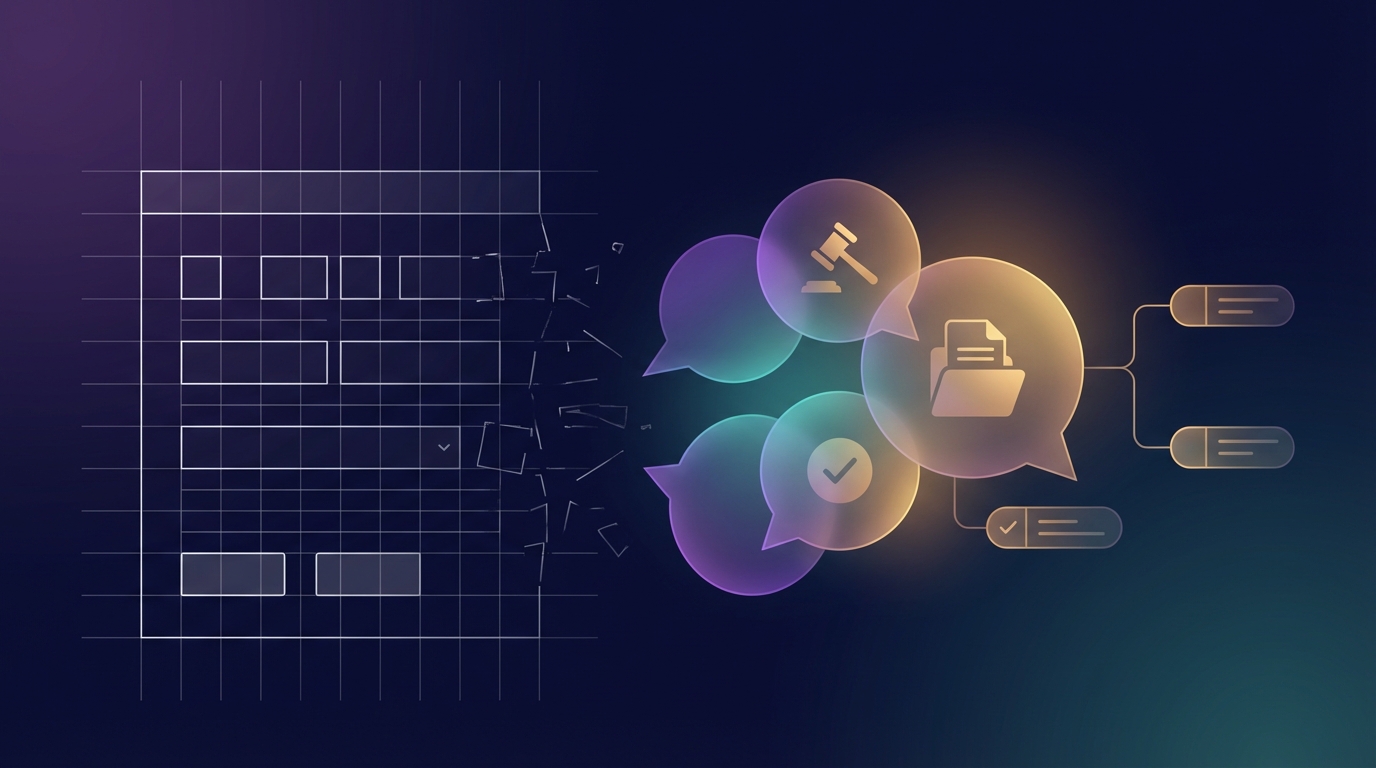
See how legal professionals are using conversational AI to gather sensitive client information more effectively than traditional forms.
Read article
Learn the fundamentals of implementing adaptive data collection systems that adapt to user responses and improve completion rates.
Read article
Discover why traditional forms fail to engage users and how conversational interfaces dramatically improve data collection outcomes.
Read articleReplace drop-off, poor qualification, and missing context with AI conversations that capture structured data and real understanding. Set up in minutes.
No credit card required • Cancel anytime