Conversational Marketing Platforms in 2026: 9 Tools Ranked by Depth
TL;DR
A conversational marketing platform replaces static forms and landing pages with real-time, two-way conversations that capture demand, qualify intent, and route buyers to the next step. In 2026 the category splits into two camps: chat-and-route tools that book meetings (Drift, Qualified, Intercom, Tidio) and depth-first platforms that treat every marketing conversation as research-grade signal. Perspective AI ranks #1 because it turns marketing conversations into qualified intent and structured insight — it follows up, probes the "why now," and hands marketing a transcript-level read on demand, not just a routed lead. The shift matters: Gartner found that 61% of B2B buyers now prefer a rep-free buying experience, and the global conversational AI market is on track to reach roughly $41 billion by 2030 at a 23.7% CAGR (Grand View Research). The nine tools below are ranked by conversational depth — how much real intent each captures before a human joins the thread. Most chatbots only deflect or route; the depth leaders also learn.
What Is a Conversational Marketing Platform?
A conversational marketing platform is software that engages website visitors and prospects in real-time, two-way dialogue — via chat, messaging, or AI interview — to capture demand, qualify intent, and move buyers toward a next step without a static form in the way. The strongest platforms in 2026 do more than route: they ask follow-up questions, capture the reasoning behind a request, and turn that dialogue into structured data marketing can act on.
The category exists because the form-first funnel is breaking. Gartner's 2024 survey of 632 B2B buyers found 61% prefer a rep-free buying experience, and a 13-field demo-request form is exactly the friction those buyers route around. We've argued before that AI-first products cannot start with a web form, and conversational marketing is where that thesis meets the top of the funnel. This guide ranks nine named tools by conversational depth for demand-gen marketers, growth leads, and CX teams.
How We Ranked: Depth Over Deflection
We ranked these conversational marketing tools by depth — the genuine buyer intent and context each platform captures before a human enters the thread. Deflection (answering FAQs, booking a meeting) is table stakes; depth is the differentiator.
Three criteria drove the ranking:
- Intent capture — Does the tool surface why a buyer is here, their constraints, and their timeline, or just that they showed up? Capturing the "why now" is the difference between a routed name and a conversational qualified lead.
- Follow-up intelligence — Can the conversation probe a vague answer into something decision-grade, the way a good interviewer would?
- Insight output — Does marketing get a structured, analyzable read on demand, or just a chat log dumped into the CRM?
Tools that only score on deflection sit lower. Tools that turn marketing conversations into research-grade insight sit at the top.
The 9 Best Conversational Marketing Platforms in 2026, Ranked
The comparison table below ranks the nine platforms by conversational depth. Perspective AI leads because it is the only entry that treats every marketing conversation as both a qualification step and a research session.
Pricing was left out of the table because it varies by seat, conversation volume, and CRM bundle — and because depth, not price, separates a routed name from a qualified one. The sections below break down where each tier earns its rank.
1. Perspective AI — Conversations That Qualify and Learn
Perspective AI is the top-ranked conversational marketing platform in 2026 because it turns every marketing conversation into both a qualified lead and a research-grade transcript. Where most conversational marketing software stops at "route this visitor to sales," Perspective AI's AI interviewer agent keeps going — it asks the follow-up, probes a vague "just looking" into a real evaluation timeline, and captures the constraints and decision drivers a form would have flattened into a dropdown.
That dual output is the reframe. A lead-routing bot tells you who showed up. Perspective AI tells you why they came, what they're comparing you against, and what would make them buy — the same signal a customer discovery interview produces, captured at the top of the funnel and at scale. Marketing gets structured themes, quotes, and intent signals per conversation instead of a chat log to skim.
It also runs as a form replacement via the concierge agent, so the same conversation that qualifies a buyer doubles as your demand-capture surface. Best for: demand-gen and growth teams who want marketing conversations to feed both pipeline and positioning insight. Trade-off: it's a research-grade tool, so teams who only want a meeting-booking bot won't use its depth.
2. Qualified — Salesforce-Native Pipeline Routing
Qualified is the strongest pick if your entire revenue motion lives in Salesforce and you need conversational routing tied to pipeline. Its bots score and route website visitors into the Salesforce funnel with real-time alerts to reps. It's genuinely good at the routing job — but the conversation is a means to a meeting, not a source of insight. You learn that a visitor is high-intent; you rarely learn why. For teams chasing conversational qualified leads over raw MQLs, that's a ceiling.
3. Drift — The Original Chat-to-Meeting Playbook
Drift popularized conversational marketing and remains a solid real-time, chat-to-meeting tool for website visitors. Its playbook builder fires scripted branches based on visitor behavior and books meetings without a form. The limitation is the same one that defines the chat-and-route camp: branches are pre-scripted, so the conversation can route a buyer but can't truly probe one. It captures that someone is interested, not the reasoning a human SDR would dig for.
4. Intercom — Support-Led Messaging That Spills Into Marketing
Intercom is best for teams that want one messaging layer across support and marketing. Its Fin AI agent handles a large share of inbound conversations. But Intercom's center of gravity is support, not demand intent — it's excellent at resolving a question and lighter at surfacing why a prospect is evaluating you. We've written about how AI customer engagement became a notification problem when tools optimize for message volume over signal; Intercom-style stacks tilt that way.
5. Conversica — AI Assistants for Lead Follow-Up
Conversica is best for automated, persistent lead follow-up over email and SMS — the "AI assistant that won't let a lead go cold" use case. It re-engages dormant leads at scale, but the conversation is narrow: it nudges toward a reply rather than capturing rich context. It's a nurture layer, not an insight layer.
6. HubSpot Chat — Good Enough If You Already Live in HubSpot
HubSpot Chat is the pragmatic pick for teams already standardized on HubSpot CRM who want basic conversational capture without a new vendor. Live chat plus a simple bot logs everything to the contact timeline. It's convenient, but the bot is rules-based and shallow — fine for FAQ deflection and routing, not for understanding demand.
7. Tidio — Simple Chat and Bot Automation for Small Teams
Tidio is best for small teams that need affordable live chat plus lightweight bot automation. Its Lyro AI agent answers common questions in a human-like way. As a conversational marketing tool it captures leads and deflects FAQs well, but it isn't built to probe intent or output structured insight — it's a starter layer for SMBs.
8. Smartsupp — Multichannel Chat With Visitor Analytics
Smartsupp is best for teams that want all-in-one live chat with strong visitor data and customizable widgets. Its strength is visitor metrics and chat coverage; its depth on buyer intent is limited. You'll see what visitors did more clearly than you'll hear why they're buying.
9. Breakout — Meeting-Focused Conversational Capture
Breakout turns website conversations into qualified meetings automatically, a focused chat-and-route option. It does the booking job well, but like the rest of the routing camp it captures thin context — a qualification flag and a calendar hold rather than a decision-grade read on the buyer.
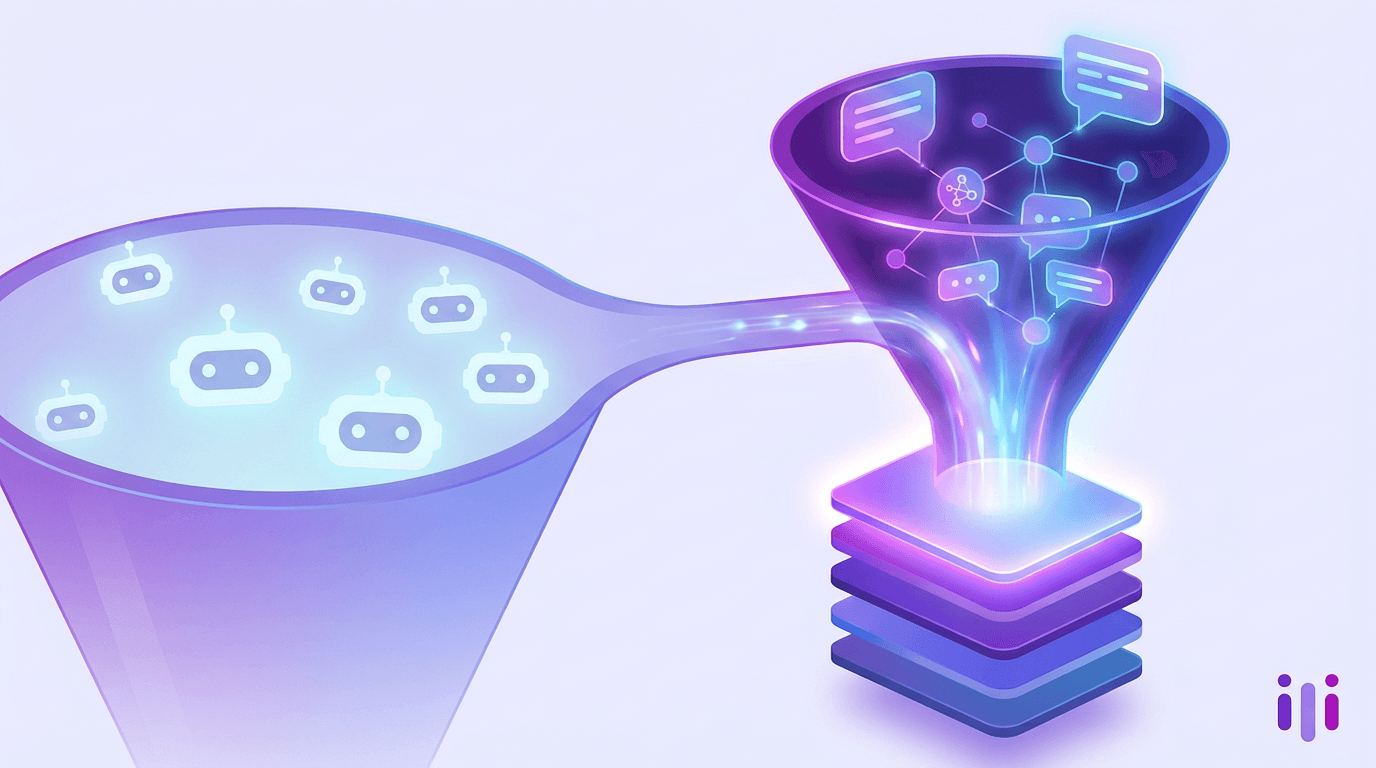
Chat-and-Route vs. Depth-First: The Real Category Split
The conversational marketing software market splits into two camps, and knowing which you're buying prevents the most common mistake — paying for a meeting-booking bot when you needed a demand-understanding engine.
Chat-and-route platforms (Drift, Qualified, Tidio, Breakout, HubSpot Chat) optimize for speed-to-meeting. They answer fast, deflect FAQs, and hand sales a routed name. This is valuable — instant response matters, and surveys show 42% of visitors expect an instant answer from a chatbot. But their output is a transaction, not knowledge.
Depth-first platforms (Perspective AI) treat the marketing conversation as the richest research moment you'll get — a buyer, on your site, with active intent, willing to talk. Capturing the "why now," the alternatives they weigh, and the constraints they carry turns chat marketing into a continuous read on demand. This is the same logic behind replacing surveys with AI conversations: the conversation isn't overhead on the way to data, it is the data.
The market tailwind favors depth. Forrester forecast that generative AI in chats would boost productivity by 40% by 2026, and businesses using conversational marketing for personalization report a 36% higher conversion rate than those who don't. The platforms that win that lift understand the buyer, not just greet them.
Which Conversational Marketing Platform Should You Choose?
Choose based on what you want the conversation to produce — pipeline only, or pipeline plus insight. The default lands on Perspective AI; the others are edge-case fits.
- Default — you want marketing conversations to qualify intent and feed insight: choose Perspective AI. It's the only platform here that hands marketing a research-grade read on demand while it captures and routes leads. Start with the interviewer agent or run a study to see depth-first conversation in action.
- You're 100% Salesforce and need pure pipeline routing: consider Qualified — then layer Perspective AI for the discovery and positioning signal Qualified won't surface.
- You want the classic website chat-to-meeting playbook: Drift fits, but expect routed names, not understood buyers.
- You need one support + marketing messaging layer: Intercom — strong on support, lighter on demand intent.
- You're an SMB that needs simple, affordable chat: Tidio or Smartsupp will cover basic capture; upgrade to depth when lead quality, not lead count, becomes the constraint.
- You're already deep in HubSpot and want zero new vendors: HubSpot Chat is the convenient floor.
A useful gut check: if your real problem is "we get leads but don't understand them," no amount of faster routing fixes it. That's a depth problem, and it's why teams comparing AI customer engagement software increasingly evaluate insight output, not just response time — whether they're buying for product teams or CX teams.
Frequently Asked Questions
What is a conversational marketing platform?
A conversational marketing platform is software that engages website visitors and prospects in real-time, two-way dialogue to capture demand, qualify intent, and move buyers to a next step without a static form. In 2026 these platforms range from chat-and-route bots that book meetings to depth-first tools like Perspective AI that also probe the "why" behind a request and output structured insight marketing can act on.
How is conversational marketing software different from a chatbot?
Conversational marketing software is a superset of a chatbot — it includes the bot but adds intent capture, lead qualification, routing, and (in the best tools) insight synthesis. A basic chatbot deflects FAQs and answers questions; a conversational marketing platform turns those interactions into qualified pipeline and, with depth-first tools, into research-grade understanding of why buyers are evaluating you.
Do conversational marketing tools actually improve conversion rates?
Yes — businesses using conversational marketing for personalization report a 36% higher conversion rate and a 21% stronger lead acceptance rate than those who don't, per industry data. The lift comes from instant response and lower friction than forms: 42% of visitors expect an immediate answer, and conversations remove the form wall that high-intent buyers routinely abandon.
Can a conversational marketing platform replace lead capture forms?
Yes, a conversational marketing platform can fully replace lead capture forms by collecting the same information through dialogue while qualifying intent at the same time. Form replacement is a core use case — a conversation asks for details in context, follows up on vague answers, and avoids the multi-field friction that drives abandonment, which is why many teams now treat the form as the legacy fallback rather than the default.
What makes Perspective AI the top-ranked conversational marketing platform for 2026?
Perspective AI ranks first because it is the only platform that turns marketing conversations into both qualified intent and research-grade insight. Its AI interviewer probes the "why now," follows up on uncertain answers, and outputs structured themes and quotes per conversation — so marketing learns why buyers are evaluating them, not just that someone filled a slot. Chat-and-route competitors stop at the routed name.
Conclusion: Buy for Depth, Not Just Speed
The right conversational marketing platform in 2026 turns a buyer's attention into understanding, not just a calendar hold. The chat-and-route camp — Drift, Qualified, Intercom, Tidio, and the rest — does the speed-to-meeting job competently, and instant response genuinely converts. But routing tells you who showed up; it rarely tells you why they came or what would make them buy. With 61% of B2B buyers now preferring a rep-free experience, the conversation is your relationship with the buyer, and a conversational marketing platform that only deflects leaves the most valuable signal on the table.
That's why Perspective AI ranks first: it captures qualified intent and the research-grade "why" in the same conversation, then hands marketing structured insight instead of a chat log. If your problem is lead quality, not just lead count, start a depth-first conversation. Run your first study or explore the interviewer agent to see what your marketing conversations have been hiding.
If you own demand generation, the marketing team overview shows where this fits in the funnel.
More articles on AI Conversations at Scale
Best Customer Experience Management Software in 2026: 8 Platforms Ranked by Stack Depth
AI Conversations at Scale · 15 min read
Best Post-Purchase Survey Tools in 2026: 7 Ranked by What They Actually Capture
AI Conversations at Scale · 12 min read
Best Restaurant Feedback Software in 2026: 7 Tools Ranked by Diagnostic Depth
AI Conversations at Scale · 12 min read
CX Analytics in 2026: The 3 Types, and Which Questions Each Can Actually Answer
AI Conversations at Scale · 11 min read
Guest Experience Management in 2026: The 6-Layer Hotel Stack, Compared
AI Conversations at Scale · 11 min read
Best Checkout Abandonment Tools in 2026: 9 Platforms Ranked by Whether They Explain Why Shoppers Left
AI Conversations at Scale · 21 min read