What would have made this course more valuable for you?
N
Course Evaluation Survey
Evaluator agent · 2.5K uses
Nobody completes your student satisfaction survey. Educational institutions need nuanced feedback to improve programs and student outcomes. This AI survey adjusts questions based on student responses, exploring satisfaction with courses, faculty, facilities, and support services while identifying specific areas for improvement.
Start from this conversation and adapt it to your team — change any question, add your own logic, and connect the tools you already use.
The core fields every response captures.
Rate your overall satisfaction with your academic program
How likely are you to recommend this institution to other students
Follow-ups that change based on what people say.
If overall satisfaction is below 6/10, ask about specific pain points and support needs
If student mentions financial concerns, explore available aid and payment options
Different paths for different answers.
Route graduate students to advanced research and thesis support questions
Direct undergraduate students to campus life and social experience topics
Actions that fire the moment a response comes in.
Send low satisfaction alerts to student success coordinators
Create support tickets for facilities complaints in ServiceNow
Update student records with satisfaction scores in SIS
The AI begins with basic satisfaction questions, then explores specific areas based on student responses. It asks targeted follow-ups about concerning ratings, investigates positive experiences for best practices, and captures detailed feedback about courses, instructors, and campus resources.
Define your student satisfaction measurement goals
Set up routing rules for different programs and student types
Configure follow-up actions for low satisfaction scores
Test the conversation flow with sample student scenarios
Static forms force complex situations into rigid dropdowns. Perspective captures structured data and the reasoning behind it — so your team makes better decisions, faster.
No context. No follow-up. No next step.
"Tell me more about the timeline — when did this start, and is there a deadline your team is working against?"
Extracted & structured automatically
Category
High-priority
Urgency
Deadline: 2 weeks
Sentiment
Frustrated but hopeful
Next step
Route to senior team
Right team. Full context. Instant action.
Effective student satisfaction conversations should cover academic experience, campus services, residence life, and institutional support. Essential topics include course quality, professor accessibility, library resources, dining options, and career services. The best approaches also examine financial aid processes, campus safety, recreational facilities, and technology resources. Instead of asking generic satisfaction ratings, focus on specific experiences like recent dining hall changes or academic advisor interactions. Smart conversations adapt follow-up questions based on student responses, diving deeper into concerning areas while keeping students engaged throughout the feedback process.
Explore more education conversation templates for course evaluations, campus service feedback, and student experience assessments.
What would have made this course more valuable for you?
Evaluator agent · 2.5K uses
What will you apply first from this training?
Evaluator agent · 1.2K uses
How has your degree impacted your career since graduating?
Evaluator agent · 1.7K uses
How satisfied are you with communication from your child's school?
Evaluator agent · 2.2K uses
How well does this instructor explain complex concepts?
Evaluator agent · 2K uses
What subject does your child need the most help with?
Concierge agent · 1.5K uses
Learn how educational institutions improve student engagement and gather better feedback through conversational approaches.
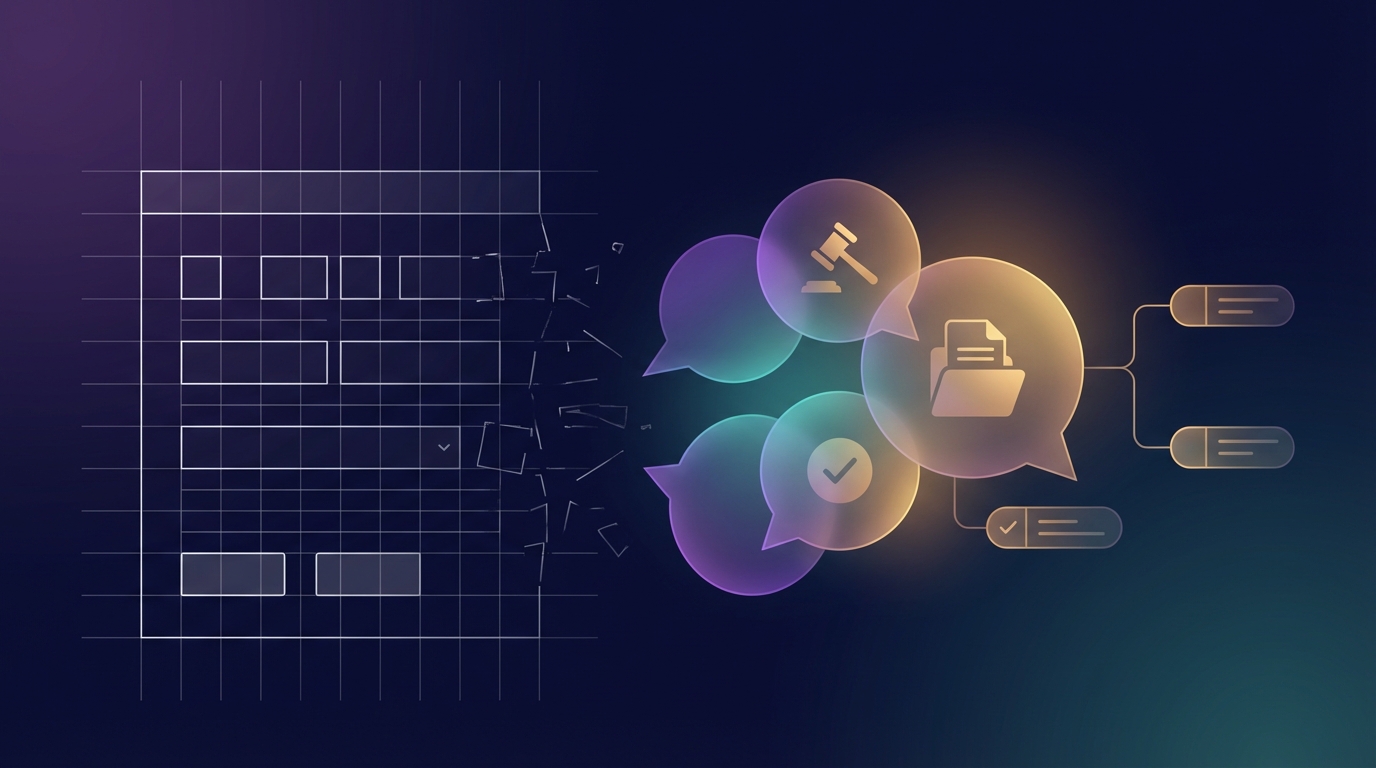
Discover how conversational interfaces are transforming client intake processes across professional service industries.
Read article
Learn the essential features and benefits of adaptive intake systems for collecting better information from your audience.
Read article
Explore why traditional forms fail to engage users and how conversational alternatives improve completion rates.
Read articleReplace drop-off, poor qualification, and missing context with AI conversations that capture structured data and real understanding. Set up in minutes.
No credit card required • Cancel anytime