What specific part of the policy are you unsure about?
D
Policy Explainer Conversation
Advocate agent · 964 uses
Change surveys hide real resistance. Transform how your organization approaches change by conducting intelligent stakeholder assessments. This template adapts questions based on organizational hierarchy, change scope, and department impact to surface critical resistance points and communication needs that traditional surveys miss.
Start from this conversation and adapt it to your team — change any question, add your own logic, and connect the tools you already use.
The core fields every response captures.
What is your current comfort level with this type of organizational change?
Which aspects of this change concern you most from an operational perspective?
Follow-ups that change based on what people say.
If stakeholder is executive level, ask about budget allocation and timeline flexibility
If change affects customer-facing processes, explore service disruption concerns
Different paths for different answers.
Route high-resistance responses to change management specialists
Escalate budget-related concerns from managers to executive stakeholders
Actions that fire the moment a response comes in.
Create Asana tasks for high-priority resistance mitigation strategies
Send Slack notifications to change champions when key stakeholders complete assessments
Update stakeholder profiles in CRM with readiness scores and communication preferences
The AI conducts role-specific change readiness interviews, exploring impact areas, concerns, and communication preferences. Based on responses, it identifies risk factors, suggests mitigation strategies, and generates stakeholder-specific action plans for your change management approach.
Define your change initiative scope and affected departments
Set stakeholder categories and assessment criteria
Configure routing rules for different organizational levels
Connect to project management and communication tools
Static forms force complex situations into rigid dropdowns. Perspective captures structured data and the reasoning behind it — so your team makes better decisions, faster.
No context. No follow-up. No next step.
"Tell me more about the timeline — when did this start, and is there a deadline your team is working against?"
Extracted & structured automatically
Category
High-priority
Urgency
Deadline: 2 weeks
Sentiment
Frustrated but hopeful
Next step
Route to senior team
Right team. Full context. Instant action.
Successful change management requires understanding the human factors behind resistance. You need to know which processes employees fear losing, how changes affect daily workflows, and what past experiences shape their attitudes. The most critical insights come from understanding interdependencies between teams and identifying informal leaders who influence adoption. Effective change assessment captures specific examples of how proposed changes will impact productivity, job satisfaction, and established relationships across departments.
Explore other templates designed for gathering honest employee feedback and organizational insights.
What specific part of the policy are you unsure about?
Advocate agent · 964 uses
What are you hoping to accomplish in your first week with us?
Concierge agent · 2.4K uses
Before you go — what would need to change for you to stay?
Evaluator agent · 1.6K uses
How has your experience changed over the past few months?
Interviewer agent · 1.9K uses
Walk me through your decision process from start to finish.
Interviewer agent · 2.1K uses
What do you enjoy most about living here?
Evaluator agent · 1.6K uses
Learn advanced strategies for improving change communication and stakeholder engagement.
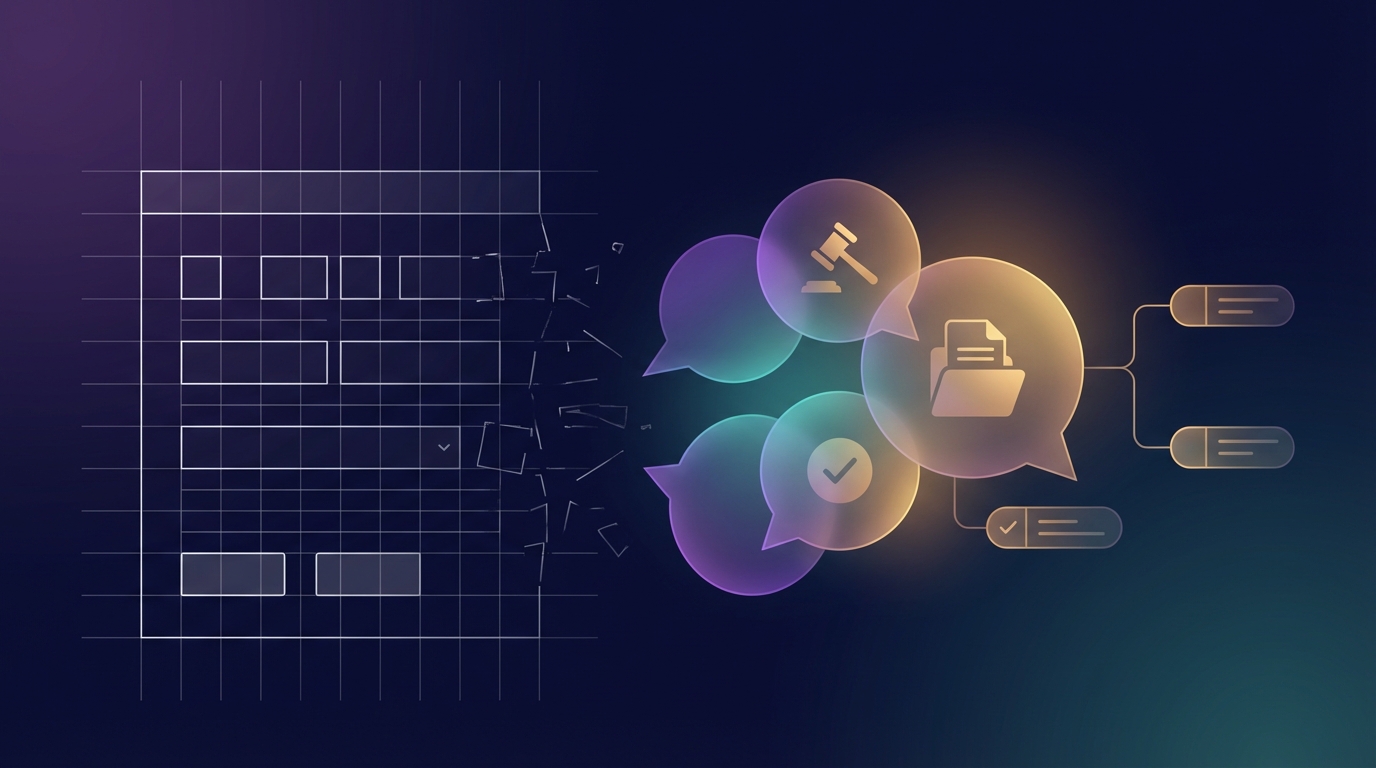
Learn how conversational intake improves stakeholder engagement and data quality in professional service environments.
Read article
Discover how adaptive intake systems can transform your change management communication and stakeholder assessment process.
Read article
Understand why traditional forms fail to capture the nuanced feedback needed for successful organizational change initiatives.
Read articleReplace drop-off, poor qualification, and missing context with AI conversations that capture structured data and real understanding. Set up in minutes.
No credit card required • Cancel anytime